
There is a particular kind of freedom that comes with walking from one place to another under your own steam. You carry what you need for the day, follow the trail, stop when something catches your eye and eventually arrive somewhere completely new. Nobody is hurrying you along. Nobody is telling you when to take a break. And if you decide that a scenic lookout, a tiny cafe or a slightly questionable detour deserves your attention, you can change the plan.
This is exactly what I love about self -guided hiking.


But – and it’s quite a big but – multi-day hiking also comes with a sizeable pile of logistics. There are routes to research, accommodation to book, luggage to move, transfers to organise, maps to understand, food to source and contingency plans to consider. Add another country, another language and a trail that wanders through small villages and remote areas, and suddenly the planning can become a bigger expedition than the hike itself.
This is where a hiking company earns its keep.
Supported, But Still Self-Guided
For our Kumano Kodo hike in 2023, we booked through the Australian company RAW Travel. For our upcoming Shikoku adventure, we are using Auswalk.


Both trips give us what I think is the sweet spot of multi-day hiking – the structure and support of an organised trip, with the freedom and independence of walking it ourselves.
We are not joining a tour group or following a guide carrying a little flag. We make our own way each day. We decide when to start, how quickly (or slowly) to walk, where to stop and how long to stay there. We can talk all day, walk in silence, take too many photos, investigate a side trail or stop for snacks and breaks whenever the mood strikes. In other words, we get to create our own fun.


At the same time, somebody with local knowledge has already done the heavy lifting behind the scenes. The itinerary is mapped out, the accommodation is booked, the luggage transfers are arranged, and on-the-ground support is available if something goes wrong.
That combination is a winner.
The Joy of Luggage-Free Hiking
One of the biggest benefits is walking without hauling your entire holiday on your back. Our main luggage is transferred between accommodations, so we only carry what we need for the day (and occasionally an overnight). Water, lunch, essential gear, some safety essentials and whatever else has survived my ongoing campaign to reduce backpack weight!
You are still a hiker. Your legs certainly know they have been hiking. But you are not carrying clothes, a tent, cooking equipment, toiletries and every other possession over every hill and through every forest. For us, luggage-free hiking makes the trip more enjoyable and more sustainable over consecutive days. It means less strain on the body, more energy to appreciate where we are and a considerably better chance that TAB and I will still be on speaking terms at the end of the hike!
The Boring Bits are Already Done
I enjoy planning a hiking holiday. I love researching destinations, looking at maps and imagining what each day will bring. What I enjoy less is trying to piece together multiple overnight options, luggage issues, connections and backup options in places I don’t know. A hiking company takes care of those moving parts. They design daily stages that are broadly achievable, select accommodation that works with you and the route and provide the practical info to get from A to B.


That local knowledge is particularly valuable on trails such as the Kumano Kodo and the Shikoku routes, where walking days can involve rural areas, limited public transport, and accommodation off the beaten track.
It removes a great deal of uncertainty without removing the adventure.
Support off the Beaten Track
Self-guided doesn’t have to mean completely on your own. Knowing there is someone to contact if we are lost, miss a connection, encounter a trail issue or need to change plans provides a reassuring safety net. Hopefully, we won’t need it. But on a long walk in another country, it’s comforting to know that support exists beyond a frantic internet search and Google Translate at 10pm on a Monday night.

This was part of what made our Kumano Kodo experience with RAW Travel feel so manageable. We had the independence we wanted, but we were not starting each day without a plan or backup. We anticipate the same balance with Auswalk for Shikoku.
Are There Drawbacks?
Of course. The biggest is cost.
Booking through a hiking company will usually be more expensive than arranging everything yourself. We are paying for their expertise, route planning, booking administration, luggage transfers, trip information, and on-ground support. If you enjoy detailed planning, speak the local language, and have plenty of time to research and confirm every stage, then you can absolutely organise your hiking trip yourself.
There is also slightly less flexibility before and during the trip. Accommodation is booked in advance, luggage needs to be ready at certain times, and you generally need to finish each day at the booked location. You can’t just wake up and decide to stay another night or completely change direction.
And while luggage transfers are the gift of the gods, they do require a little discipline. One piece and 20kg max means that. One piece and no more than 20kg. You also need to prepare physically, understand the next day’s route, carry the right gear, monitor the weather and make sensible decisions. Supported isn’t the same as chauffeured.

Why it Works For Us
TAB and I both work fulltime. We have limited annual leave and a range of family commitments (husbands, children, fur babies, etc). We have a strong preference for spending our holiday hiking rather than untangling logistics. Using a hiking company gives us confidence before we leave and support while we are away. It means the major pieces are in place, but the experience still belongs to us.
We will still walk every kilometre ourselves. We will still need to read the maps, navigate local transport, manage the hills, cope with the weather and find our way. We will still make the decisions, create the laughs and collect the stories.


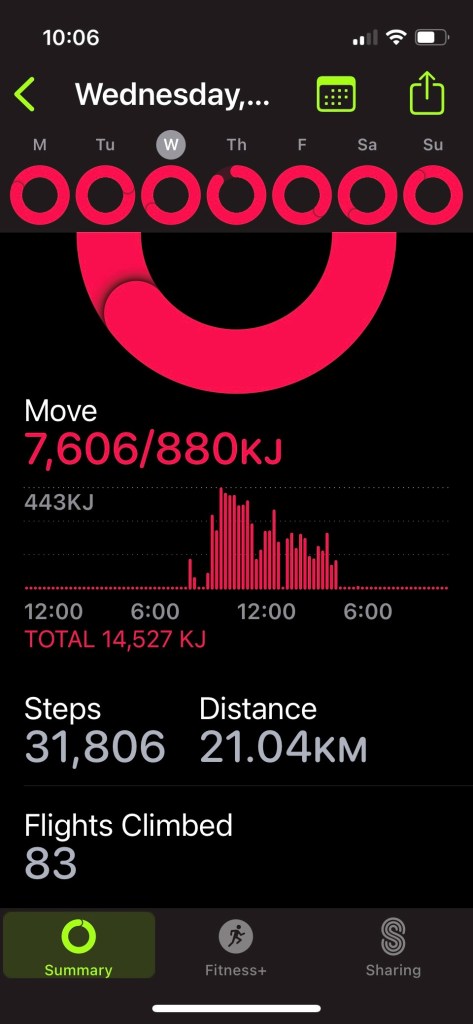
We just won’t be dragging a suitcase up a mountain or trying to book tonight’s lodgings online from the side of the trail. For us, supported hiking is the best of both worlds. The freedom to have our own adventure, with just enough organisation in the background to allow us to enjoy it.
And honestly, if someone else is willing to make sure my clean clothes arrive before I do, I’m very happy to call that money well spent.
See you out on the trails
PJ 🙂


