As the crisp bite of autumn rolls into Tamaki Makaurau (Auckland), there’s no better time to lace up your boots and head for one of the city’s most iconic walks, the loop through Cornwall Park and up to the summit of Maungakiekie, also known as One Tree Hill. The leaves are putting on their best autumn fashion show, there’s a gentle crunch underfoot and the sheep are living their best lives, like they own the place, which to be fair they kinda do.
Cornwall Park in autumn is pure magic. Towering oaks, sycamores and liquid ambers are bursting into colour, paths wind past stone walls, grassy knolls and the occasional moo or baa remind you that you’re sharing the space with a range of original inhabitants. It’s a country getaway, minus the traffic, petrol costs and inevitable car snack disaster.
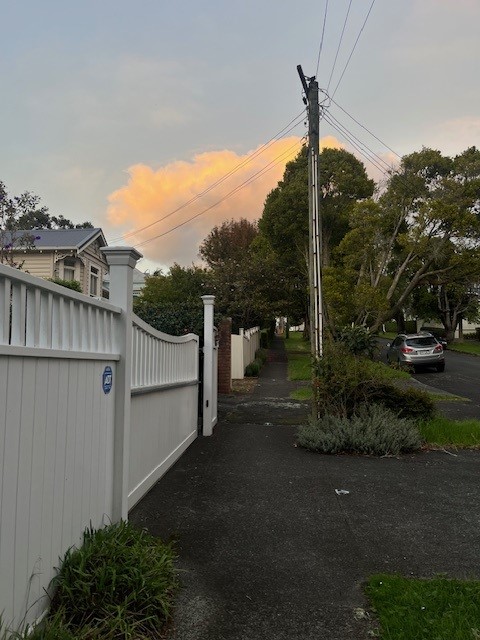
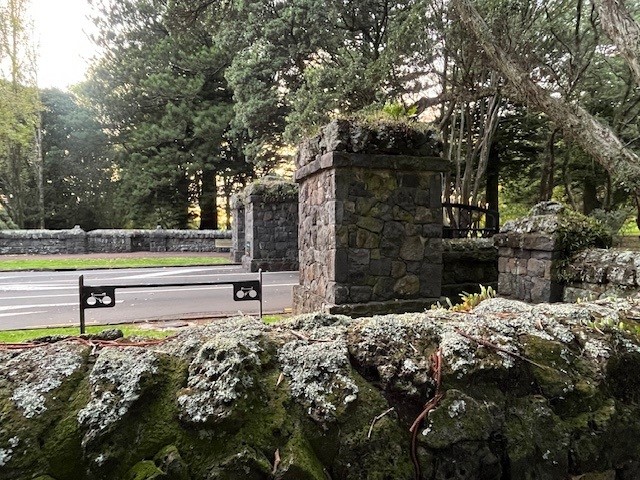
Winding through EpsomFirst park sign and side entranceOriginal Cornwall Park stones
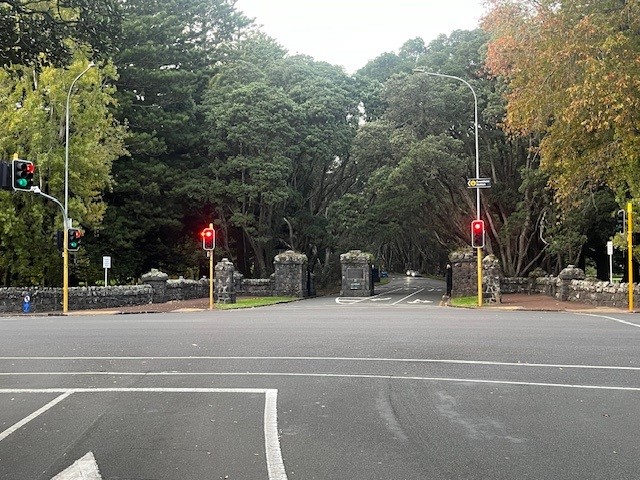
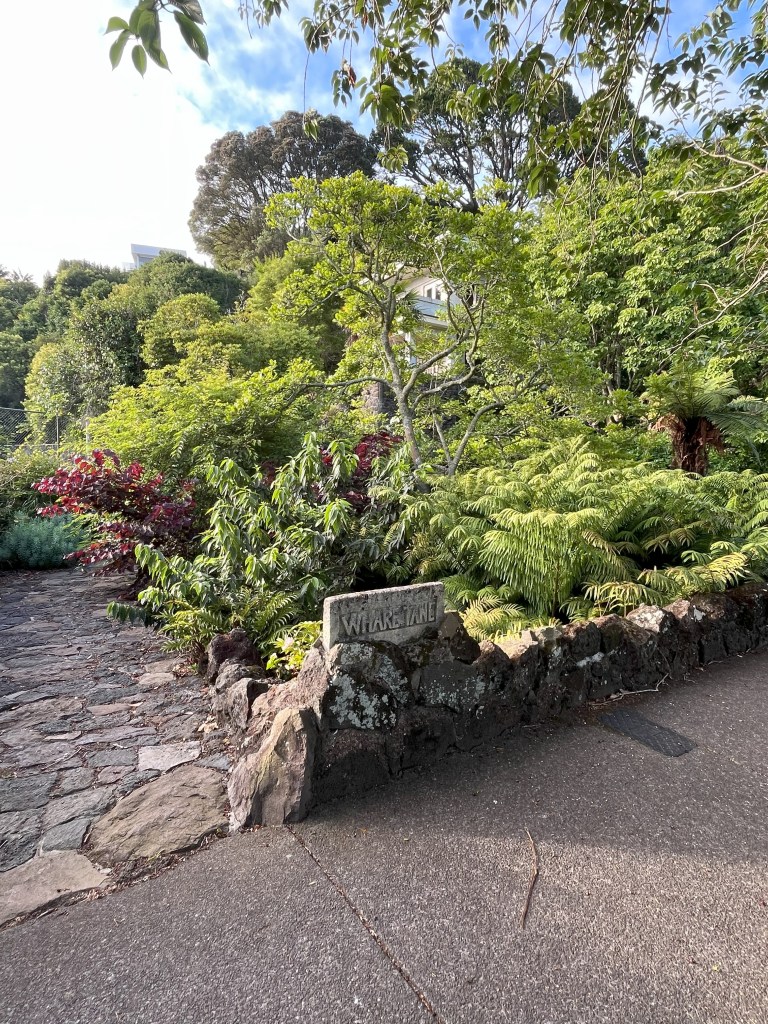
I started my 9km morning hike in Epsom and walked the quiet streets to an entry point for Cornwall Park, hidden away in a suburban cul-de-sac. Let Google Maps show you where you can walk, it’s surprising what pops up. Approaching the formal entrance to the park proper is rather imposing, with the liberal use of volcanic rock to welcome you.
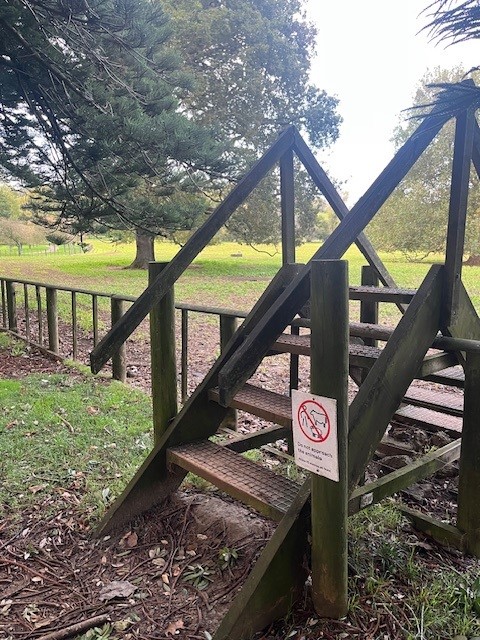
Formal gate columnsStiles for scrambling over stock fencesOne Tree Hill!
The real climb befgins as you head toward One Tree Hill, and yes the name is a bit misleading these days. Maungaekiekie is not just a pretty volcano, it’s a place steeped in history and cultural weight. It was once home to one of the largest Maori pa sites in the region, with evidence of terracing and fortifications still etched into its slopes. Ngati Awa and later, Ngati Watua call this maunga home, and standing up there, you can still feel its mana.
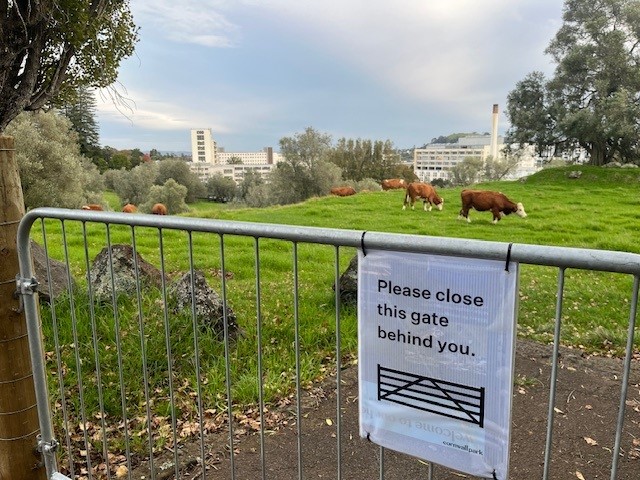
Stock paddocks on either side!Sheep grazing in the shadow of the obeliskStock grills to stop the cattle and sheep wandering out of the park
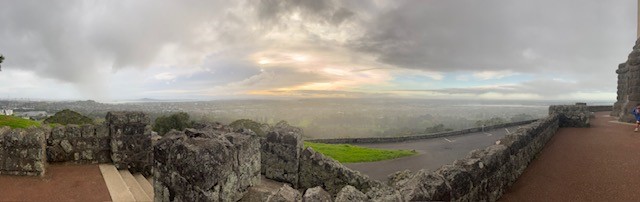
Pano view from the top – rather amazing morning
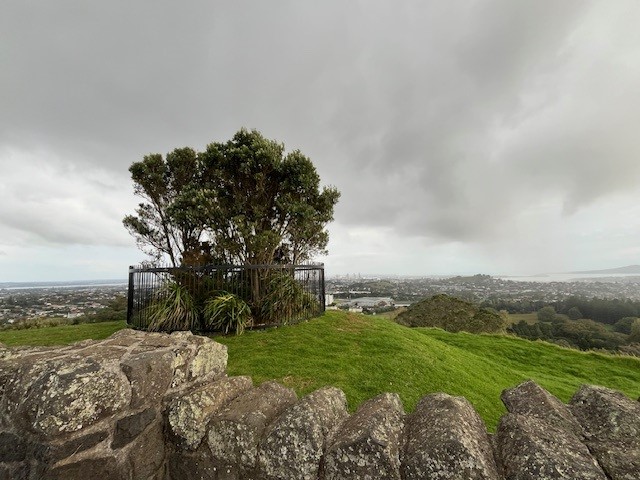
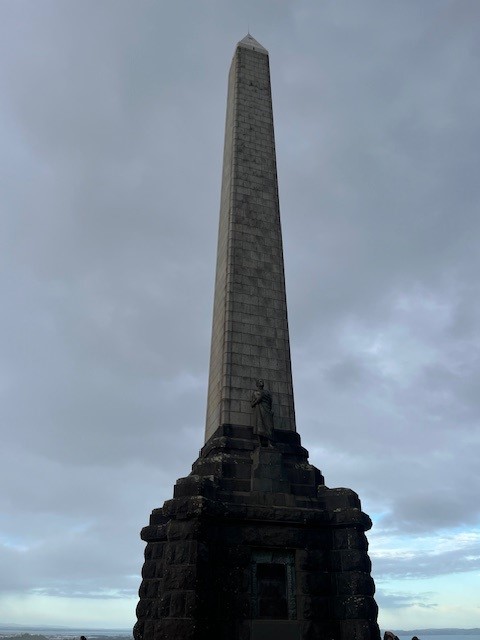
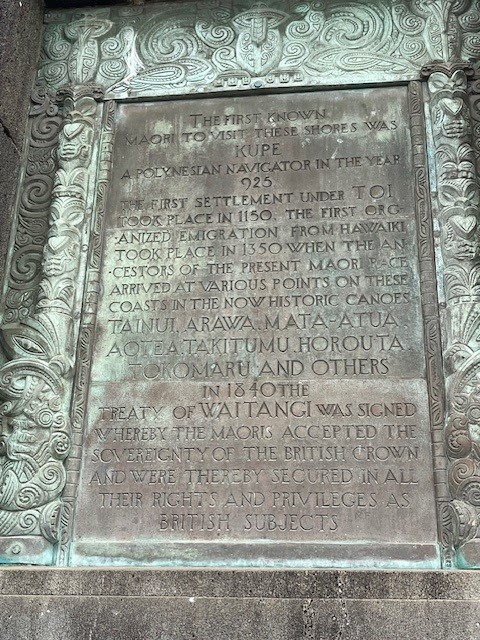
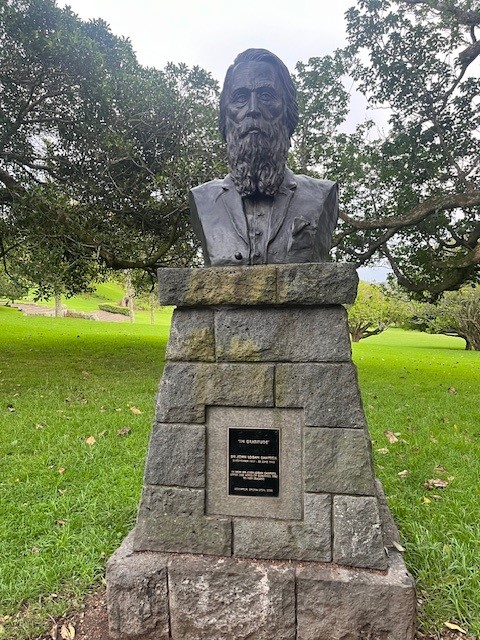
And the tree? That’s a story. The original totara was felled in the 1800s. A Monterey pine replaced it, standing proudly (if controversially) for decades until it was removed in 2000 after being damaged during protests. These days, the hilltop is mostly treeless, but the obelisk still stands tall, a monument to Maori, commissioned by Sir John Logan Campbell, who also donated the land that became Cornwall Park.
360 viewsold site of the ‘tree’Imposing obeliskOne of 4 statements on each side of the obeliskCold, rather windy but worth the hike up!
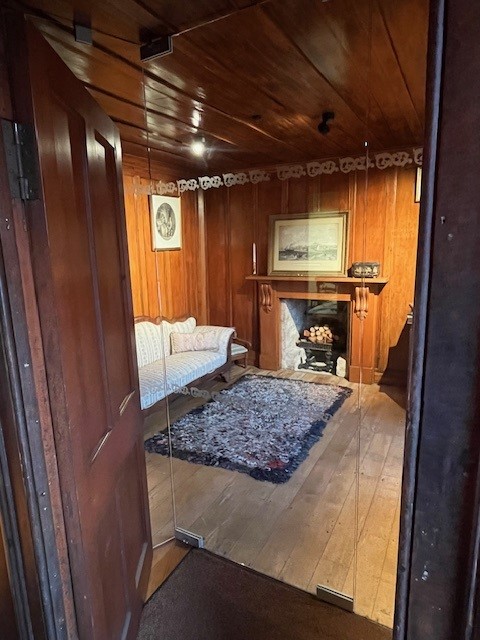
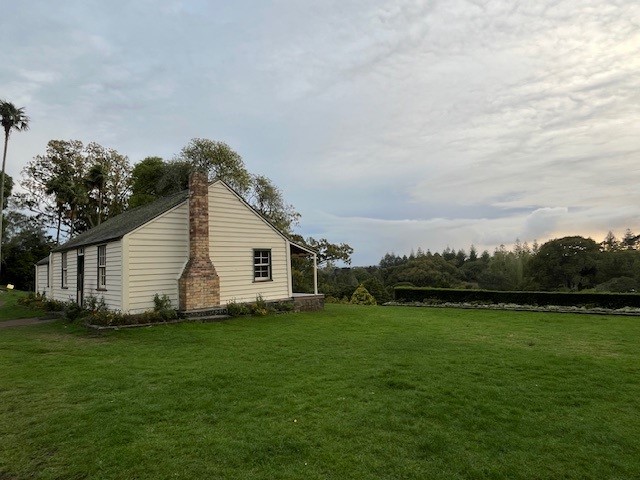
Speaking of legacy, don’t miss Acacia Cottage, nestled near the park’s main gates. It’s the oldest surviving wooden building in Auckland, built by Campbell himself in 1841. Stepping inside is just like walking into a time capsule, you can imagine what life might’ve looked like back when your sourdough came from necessity, not a pandemic hobby! It’s a perfect mid-hike break to soak up some settler history.
What makes this hike even better? It’s urban. No need to travel to the ends of the earth to get your nature fix. Urban hiking is the unsung hero of weekend adventures. It’s cheap, it’s close, and it comes with actual toilets, albeit disguised! You get the buzz of discovery without the panic of getting lost in the bush. And let’s be honest, exploring your own backyard feels good. It’s grounding. It reminds you that beauty, history and a bit of exercise are all within reach.
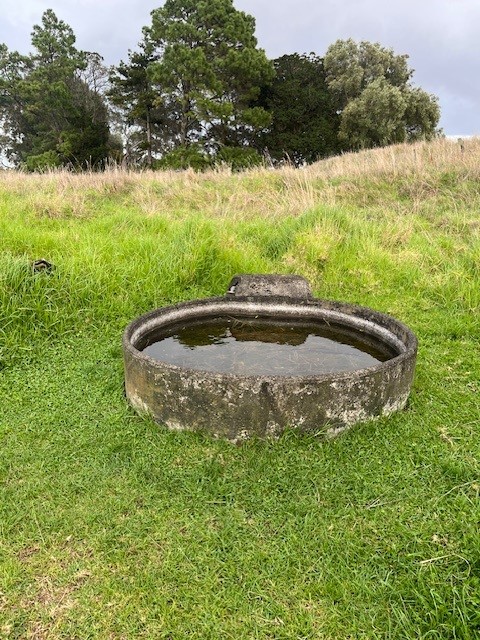
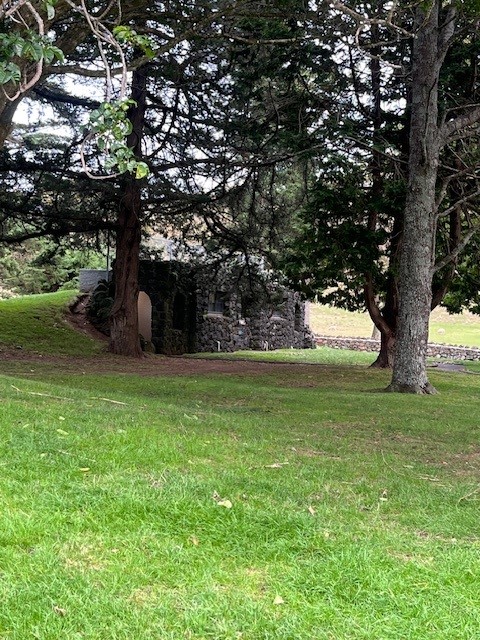
You know its real when there’s a stock water troughCleverly hidden toiletsMe trying to figure out the writing heading down the hillOne of the main roads – had the place to myself!
So, if you’re after a hike with heart, heritage and a side of sheep, pop this one on your list. Bring a mate, bring your dog (on lead please, the cows are sensitive), and enjoy the simple magic of walking where the city meets the sky.
Like the hike? You’ll love this one. See you next time out on the trails.
Hello and welcome to Like the Hike, a blog written by yours truly giving you insights, photos, commentary, tips and tools so you can enjoy hiking as much as I do. Today we’re talking about urban hiking. Back in the day, I did a blog on urban hiking in Sydney, covering some great options. We are in Auckland, New Zealand this time – bring it on!
If you’re in Auckland and your idea of exercise is strolling from the couch to the fridge, it’s time to shake things up. Let me introduce you to urban hiking, the hybrid sport where you’re as likely to dodge coffee-carrying commuters as you are to admire distant scenic vistas. And what better place to try it than the iconic Mt Eden, a 5-6km round trip guaranteed to get your heart pumping and your socials popping.
The Lowdown on Mt Eden (or Maungawhau if you’re up for a bit of bilingual education)
Mt Eden/Maungahwau isn’t just a bump on the Auckland skyline; it’s a literal high point, being the city’s tallest natural elevation at 196 metres. This extinct volcano – yes, Auckland is basically a city built on geological firecrackers – has a history as rich as your post-hike flat white (that’s a latte in Aotearoa).
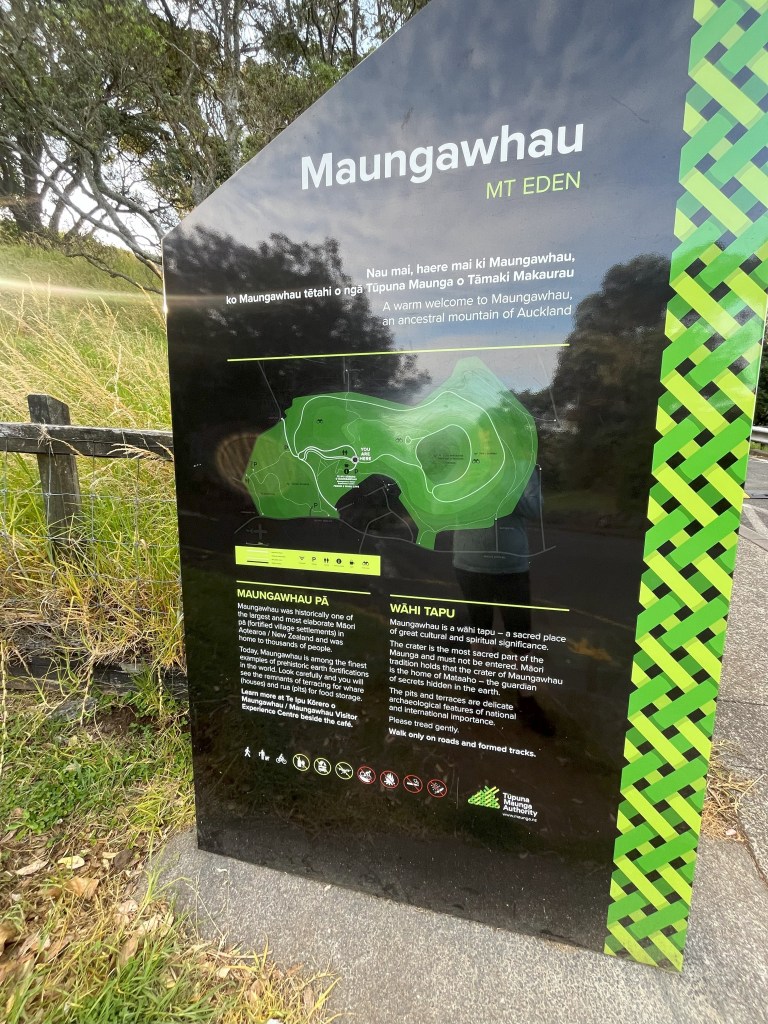
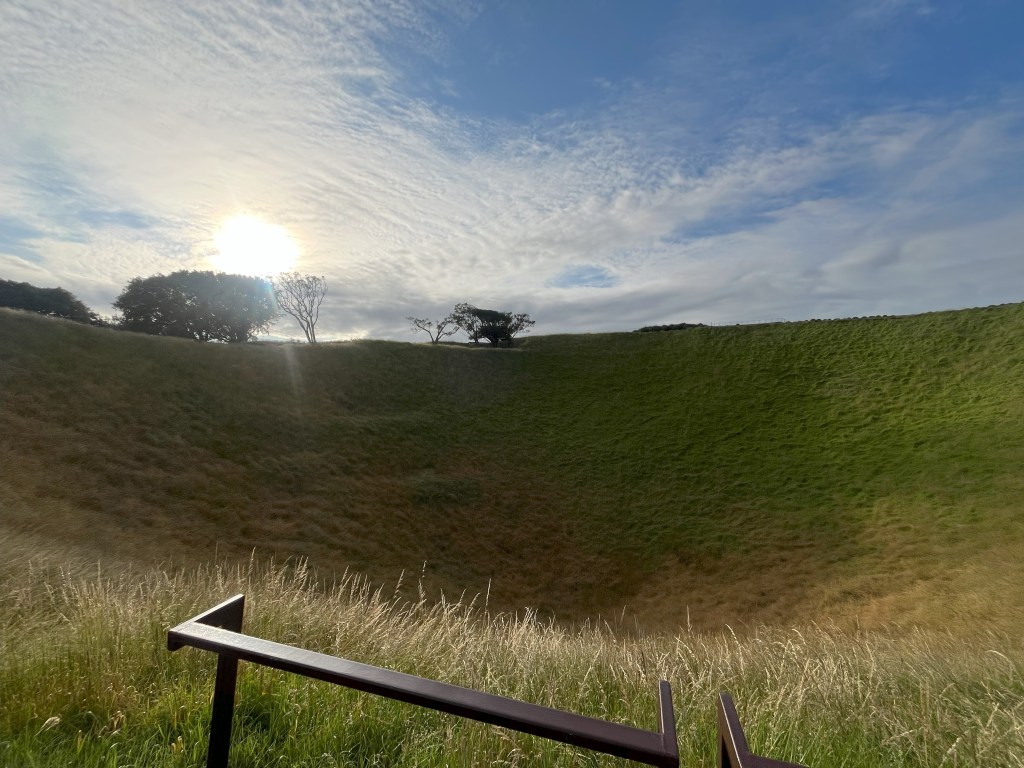
The Maori name for Mt Eden, Maungawhau, means “Mountain of the Whau Tree”. The summit crater, affectionately called Te Ipu-a-Mataaho (“Bowl of Mataaho”), was formed by volcanic activity around 28,000 years ago. In pre-pakeha times, it was a bustling Maori settlement housing several hundred people, with terraced garden, food storage pits and fortified living spaces. Today, its a protected archaeological and culturally significant site – so no, you can’t dig for treasure but you can marvel at it’s natural grandeur and incredible views.
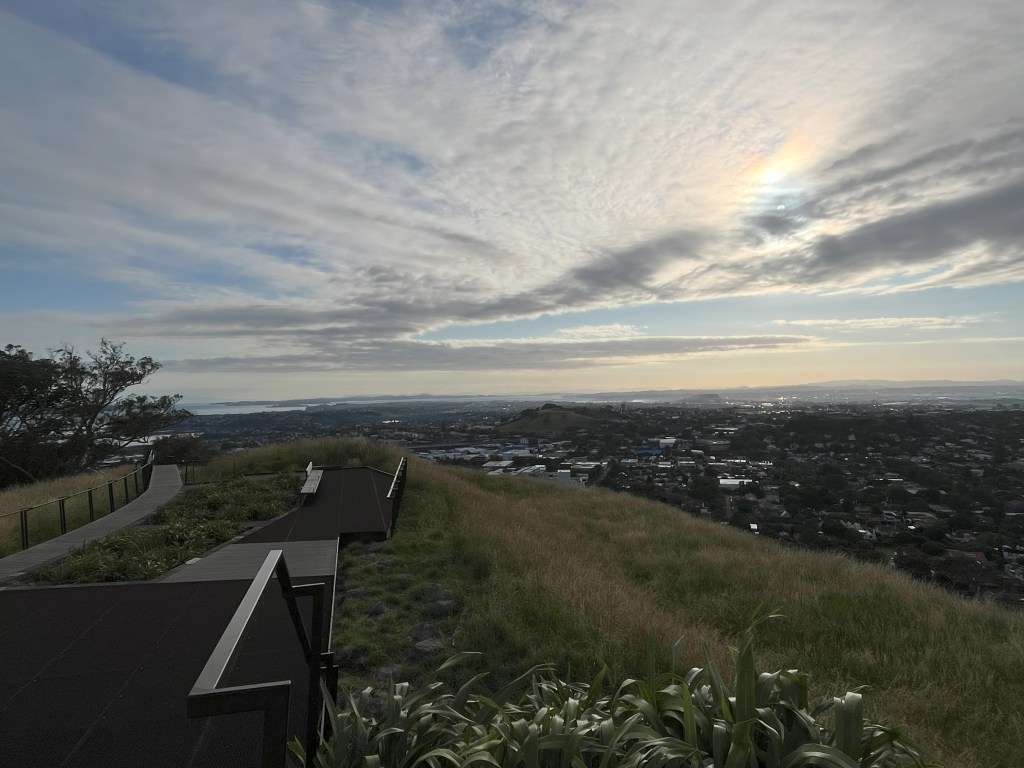
Pano south east view from the first platform
The Urban Hiking Experience
Urban hiking is like regular hiking, but with bonus features: public bathrooms, nearby bakeries and zero chance of encountering a snake or a spider (unless you count the suited ones on their way to work!). Mt Eden’s foot print is perfect for city slickers, runners and hikers who want to channel their inner explorer without sacrificing wifi.
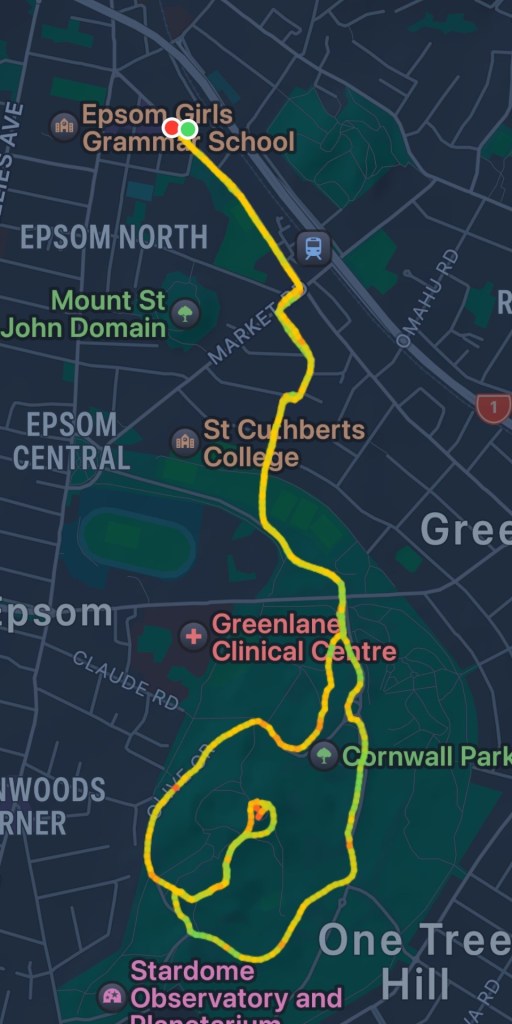
The trail I took winds through suburban streets, tree lined paths and a winding track that circles its way up the mount to the summit. There are a number of access points to get into the reserve, I took the one with about 4 flights of stairs from Glenfell Place. That’s the red bit in my tracking! Along the way you’ll spot everything from joggers to locals walking their highly enthusiastic dogs. The ascent is steep enough to feel accomplished but mercifully short…you can see that in the red and yellow sections!
Why You’ll Love It
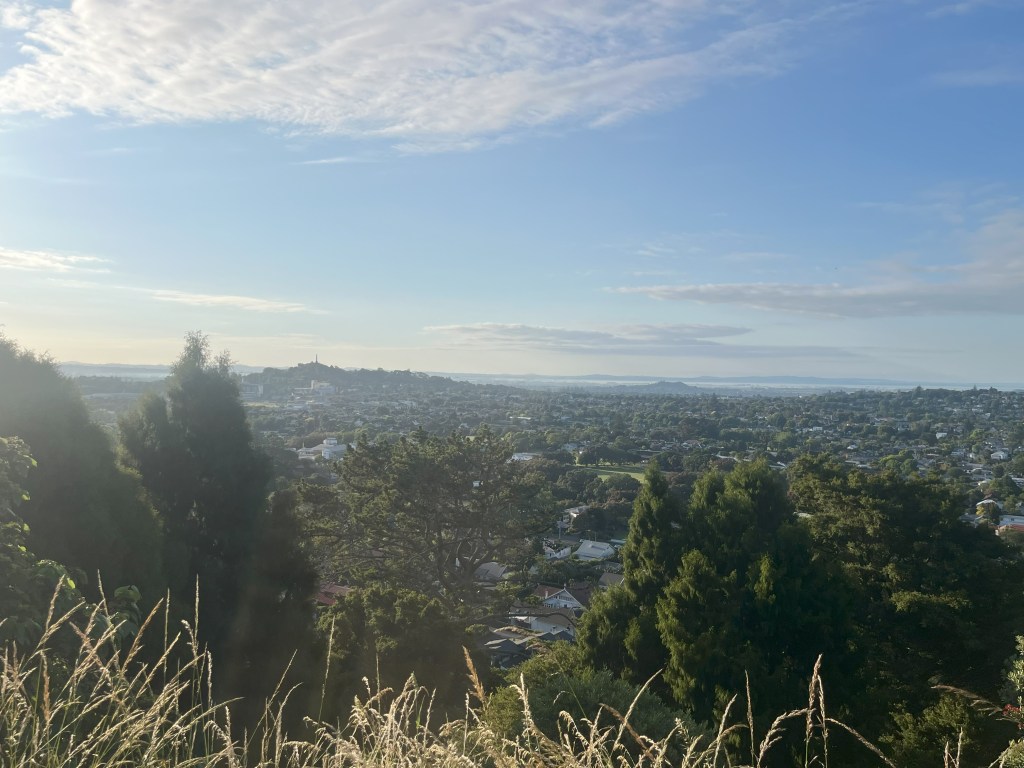
Views that WOW – at the summit, you’re rewarded with 360 panoramic views of Auckland, including Waitemata Harbour, Rangitoto Island, a plethora of extinct volcanos and the city skyline. It’s like Mother Nature’s way of saying “thanks for sweating“.
History on Tap – as you explore the summit, you’ll literally be walking through centuries of history and cultural richness. The Maungawhau Visitor Experience Centre is also worth a recce after you’ve finished at the crater.
Fitness without the Fuss – forget treadmills and fluro gym lighting. Urban hiking lets you burn calories while soaking up sunshine and fresh air (remember your hat!). Both are scientifically proven to improve your mood, or at least make you less grumpy about steep hills.
Cafe Proximity – end your adventure with a well deserved treat at one of the local cafes. Nothing says “hiker’s reward” like a flaky croissant and a flat white.
South to Mt Wellington, another extinct volcanoWest Aucklandlooking north over Waitemata Harbour
Tips for First Timers
Pick your Footwear – you probably don’t need to wear hiking boots, I prefer a hybrid shoe or sturdy sneaker for urban hikes, still supportive but not too inflexible.
Wear Layers – Auckland’s weather changes faster than a TikTok trend, so be prepared for sun, wind and rain, all probably in the same hour.
Respect the Significance of the Land – Mt Eden/Maungawhau is a strongly sacred site, or a wahi tapu. The crater is especially significant, so stick to the marked paths and enjoy the views. This isn’t a race, it’s a walk….with style.
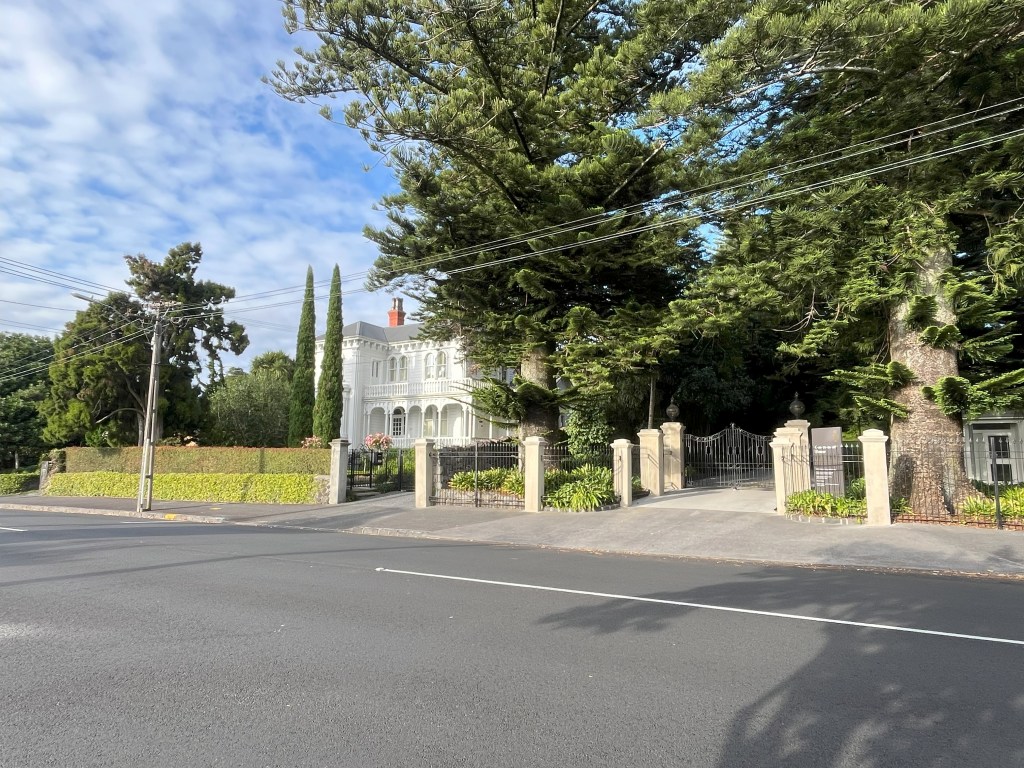
Enjoy your Surrounds – urban hiking isn’t just about the mountains or the reserves, it’s also about the scenery along the way. Seek out interesting architecture, buildings or streets. I found the Governors Residence and a lovely old house with stone maori carvings…quite special.
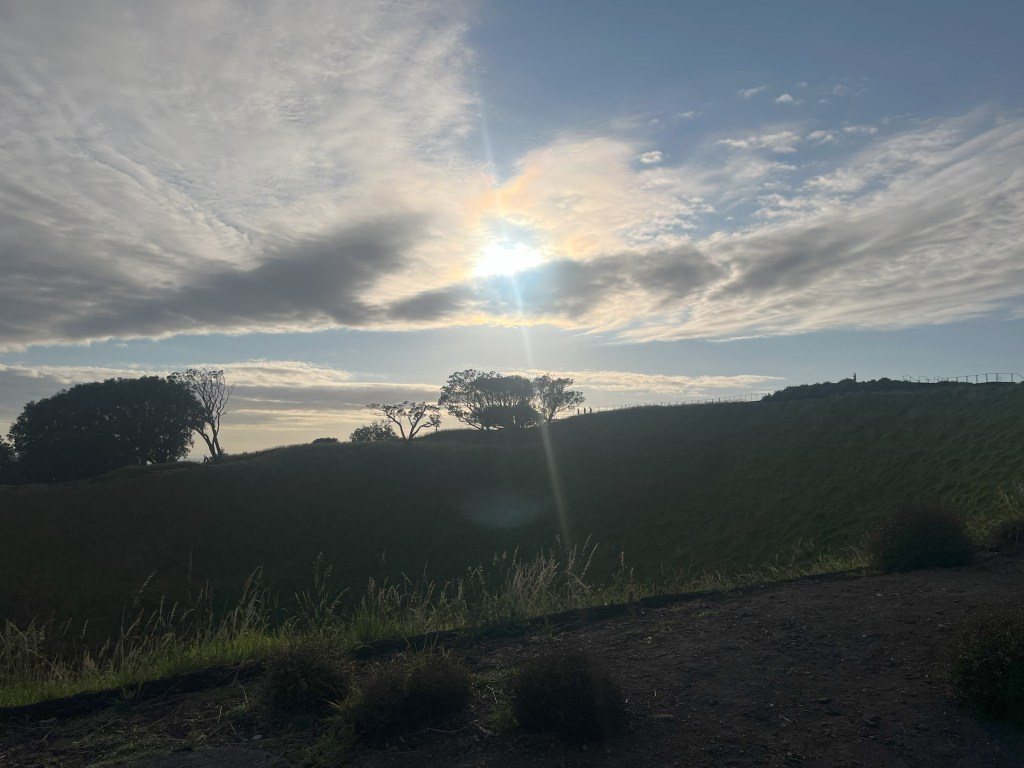
looking across the crateramazing period architeturelook closely for the carvings…believe it or not, te where ka means “The Car House”…or garage!
Final Thoughts
Hiking around Mt Eden is proof that adventure doesn’t have to involve remote wilderness or epic gear. In fact, a hike of just 5.8km is more than satisfying, it’s downright enjoyable. Sometimes, all you need is a good pair of sneakers, a sense of curiosity and a willingness to sweat a little.
So, lace up, hydrate, slap on sunscreen and a hat, and get ready to like the hike. Who knows, you may even fall in love with it 😉
Hello and welcome to my LIKETHEHIKE blog. I’m PJ and I write about the hikes I take, giving you insights, photos, commentary, tips and tools so you can enjoy hiking and embrace the experience.
Let’s talk URBAN HIKING. Yep. URBAN HIKING
What is Urban Hiking?
Urban hiking is walking in a city – usually on a route you haven’t explored before – taking new paths, up hills, down stairs, through parks and reserves, following signs, seeing new things. Sounds pretty good huh?!
Urban hiking is easy to plan and execute. You can use maps, or simply start walking and see where the hike takes you. If you’re staying at a hotel, ask the front desk. Locals are very happy to point you in the right direction.
What Do You Need?
Urban hiking is a bit different to trail hiking.
No Backpack. I do wear exercise tights with pockets so I can carry a mobile, glasses and ever present lip salve. If I’m feeling like a long urban hike I’ll dust off the bum bag (fanny pack). Food and water I buy as I need it.
No Hiking Boots. I wear a hybrid or trail sneaker. I find that asphalt walking can be a bit harder on my knees and hips, so I like the additional padding a trail shoe provides. My latest find was at North Face, Vectiv Infinite Trail Shoes. Super padded and comfy. Another tried and true option is New Balance Fresh Foam Hierro v6. Both are great for urban hiking.
Keep the Hat! I still wear a hat and sunscreen. I’m a child of the 70’s and we weren’t very sun smart back then. Skin protection is EVERYTHING. I use a full brim hat rather than a baseball cap.
Time of Day. Is important for an urban hike. A city has so many personalities that change according to the time of day. I prefer early morning, but have also hiked later in the day for a change of pace. Don’t worry too much about distance, but look for interesting destinations, happenings, landmarks or people. This will create a great urban hiking experience.
Urban Hike #1 – Sydney CBD
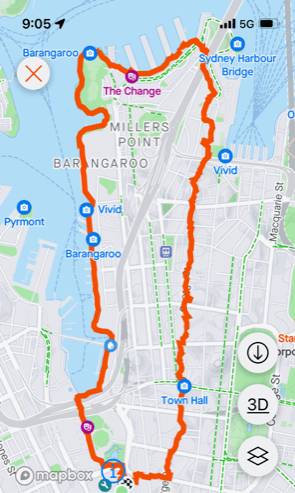
I was in Sydney for work and needed to stretch my legs. I mapped out a cheeky wee 8km urban hike which took in Darling Harbour, Barangaroo, Walsh Bay, the Harbour Bridge, The Rocks and the CBD.
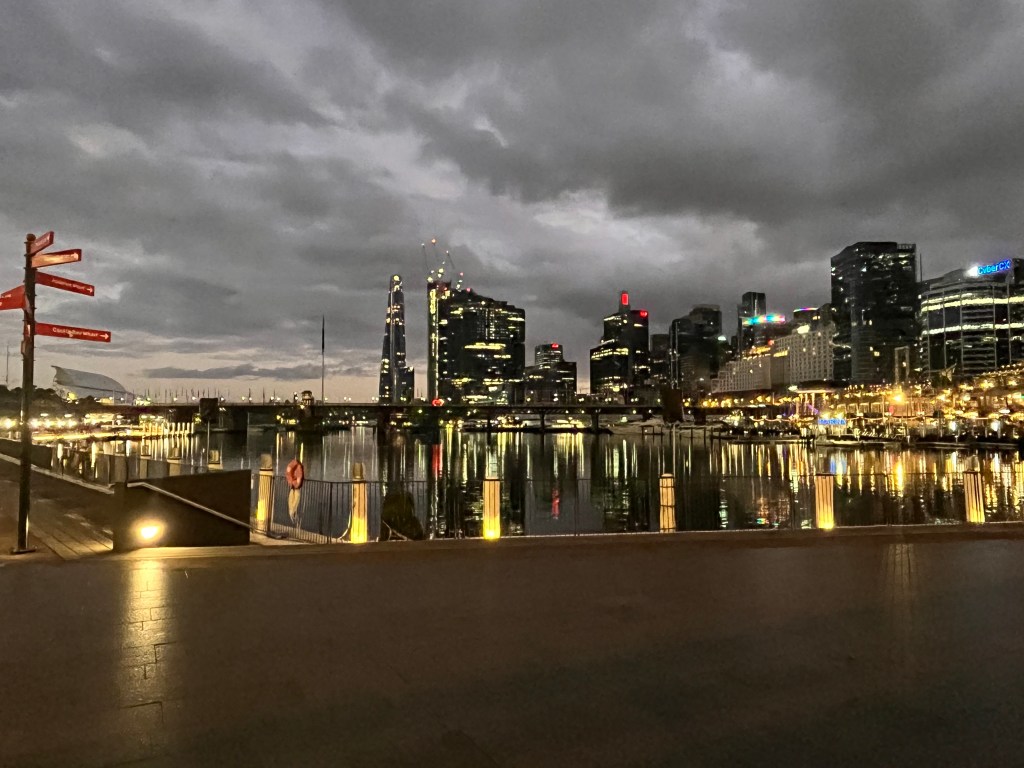
Darling Harbour
Always a favourite destination for either revitalisation or rest, Darling Harbour sits just west of the Sydney CBD. It’s home to restaurants, ships, parks, art trails, ferries, you name it. It was home to the maritime industry through the 1800’s, Sydney’s first gasworks and during the 1980’s underwent a decade long gentrification project.
Handy maps are scattered aroundLooking down the harbour out to sea – a little drizzly!
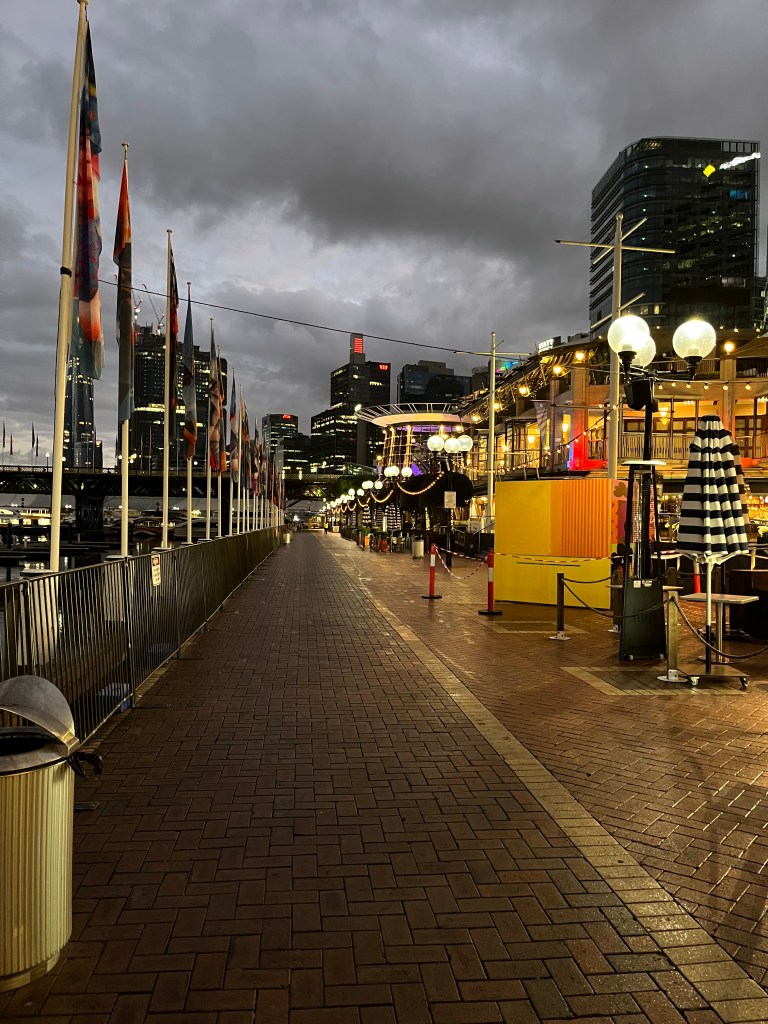
For about 3km I walked along the reclaimed wharf, past ferries and a very still harbour. At this time of morning it’s you, some keen exercisers and a whole heap of tradies coming down to work on the construction sites scattered around. It’s still a working harbour but very pedestrian friendly.
Pride Week in Sydney Kings WharfComing into Barangaroo
Barangaroo Reserve
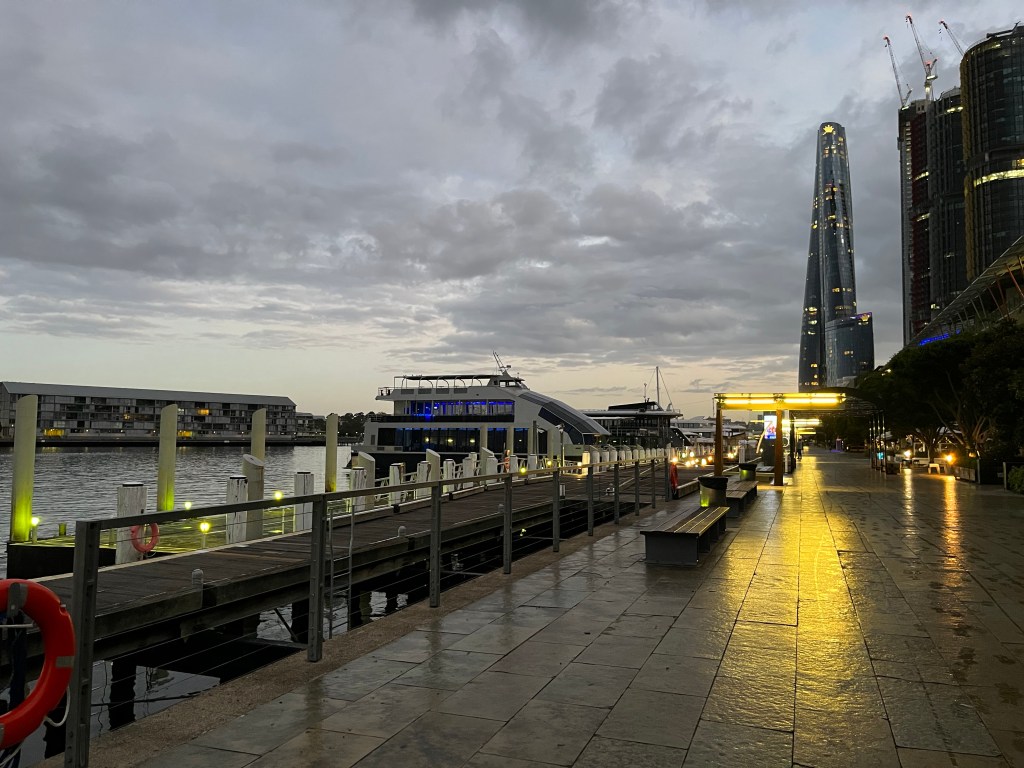
Barangaroo is part of Gadigal country and is named after a powerful female Cammeraygal leader of the Eora nation. Barangaroo Reserve is a landmark waterfront destination, made up of hotels, entertainment precincts, reserves and water. It’s marked by over 75,000 native trees and bushes as well as very distinct square sandstone blocks lining the foreshore. It provides incredible views onto the harbour and passing aquatic traffic. It’s a very visually powerful space to walk though at dawn.
Barangaroo Point with a SIlverSeas vessel peeking around. Note to the left, a Sydney ferry. Around the point and this is what you see! Fantastic!
Millers Point, Walsh Bay, Dawes Point
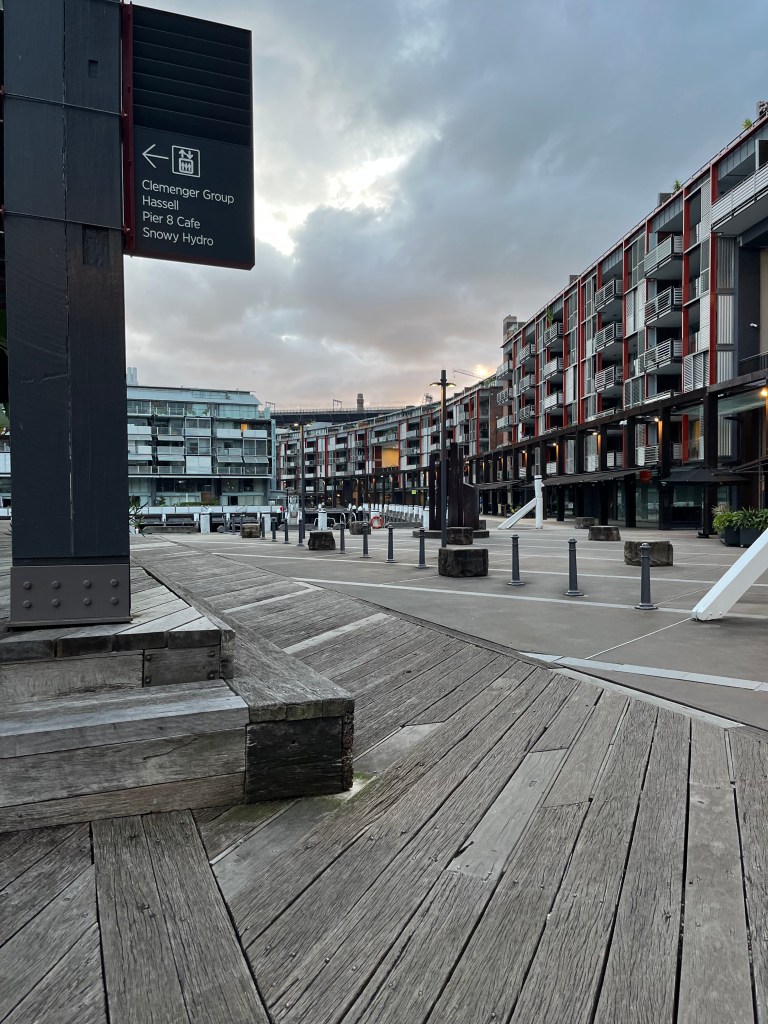
At about the 3.5km mark (just around the point you can see in the pic above), you will exit Barangaroo Reserve and enter Millers Point, then Walsh Bay. You could simply follow the road, but I try to stay away from roads wherever possible. With a little bit of trial and error, I found I could walk through the refurbished wharves in Walsh Bay, now home to cafes, residences and a cultural precinct. AND – you get to walk underneath the Sydney Harbour Bridge…!
The exit from Barangaroo Reserve. Historic workmen’s cottages still residential. Walsh Bay wharvesDawes Bay view
The Rocks
Coming out of Dawes and Walsh Bay, the vibe is very historic and utilitarian. This used to be a working area, and the streetscape reflects that. One of the fun parts of this walk is actually walking right under the Sydney Harbour Bridge!
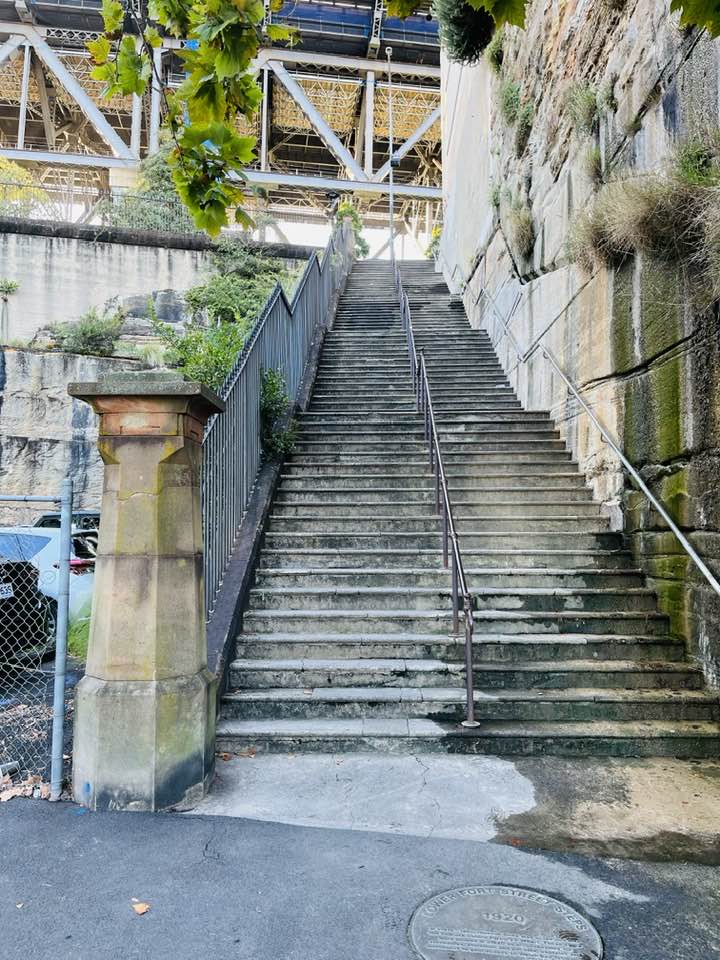
Coming out of the wharf district100 year old stairs up to the Bridge and The Rocks. My knees felt about 85 years old looking at these!Under the bridge – and look at the Opera House in the distance….
This would have to be one of my recommended destinations in Sydney. Nestled into the side of the sandstone headland supporting the Harbour Bridge, this tiny neighbourhood is a maze of historic laneways, colonial terrace houses, old pubs and a working harbourfront, dating back to 1788.
A pristine example of Rocks terrace housingLanewaysDid I mention it was Pride Week in Sydney?!Looking from The Rocks toward Circular Quay – where a monolith was berthed! Road shut for Pride revelry.
The Rocks is also home to a passenger ship terminal, The Museum of Contemporary Art and over 50 heritage listed buildings. Your urban hike might slow down a bit as you walk through this fantastic slice of Sydney history, or might even go on pause for a quick coffee break.
George St & Sydney CBD
Once through The Rocks it’s a brisk troy up the middle of Sydney CBD via George St. Running for 3km from Circular Quay to Chinatown, it was Sydney’s original high street, and is still home to a number of the city’s most prestigious buildings and precincts. I walked George St around 7.30am and it was still relatively quiet, with only the first office workers trotting to work. By 11am, George St is awash with humanity. It’s mainly a pedestrian and light rail thoroughfare, so very easy to walk.
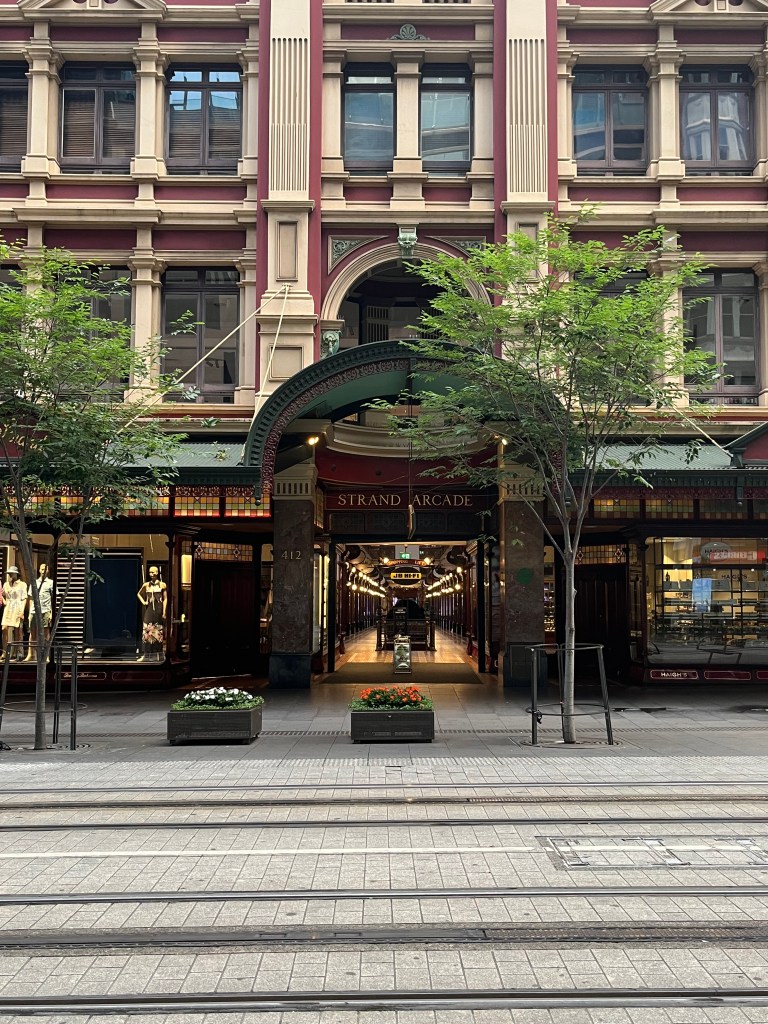
Start of George St, all to myself 🙂 Strand Arcade, one of the Sydney CBD landmarksNot often you see George St this quiet…
Compulsory Stop – QVB Time
It was about 7km into my urban hike when I felt the need for sustenance. Another great destination in Sydney CBD presented itself – the Queen Victoria Building (or QVB in Aussie vernacular).
QVB is a five-level heritage listed building which is now home to premium retailers such as Bally, Camilla, Coach, Furla, Jimmy Choo, Longines, Georg Jensen, Dior – it’s a shopping destination! It’s also home to a range of eateries, and my breakfast destination.
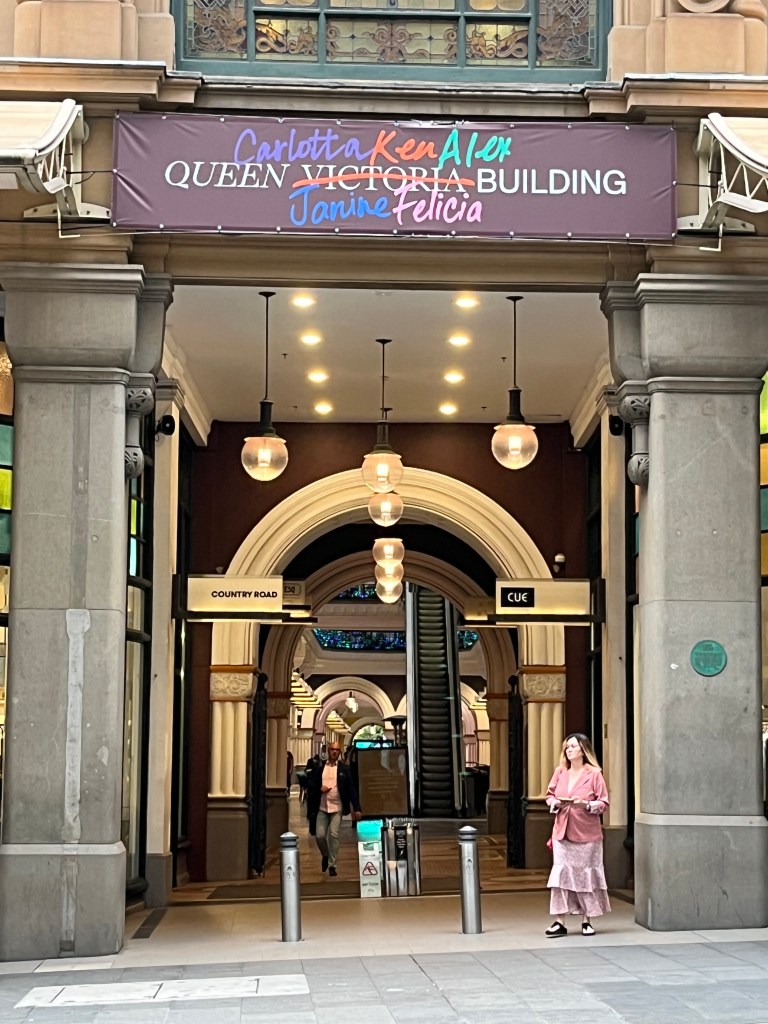
My visit to Sydney coincided with 2023 Pride Week, so the city was packed with pride related activities, events and decorations. Hence the temporary re-naming of QVB.
Eastern entry to QVBBreakfast sustenance at Manon BrasseriePeeking over the cafe curtain at the movie madness
Stopping somewhere on your urban hike provides two benefits:
Sustenance, in both solid and liquid form; and
An opportunity to people what, to get a sense of the flow in the area.
I had a quick but delicious breakfast and coffee at Manon Brassier, and watched a film crew outside the café as they hustled and bustled very busily filming an ‘as yet unnamed’ movie adjacent to the Queen Victoria statue. By now Sydney was well and truly awake with workers, shoppers, tradies and all the madness of a large CBD.
Last Leg
It was a final 2km up George St to Chinatown, past the Town Hall to my hotel and the start of my working day.
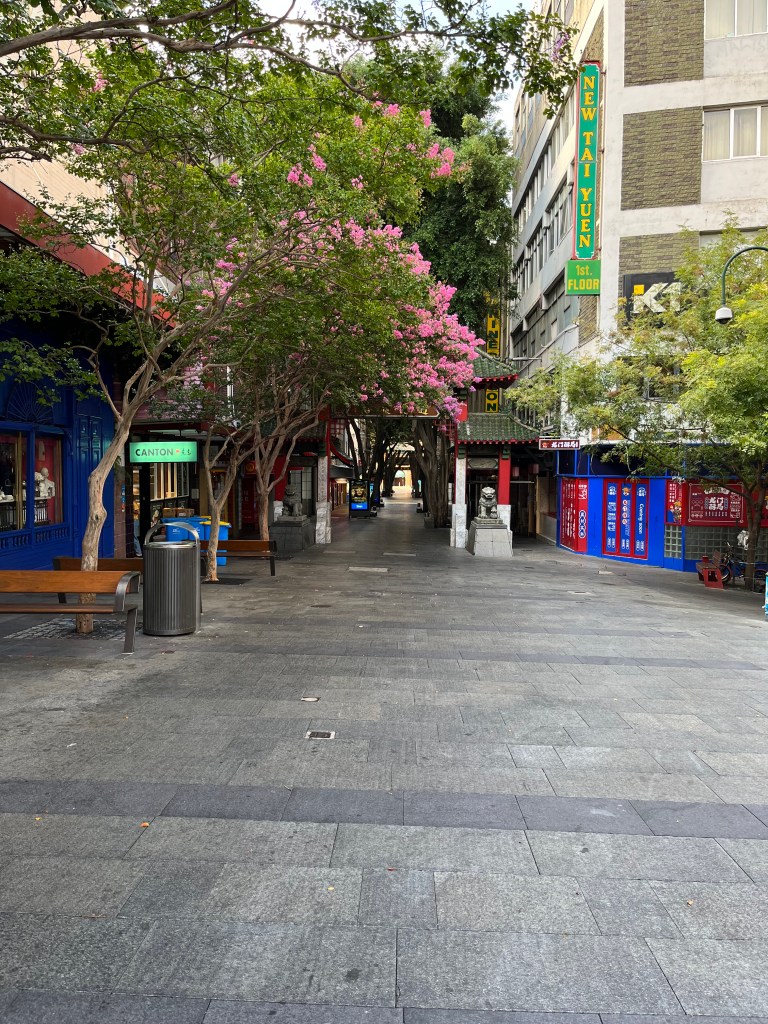
Sydney Town HallChinatown…where racism IS NOT WELCOME 🙂
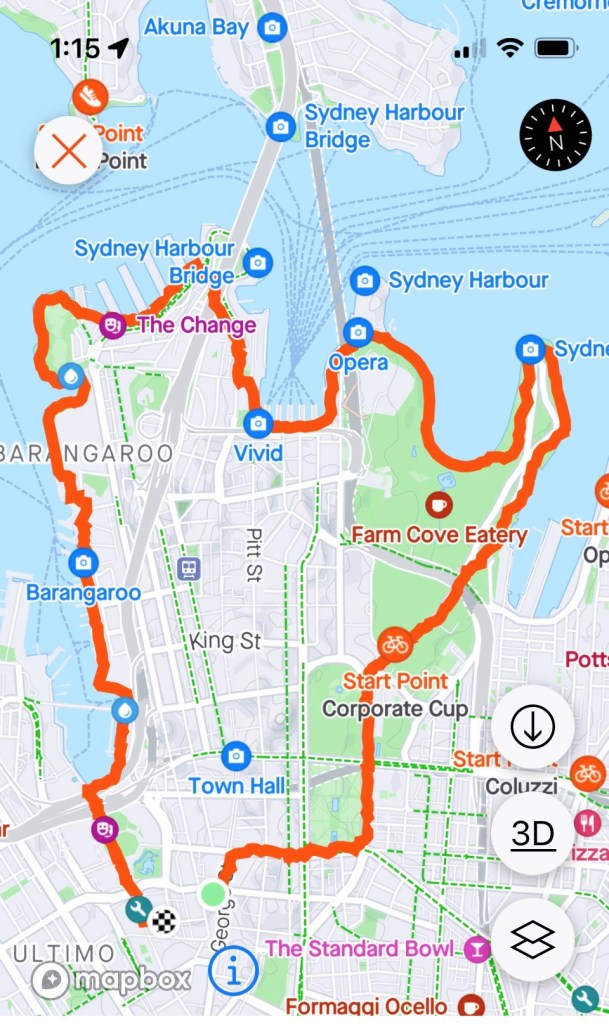
Sydney has a wide range of walking trails/tracks/areas for visitors to explore. I also love walking around the Opera House, the botanic gardens, the harbour, Woolloomooloo (yep, that’s a real place), the Domain, and there’s a great 10km circuit that takes in most of these places.
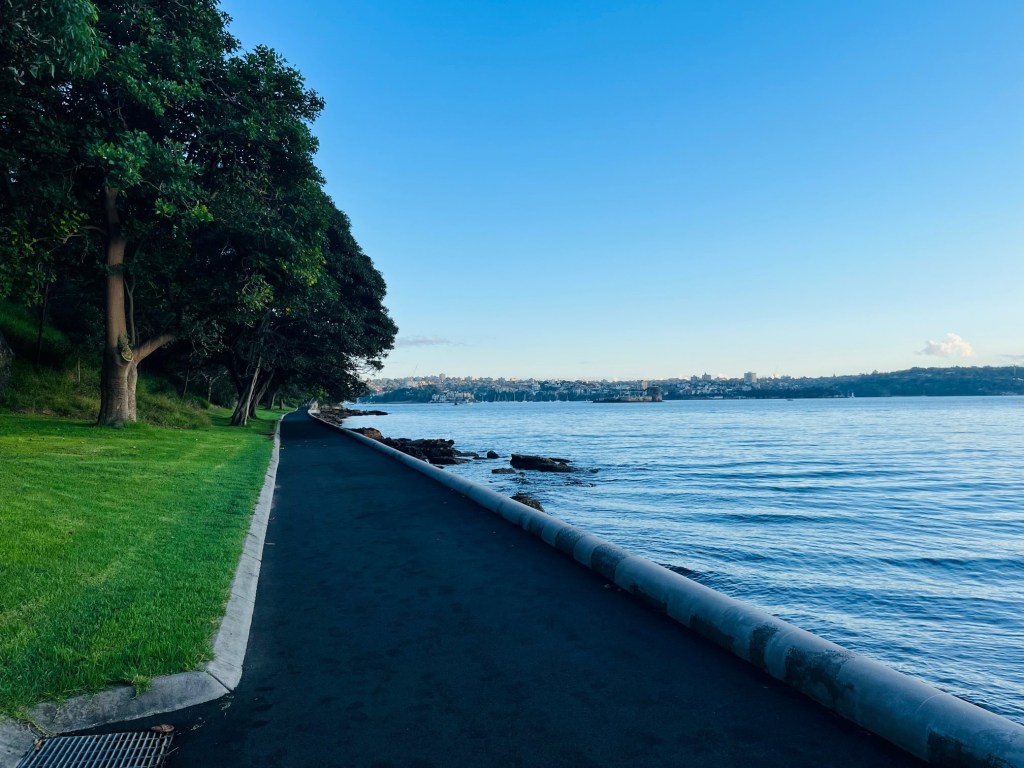
Bottom of DomainLonger 10km urban hike of Sydney CBDGreat shot!
Take the time to explore your city – or take advantage of travel and explore a new city. You’ll be surprised at what you find.





























 Like The Hike