
Hello and welcome to my LIKETHEHIKE blog.
I’m PJ and I write about the hikes I take, giving you insights, photos, commentary, tips and tools so you can enjoy hiking and embrace the experience.
I’ve just returned from an amazing hiking experience on the Kumano Kodo and what better way to help you plan your Kumano adventure than for me to share my experiences on ryokans 🙂
One big consideration when planning your Kumano kike is accommodation and deciding where to stay. Modern? Traditional? Backpacker? Five Star?
There are many options available to the discerning hiker (you’re welcome) and it’s both fun and frantic navigating the plethora of options.
These two blogs pull back the curtain on what you can expect from your overnights. I will cover off the good, the bad and the ugly as I rate the ryokans! Note – our accommodation was booked via our Kumano travel company, Raw Travel.
WHAT IS A RYOKAN?
First, lets talk specifics. There are a few names used when discussing accommodation in Japan. It’s important to know the difference before you start making your bookings or confirming with your travel company.
RYOKAN – traditional style inn, usually adjacent to a hot spring area or resort. Private room, sometimes with bathroom.
MINSHUKU – traditional bed and breakfast house, usually family operated. Private or shared rooms, shared bathroom.
MINPAKU – older houses converted into accommodation. Usually unattended. Basic facilities.
SHUKUBO – Buddhist temples converted to tourist accommodation. Private room, shared bathroom.
WESTERN HOTEL – as it sounds, larger chain hotels with western rooms and bathrooms.
CAPSULE HOTEL – also known as pod hotels, rows of compact, self contained capsules with shared bathroom.
ONSEN – the natural hot springs, bathing facilities and resort areas surrounding the hot springs.
For ease of reference (and my love of alliteration), I have titled these blogs Rating the Ryokans, but I did stay in a range of accommodation experiences beyond ryokans during my time on Kumano Kodo.
ICHIE CAFE & GUESTHOUSE – MINPAKU EXPERIENCE
Our first night on our Kumano hike was in Kii-Tanabe. We travelled down from Tokyo via Osaka which took most of the day, and were booked to stay at Kii-Tanabe, and leave early the next morning. Kii-Tanabe is the jump point for most hikers to start Kumano, which is located about 20 minutes away at Takijiri.
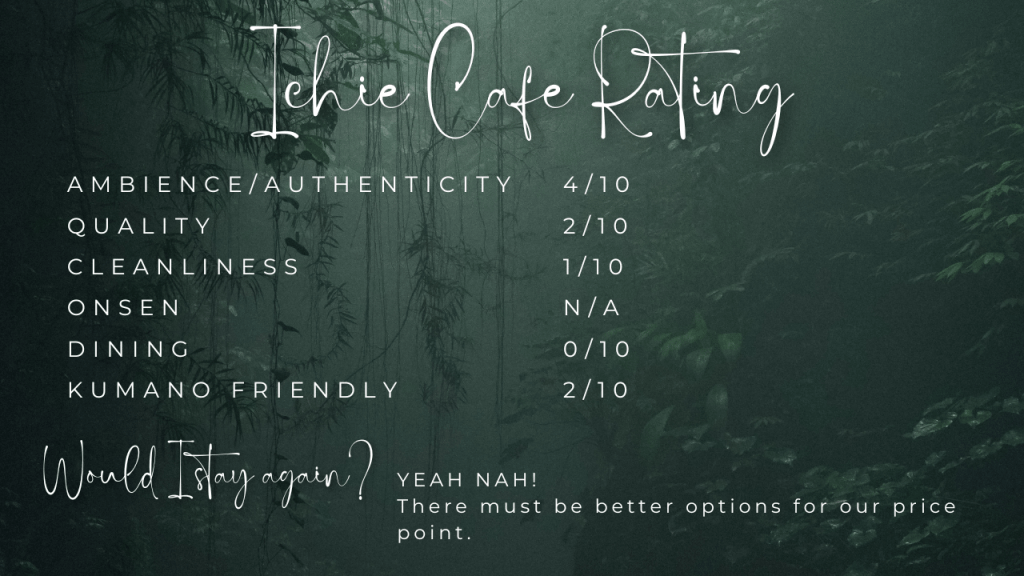
We were a little perplexed about our first night’s accommodation. Ichie Cafe is exactly that – a cafe which specialised in chiffon cake. It was expansively described as “authentic“. I would describe it as “bare bones backpacker“.

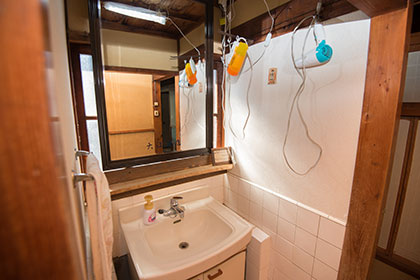
We stayed in one of two guest rooms adjacent to the cafe area, set up in traditional tatami style with futons on the floor. The walls were paper, and our host provided ear plugs, which gives you an indication of what to expect. And sure enough, we scored not only a snoring neighbour, but his partner who felt the need to use a hairdryer at 1.17am. For quite some time….
Access after 3pm was via a key lockbox as the host was not on site after hours. We shared a grubby shower area which was liberally festooned with very long black hairs, and a kitchenette. We didn’t use any of the facilities beyond the toilet and the sink for teeth brushing. The shower was just too much for me to tackle 😦
Breakfast was packaged chiffon cake in the fridge. Not ideal fuel for tackling a 14km steep hike. Chiffon cake is usually a delightful afternoon snack, but holds zero nutritional value for any exercise.
Our host was very pleasant and familiar with Kumano hikers so was used to the suitcase transfer arrangement.
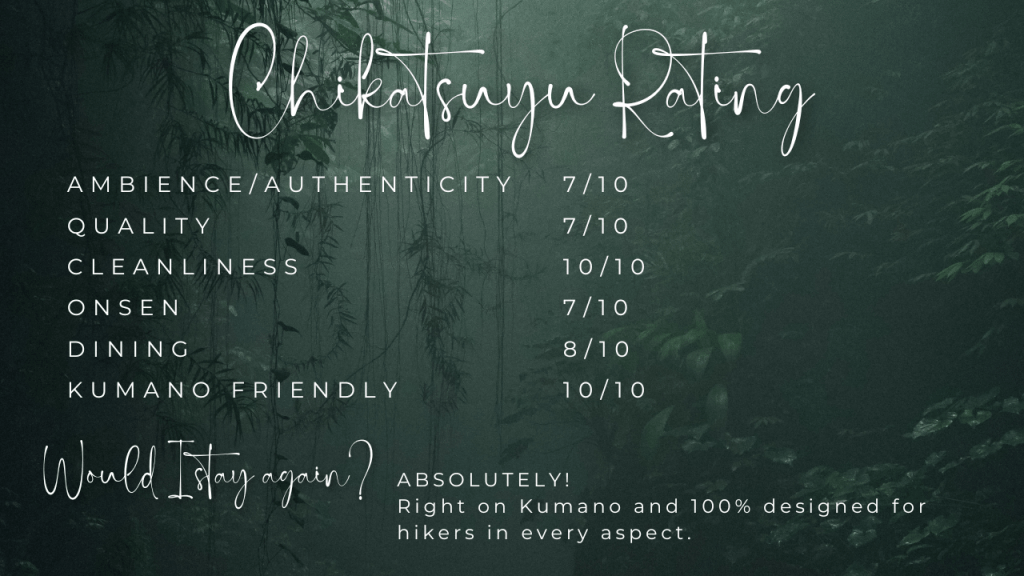
CHIKATSUYU – MINSHUKU EXPERIENCE
After our first night on the Kumano, were were very unsure about what to expect for our second lodgings. We had walked about 15km from Takijiri all the way to Chikatsuyu and arrived at the village on dusk – very tired.
WOW – what a fabulous experience! A family owned and run establishment with separate tatami and shared facilities which were immaculate. It also had a hot spring onsen which was divine after our hiking day.
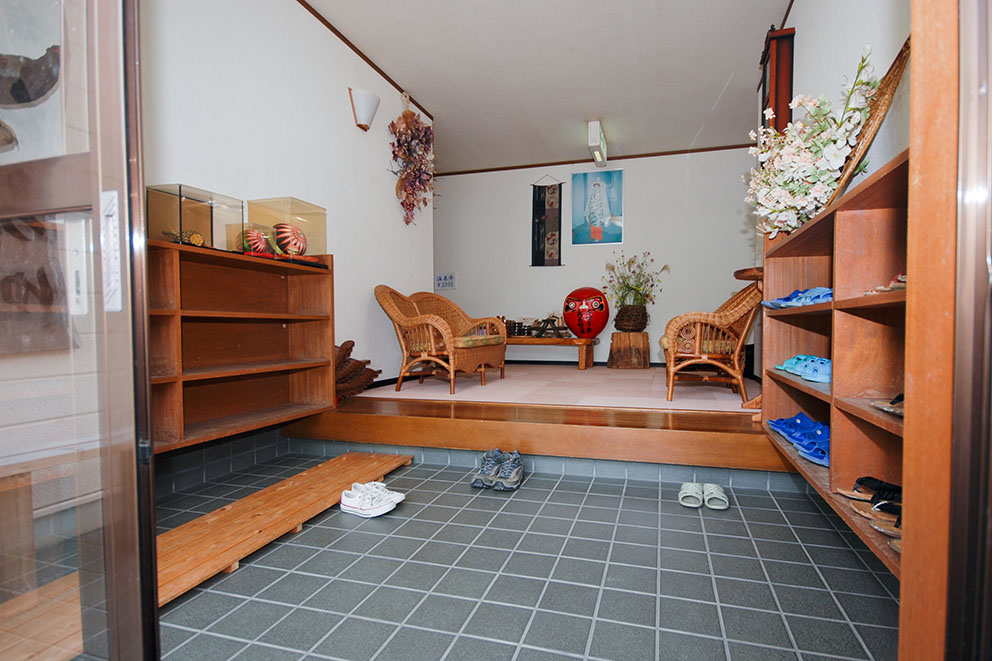
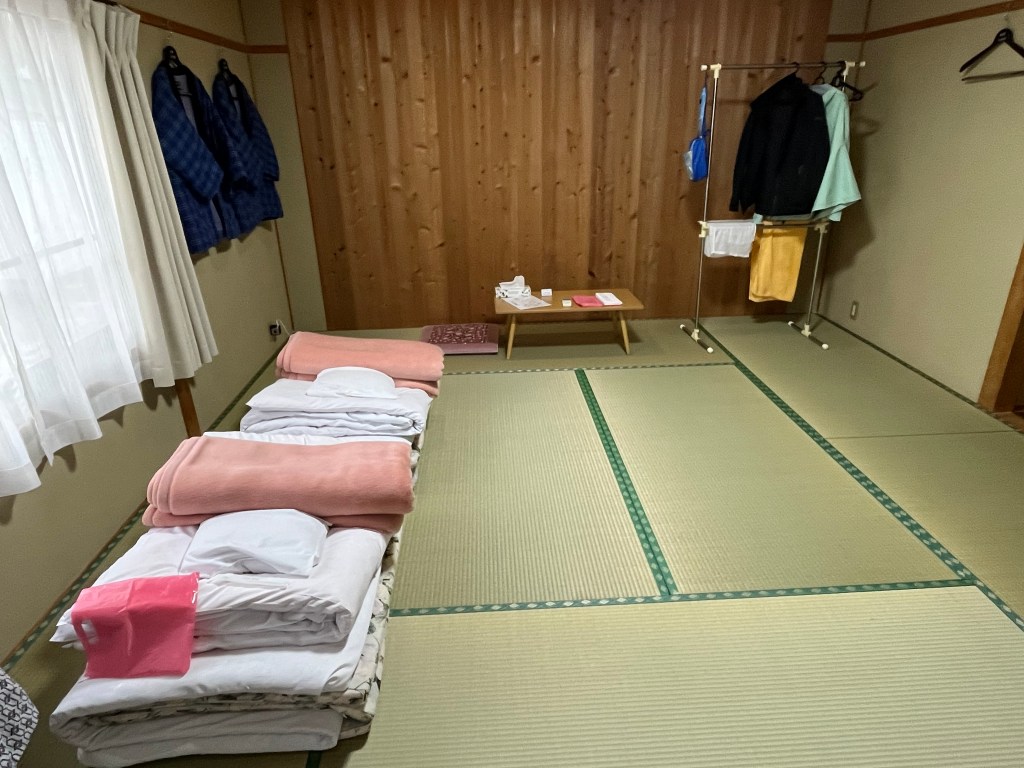
The room we had was large with crisp, clean bedding (see above) and lovely yukata to wear after onsen. Our suitcases arrived before us and were in the room, thoughtfully placed on a plastic sheet so as not to damage the tatami mats. We then used that same mat to dump and sort our dirty gear.
Dinner (kaiseki ryori) was a lovely shared dining experience and we had the ability to purchase very modestly priced drinks. Our room was equipped with fluffy doonas, additional blankets and had heating as well as windows you could open for fresh air. The building itself appeared quite new and everything was in tip top condition and exceptionally clean.
Not only did we have a wonderful dinner, but then did it all again at breakfast before we left – along with our lunch bento box.
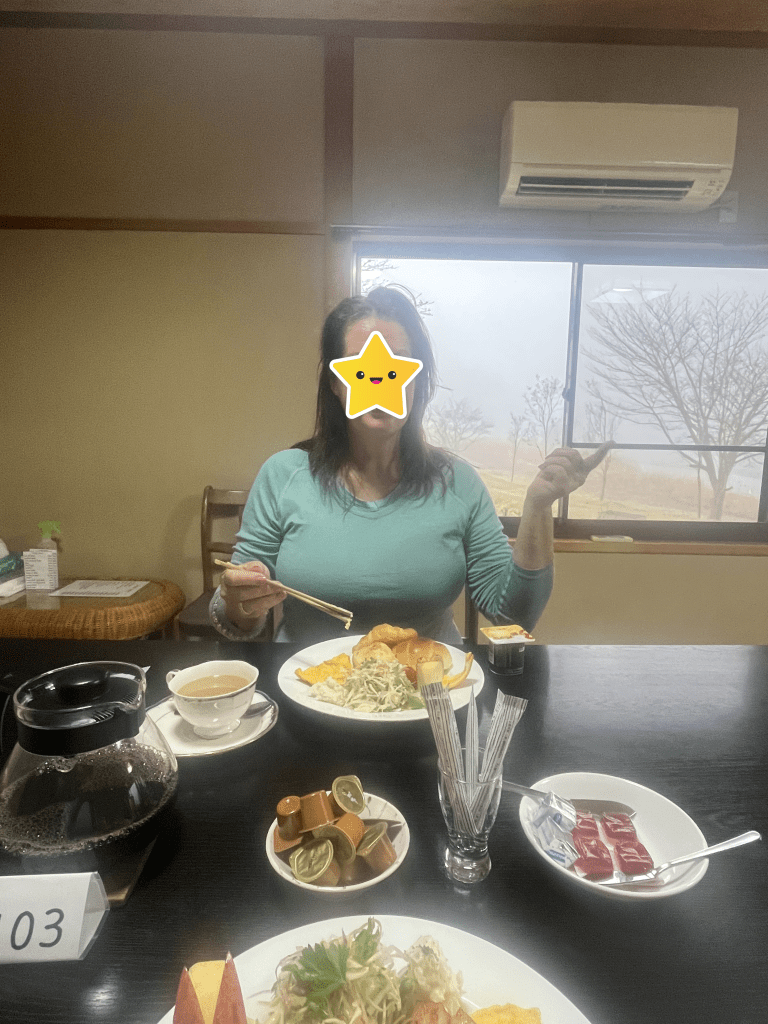
Our hosts could not do enough for us. They were responsive, extremely welcoming and very proud of their lodgings – as they should be. Everything was sparkling clean, the bathroom facilities were spotless and I was very happy to enjoy their riverside onsen!
KAWAYU MIDORIYA – RYOKAN EXPERIENCE
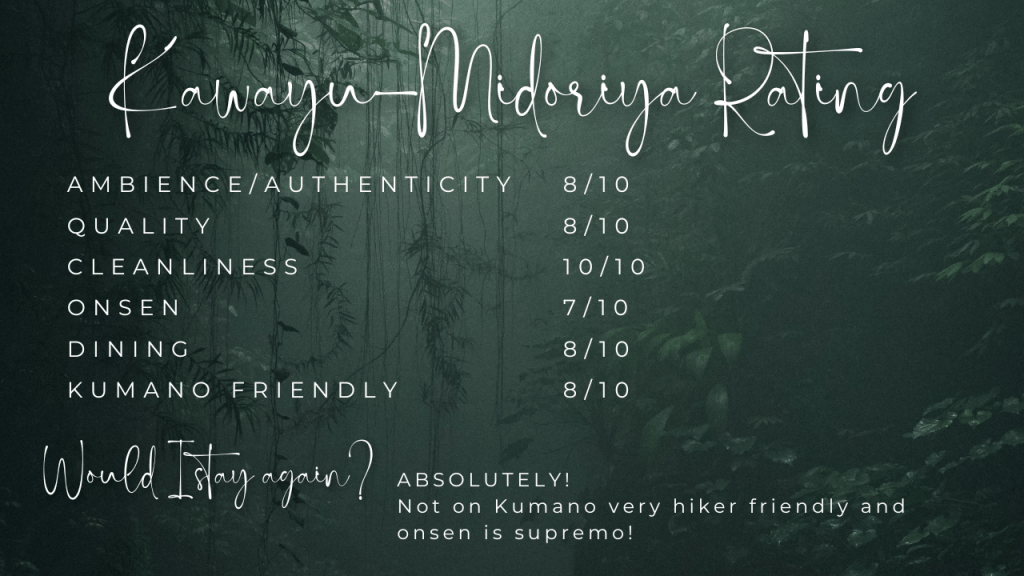
This was our first exposure to a ryokan – albeit a rather large one! Kawayu Modoriya is located about 4km outside of Hongu, in a cluster of onsen villages scattered in the mountains.
It has a fantastic indoor and outdoor onsen located on the River Oto, which is one of the reasons it’s a very popular destination with tourists and locals. The building itself is seven stories and very much a traditional hotel, but the experience within is driven by the Japanese practice of omotenashi, which I can best describe as mindful, authentic hospitality. Omotenashi extended from the front desk staff, to the restaurant staff, to the lovely room attendant refreshing the ikebana arrangements on our floor.
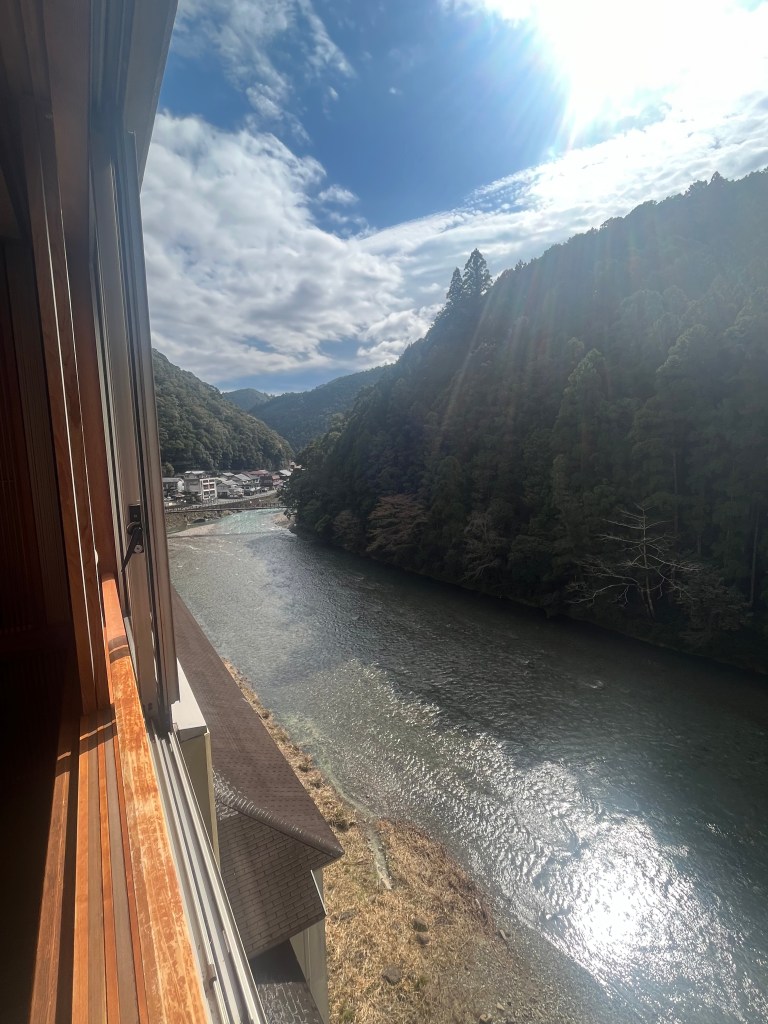
Our room was a tatami style on level six overlooking the river and outdoor onsen. This was the first time we had a full amenities bathroom – so pretty exciting. Everything was immaculately clean and staff laid out your bedding when you were at dinner, no need to wrestle the futons onto the floor.


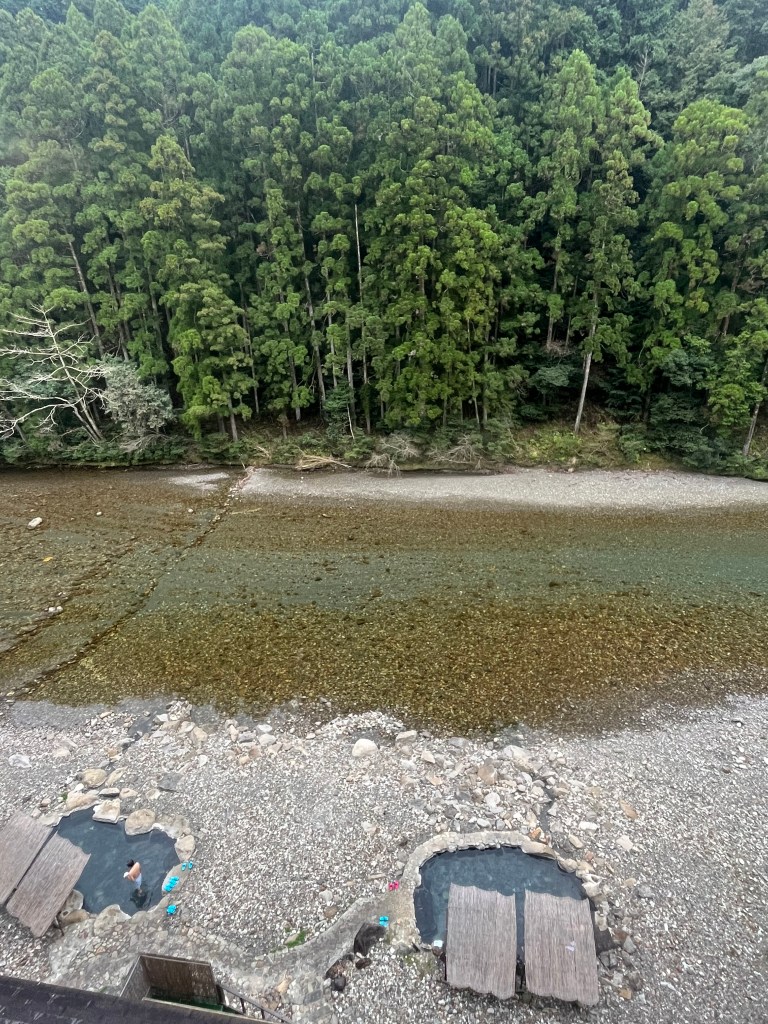
The onsen was outstanding. Not only did we have full indoor facilities, but there were two mixed outdoor pools (see above). No nudity outside though (whew), we had yukata that we could wear in the pool – all very decent.
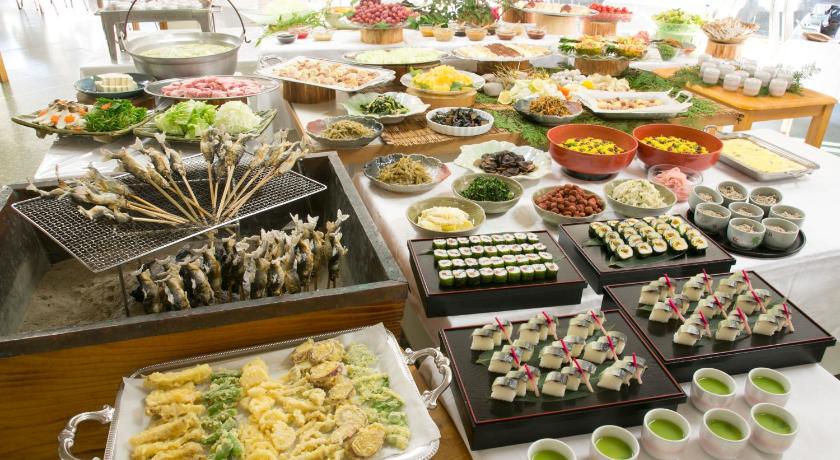
Dinner at Kawayu Midoriya was an experience all of its own. It was a combination of shabushabu at the table, and then a sumptuous buffet to choose from. We cooked up a storm and then proceeded to try everything on offer. We were stylishly dressed in our lovely hotel yukata, slippers and jacket – very fancy!


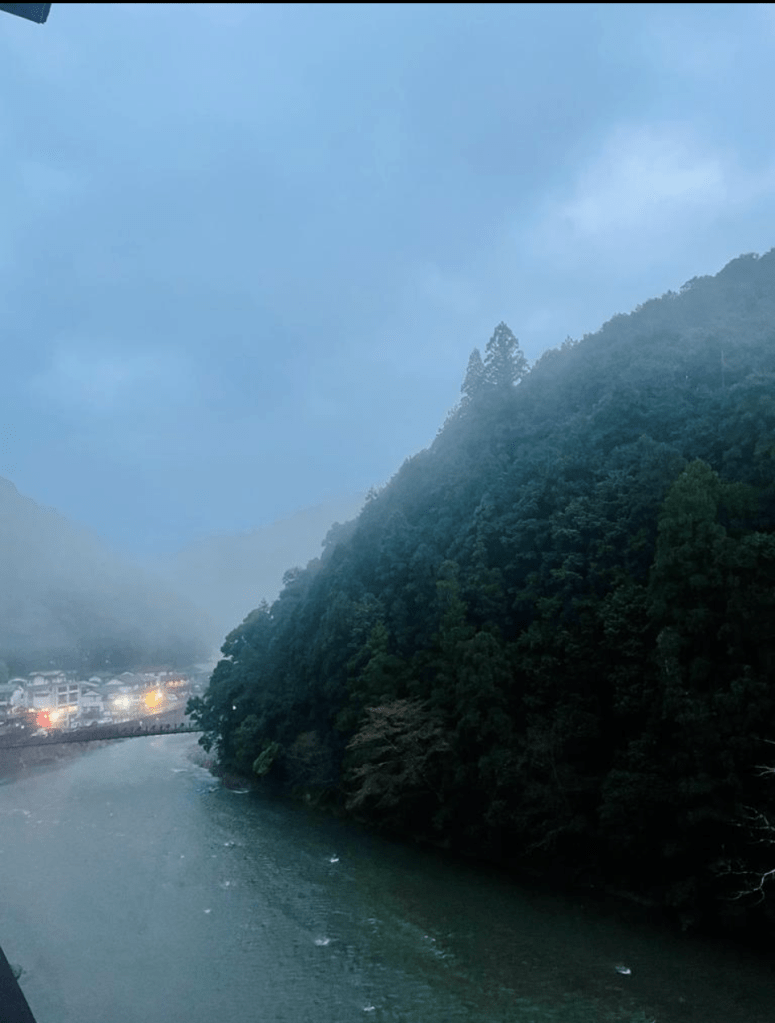
The location of this hotel is simply stunning. It sits next to the River Oto and our room not only was riverside, but facing a beautiful forest. We stayed here twice on non-consecutive nights as we were hiking different sections of Kumano, and watching the river gently bubble past with rain mist hovering and the twinkling village lights in the distance was very special.
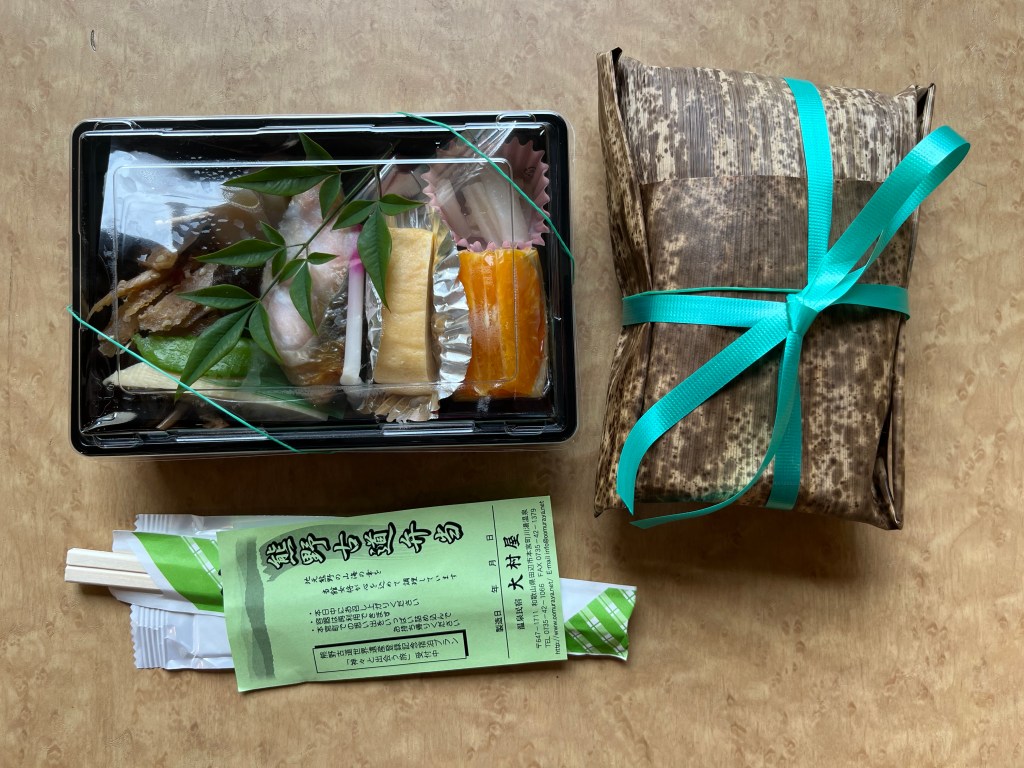
Our farewell gift from Kawayu Midoriya was a bento box for our hiking lunch – packed full of goodies. A fitting goodbye from a fabulous place to stay.
MANSEIRO – RYOKAN EXPERIENCE
Our next stop was the seaside town of Kii-Katsuura, about 30 minutes south of Shingu. We had travelled down the Kumano River by traditional boat and spent some time at the Shingu Kumano Shrine, and our overnight stay was at the lovely Manseiro.
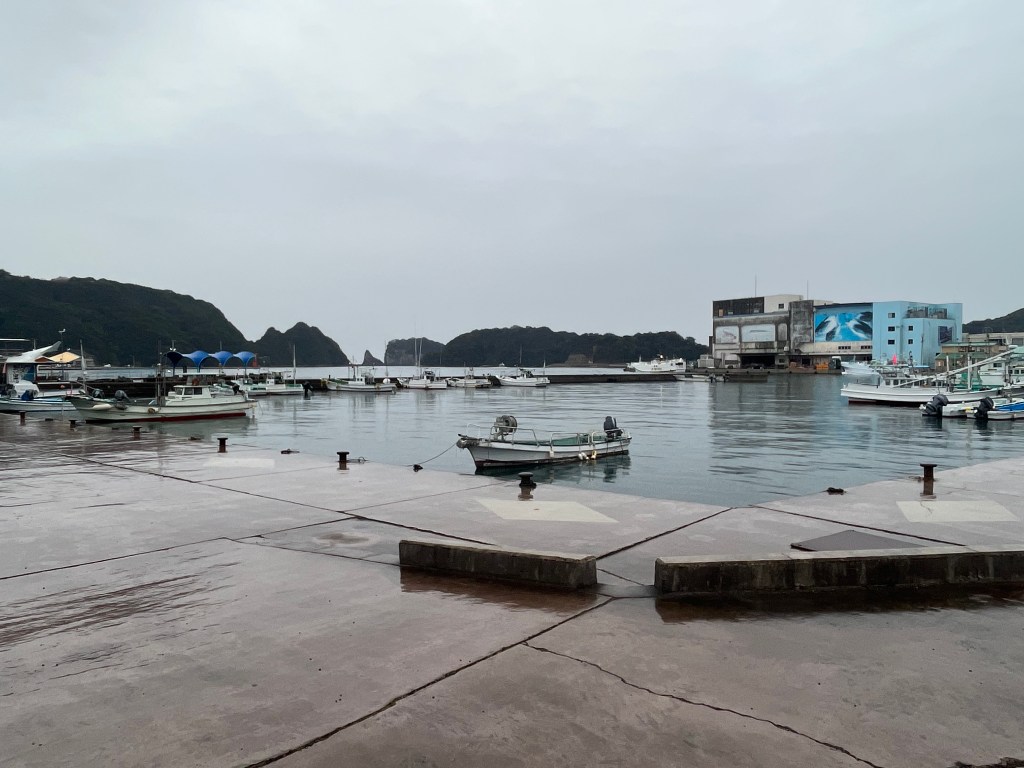
Manseiro is a small boutique hotel on the Kii-Katsuura waterfront, facing the fishing harbour. Kii-Katsuura is a working town, so expect a very authentic fishing vibe. If you’re vegan or don’t enjoy fish – give this overnight a miss…if not, then read on!
Fun fact, the tuna market in town boasts the largest haul of fresh tuna in Japan and holds daily tuna auctions, much like the Tokyo fish market, but to scale. TB is a sashimi fan so we had a LOT of fun in the market food hall.

Back to Manseiro. A small hotel, perhaps 20 rooms, but very tidy and well presented. Less multilingual staff than we had encountered so far, one front desk staff member spoke English and he was very excited to talk to us. We were the only ‘western’ tourists there – so we felt quite special. Google Translate got a good workout.
Our room was actually two rooms and a bathroom, tatami style. Very spacious. We used one room for our bags and gear, and the other for sleeping. Immaculately clean and well presented – which we realised was the norm, and Ichie Cafe was the exception. We weren’t harbourside, but overlooked the back street which was quite entertaining. It was a very traditional town so our view was very old Japanese architecture – fine by me.

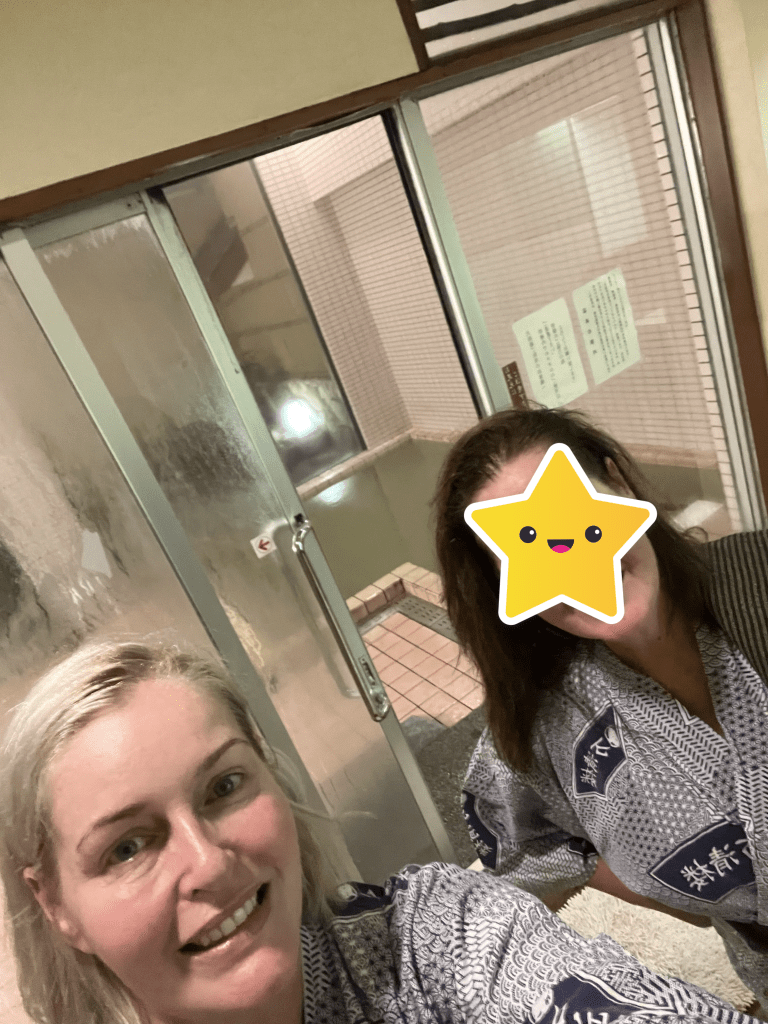
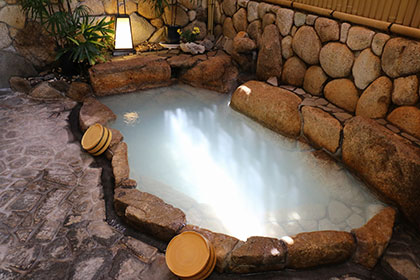
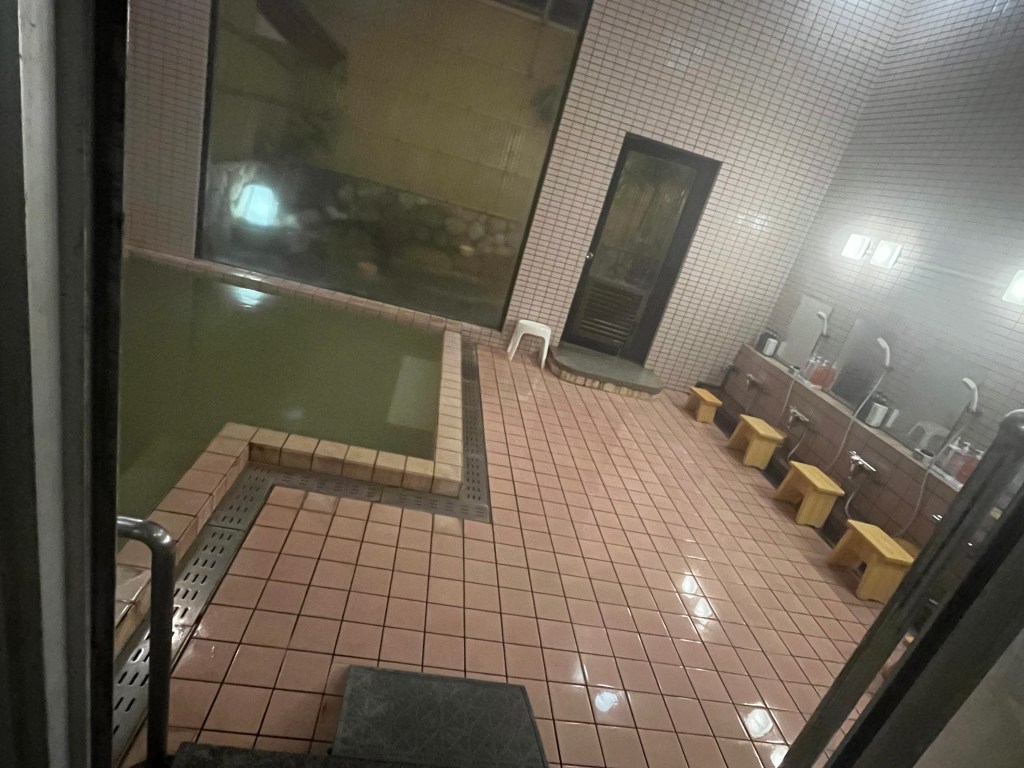
Our next treat was the onsen, with both indoor and outdoor facilities – and we had it to ourselves so I could take some photos! It’s very bad form to take photos in the onsen when other people are present, understandable as I wouldn’t want to be in someone’s background in all my birthday glory…

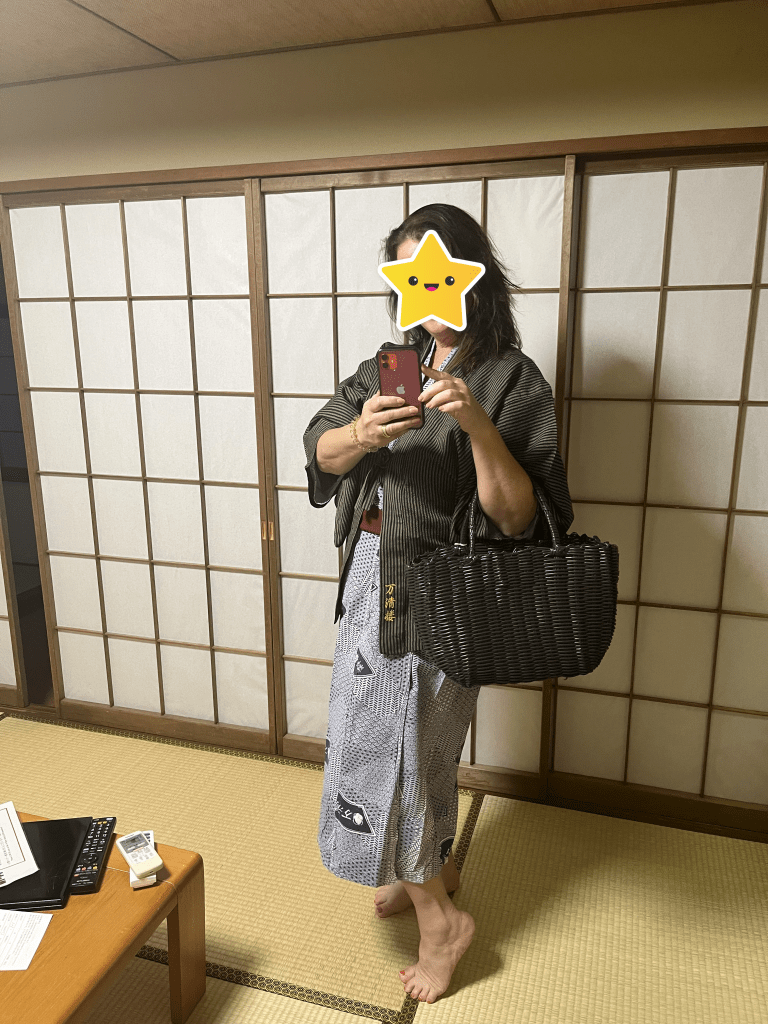
After our onsen it was time for dinner. OH MY. I thought we had experienced some great kaiseki ryori and omotenashi – we were in for an 11 course delight at Manseiro. We were ushered to our sectioned off table – the dining area is made up of little private dining spaces where guests can enjoy the company and the food.
It was a seafood extravaganza, delectable finery served by highly professional staff. TB and I dined on (in no particular order) salmon, scallop, tofu, rice, white fish, octopus, mushrooms, beef, tuna and….wait for it……white abalone! (or for those from Aotearoa, paua). It was tabled raw and we simmered it in our shabushabu with butter for about 10 minutes, and finished it with a squeeze of lemon.

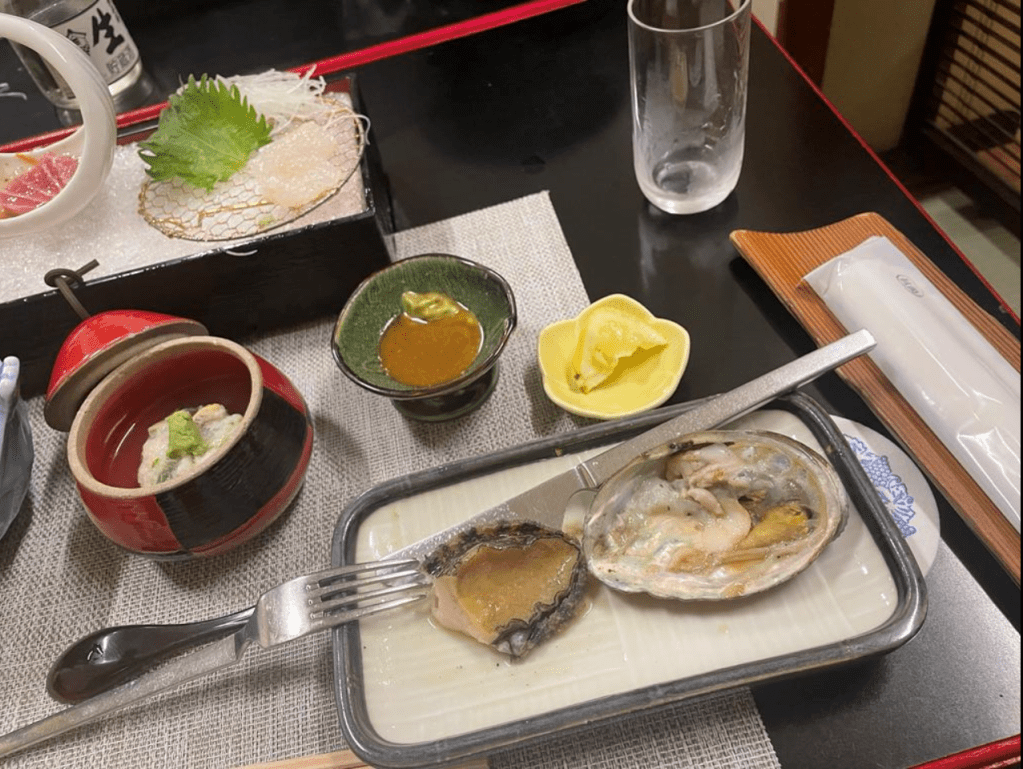
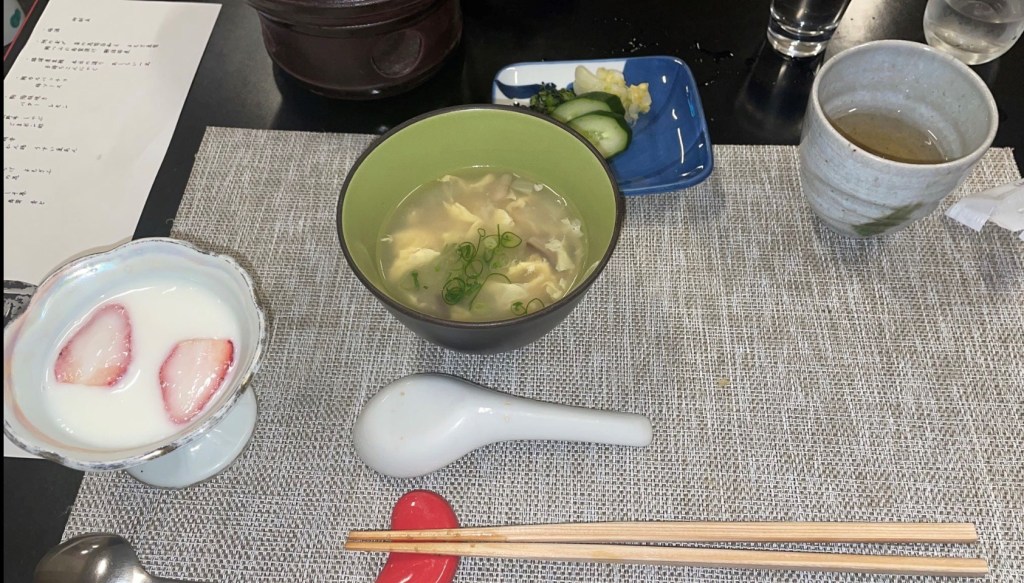

We had the loveliest server who was our immediate adopted nana. She sorted us out, checked our abalone cooking skills were up to scratch, said yes and now, and gave us big smiles when we got it right. All without a shared language except a love of food. I felt appreciated as a guest, and I deeply appreciated the omotenashi extended to me.
I don’t recall eating the dessert, by then I think I had fallen into a happy food coma. This was a dining experience I won’t forget in a hurry.
TB and I departed Manseiro with a deep respect for a fishing town full of quality, culture, experiences and tuna 🙂
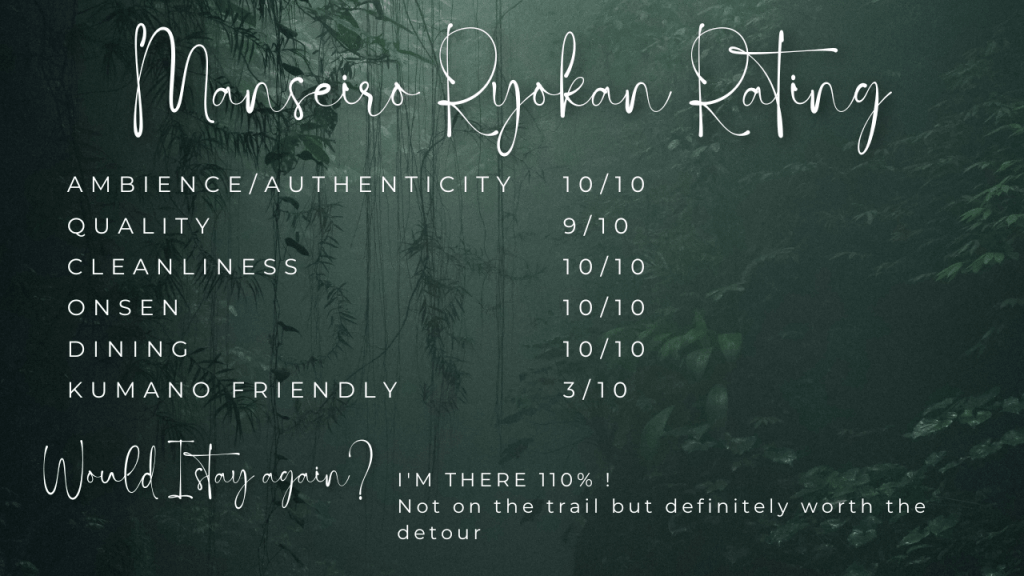
SUMMARY (for now)
Given that I have sooooooo much to share with you about the places TB and I stayed on our Kumano Kodo trip, I’ve split this blog into part one and part two. Next time I’ll tell you all about a very odd ryokan/training camp setup, a western style hotel in the middle of nowhere and to round out our magical experience, our stay in a Koyasan shukubo!!!!
See you out on the trails.
PB.

 Like The Hike