Three Bags, One Mission – Light, Light, LIGHT!

Packing for Shikoku has become a challenge within the adventure. Before we’ve climbed a mountain, followed a trail or found our first onsen, I have three things to conquer:

  • the backpack
  • The carry on case
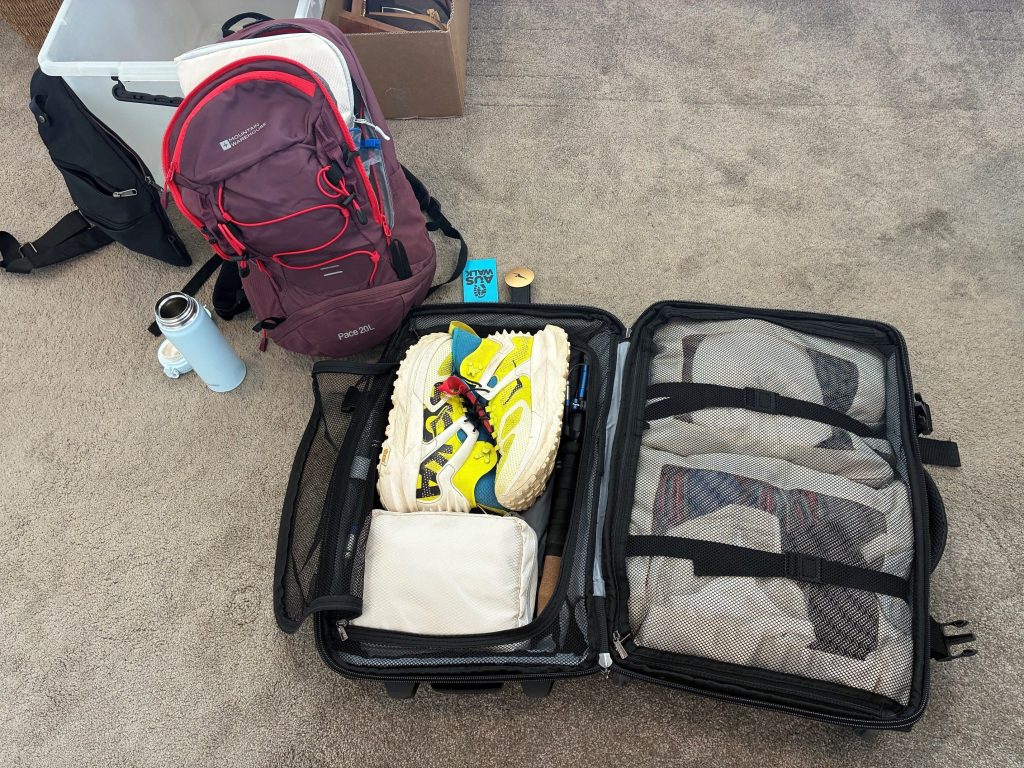
  • the cross body bag (and my shoe for perspective as these are SMALL!)
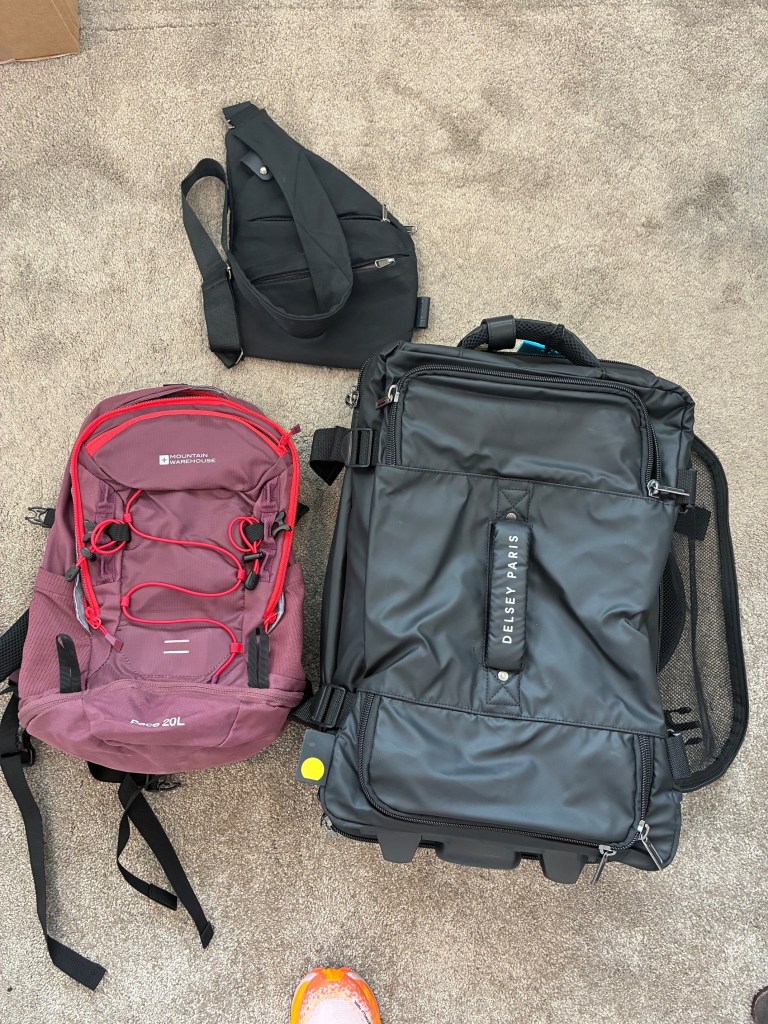
Each has a job. Each has limited space. And none of them needs to contain enough supplies to support a small expedition.

This is where experience has really changed the way I pack. After our Kumano Kodo trip, I know how many “just in case” items can travel thousands of miles without ever seeing daylight.

This time, everyhthing has to earn its place. I’m going light, light, LIGHT!

Challenge One – The Backpack

My 20L backpack is for the things I need while hiking. Keeping it small is quite deliberate, give me more space and I’ll find something to fill it.

And every unnecessary thing I put in it becomes something I have to carry uphill. Personally. With my legs. Here’s what’s coming on the trail.

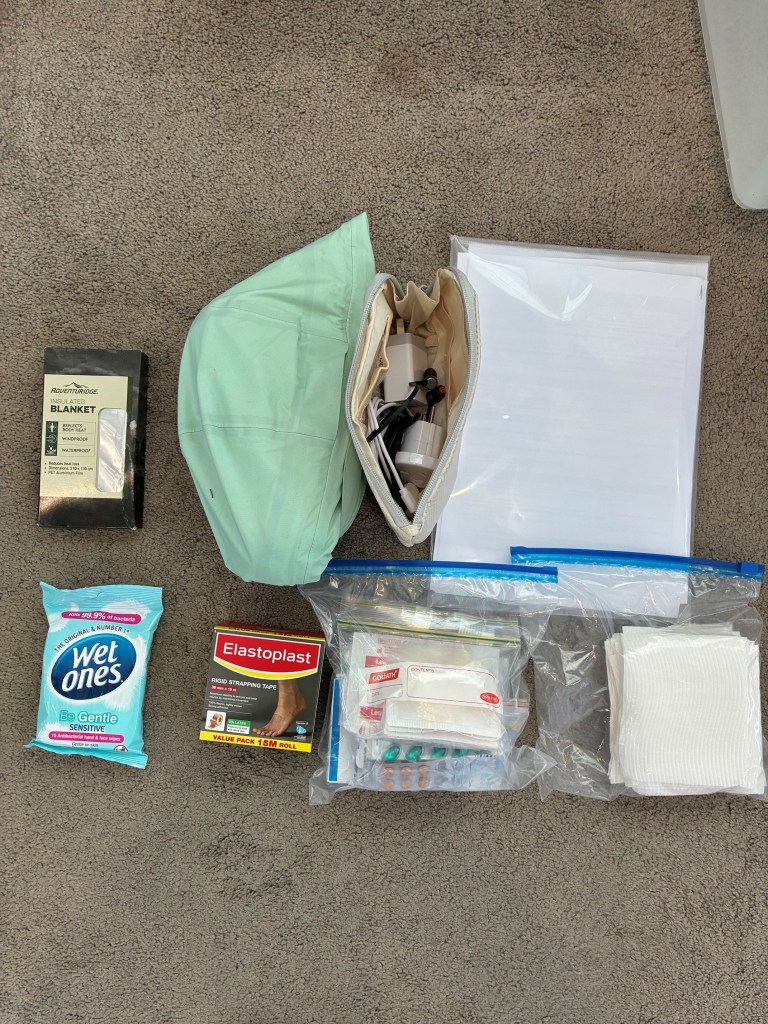
Gloves and Ear Warmers – Small, light and worth having for chilly mountain mornings. I’d much rather tuck these into a pocket than spend the first hour trying to convince my fingers to function, and I HATE having cold ears.

Raincoat – Hopefully it spends most of the trip neatly folded inside my pack. But our last hiking trip taught me to respect changing weather, so its coming regardless of the forecast.

Emergency Blanket – Otherwise known as my “Crunchie Wrapper”. Tiny, light and hopefully never needed, but always in my backpack. ALWAYS. There’s packing light, and then there’s leaving behind something you might really need. This little pack stays.

Medical Kit and Hikers Wool – If you know about hiker’s wool, you know. it helps me deal with those little hotspots before they become something more annoying and takes up next to no room. It’s sometimes as simple as walking a little differently than the day before and creating a wee hotspot. All part of the journey. The medical kit is similarly modest. Pain relief, anti-inflammatories, antihistamines, band-aids, strapping tape, and blister supplies. I’ve never had a hiking blister, but I’m not about to announce that to the universe without having a backup plan!

Paper Maps – yes, we have phones, apps and GPS. But batteries go flat, phones get dropped, and e-sims occasionally choose the worst possible moment to have a meltdown. A paper map doesn’t need charging. Call me old fashioned but I like that.

Trusty Thermos – I’m taking the insulated bottle I bought on my last trip to Japan. It only holds 500ml, but its beautifully made and keeps liquid cold (or hot) for hours. I love drinking coconut water on a long hike so its a no brainer.

Room for Snacks – There needs to be room in the backpack for Japanese 7-Eleven snacks, which are next-level IMPRESSIVE. Bento boxes, onigiri, little sandwiches, sweet treats….choosing provisions could take longer than packing the bag. These aren’t emergency rations. They’re a highlight of the day, with a bit of walking inbetween snack stops.

I’m leaving space deliberately. Going light is sensible. Leaving no room for snacks would be madness.
Challenge Two – The Carry On

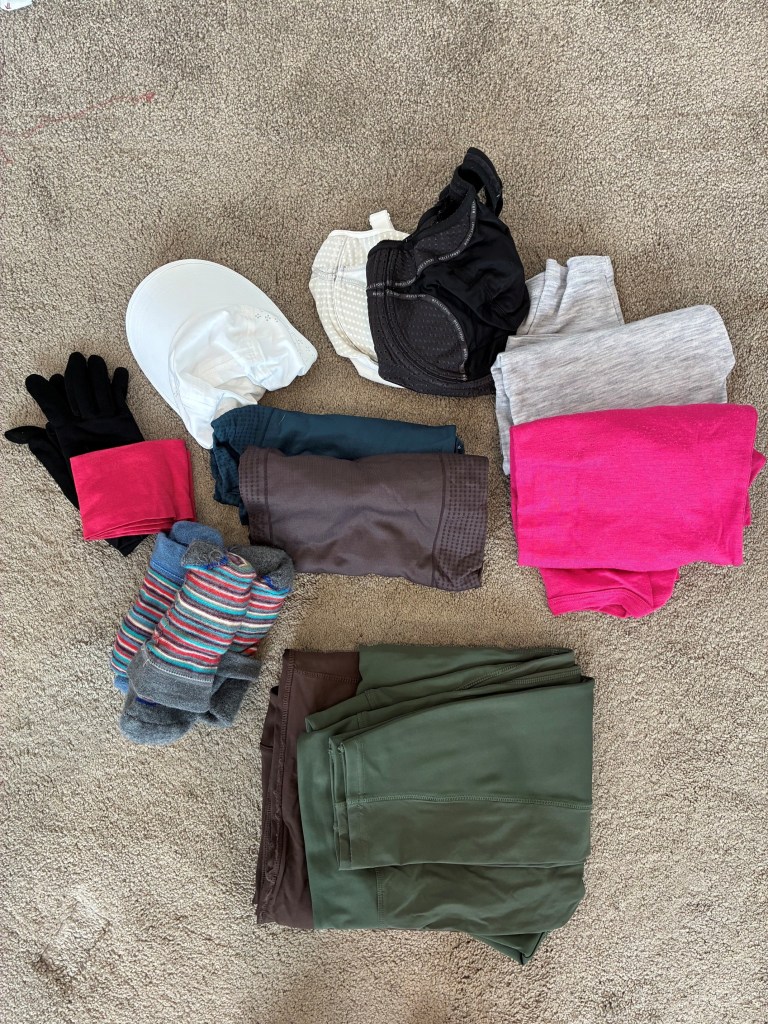
This is where the rest of my little travelling wardrobe lives. Looking at everything laid out on the floor, it seems quite reasonable. Looking at the case, it becomes a spatial reasoning exercise. The clothing selection is deliberately small. Hiking trousers, tops that can be layered, underwear, bras, hiking socks and a cap. Pieces I can wear repeatedly, mix together and wash along the way if needed.

There is no separate outfit for every possible mood, temperature of photo opportunity. The forests of Shikoku will have to cope with seeing me in the same trousers day after day.

The carry-on also holds my toiletries (trimmed down), chargers and adaptor, with footwear taking up a rather noticeable share of available space. Shoes have absolutely no respect for a minimalist packing philosophy. The aim is to take what I’ll use, in sensible quantities. Toiletries for the trip and no more, rather than a portable bathroom. The charging gear I need, rather than a bag of cables and charger packs that I haven’t used…well…ever.

And fewer clothes means fewer decisions every morning. When the choice is between two tops, I can get on with more important decisions, what bento box to buy???!
Challenge Three – The Cross Body Bag

This is my little travel bag of things I want close at hand when I’m in transit. Passport, phone, money, cards, travel details, lip salve and reading glasses. The essentials I don’t want to excavate from a backpack or a suitcase every time someone asks for something.

It’s also useful for heading out for dinner or a wander when I don’t want a whole hiking pack.

And yes, the reading glasses are absolutely coming. No discussion. At some point, I’ll need to read a menu, a map or check a booking to work out where we are off to. Despite my ongoing attempts to convince myself otherwise, I can’t read shit without them.

There’s no point in travelling light if I accidentally order dinner for four when all I’m trying to do is feed one hungry hiker, with absolutely no idea what she’s just ordered! The challenge with this bag is keeping it small. It’s remarkably easy for “just the essentials” to turn into receipts, tissues, loose coins and an assortment of objects that apparently moved in while I wasn’t looking.

This time, I’m keeping an eye on the tenants. And my rental space is pretty tight.
What’s Staying at Home

Probably about half the things I packed for the Kumano Kodo. The extra clothes I never wore. The backup gadgets. The things that came along because I could imagine one wildly specific situation in which they might be useful.

I’ve learnt that “it might come in handy” is a dangerous sentence when you’re packing for a hiking trip. Every unnecessary kilogram asks a little more of you – on the climb, on the stairs, through a station, or at the end of a long day when all you want is a shower and something delicious to eat (drink). I’d rather save that energy for the actual adventure.

So when I pick something up and think, “Maybe I’ll need this”, my next question is: “Enough to carry it all the way there?”

That tends to clarify things.

Why I’m going light, light, LIGHT!

I want to move comfortably, find things easily and spend less time managing my belongings. I want my backpack to feel manageable when the trail gets steep. I want my case to close without me sitting on it and negotiating with the zip. And I want to find my passport without tipping the contents of a bag onto an airport floor.

There are still a few non-negotiables. Safety essentials stay. Comfortable feet matter. And my sentimental water bottle gets a small exemption from the ruthless weight review. But everything else needs a good reason to come.

The point of this trip is to enjoy the forests, villages, temples, and mountains of Shikoku with TAB, leaving enough energy for an onsen and some very important 7-Eleven snack research afterwards. Three bags. A much smaller pile of belongings.

And hopefully, two very grateful feet.

See you out on the trails! (Shikoku style)
Shikoku Series – The Best of Both Worlds, Why We Use Hiking Companies for Self-Guided Hikes

There is a particular kind of freedom that comes with walking from one place to another under your own steam. You carry what you need for the day, follow the trail, stop when something catches your eye and eventually arrive somewhere completely new. Nobody is hurrying you along. Nobody is telling you when to take a break. And if you decide that a scenic lookout, a tiny cafe or a slightly questionable detour deserves your attention, you can change the plan.

This is exactly what I love about self -guided hiking.

But – and it’s quite a big but – multi-day hiking also comes with a sizeable pile of logistics. There are routes to research, accommodation to book, luggage to move, transfers to organise, maps to understand, food to source and contingency plans to consider. Add another country, another language and a trail that wanders through small villages and remote areas, and suddenly the planning can become a bigger expedition than the hike itself.

This is where a hiking company earns its keep.

Supported, But Still Self-Guided

For our Kumano Kodo hike in 2023, we booked through the Australian company RAW Travel. For our upcoming Shikoku adventure, we are using Auswalk.

Both trips give us what I think is the sweet spot of multi-day hiking – the structure and support of an organised trip, with the freedom and independence of walking it ourselves.

We are not joining a tour group or following a guide carrying a little flag. We make our own way each day. We decide when to start, how quickly (or slowly) to walk, where to stop and how long to stay there. We can talk all day, walk in silence, take too many photos, investigate a side trail or stop for snacks and breaks whenever the mood strikes. In other words, we get to create our own fun.

At the same time, somebody with local knowledge has already done the heavy lifting behind the scenes. The itinerary is mapped out, the accommodation is booked, the luggage transfers are arranged, and on-the-ground support is available if something goes wrong.

That combination is a winner.

The Joy of Luggage-Free Hiking

One of the biggest benefits is walking without hauling your entire holiday on your back. Our main luggage is transferred between accommodations, so we only carry what we need for the day (and occasionally an overnight). Water, lunch, essential gear, some safety essentials and whatever else has survived my ongoing campaign to reduce backpack weight!

You are still a hiker. Your legs certainly know they have been hiking. But you are not carrying clothes, a tent, cooking equipment, toiletries and every other possession over every hill and through every forest. For us, luggage-free hiking makes the trip more enjoyable and more sustainable over consecutive days. It means less strain on the body, more energy to appreciate where we are and a considerably better chance that TAB and I will still be on speaking terms at the end of the hike!

The Boring Bits are Already Done

I enjoy planning a hiking holiday. I love researching destinations, looking at maps and imagining what each day will bring. What I enjoy less is trying to piece together multiple overnight options, luggage issues, connections and backup options in places I don’t know. A hiking company takes care of those moving parts. They design daily stages that are broadly achievable, select accommodation that works with you and the route and provide the practical info to get from A to B.

That local knowledge is particularly valuable on trails such as the Kumano Kodo and the Shikoku routes, where walking days can involve rural areas, limited public transport, and accommodation off the beaten track.

It removes a great deal of uncertainty without removing the adventure.

Support off the Beaten Track

Self-guided doesn’t have to mean completely on your own. Knowing there is someone to contact if we are lost, miss a connection, encounter a trail issue or need to change plans provides a reassuring safety net. Hopefully, we won’t need it. But on a long walk in another country, it’s comforting to know that support exists beyond a frantic internet search and Google Translate at 10pm on a Monday night.

This was part of what made our Kumano Kodo experience with RAW Travel feel so manageable. We had the independence we wanted, but we were not starting each day without a plan or backup. We anticipate the same balance with Auswalk for Shikoku.

Are There Drawbacks?

Of course. The biggest is cost.

Booking through a hiking company will usually be more expensive than arranging everything yourself. We are paying for their expertise, route planning, booking administration, luggage transfers, trip information, and on-ground support. If you enjoy detailed planning, speak the local language, and have plenty of time to research and confirm every stage, then you can absolutely organise your hiking trip yourself.

There is also slightly less flexibility before and during the trip. Accommodation is booked in advance, luggage needs to be ready at certain times, and you generally need to finish each day at the booked location. You can’t just wake up and decide to stay another night or completely change direction.

And while luggage transfers are the gift of the gods, they do require a little discipline. One piece and 20kg max means that. One piece and no more than 20kg. You also need to prepare physically, understand the next day’s route, carry the right gear, monitor the weather and make sensible decisions. Supported isn’t the same as chauffeured.

Why it Works For Us

TAB and I both work fulltime. We have limited annual leave and a range of family commitments (husbands, children, fur babies, etc). We have a strong preference for spending our holiday hiking rather than untangling logistics. Using a hiking company gives us confidence before we leave and support while we are away. It means the major pieces are in place, but the experience still belongs to us.

We will still walk every kilometre ourselves. We will still need to read the maps, navigate local transport, manage the hills, cope with the weather and find our way. We will still make the decisions, create the laughs and collect the stories.

We just won’t be dragging a suitcase up a mountain or trying to book tonight’s lodgings online from the side of the trail. For us, supported hiking is the best of both worlds. The freedom to have our own adventure, with just enough organisation in the background to allow us to enjoy it.

And honestly, if someone else is willing to make sure my clean clothes arrive before I do, I’m very happy to call that money well spent.

See you out on the trails

PJ 🙂

Our Next Adventure Begins!

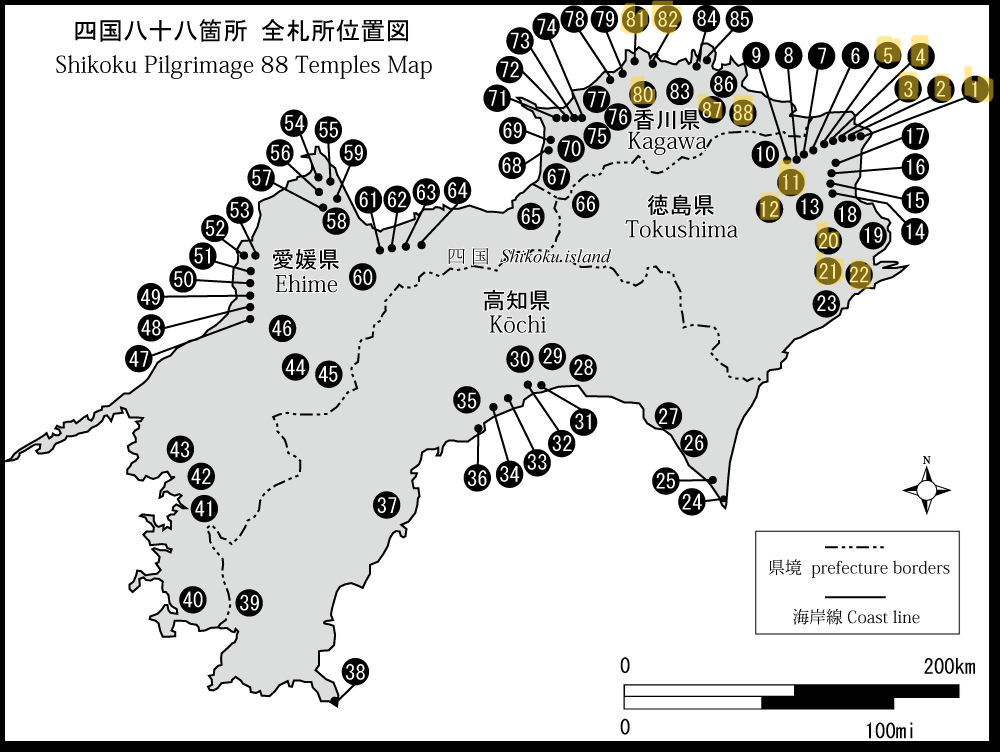
Well, we’ve done it. My sister TB and I have officially booked our next hiking adventure. In October 2026, we’ll be heading to Japan to walk sections of the famous Shikoku Pilgrimage, an incredible trail that winds its way around Shikoku Island, connecting 88 temples through mountains, forests, coastal villages and bustling towns. It’s a journey steeped in history, culture and spirituality, and one that’s been on our radar for some time.

We’re hiking the yellow coloured sections!

Now that the flights are booked and the countdown has begun, it feels real. And that’s where this new blog series comes in.

Why “Like the Hike”?

Over the coming months, I want to share the lead-up to our adventure, not because I’m an expert hiker, but because I’m not. I’m just an ordinary person with a fulltime job, a husband, two slightly spoiled dogs, a calendar that always seems fuller than I’d like, and a goal that’s just audacious enough to be exciting.

I don’t spend every weekend climbing mountains.

I don’t own every piece of the latest hiking gear.

I don’t have unlimited time to train.

Like most people, I have to fit adventure around real life. And maybe that’s why I love to write this blog.

Come Along for the Journey

This won’t be a polished travel guide or a “how to” from someone who’s conquered every famous trail. Instead, it will be an honest look at preparation, planning, training, gear decisions, the inevitable overthinking about what to pack, and, hopefully, a few laughs along the way.

I’ll be sharing things like why we chose Shikoku, how I’m training around work and everyday life, the gear I’m upgrading, and the gear that’s staying home, how we’re planning to travel carry on only (!), food, accommodation, and budget, the mistakes we’ll probably make even before leaving home and eventually, what it actually feels like to walk the trail itself.

If you’re planning your own adventure, I hope some of it helps. If you’re simply curious, I hope you enjoy coming along for the ride.

And if you’ve ever looked at a hiking trail and thought, “I’d love to do that one day”, maybe this series will show you that you don’t have to be an extraordinary trail athlete to enjoy an extraordinary adventure.

You just have to take the first step.

So…welcome!

We’ve got 11 weeks until we depart (eeeek!). Lots to prepare, lots to learn and a long walk waiting for us in Japan. The next blog will break down our training plan to make sure we are trail fit, along with stress-testing our gear (and our bodies!).

Until then, see you out on the trails.

PJ.