Shikoku Series – The Best of Both Worlds, Why We Use Hiking Companies for Self-Guided Hikes

There is a particular kind of freedom that comes with walking from one place to another under your own steam. You carry what you need for the day, follow the trail, stop when something catches your eye and eventually arrive somewhere completely new. Nobody is hurrying you along. Nobody is telling you when to take a break. And if you decide that a scenic lookout, a tiny cafe or a slightly questionable detour deserves your attention, you can change the plan.

This is exactly what I love about self -guided hiking.

But – and it’s quite a big but – multi-day hiking also comes with a sizeable pile of logistics. There are routes to research, accommodation to book, luggage to move, transfers to organise, maps to understand, food to source and contingency plans to consider. Add another country, another language and a trail that wanders through small villages and remote areas, and suddenly the planning can become a bigger expedition than the hike itself.

This is where a hiking company earns its keep.

Supported, But Still Self-Guided

For our Kumano Kodo hike in 2023, we booked through the Australian company RAW Travel. For our upcoming Shikoku adventure, we are using Auswalk.

Both trips give us what I think is the sweet spot of multi-day hiking – the structure and support of an organised trip, with the freedom and independence of walking it ourselves.

We are not joining a tour group or following a guide carrying a little flag. We make our own way each day. We decide when to start, how quickly (or slowly) to walk, where to stop and how long to stay there. We can talk all day, walk in silence, take too many photos, investigate a side trail or stop for snacks and breaks whenever the mood strikes. In other words, we get to create our own fun.

At the same time, somebody with local knowledge has already done the heavy lifting behind the scenes. The itinerary is mapped out, the accommodation is booked, the luggage transfers are arranged, and on-the-ground support is available if something goes wrong.

That combination is a winner.

The Joy of Luggage-Free Hiking

One of the biggest benefits is walking without hauling your entire holiday on your back. Our main luggage is transferred between accommodations, so we only carry what we need for the day (and occasionally an overnight). Water, lunch, essential gear, some safety essentials and whatever else has survived my ongoing campaign to reduce backpack weight!

You are still a hiker. Your legs certainly know they have been hiking. But you are not carrying clothes, a tent, cooking equipment, toiletries and every other possession over every hill and through every forest. For us, luggage-free hiking makes the trip more enjoyable and more sustainable over consecutive days. It means less strain on the body, more energy to appreciate where we are and a considerably better chance that TAB and I will still be on speaking terms at the end of the hike!

The Boring Bits are Already Done

I enjoy planning a hiking holiday. I love researching destinations, looking at maps and imagining what each day will bring. What I enjoy less is trying to piece together multiple overnight options, luggage issues, connections and backup options in places I don’t know. A hiking company takes care of those moving parts. They design daily stages that are broadly achievable, select accommodation that works with you and the route and provide the practical info to get from A to B.

That local knowledge is particularly valuable on trails such as the Kumano Kodo and the Shikoku routes, where walking days can involve rural areas, limited public transport, and accommodation off the beaten track.

It removes a great deal of uncertainty without removing the adventure.

Support off the Beaten Track

Self-guided doesn’t have to mean completely on your own. Knowing there is someone to contact if we are lost, miss a connection, encounter a trail issue or need to change plans provides a reassuring safety net. Hopefully, we won’t need it. But on a long walk in another country, it’s comforting to know that support exists beyond a frantic internet search and Google Translate at 10pm on a Monday night.

This was part of what made our Kumano Kodo experience with RAW Travel feel so manageable. We had the independence we wanted, but we were not starting each day without a plan or backup. We anticipate the same balance with Auswalk for Shikoku.

Are There Drawbacks?

Of course. The biggest is cost.

Booking through a hiking company will usually be more expensive than arranging everything yourself. We are paying for their expertise, route planning, booking administration, luggage transfers, trip information, and on-ground support. If you enjoy detailed planning, speak the local language, and have plenty of time to research and confirm every stage, then you can absolutely organise your hiking trip yourself.

There is also slightly less flexibility before and during the trip. Accommodation is booked in advance, luggage needs to be ready at certain times, and you generally need to finish each day at the booked location. You can’t just wake up and decide to stay another night or completely change direction.

And while luggage transfers are the gift of the gods, they do require a little discipline. One piece and 20kg max means that. One piece and no more than 20kg. You also need to prepare physically, understand the next day’s route, carry the right gear, monitor the weather and make sensible decisions. Supported isn’t the same as chauffeured.

Why it Works For Us

TAB and I both work fulltime. We have limited annual leave and a range of family commitments (husbands, children, fur babies, etc). We have a strong preference for spending our holiday hiking rather than untangling logistics. Using a hiking company gives us confidence before we leave and support while we are away. It means the major pieces are in place, but the experience still belongs to us.

We will still walk every kilometre ourselves. We will still need to read the maps, navigate local transport, manage the hills, cope with the weather and find our way. We will still make the decisions, create the laughs and collect the stories.

We just won’t be dragging a suitcase up a mountain or trying to book tonight’s lodgings online from the side of the trail. For us, supported hiking is the best of both worlds. The freedom to have our own adventure, with just enough organisation in the background to allow us to enjoy it.

And honestly, if someone else is willing to make sure my clean clothes arrive before I do, I’m very happy to call that money well spent.

See you out on the trails

PJ 🙂

Why We Chose Shikoku – Our Next Japanese Adventure

“You’re going back to Japan….AGAIN??” We’ve heard it more than once since booking our next hiking adventure. The answer is simple. Yes. Happily. And if someone offered us free business flights tomorrow, we’d probably already be packing.

Because sometimes you don’t go back to a place because you’ve run out of new destinations. You go back because it gave you something you can’t quite find anywhere else.

It All Started with the Kumano Kodo

Back in 2023, TB and I spent nine incredible days walking sections of the Kumano Kodo on a self-guided hike. To say it exceeded our expectations would be an understatement. The ancient forests, tiny mountain villages, peaceful shrines, steaming onsens, incredible food and the genuine kindness of our hosts combined to create one of the most memorable travel experiences either of us has ever had.

It wasn’t just a holiday, it genuinely changed the way I looked at hiking.

I’d always enjoyed getting outdoors, but Kumano Kodo showed me that walking wasn’t simply about getting from A to B, it was about slowing down, noticing things, embracing discomfort, connecting with history and finding joy in the simple rhythm of putting one foot in front of the other.

By the time we flew home, we knew one thing for certain. We’d be back.

The Search Began…

Finding our next adventure wasn’t as simple as booking another Kumano Kodo trip. We wanted something new. Naturally, we started researching.

The Nakasendo Way

Nakasendo was probably our first serious contender. It links Tokyo and Kyoto through historic post towns, beautiful villages and centuries of history. It looked spectacular. But the more we researched, the more we realised it wasn’t quite the experience we were chasing. Many sections pass through open farmland and sweeping plains. Beautiful? Absolutely. But after experiencing the dense cedar forests, misty mountain paths and secluded villages of Kumano Kodo, we realised we were craving another immersive forest experience.

We wanted towering trees, we wanted moss-covered trails (not the stones tho -they were slippery suckers!). We wanted to finish the day soaking in an onsen after disappearing into the mountains.

Nakasendo is firmly on our list, but not this time.

Michinoku Coastal Trail

Next came the Michinoku Coastal Trail. Again, it looked incredible. Rugged coastlines, fishing villages, and dramatic ocean views. But then we both laughed. We live on the Gold Coast in Queensland, Australia. As stunning as the Japanese coastline is, we realised that if we were travelling overseas to hike, we wanted something completely different from what we see every day. The coast wasn’t calling us, the mountains were.

Nikko National Park

Nikko was another possibility. Beautiful forests, World Heritage temples, mountain scenery. It ticked a lot of boxes. The only problem? It’s really a two to three-day hiking experience. For us, travelling internationally is a significant investment, so we wanted something we could immerse ourselves in for longer. If we were making the trip to Japan again, we wanted a proper multi-day adventure.

Then We Discovered Shikoku

And suddenly everything clicked.

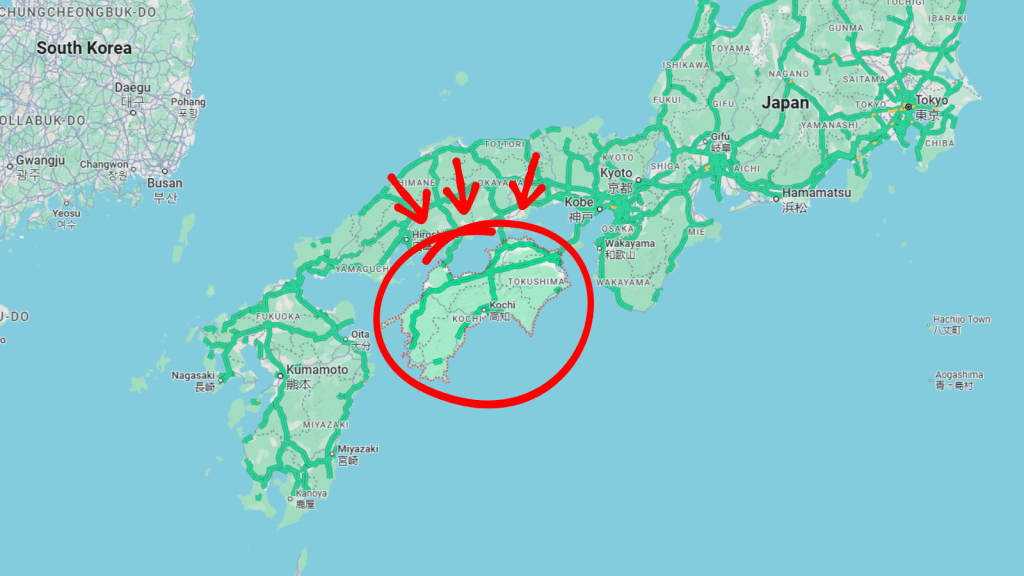
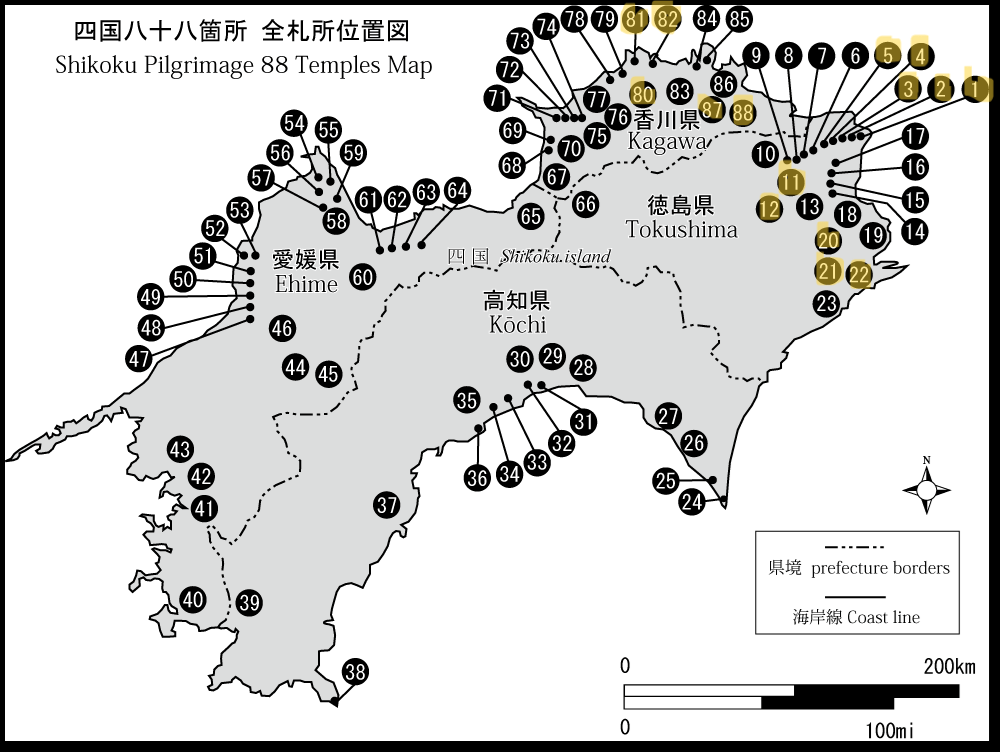
Shikoku is famous for its 88 Temple Pilgrimage, a remarkable circular route of around 1,200km connecting 88 Buddhist temples across the island. Pilgrims have been walking it for over 1,000 years. Some complete the entire circuit in 6-8 weeks. Some travel by bike. Some by bus. Some over multiple years. And many, like us, simply choose a section or three.

And that’s what appealed to us – we didn’t have to commit to the entire pilgrimage to experience its magic. The trail naturally lends itself to shorter adventures, allowing walkers to select sections that suit their time, fitness and interests while still experiencing the culture and spirit of the pilgrimage.

For TB and me, that flexibility made Shikoku the perfect choice.

Why Japan Again?

People often ask why we didn’t choose somewhere completely different – the Cotswold Way, Camino…or Canada??

The answer is simple. Because we both loved Japan. The hiking is exceptional. The food is amazing. The history is fascinating, and the culture is welcoming, respectful and endlessly interesting.

There’s something incredibly comforting about finishing a long day on the trail with a hot meal, a soak in an onsen and a quiet evening at a traditional ryokan. Japan also makes sense practically. From Australia, it’s a relatively easy international trip of around 10 hours, with minimal time zone changes, so we can enjoy an incredible hiking holiday without taking long blocks of leave or being jetlagged for a week. With around 10 days available, it strikes the perfect balance between adventure and reality.

And guess what? We have other adventures in England, Spain and the Dolomites lined up for future visits!

Our Shikoku Adventure Awaits

So, in a few short months, TB and I will spend 9 days walking selected sections of the Shikoku Pilgrimage. There’ll be forests, mountain climbs, temple visits, tiny villages, and probably some sore legs. Hopefully plenty of onsens. Almost certainly far too much delicious Japanese food.

Most importantly, we’re looking forward to slowing down again. Because that’s what hiking in Japan seems to do so well. It reminds you that sometimes the best journeys aren’t about seeing as much as possible, they’re about seeing a little more deeply.

And honestly, we can’t wait to see where the Shikoku trail takes us.

PJ 🙂

RATING THE RYOKANS – PART TWO

Hello and welcome to my LIKETHEHIKE blog.

I’m PJ and I write about the hikes I take, giving you insights, photos, commentary, tips and tools so you can enjoy hiking and embrace the experience.

We’re back for the second instalment of “Rating the Ryokans” – with my very mathematical (!) approach that measures ambience, quality, cleanliness, onsen, dining and whether the establishment is Kumano and hiker friendly. In my last blog, TB and I had just departed the fantastic Manseiro in Kii-Katsuura which had a lovely onsen and a truly magical evening dining extravaganza.

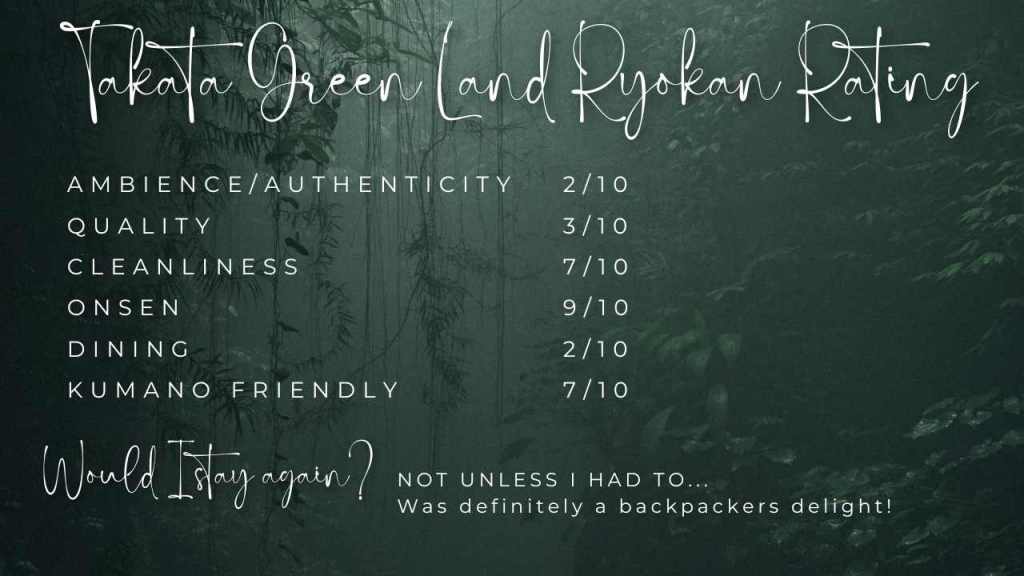
TAKATA GREEN LAND (KUMOTORI ONSEN) – SORTA RYOKAN EXPERIENCE…

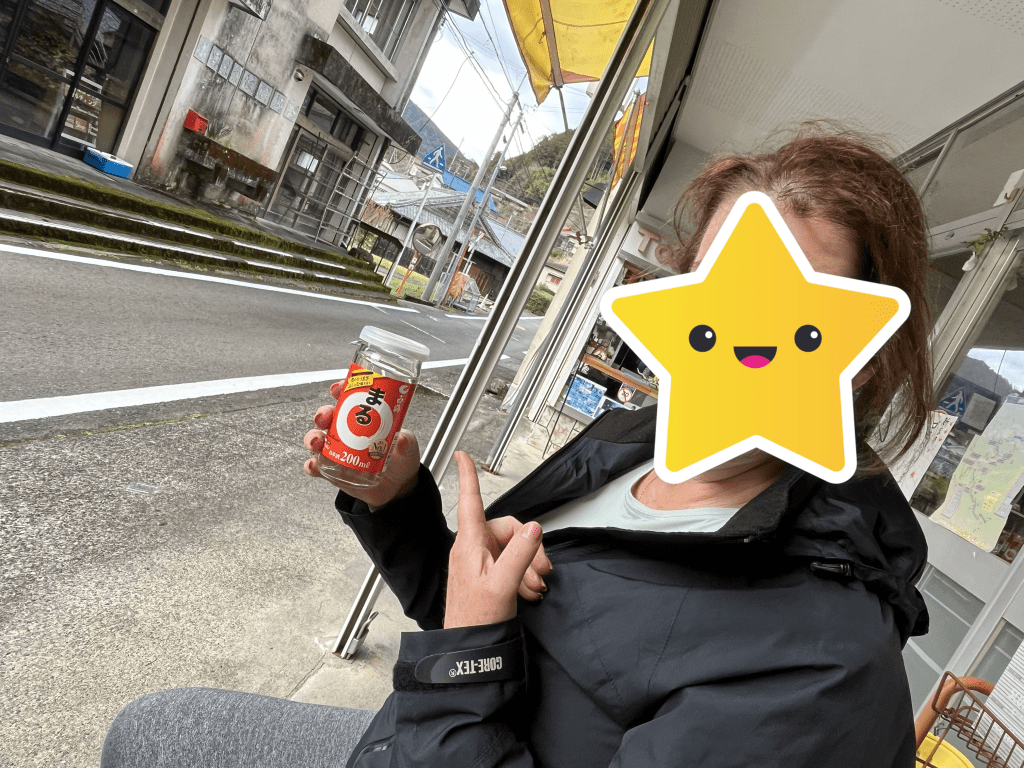
Our next stop was after our longest and most challenging day on Kumano. We did over 20km on some serious trails, finishing at a little village called Koguchi. We found a dinky corner store where we devoured drinks and snacks while waiting for our hotel shuttle.

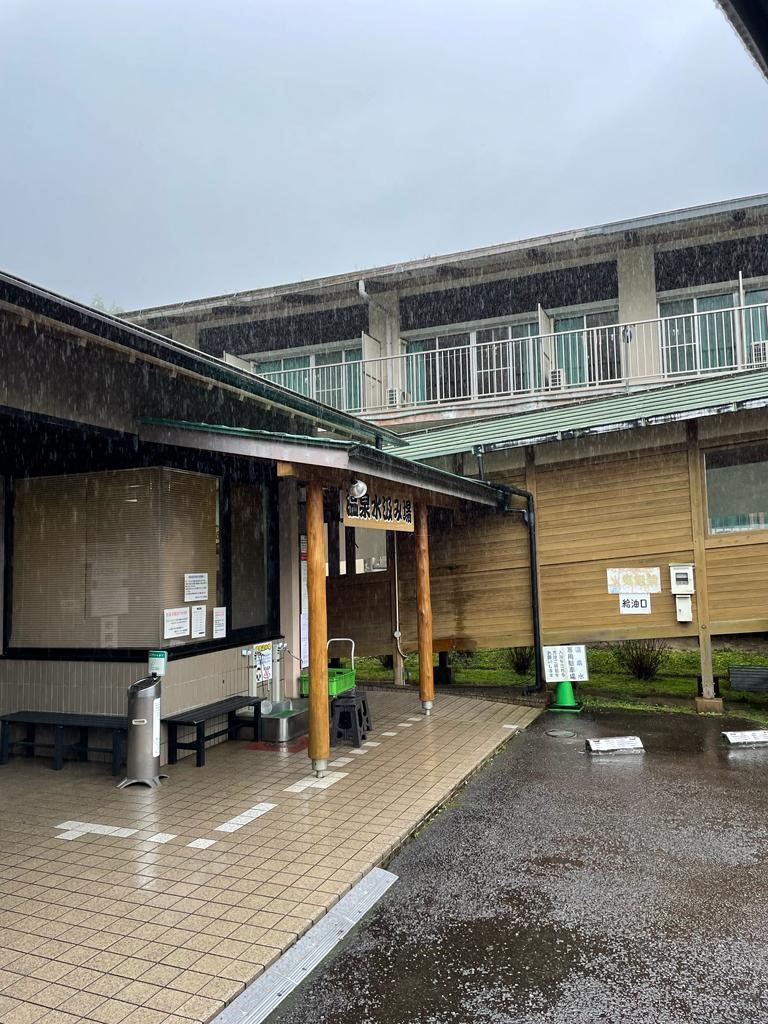
We arrived at Takata Green Land – and were perplexed. It looked like a sports complex, or perhaps a school camp destination. There were a number of interconnected buildings and the reception area gave off a very backpacker vibe, complete with worn industrial carpet, vinyl seating, pingpong table and 27,000 vending machines.

Happily our suitcases were waiting for us at reception. Unhappily we had a second floor tatami room and no lift. I almost killed me lifting cases up two flights of stairs after a 20km hike….

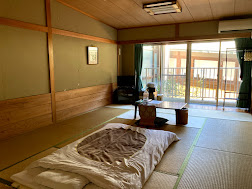
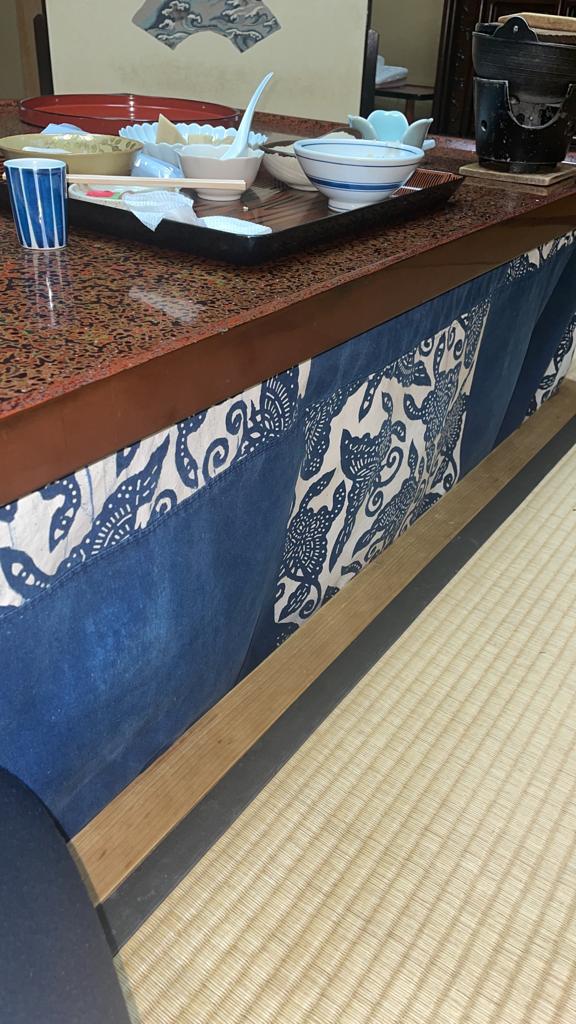
The room was very average. Clean, but sadly, much worse for wear with stained, damaged tatami matting, dings and dents in the walls. Such a shame as I suspect that it must have been quite lovely at one point in time. We had shared toilet and sink facilities right outside our room, and as it was very quiet, we pretty much had those to ourselves.

Example of room

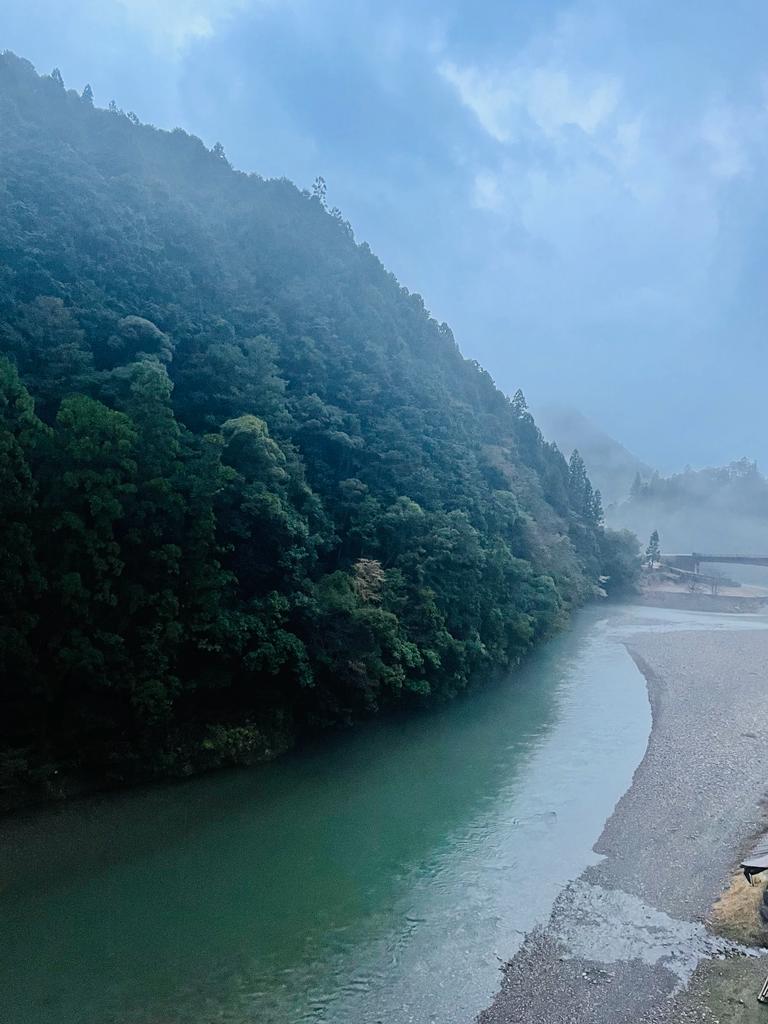
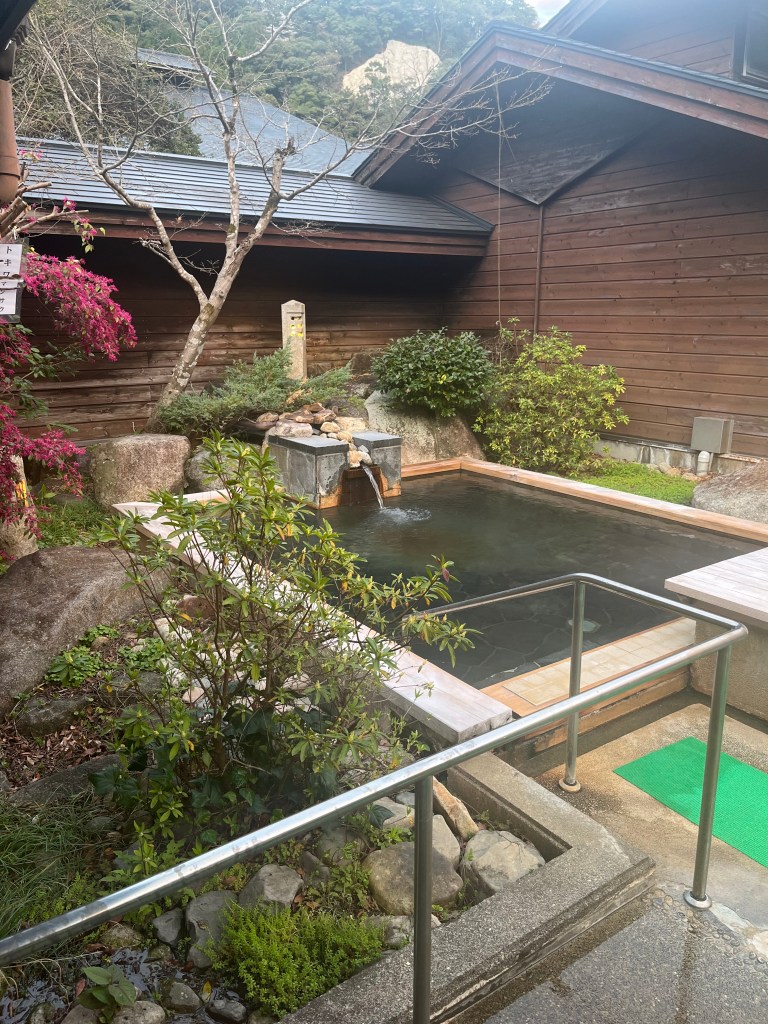
The onsen, however, was first rate. Takata Green Land had an outside onsen which we could access via a private walkway. I am not the most graceful gazelle as my family will confirm, so add the complexity of full nudity, cold misty weather, a wet wooden walkway , and speed – and you can imagine the rest. I skidded into the outside hot pool very disgracefully but to the great amusement of my sister and the other onsen users, who were far too polite to show their mirth.

Unfortunately the onsen experience was the singular highlight of our stay. Post onsen we had high hopes for our evening meal. We were ushered into what looked like a school dining hall, which was doubling as a storage facility. Along two sides of the room were an array of plastic storage containers and boxes stacked ceiling high, and stored against wall was an outdoor canteen arrangement. We were two of the three guests dining that evening, three lonely place settings on a table about 20m long.

The food was fair, with a number of courses including salad, rice, miso, fish and a shabushabu with vegetables. I have to admit, we gave up before dessert and fled to our room.

TB decided that we were staying at the local Hi-De-Hic camp off season and I reckon she was right.

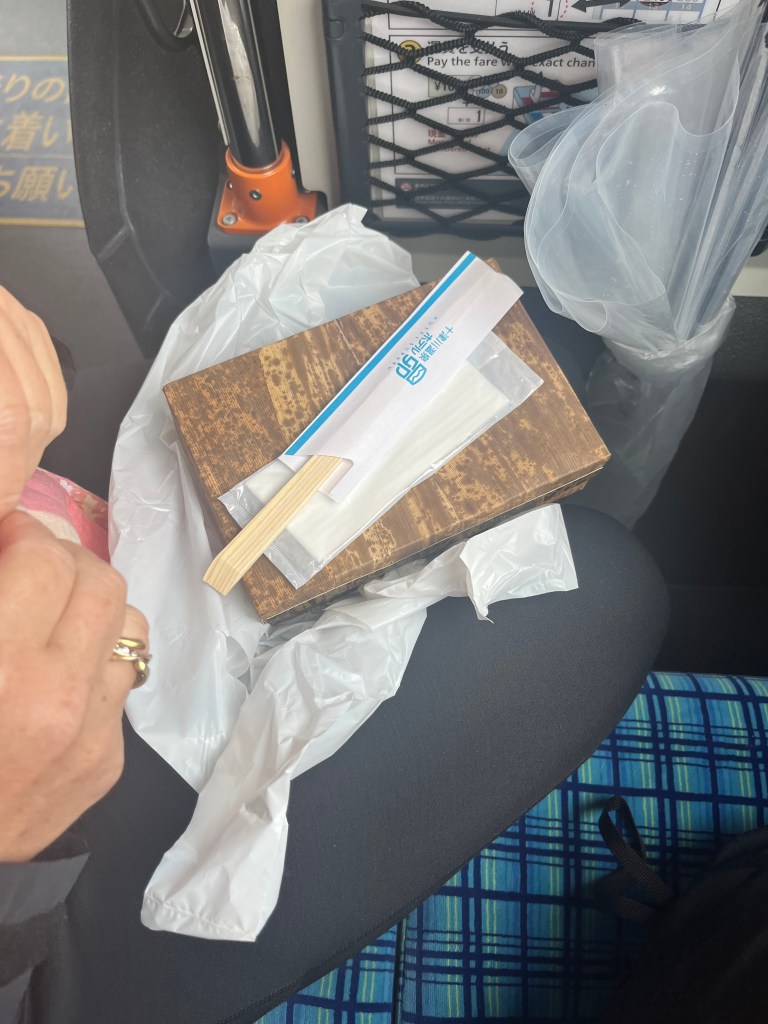
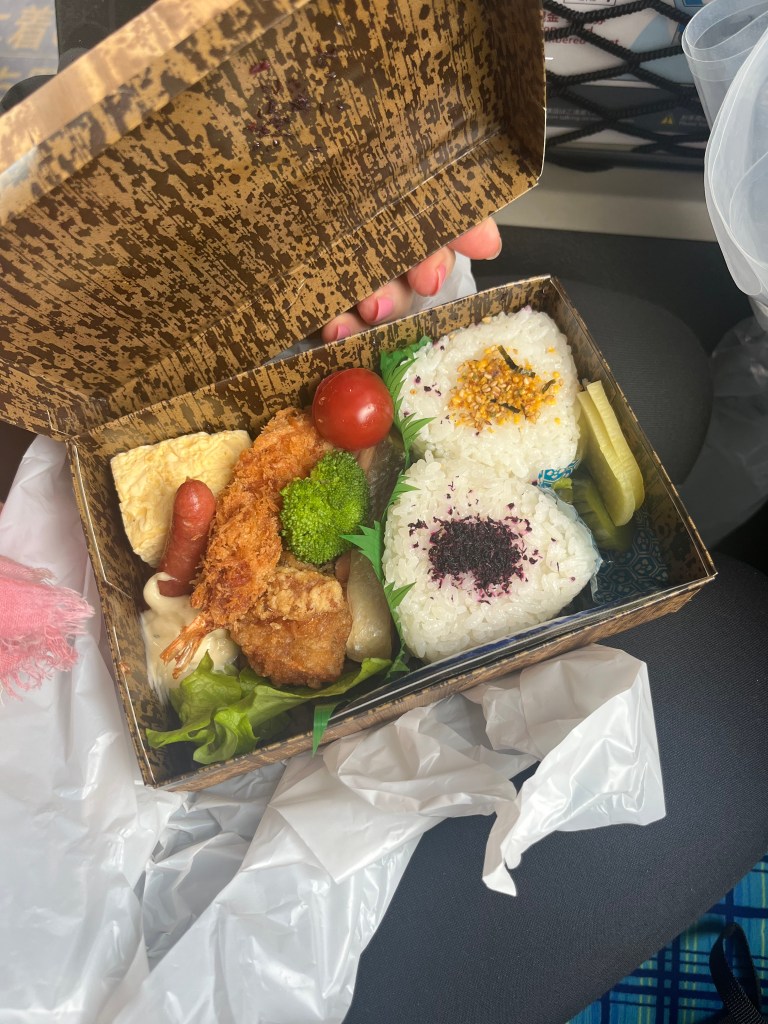
We departed early the next morning to get a bus connection to Hongu and then onto other hiking adventures. We were given a very substantial bento box, which was nice for lunch, well, more like a snack on the bus 🙂
HOTEL SUBARU – ROYKAN/HOT SPRINGS EXPERIENCE

After our Hi-De-Hi experience at Takata Green Land, I hit up Google to see what awaited us at Hotel Subaru. It looked OK – thank goodness.

Our instructions were to finish the hike, take the local bus, alight at the relevant stop and then walk down the road for 1.4km. Righto. There was a bit of excitement as the last half of the walk to the hotel was through a long road tunnel! We scurried through on a narrow pedestrian platform, and I didn’t realise how noisy a car tunnel was – deafening!

As we exited the tunnel – there was Hotel Subaru. It unfolded in front of us with a gigantic outdoor sound shell and fields to the right, and a sweeping driveway which led to the reception area.

Can I say – BEST WELCOME EVER!!!!!!

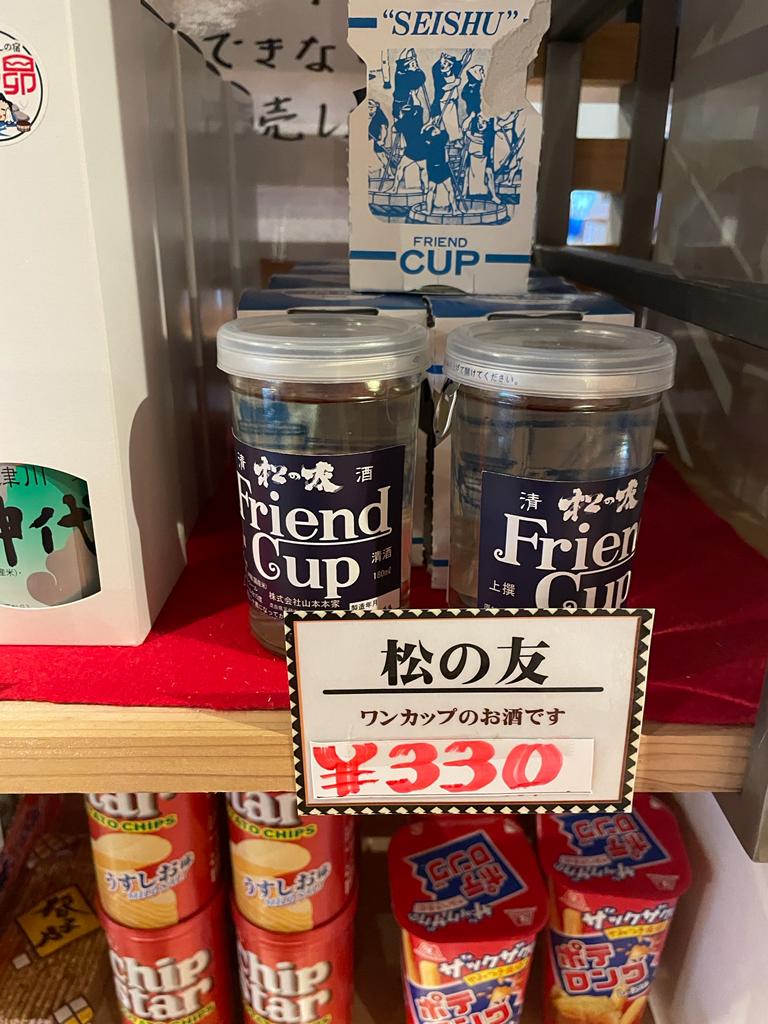
Omotenashi was in full swing at Hotel Subaru. The front desk was attentive and very helpful. The hotel lobby was immaculate and had a very well stocked (and modestly priced) convenience store where we could purchase some sake ‘friend cups’.

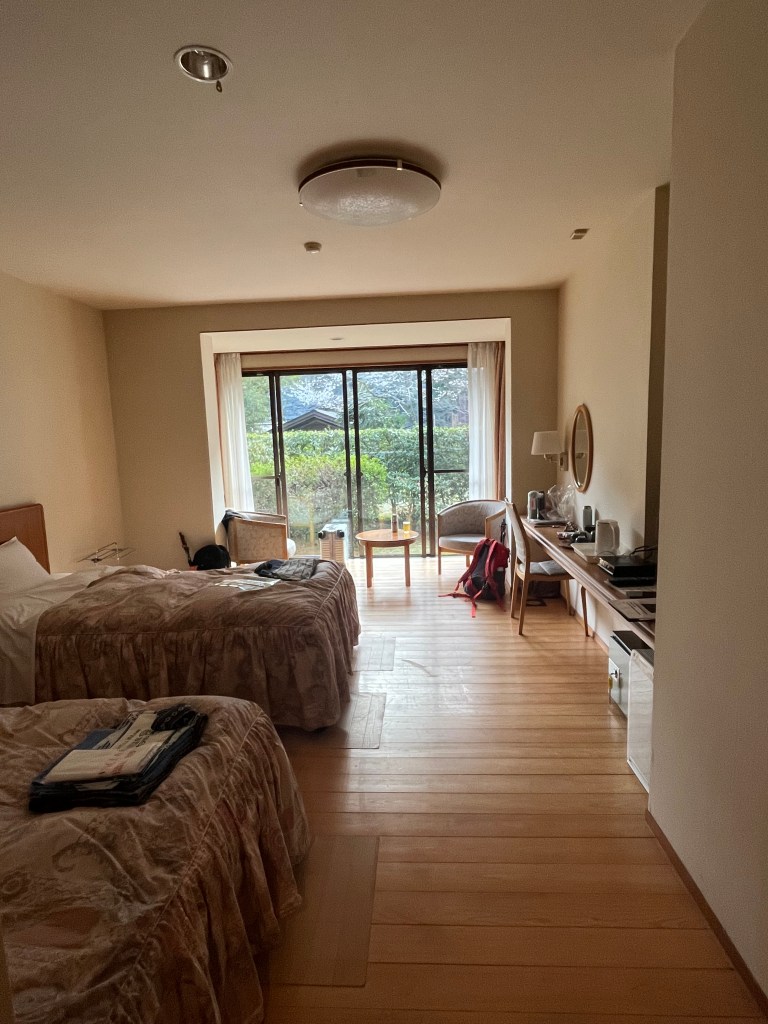
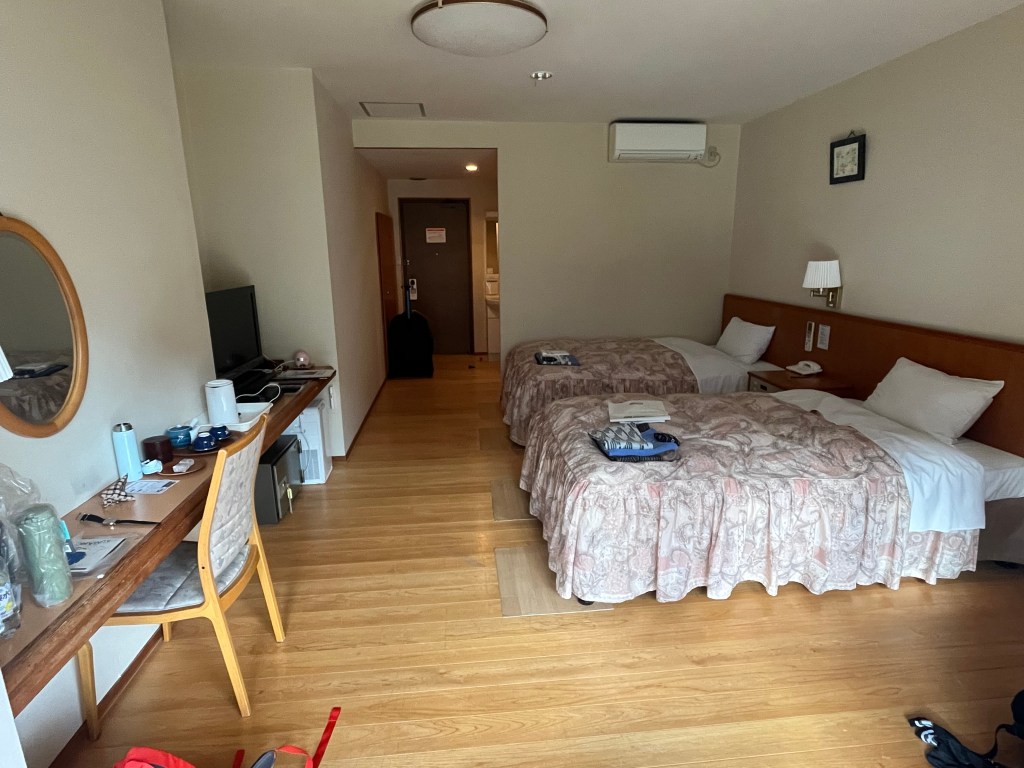
We had been assigned our only western room for our whole Kumano experience. The staff were very insistent on showing us every feature of the room itself, which took some time – mostly via mime as our Japanese, I’m embarrassed to say, was limited to yes, no, hello, goodbye and thank you! But we had a very enthusiastic delivery of our Japanese phrases…

Our room was very clean and tidy – AND – we had a sink and a loo – happy days!

It was, however, frozen in 1989. Complete with bed ruffles, English tea sets and matching curtains. Which provoked a fit of the giggles from TB as the earnest Assistant Manager was pointing out the room features….endlessly. I think the friend cups had a bit to do with it.

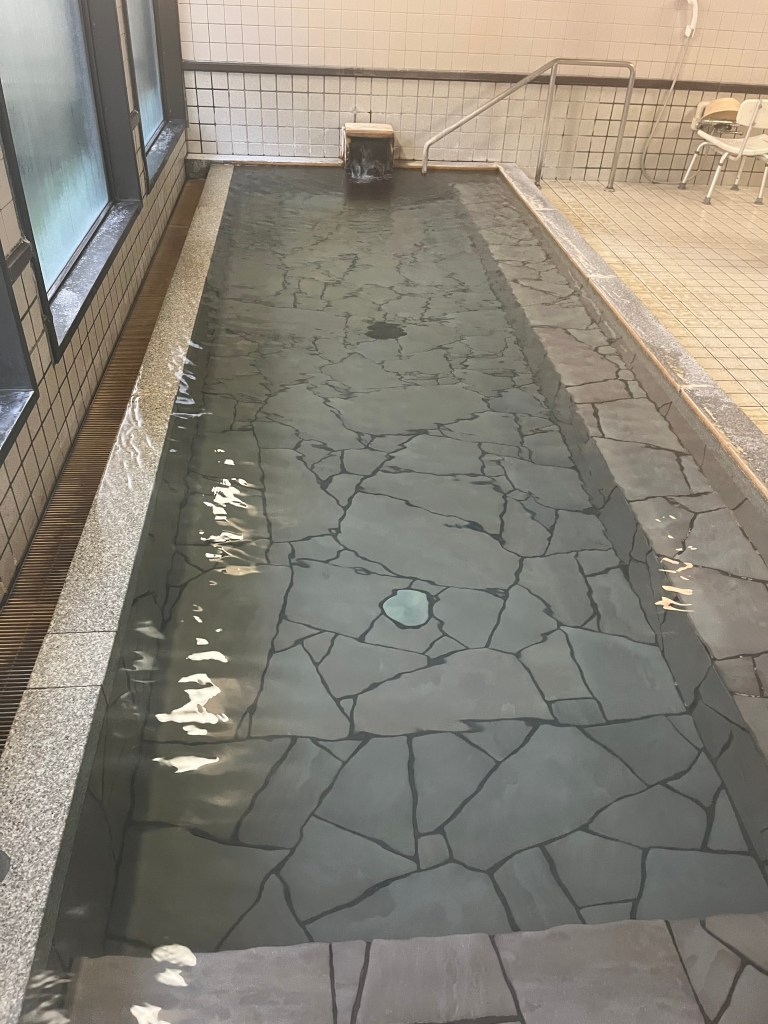
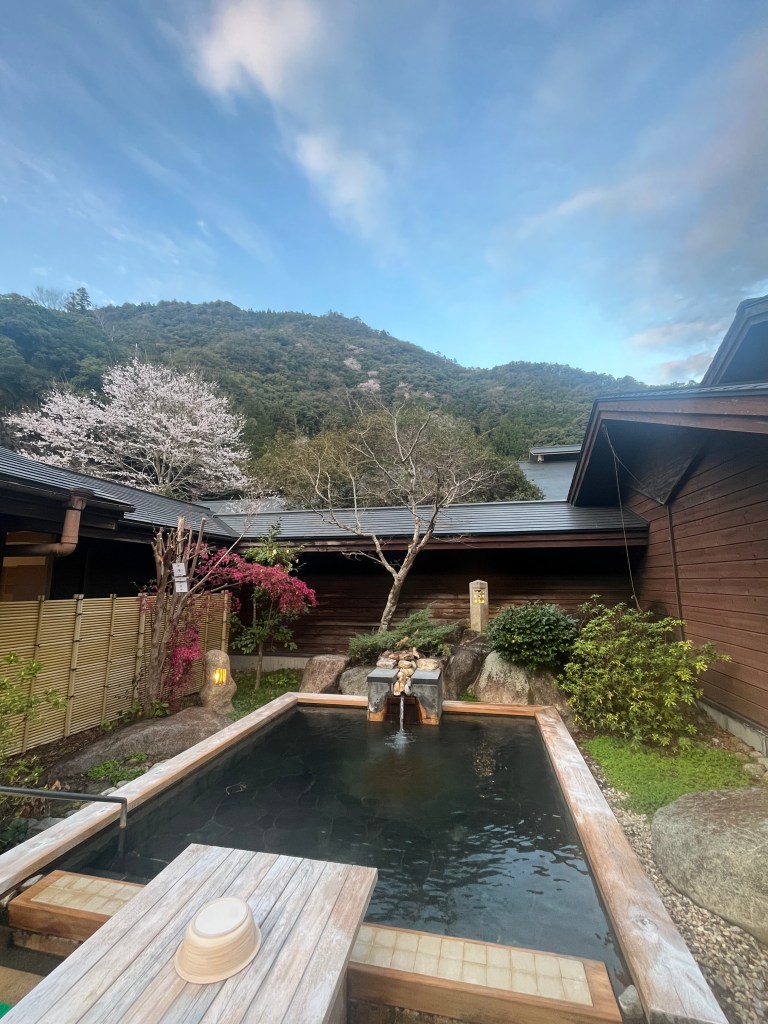
Hotel Subaru is renowned for its onsen, and wowser – hello fantastic onsen! It was a remarkable setup, indoor and out. And again, we pretty much had it to ourselves and by now TB and I regarded ourselves as onsen aficionados! Off came the hiking gear, out came the wash bag and the onsen basket and pfffft – who needs a modesty towel?!

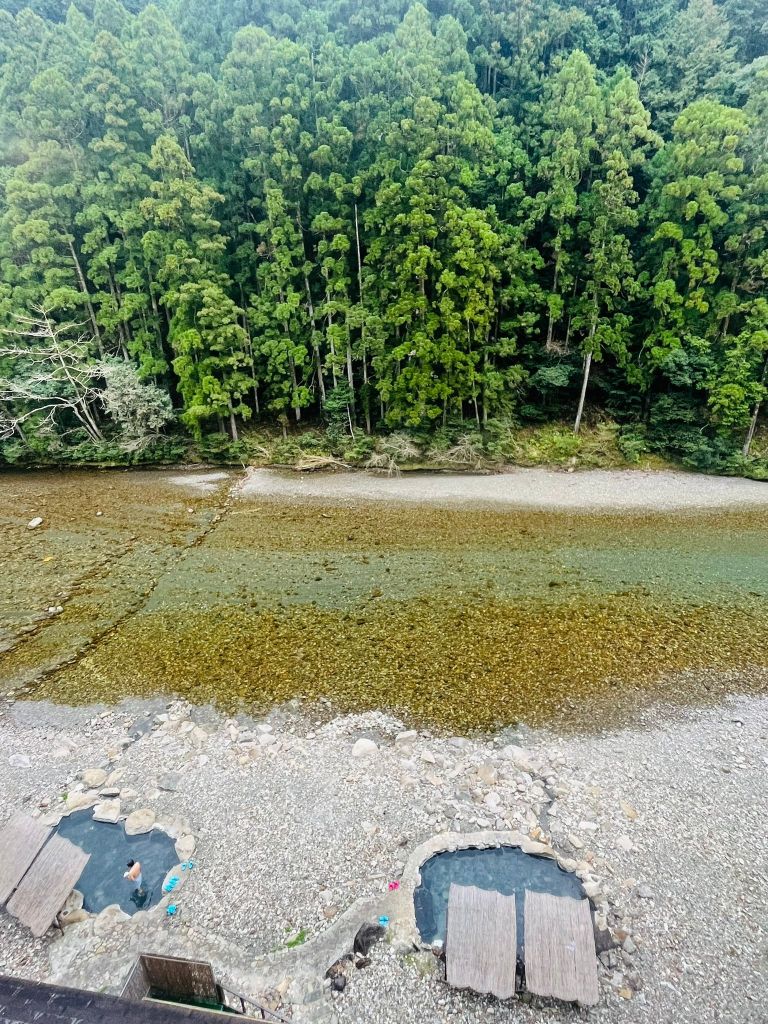
The outside onsen was tranquil, and soothing, and we had the place to ourselves (which meant I could sneak some photos!) We emerged squeaky clean and very relaxed.

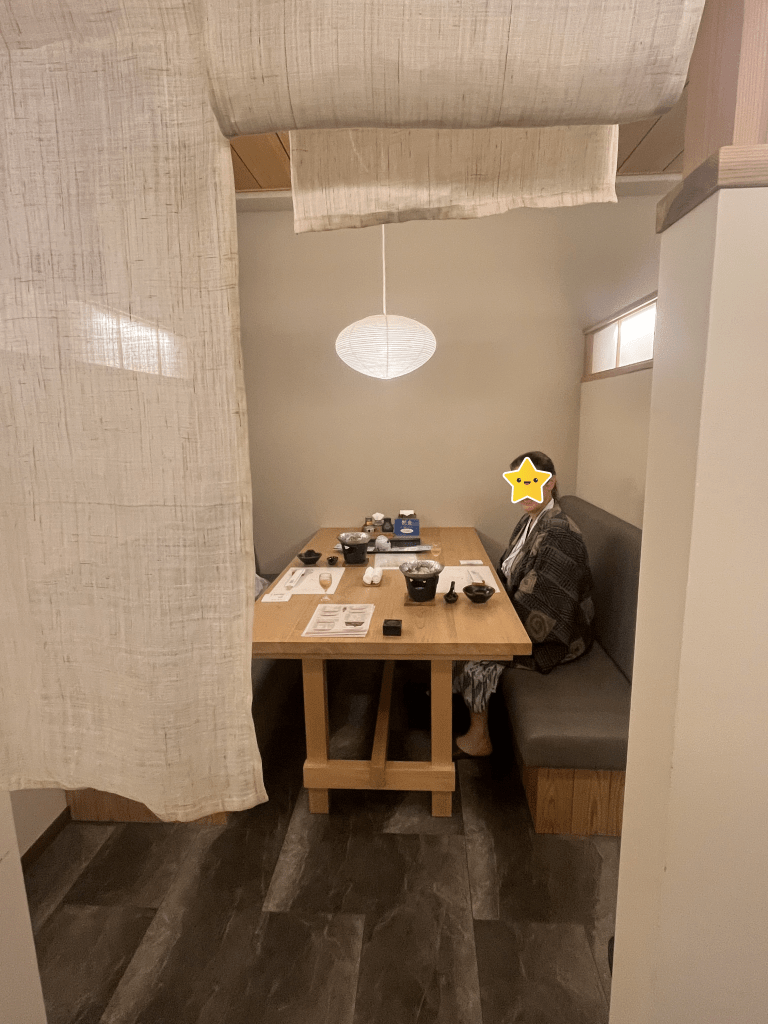
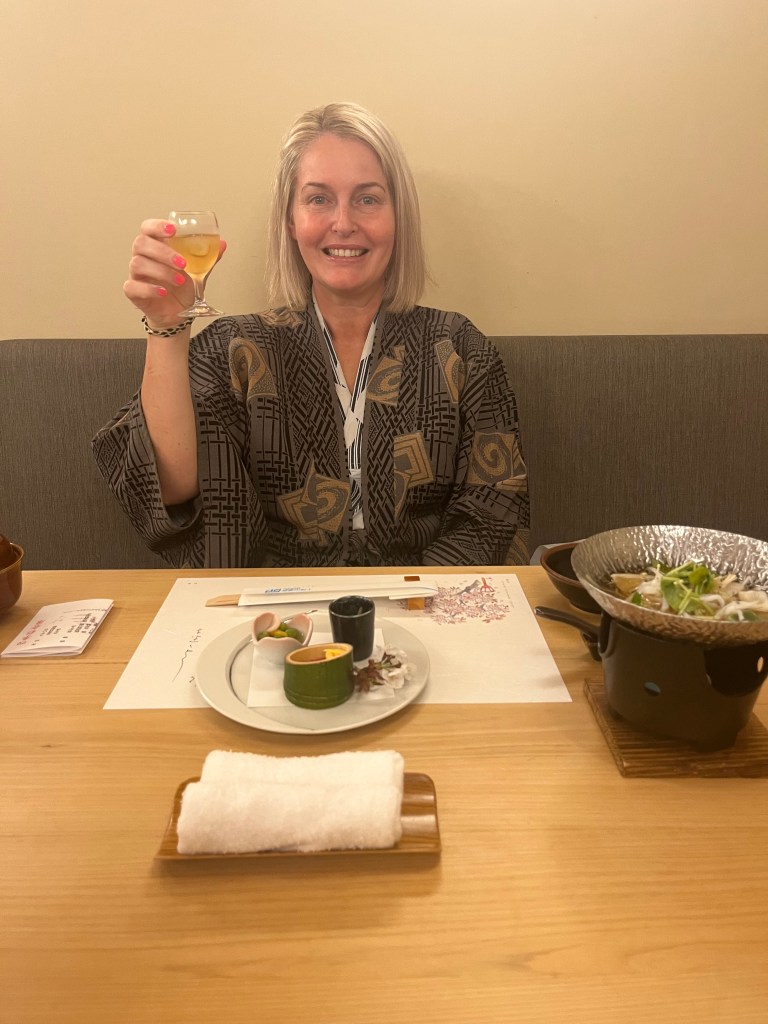
This is where we both now did a happy dance. You know dinner is going to be great when you are shown to your own little dining enclave, complete with privacy curtain and a table set for a king (actually, two majestic queens).

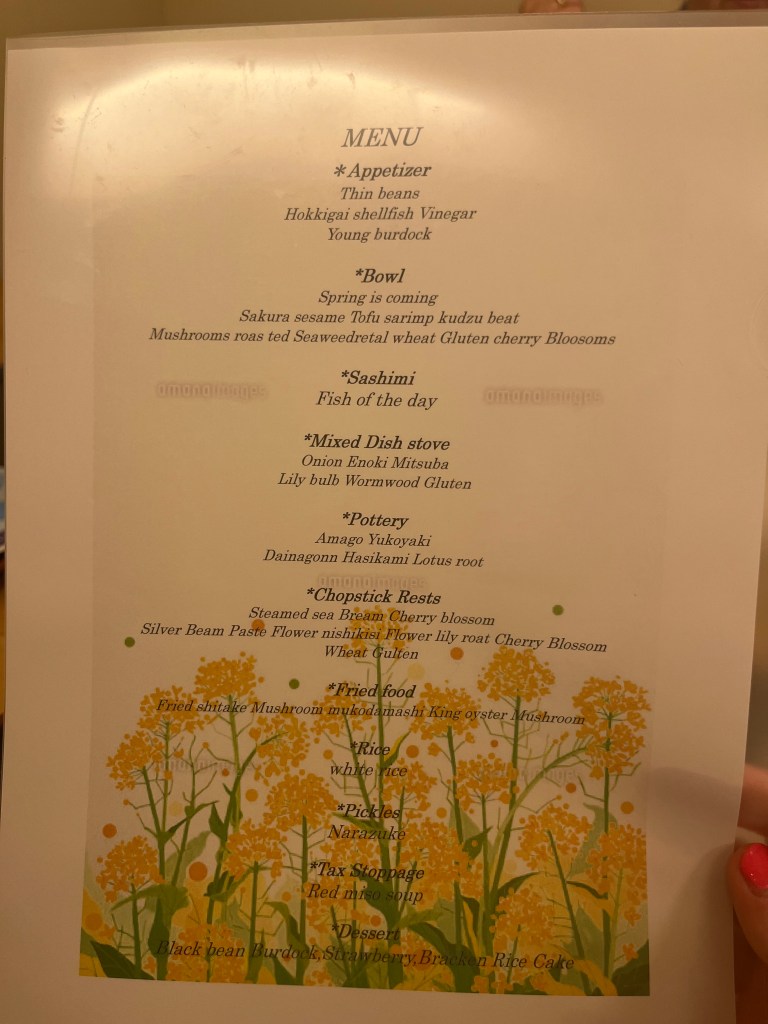
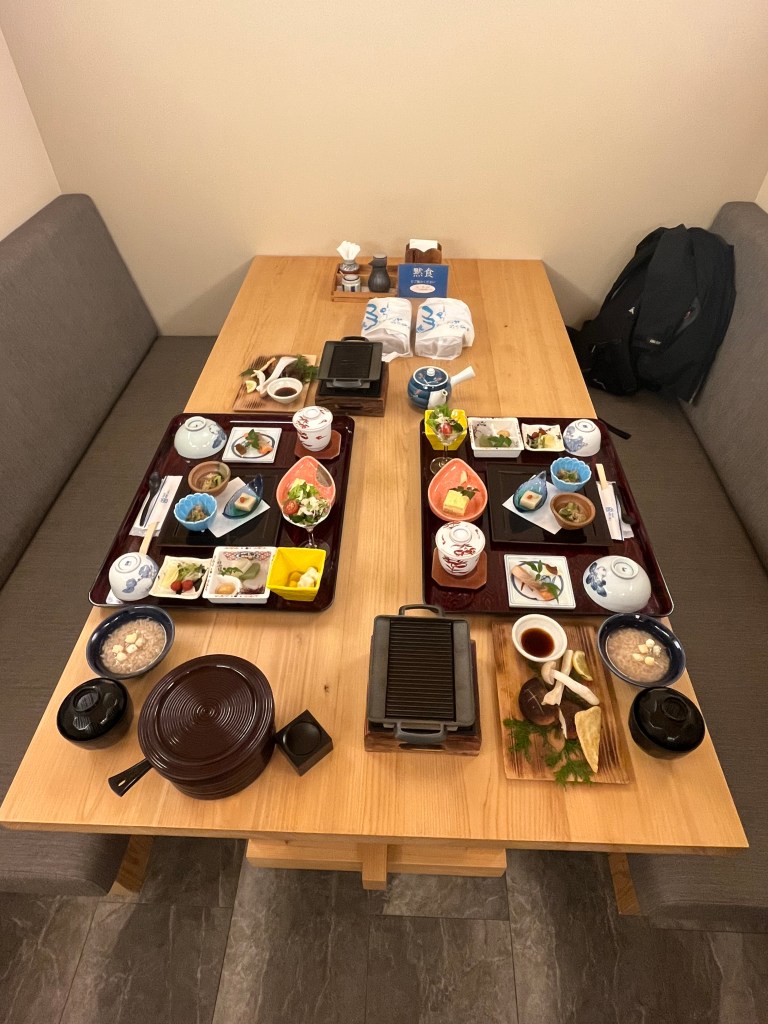
We were treated to some incredible dishes including a whole cooked fish, a shabushabu which was a meal in itself and some beautiful sake. The atmosphere really made it a treat and the attendants were impeccable in their service and attention to detail.

I can see why omotenashi is such a part of the overall Japanese hospitality experience. I felt like visiting royalty, but in a way that showed immense respect to all parties. Well done Hotel Subaru.

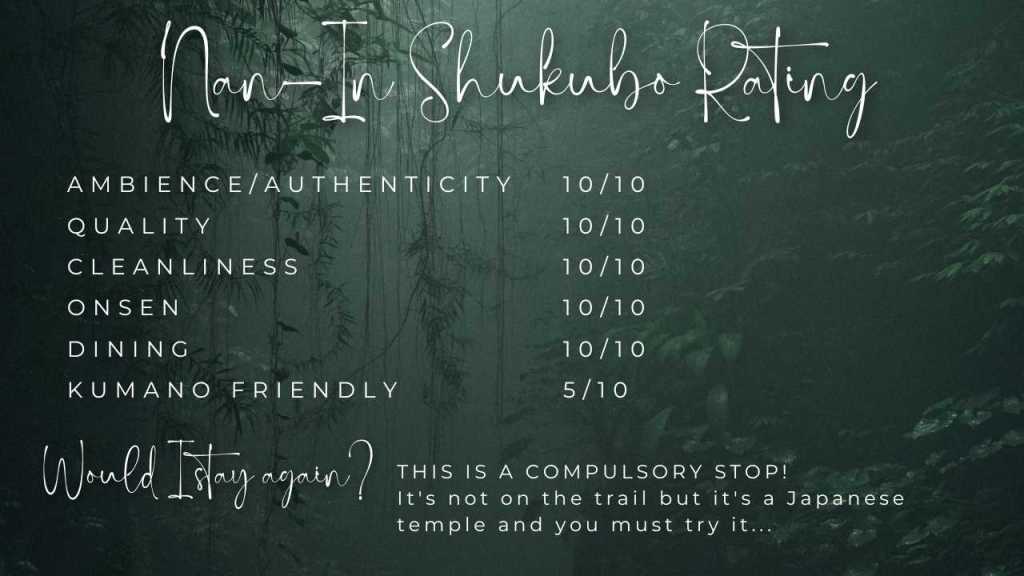
NAN-IN TEMPLE – SHUKUBO EXPERIENCE

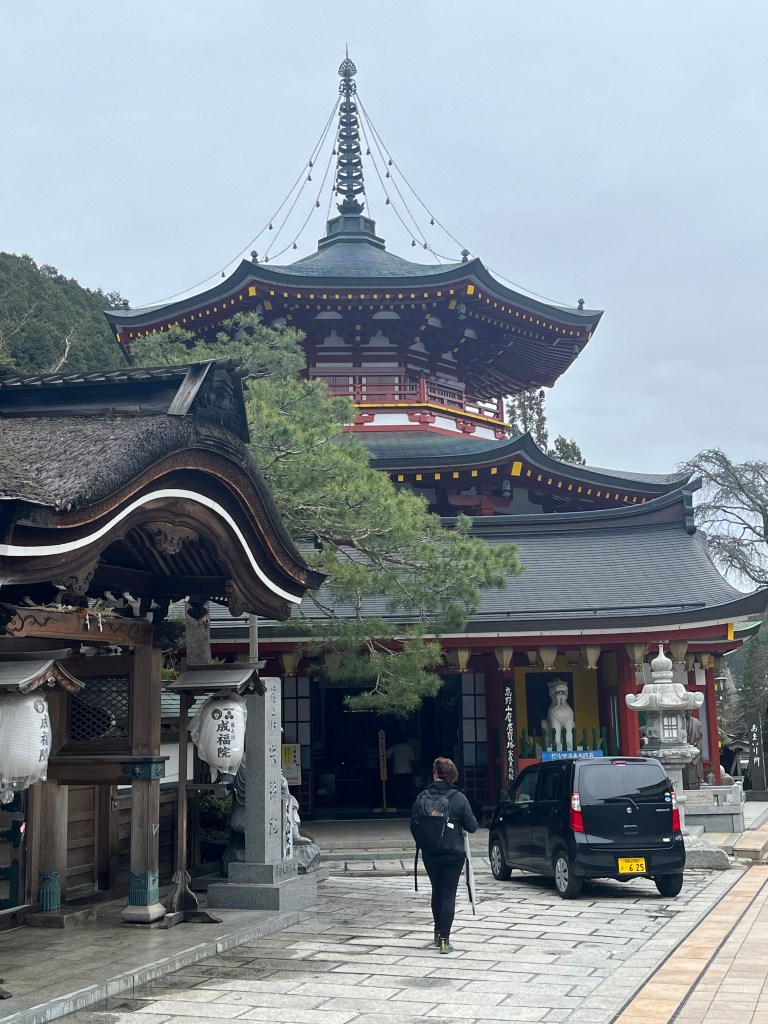
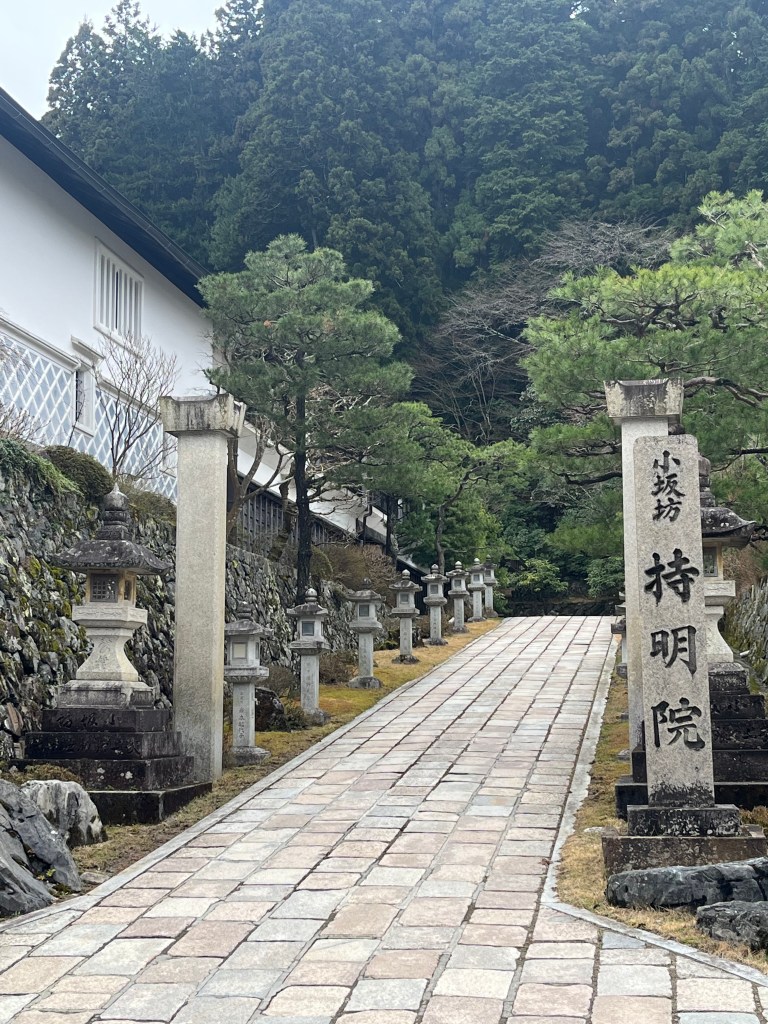
Our final destination before returning to Tokyo wasn’t on the Kumano trail, but falls within the prefecture of Wakayama, the spiritual centre of Kumano. Koyasan (Mount Koya) is the mountain of temples, comprised of 117 Buddhist temples founded over 1,200 years ago. Located high in the forest covered mountains, it won’t be a spoiler alert for me to say this was one of the most magical and spiritually affirming destinations I’ve ever had the privilege of going to.

Please put Koyasan on your list when hiking Kumano, you won’t be disappointed. And you will certainly get your walking distances in. TB and I walked 10km on our first day in Koyasan – so much to see!

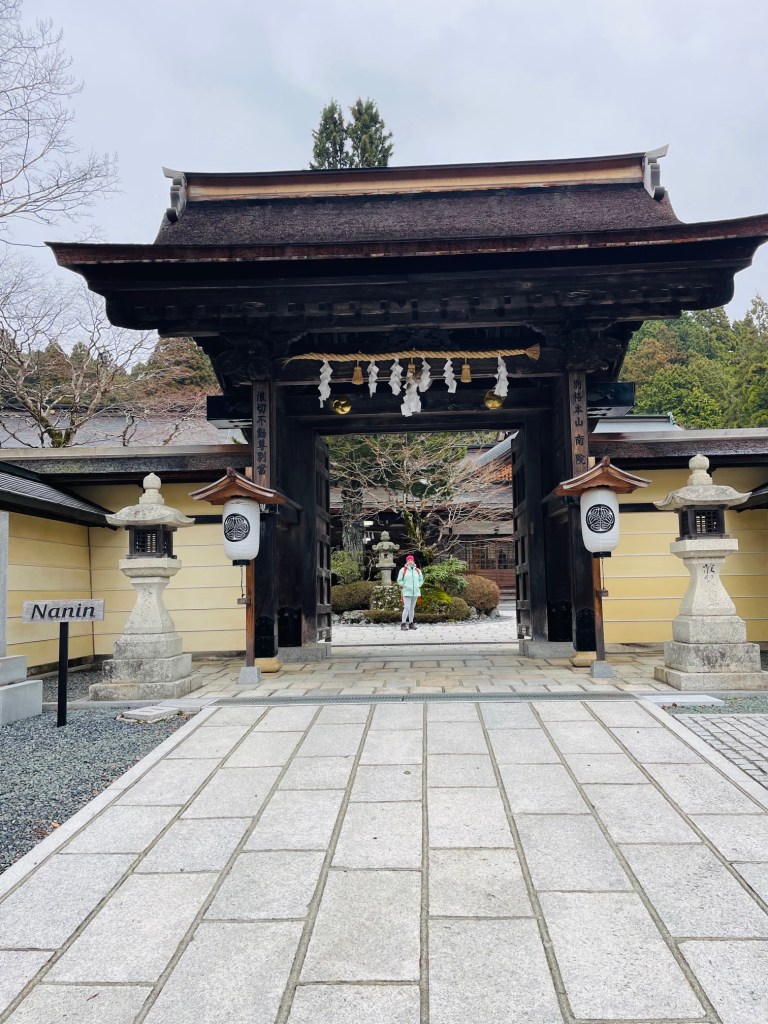
Nan-In is one of the many temples which has been partially modified to allow for overnight experiences. They offer a simple, traditional glimpse into the Buddhist life and rituals. We were very impressed with the entrance to Nan-In, which was rather ornate to honour the gods. The temple is to the left, and the accommodation on the right of the compound.

We were greeted (as we were used to now) with outstanding omotenashi. Our boots had little homes to live in outside the front door and our raincoats and packs were dried and delivered to our room. Koyasan is quite high, and it was about 6 degrees and misty rain when we arrived…brrrrrrr.

We were looked after by a young monk who spoke English, he was very patient and helpful. He seemed to be on call 24/7 for guests as whenever we popped our heads into the office door, the monks waved us out and the young monk appeared soon after. That’s omotenashi!

We were shown to our room, past the communal sinks and toilet facilities. Everything was immaculate and I am not exaggerating when I say you could have eaten off the floor. The attention to detail was incredible and could be seen in every nook and cranny as we walked through the building.

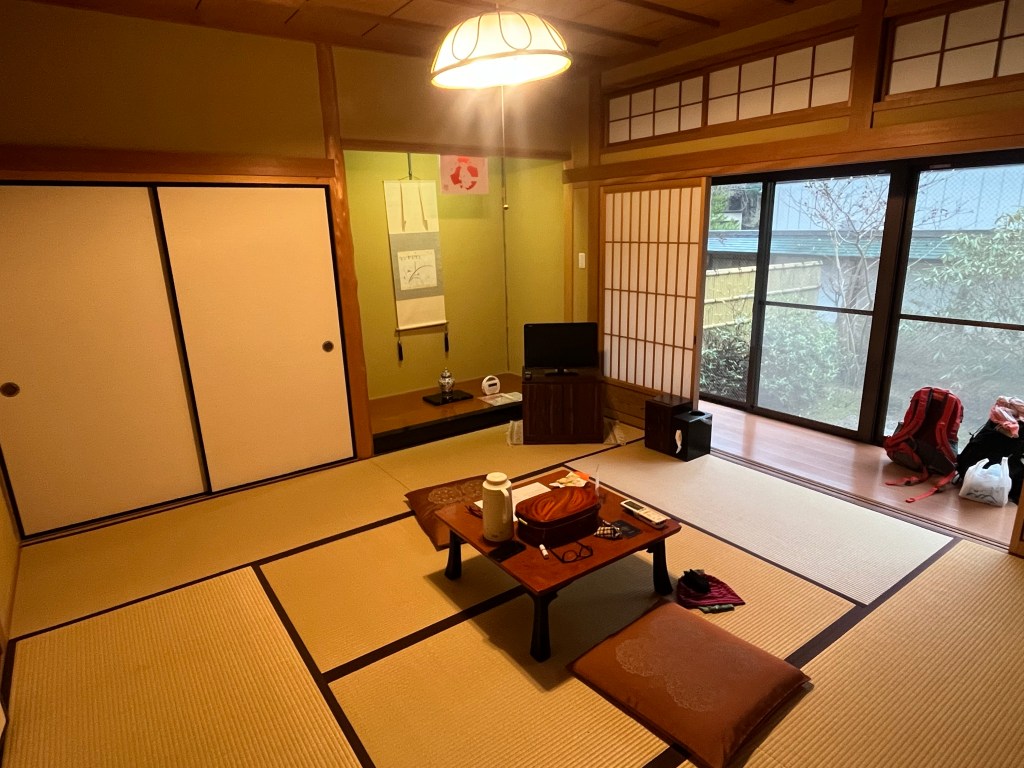
Our room was superb and had a lovely courtyard view. It consisted of an entrance space where suitcases lived, and then the main tatami space, with a sunroom out to the courtyard. We were the only guests in the wing…there’s something to be said for travelling in shoulder season… 😉

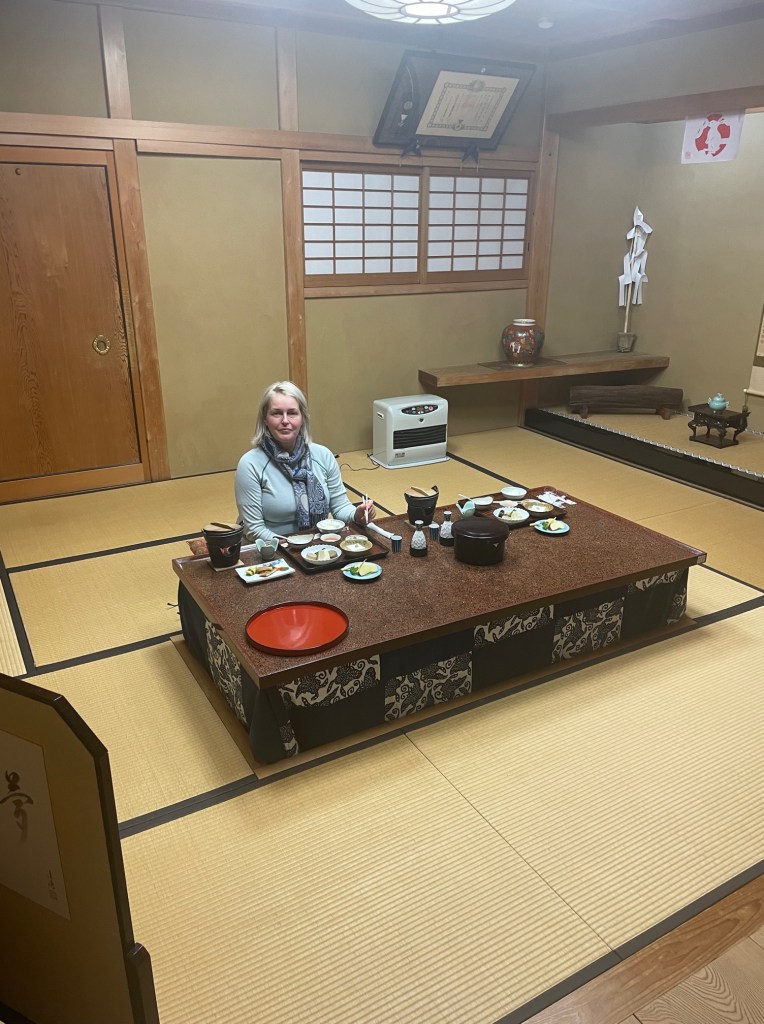
Our dinner slot was 6pm. Because we had been exploring Koyasan until quite late, we flipped things around and had dinner before the onsen. We presented ourselves at the main entry, and were ushered into a very ornate and opulent private dining room. There was a shrine in one corner, beautifully decorated sliding panels and a low dining table set for two. The only indication that we weren’t alone in the temple were the twanging American voices of a group across the hallway as they a) struggled to sit down on the floor, b) figure out the eating utensils and c) make sense of the communal bathroom facilities 🙂
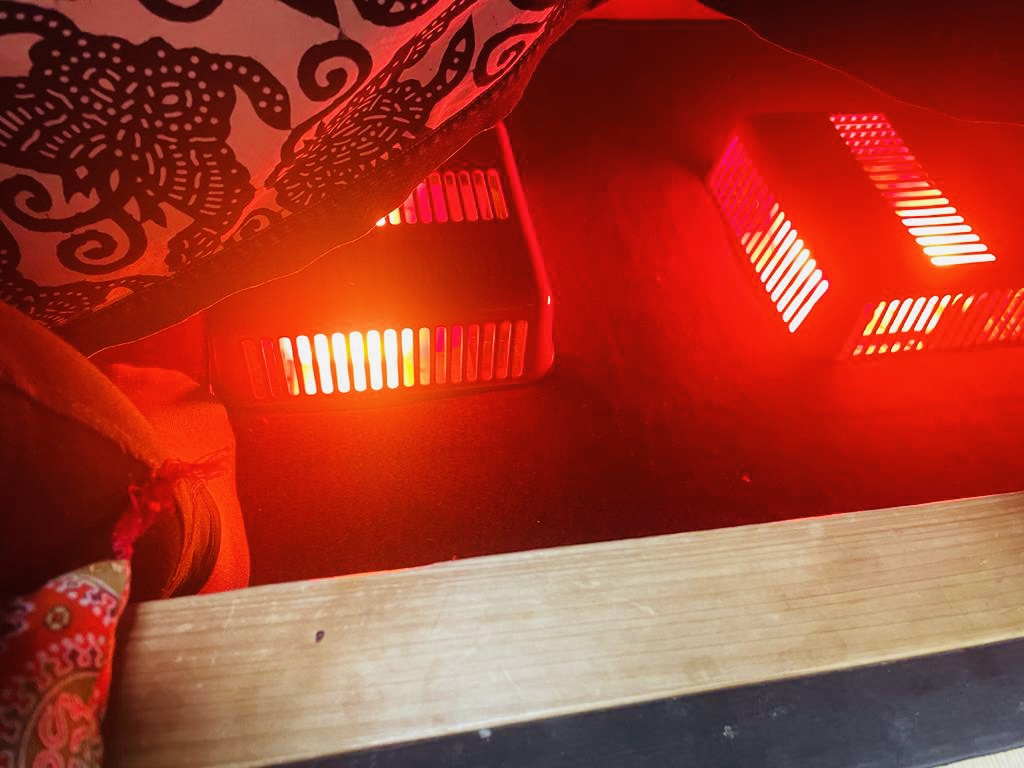
Our dining experience was a wonderful treat. Koyasan is a mountain village and was quite cold, even in late March. To counter that, we had UNDER TABLE HEATING!! Our meal was simple, but perfect. I am now an expert in how many ways tofu can be cooked and still taste lovely. All the temples are strictly vegetarian and based on what we were served, possibly plant based. We had (again) modestly priced sake and enjoyed every sip.

After our wonderful meal we went for a soak. The onsen, was very small and indoor only. It did the trick however and we were able to cleanse, bathe and soak solo. It’s not a prerequisite, but still nice to have the onsen to yourself.

Kumano Travel photo of the onsen

TIP

Most onsens are only open during the evening, not in the morning. Plan to bathe on your arrival, or after dinner. If you’re a morning bather, be prepared to adjust…or sponge bath in the loos! at Nan-In, the onsen was open from 4pm to 10pm. Look for the coloured curtains which denote gendered bathing areas – they also do swap around so always check the colours. I have no easy answer for my non-gendered readers except to follow you authentic self and enjoy your onsen experience.

Overnight, no complaints. We were warm and comfy. Except our pillows were beans. Yep, dried beans. Quite firm and small, maybe A4 size? I was clever, I ditched the pillow and went for a bundle of clothes. Worked a treat. TB persevered with her bean torture, and ended up doing emails for most of the night. Not me!

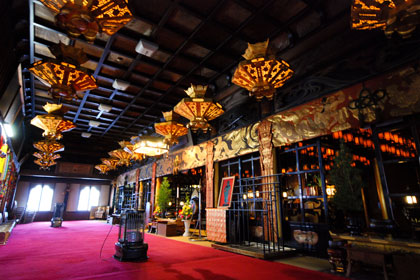
We had an invitation to attend morning prayers before breakfast. No way we were going to miss that! We almost didn’t get in as TB and I were trying to ‘pull’ a ‘slide’ door but we made it. The ceremony was very calming and beautiful to witness. I love the fact that Buddhism just assumes you’re good people, no threshold, no test, just come on in. I’m not a religious person but I appreciate anything that encourages me to stop – breathe – and centre myself.

Kumano Travel photo of worship hall

Breakfast was a cut down version of dinner, again in our own dining paradise with fabulous service and food. Lots of vegetables and tofu. I was very happy 🙂

TB and I left with our souls and tummies replenished and looking forward to our final leg in Japan.

So there you have it. my list of Rating the Ryokans. There are places I wouldn’t stay at again, but I wouldn’t change a thing.

TB and I had the trip of our lives and that included all the experiences. Ichie Cafe, the hairy snoring neighbour but wonderful chiffon cake, the Hi-De-Hi camp with a magical misty outside onsen…every less than ideal stay was also a travel moment to be treasured, embraced and remembered.

Take my rankings with a grain of salt and rather than put you off, I hope these two blogs enrich your decision making process. Not one of our nights on the trail was unpleasant. Every night was an experience – with maybe a couple I don’t need to repeat!

That’s all for now, see you out on the trails

PJ 🙂