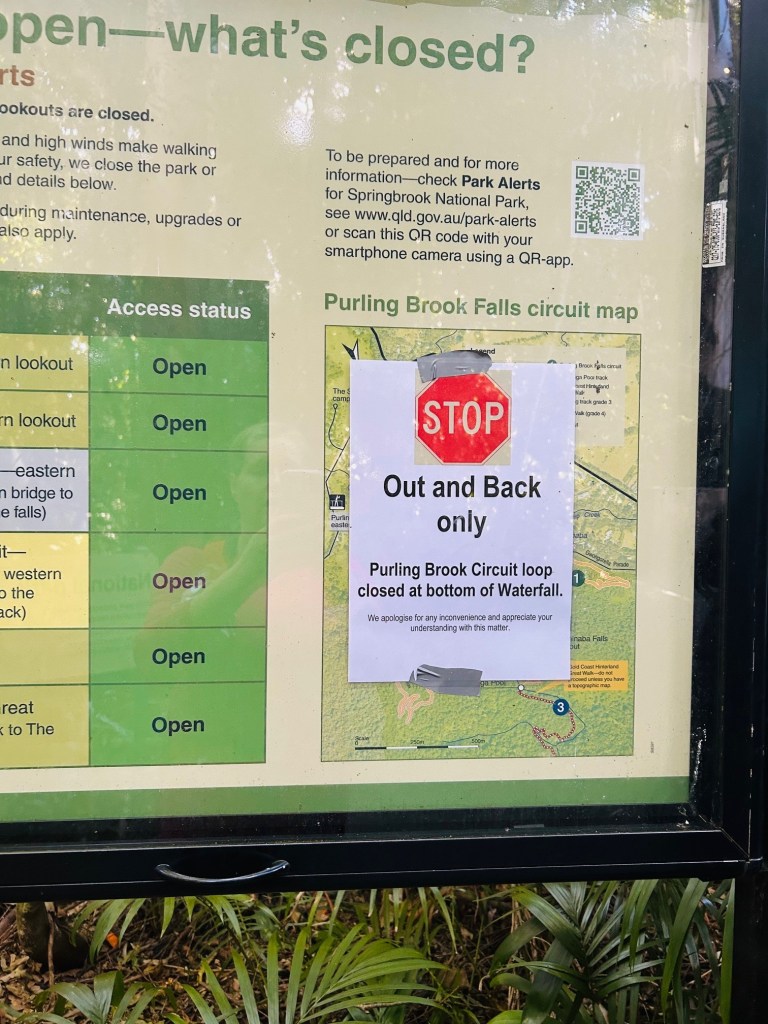
If you’re looking for a hike that really makes you feel your legs (and your lungs), then the Warringa Pools walk, part of the Purling Brook Falls Circuit in Springbrook National Park, is one to add to your list. I hit the trail early, hoping to do the full loop, but as it turns out, the circuit was closed at the mid-point. So instead of a loop, I ended up doing a “down and back”… and wow, what a down and back it was.
The Trail
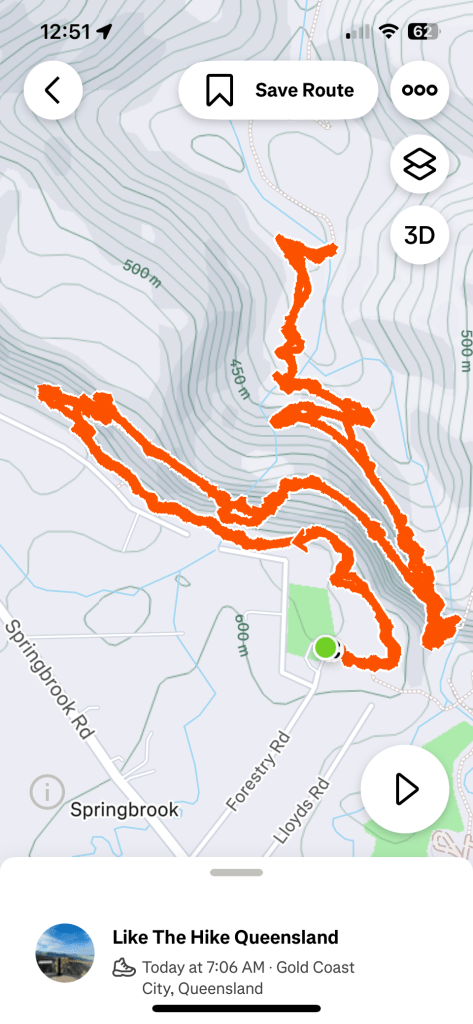
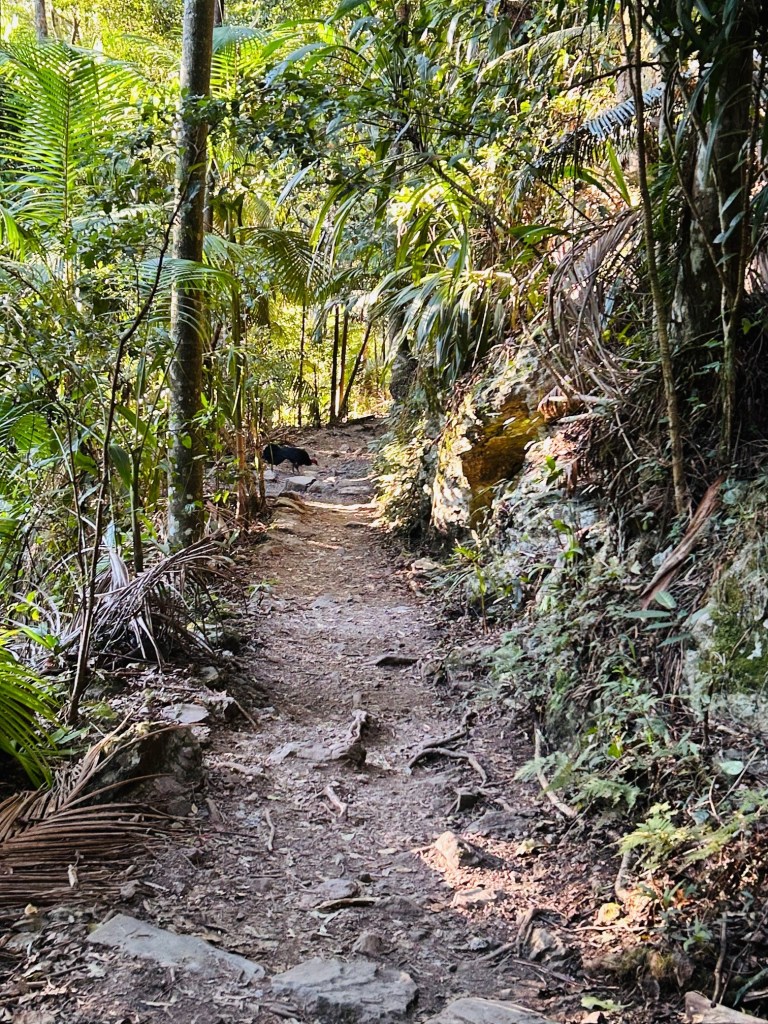
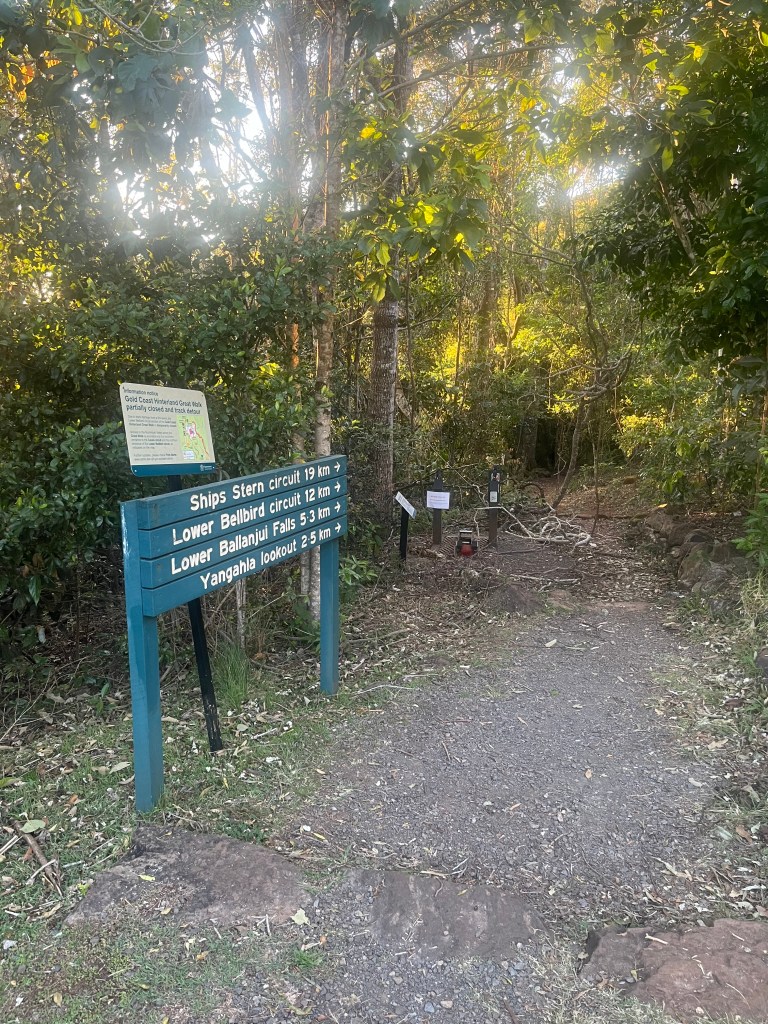
I started out on the Purling Brook Falls circuit, walking clockwise. Just after the 1 km mark, the descent really begins, winding down into the rainforest. Around 1.7 km I passed a very confident bush turkey, as they tend to be, strutting across the trail like it owned the place.
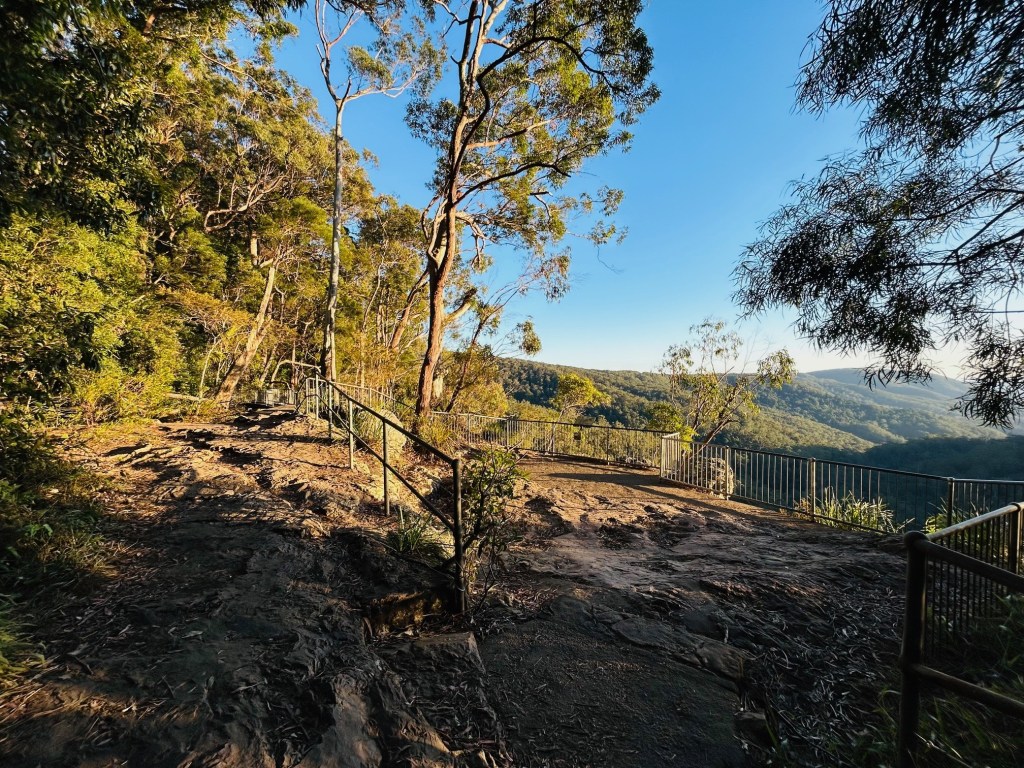
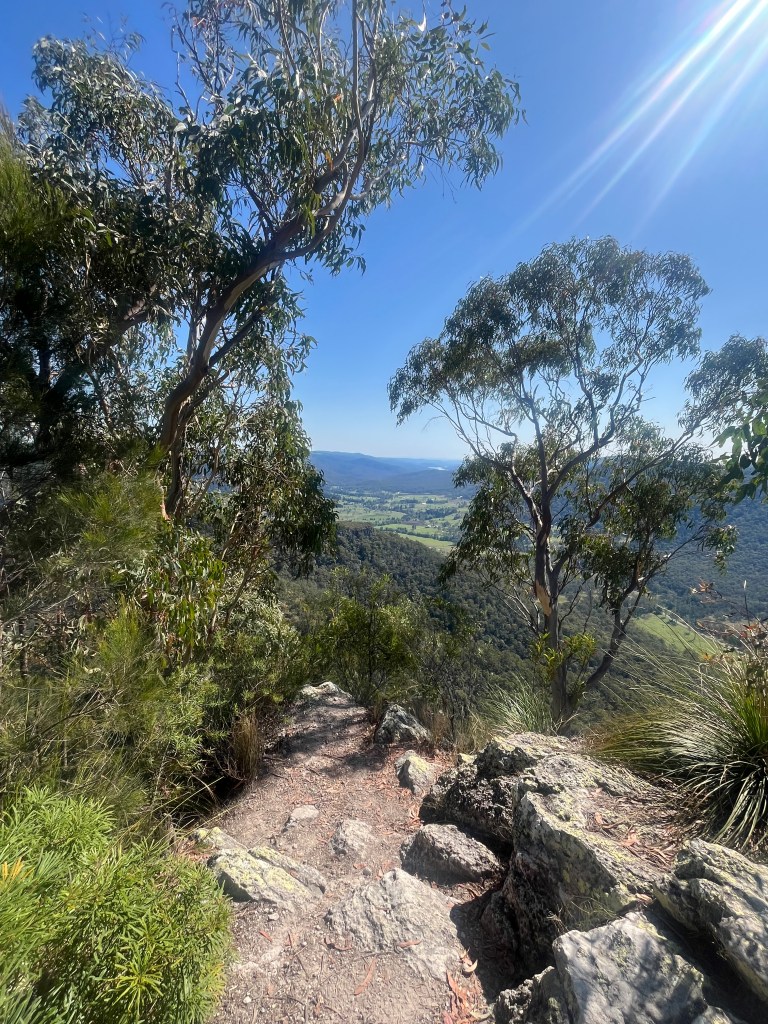
Owning the trailVery comfy around hikersThe viewing platform at the top of the escarpment
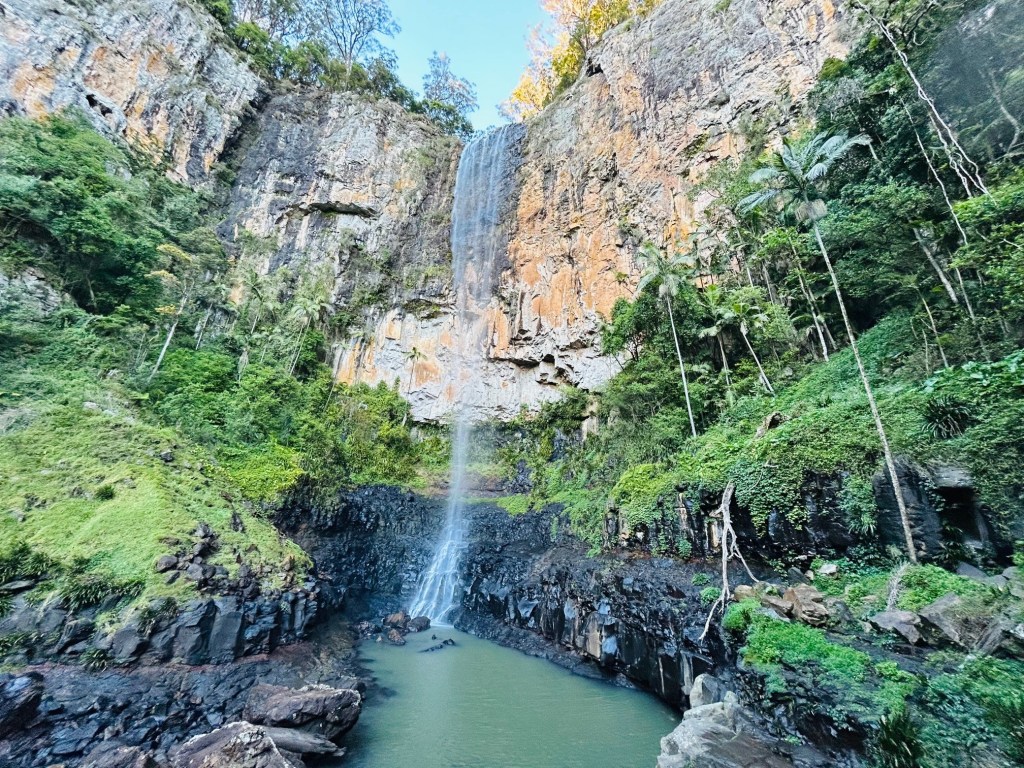
By the time I hit the 2.5 km mark, I’d reached Purling Brook Falls, also the turn-off for Warringa Pools. The falls were beautiful, even if a little underwhelming given all the rain we’ve had lately. Still flowing, but not the dramatic cascade I expected.
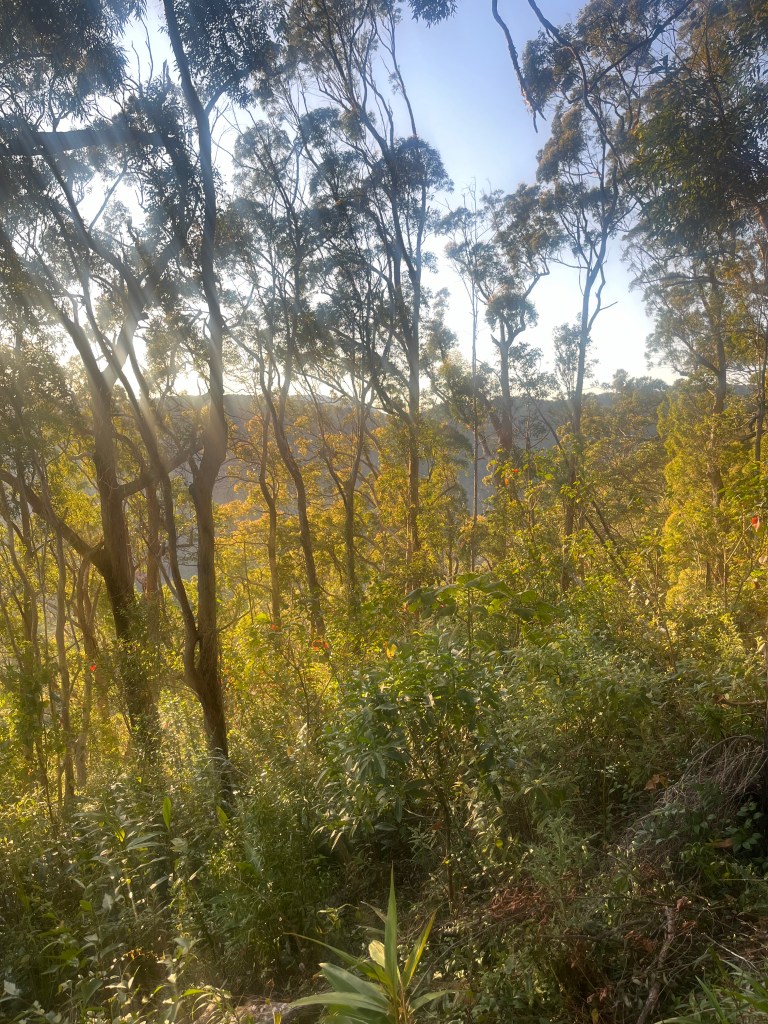
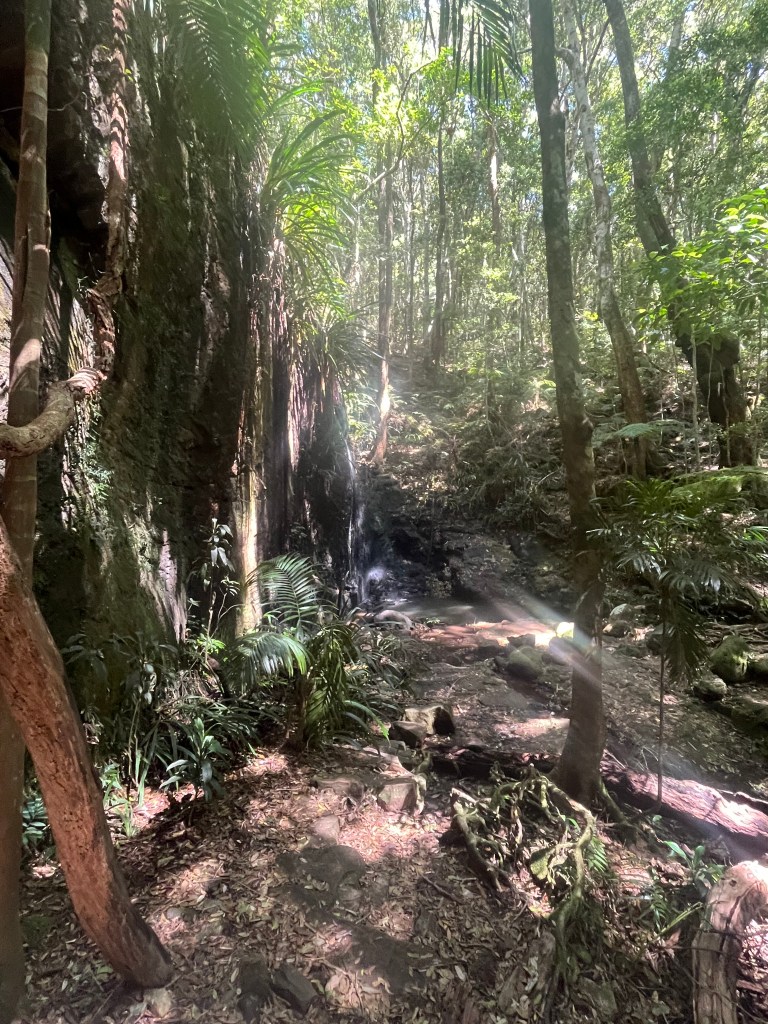
Once you’re in the gully, the air shifts. It’s damp, cool and a bit wild. The wind was whipping around where the water hits the rocks, adding to the atmosphere. The rainforest down there is proper Jurassic Park stuff.
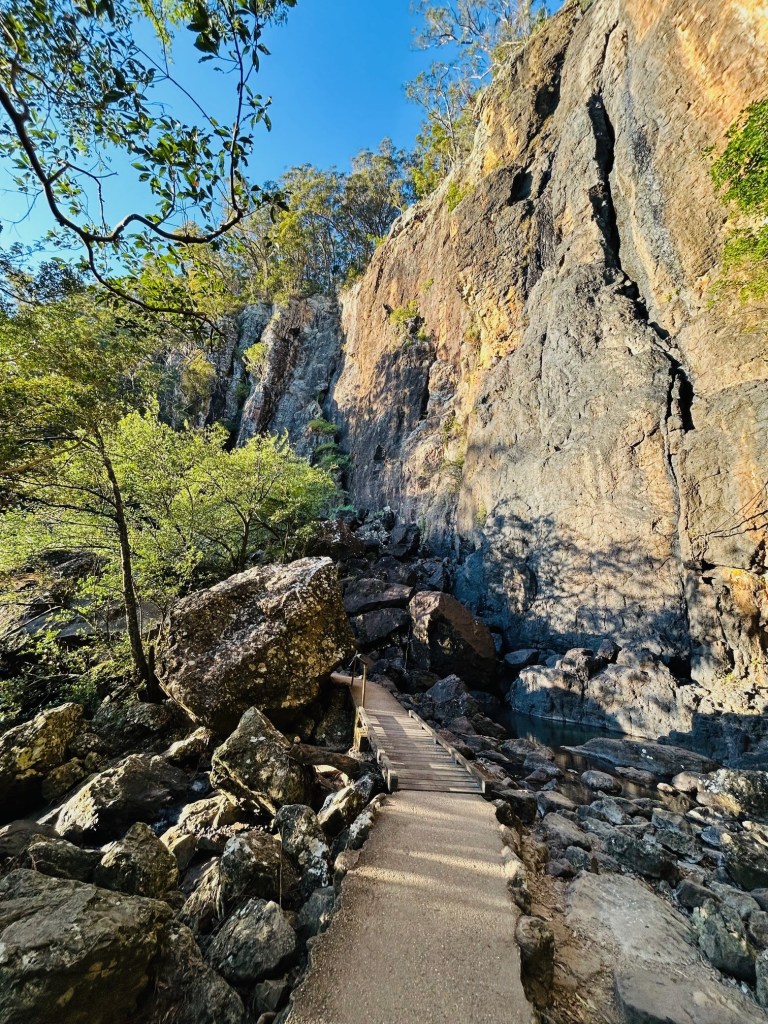
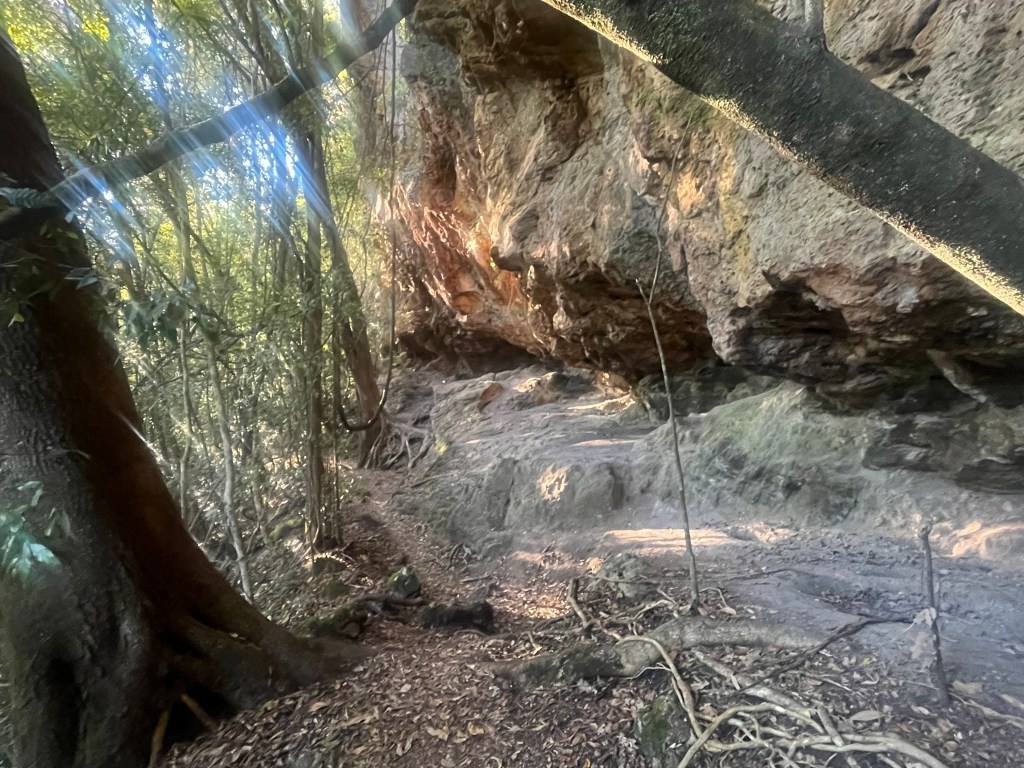
Walking through the cliffsPays to be early, had the falls to myself!Lush and green, but a little less flow than I expected
To The Pools
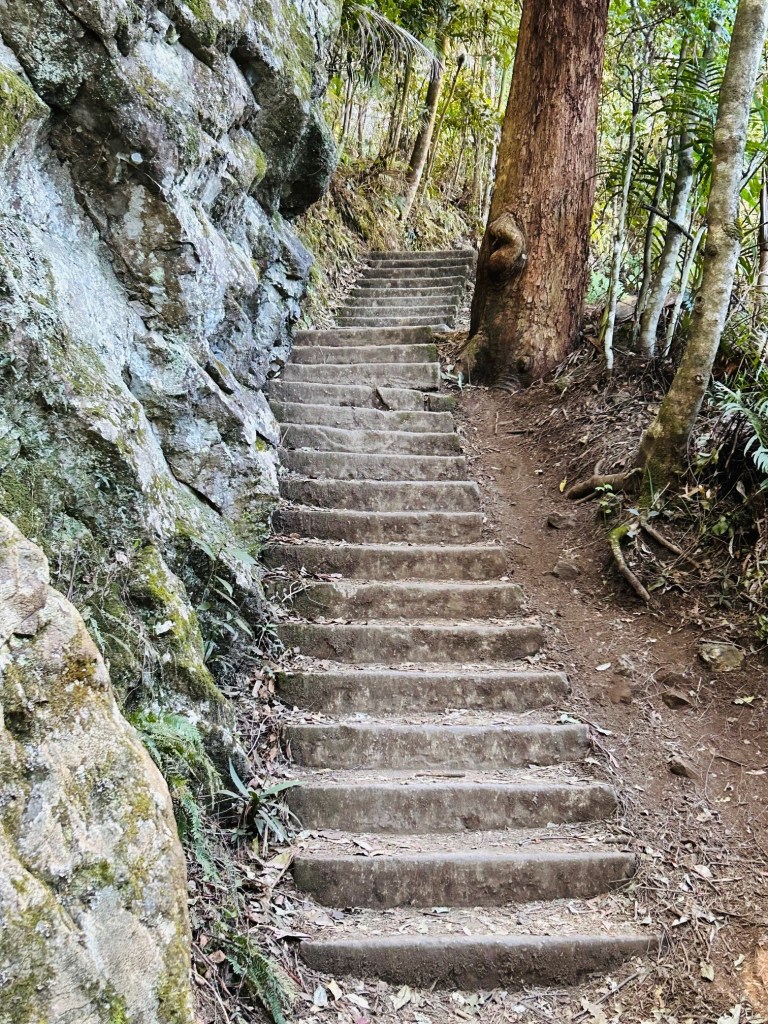
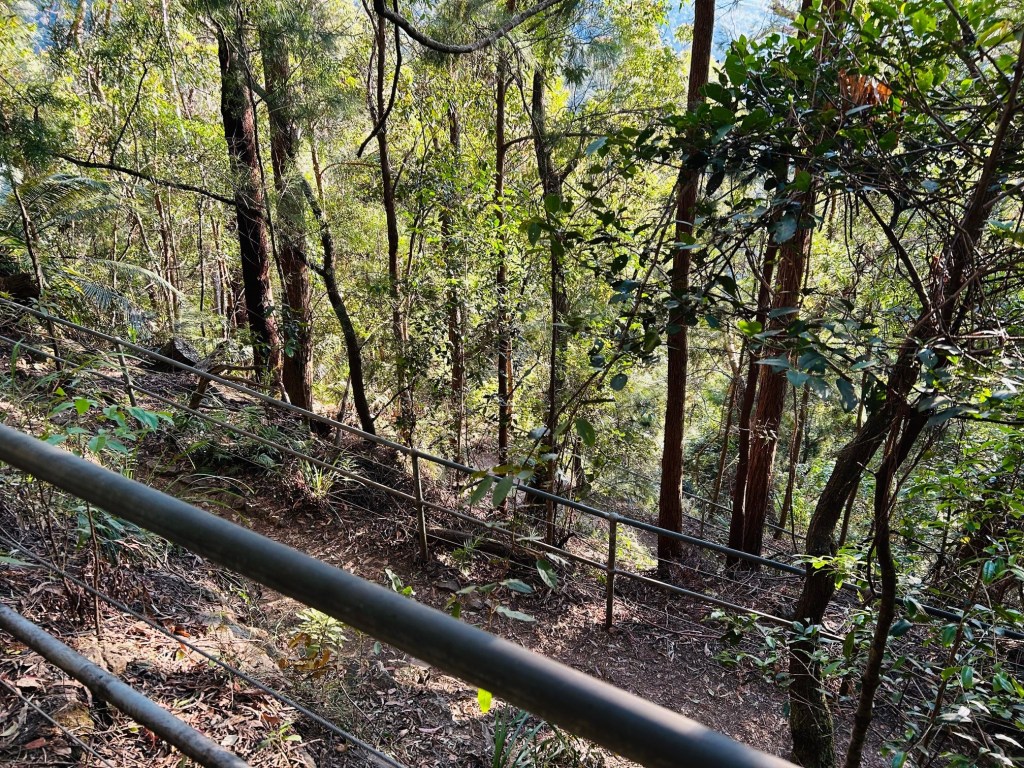
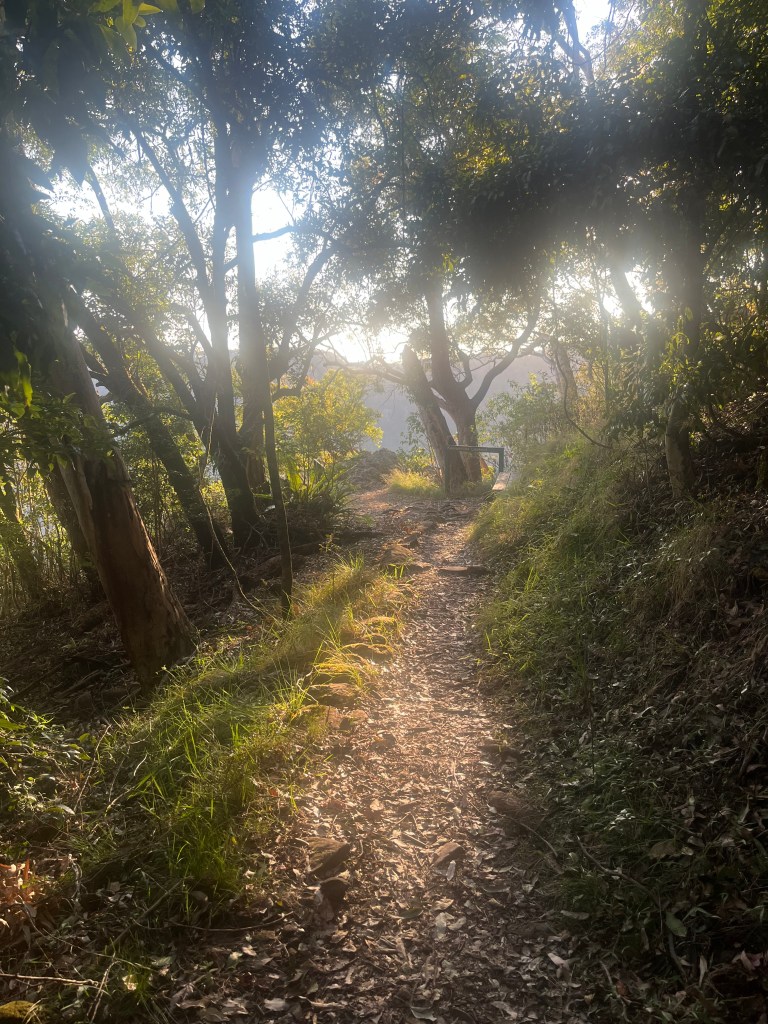
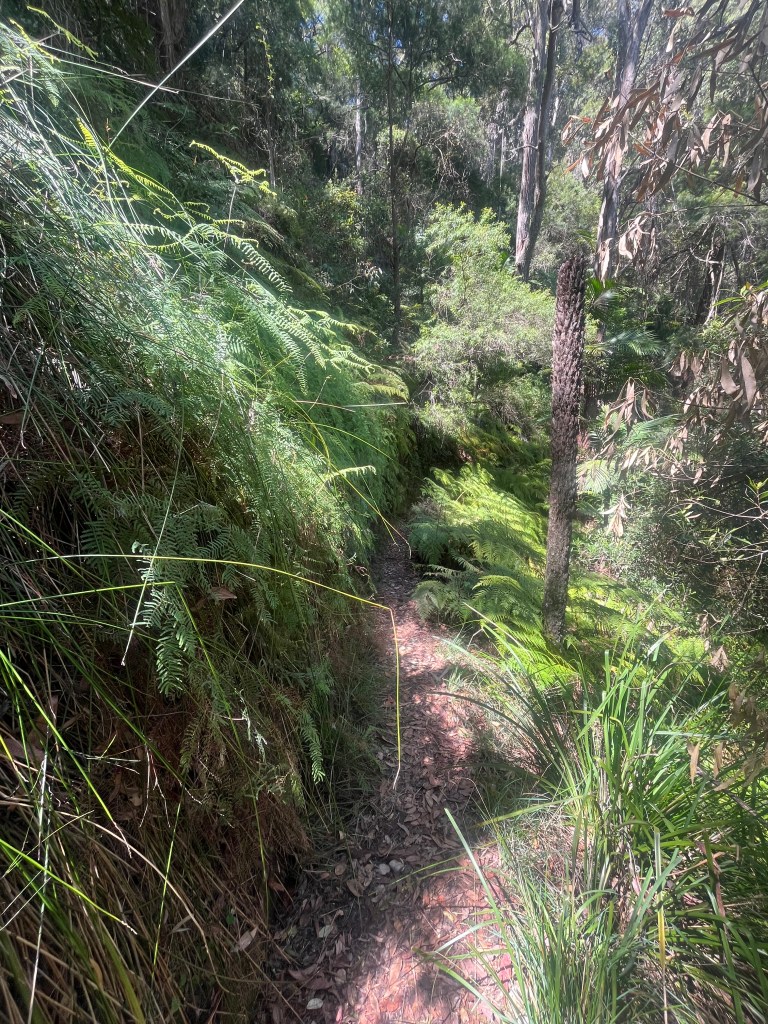
At 3.6 km you cross what I’m calling the Billy Goats Gruff Bridge, a sturdy little crossing that’s clearly built with care, like the rest of the trail. The path has been cleverly designed with mini steps and water runoff grooves to protect against erosion, especially with the recent rains.
Cute!An example of the 300+ steps you’ll traverseClever
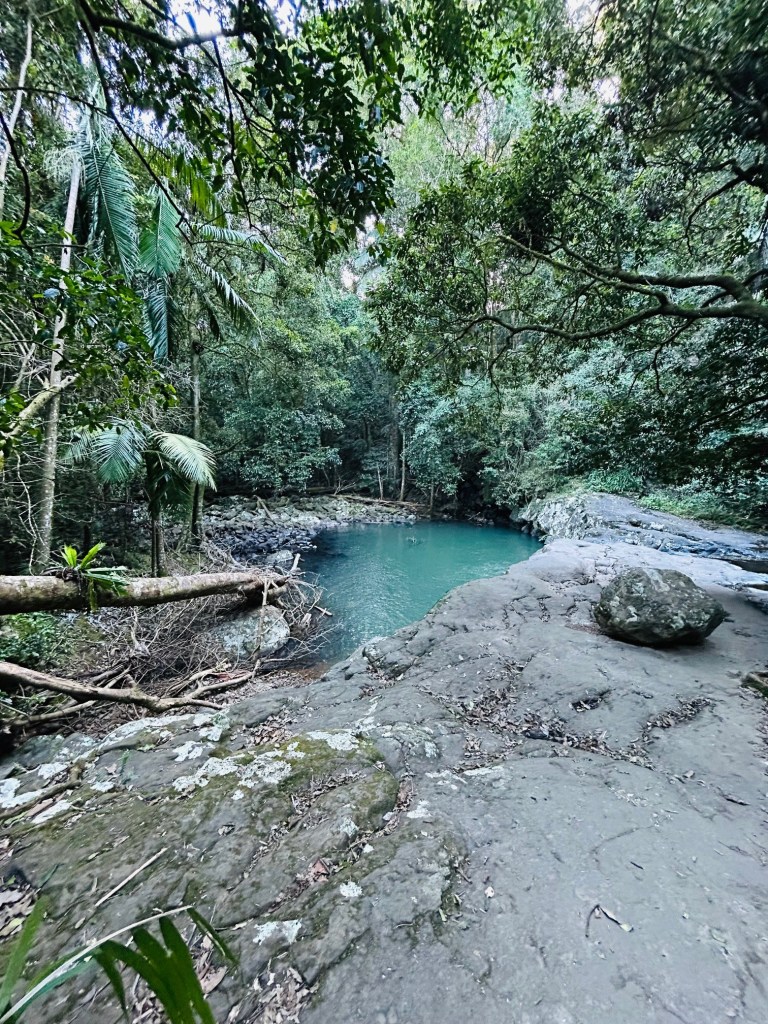
By 4 km I reached Warringa Pool, a perfect little oasis to stop, take a breather, sip some coffee, and enjoy the sounds of the rainforest. It’s a great reward for the effort of getting down there… because the real work is still to come.
My trusty coffee thermosLooking upstreamThe beautiful Warringa pool
And Back Up Again
The climb out is, quite honestly, a slog. About 4 km of constant uphill, gaining over 300 metres in elevation. That’s higher than the Eiffel Tower. I’m not saying I was climbing the Eiffel Tower in hiking boots, but it definitely felt like it. My heart rate was hovering around 150 bpm just to keep moving.
I was distracted (thankfully) by a chorus of birdlife, kookaburras laughing from the treetops, and what I think was a whipbird duet: the female answering with two sharp whips after the male’s call. Hearing her reply was a bit of a thrill as it’s rare to catch both ends of the conversation.
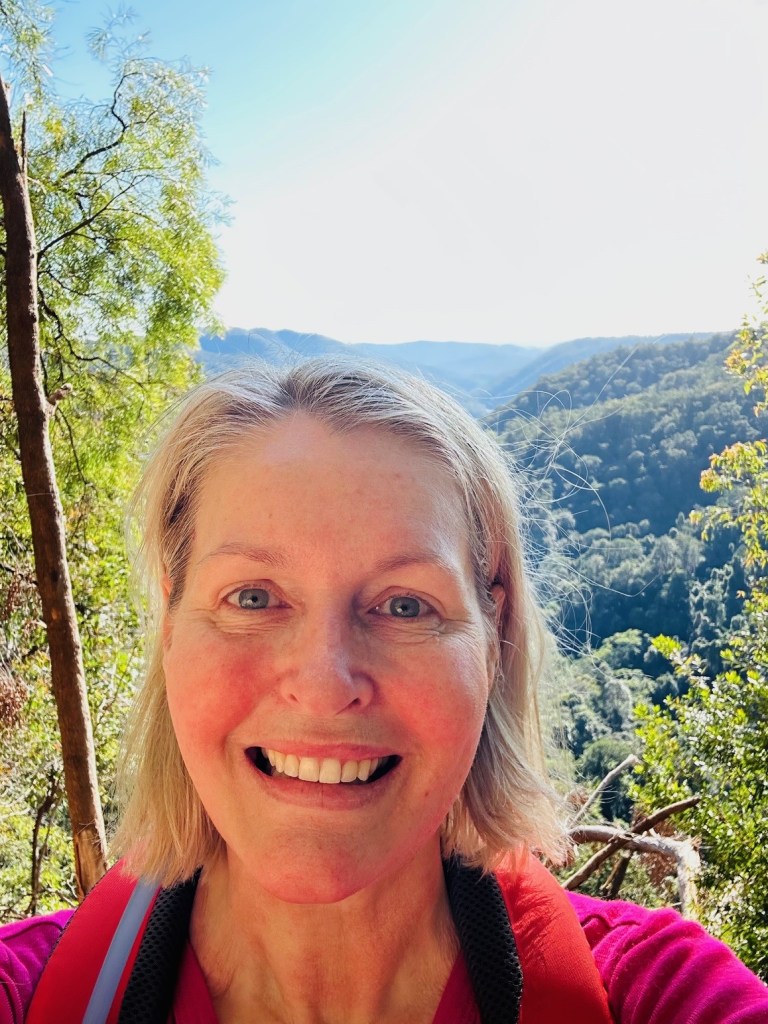
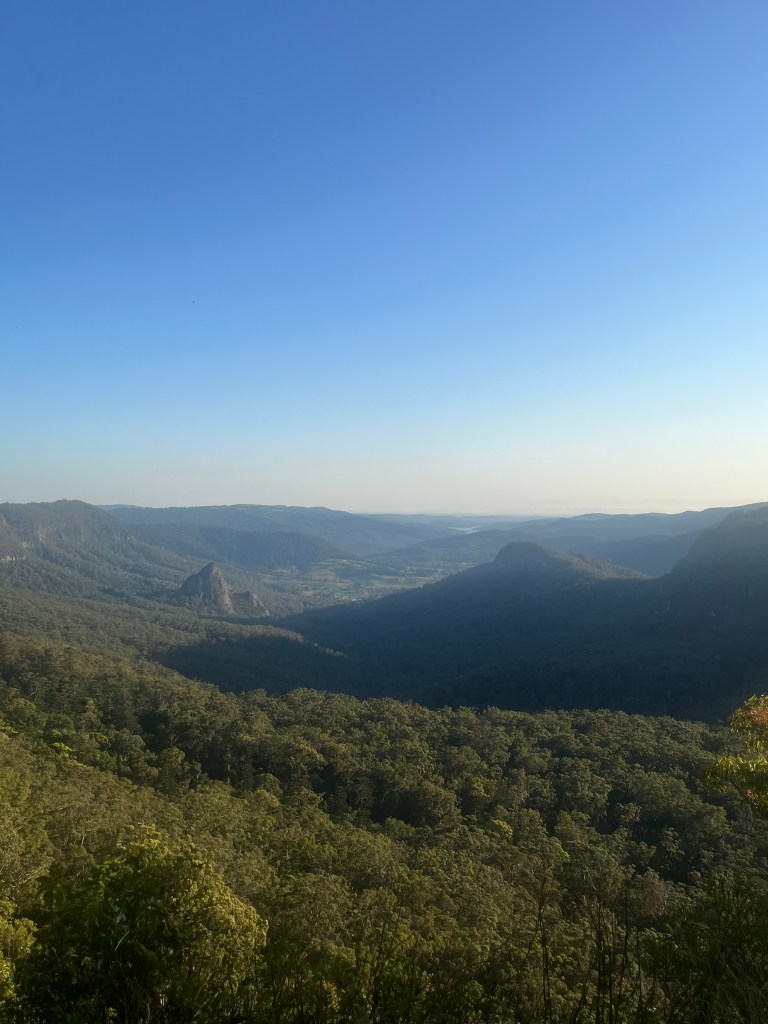
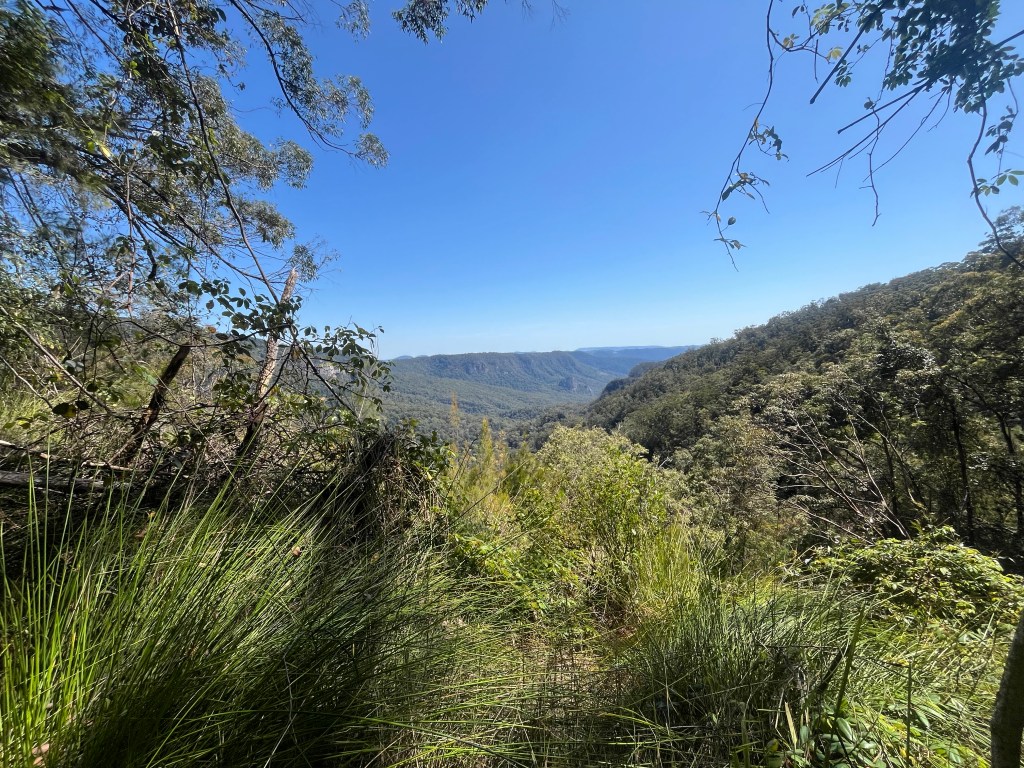
At the top, no need for jumpers or hats!Top of the fallsAnd a glorious mountain view
I made it back to the top at the 7 km mark, sweaty, satisfied, and very aware of my quads. The last stretch along the top was noticeably busier, with plenty of hikers starting their days. A reminder that the full circuit isn’t open right now, so if you’re planning the walk, check in advance or be prepared to double back like I did.
Looking back down from whence I came…Down the valley to the coast
Final Thoughts
Despite not being able to do the full loop, this was a challenging and rewarding hike through one of the most beautiful parts of the Gold Coast Hinterland. The rainforest is lush, the views are stunning, and there’s something deeply satisfying about making it all the way down to a waterfall pool and then conquering the climb back out.
So if you’re up for a bit of a workout with some serious nature vibes, give this one a go. Just bring water, a snack, and maybe a second pair of legs for the walk back up 😉
As the crisp bite of autumn rolls into Tamaki Makaurau (Auckland), there’s no better time to lace up your boots and head for one of the city’s most iconic walks, the loop through Cornwall Park and up to the summit of Maungakiekie, also known as One Tree Hill. The leaves are putting on their best autumn fashion show, there’s a gentle crunch underfoot and the sheep are living their best lives, like they own the place, which to be fair they kinda do.
Cornwall Park in autumn is pure magic. Towering oaks, sycamores and liquid ambers are bursting into colour, paths wind past stone walls, grassy knolls and the occasional moo or baa remind you that you’re sharing the space with a range of original inhabitants. It’s a country getaway, minus the traffic, petrol costs and inevitable car snack disaster.
Winding through EpsomFirst park sign and side entranceOriginal Cornwall Park stones
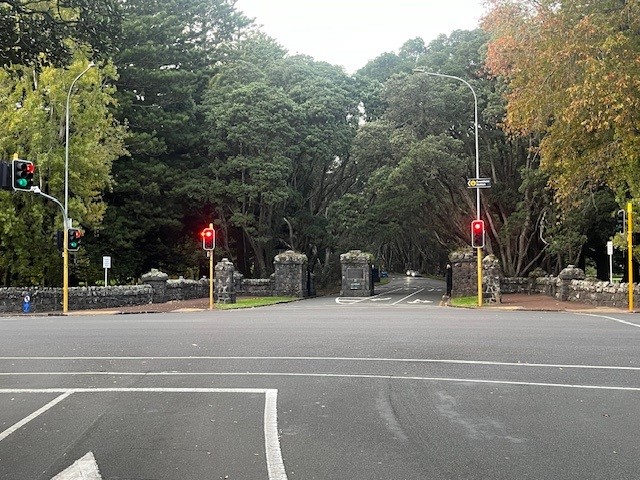
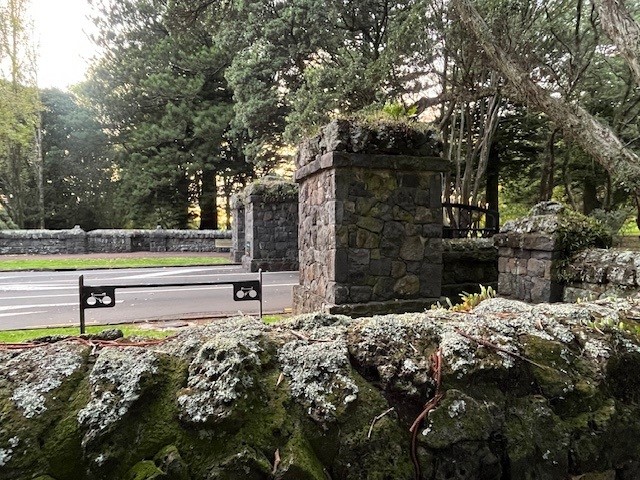
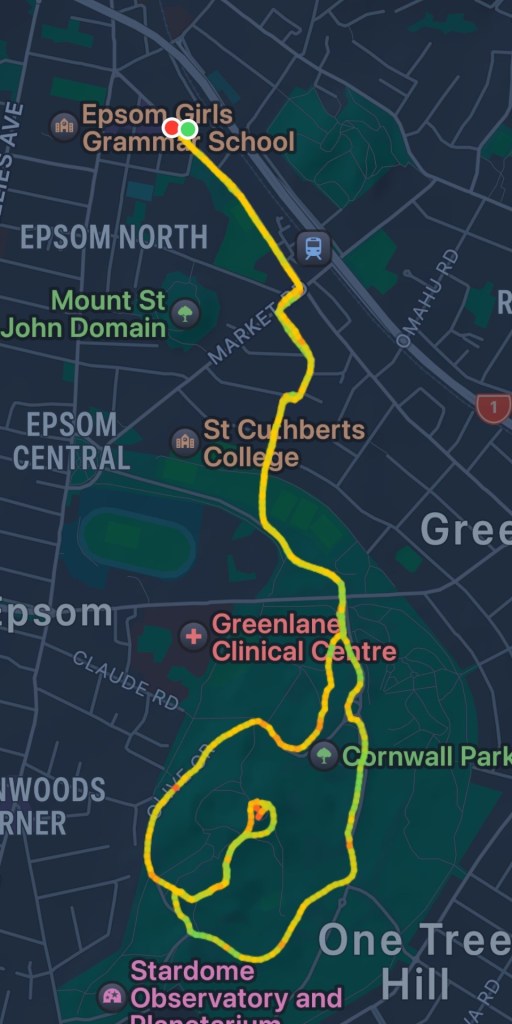
I started my 9km morning hike in Epsom and walked the quiet streets to an entry point for Cornwall Park, hidden away in a suburban cul-de-sac. Let Google Maps show you where you can walk, it’s surprising what pops up. Approaching the formal entrance to the park proper is rather imposing, with the liberal use of volcanic rock to welcome you.
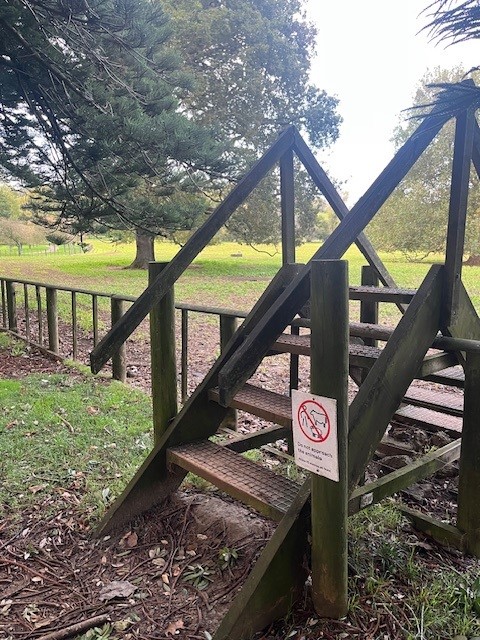
Formal gate columnsStiles for scrambling over stock fencesOne Tree Hill!
The real climb befgins as you head toward One Tree Hill, and yes the name is a bit misleading these days. Maungaekiekie is not just a pretty volcano, it’s a place steeped in history and cultural weight. It was once home to one of the largest Maori pa sites in the region, with evidence of terracing and fortifications still etched into its slopes. Ngati Awa and later, Ngati Watua call this maunga home, and standing up there, you can still feel its mana.
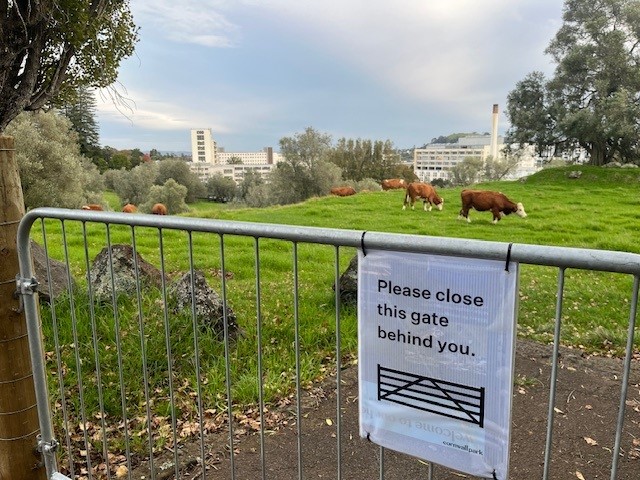
Stock paddocks on either side!Sheep grazing in the shadow of the obeliskStock grills to stop the cattle and sheep wandering out of the park
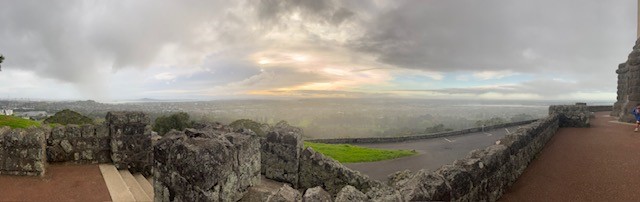
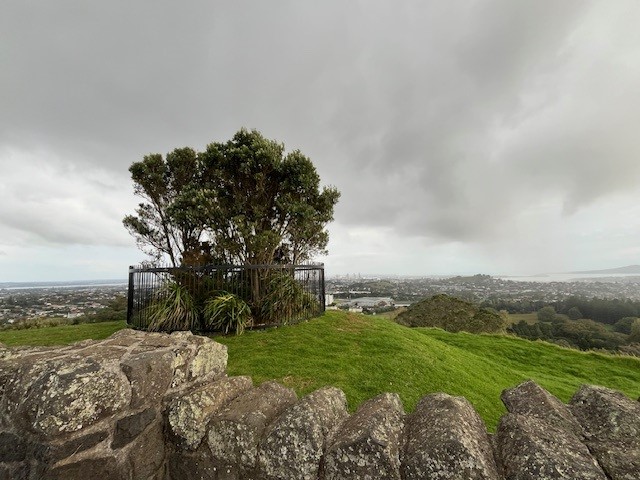
Pano view from the top – rather amazing morning
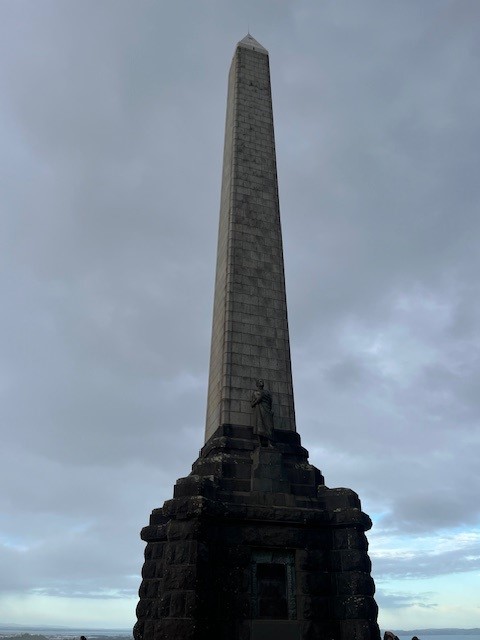
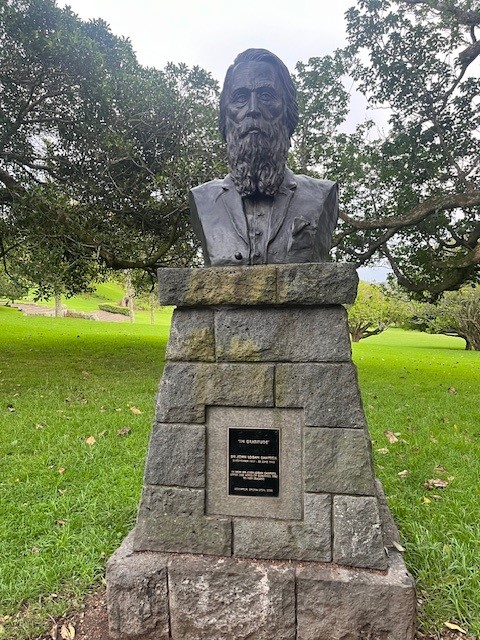
And the tree? That’s a story. The original totara was felled in the 1800s. A Monterey pine replaced it, standing proudly (if controversially) for decades until it was removed in 2000 after being damaged during protests. These days, the hilltop is mostly treeless, but the obelisk still stands tall, a monument to Maori, commissioned by Sir John Logan Campbell, who also donated the land that became Cornwall Park.
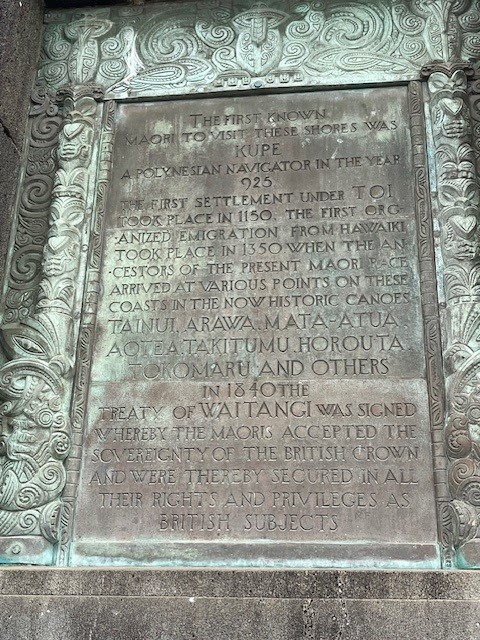
360 viewsold site of the ‘tree’Imposing obeliskOne of 4 statements on each side of the obeliskCold, rather windy but worth the hike up!
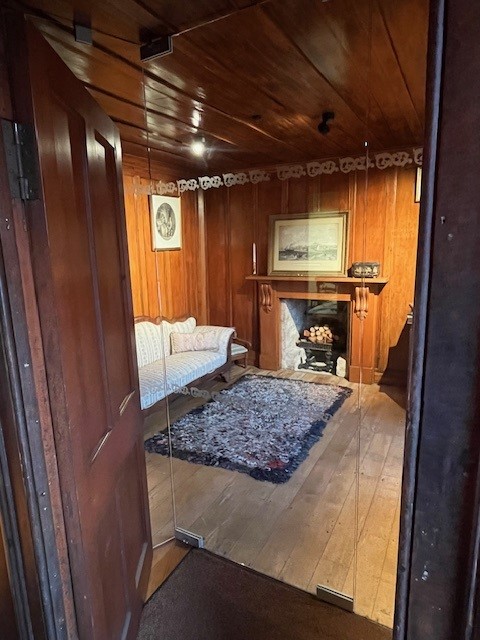
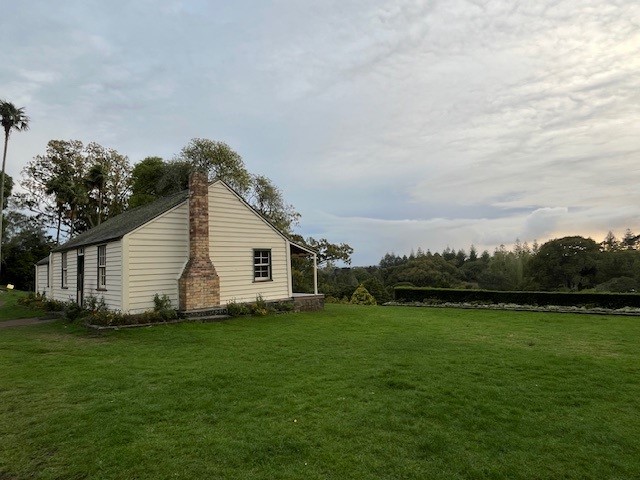
Speaking of legacy, don’t miss Acacia Cottage, nestled near the park’s main gates. It’s the oldest surviving wooden building in Auckland, built by Campbell himself in 1841. Stepping inside is just like walking into a time capsule, you can imagine what life might’ve looked like back when your sourdough came from necessity, not a pandemic hobby! It’s a perfect mid-hike break to soak up some settler history.
What makes this hike even better? It’s urban. No need to travel to the ends of the earth to get your nature fix. Urban hiking is the unsung hero of weekend adventures. It’s cheap, it’s close, and it comes with actual toilets, albeit disguised! You get the buzz of discovery without the panic of getting lost in the bush. And let’s be honest, exploring your own backyard feels good. It’s grounding. It reminds you that beauty, history and a bit of exercise are all within reach.
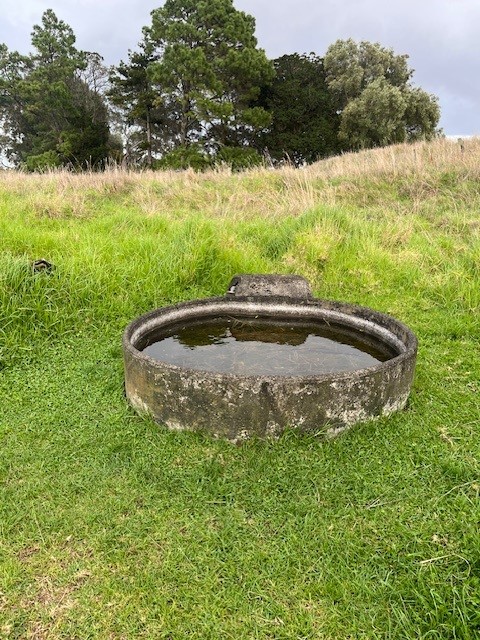
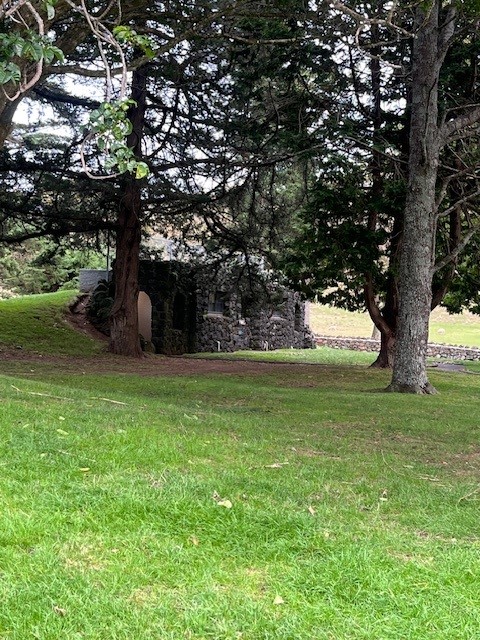
You know its real when there’s a stock water troughCleverly hidden toiletsMe trying to figure out the writing heading down the hillOne of the main roads – had the place to myself!
So, if you’re after a hike with heart, heritage and a side of sheep, pop this one on your list. Bring a mate, bring your dog (on lead please, the cows are sensitive), and enjoy the simple magic of walking where the city meets the sky.
Like the hike? You’ll love this one. See you next time out on the trails.
So, you’ve decided to join an amazing group of individuals and conquer the great outdoors. Good for you! Whether you’re a seasoned hiker or the kind who thinks taking the rubbish out in the dark counts as “adventuring”, there’s one thing everyone needs to get right: HYDRATION.
But not all liquids are created equal, and what you sip can make or break your hike. Let’s dive into the world of liquids that will keep you going – and maybe even help you survive the great outdoors (or at least look impressive while you’re out there).
1. Water – The Classic Companion
First things first, let’s talk about water. It’s reliable, classic, and does exactly what it says on the label – keeps you hydrated. No surprise here; it’s your go-to liquid for a day-long hike and not negotiable.
My water pack is totally worth the investment!
But let’s be honest, water can be boring. It’s the liquid equivalent of a first aid kit – practical and essential but not exactly the life of the party. I will say, though, when I hiked the Kokoda Challenge for 15 hours, plain cold water transformed into the nectar of the gods.
PRO TIPS
Take at least 2 litres of water for a full-day hike. A single 500ml bottle just won’t cut it.
Fancy it up with an infuser. Throw in some mint, lemon, or cucumber slices, and you’ll be the poshest person on the trail. Your fellow hikers might roll their eyes, but hey, at least your water won’t taste like, well, water.
2. Electrolyte Drinks: The Athlete’s Secret Weapon
Yep, hiking is definitely a sport, and electrolytes are like water’s smarter, more athletic cousin. When you’re sweating buckets and feeling like you’re auditioning for The Survivor, your body loses more than just water – it loses electrolytes. These are the little ions responsible for things like muscle function and energy. A big deal, actually.
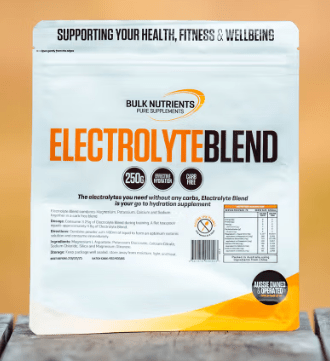
My go to for electrolyte replacementAbsolute game changer for longer hikes
Look for sports drinks like Gatorade or Powerade, or go for a tablet or powder you can add to water on the go or before you start.
PRO TIPS
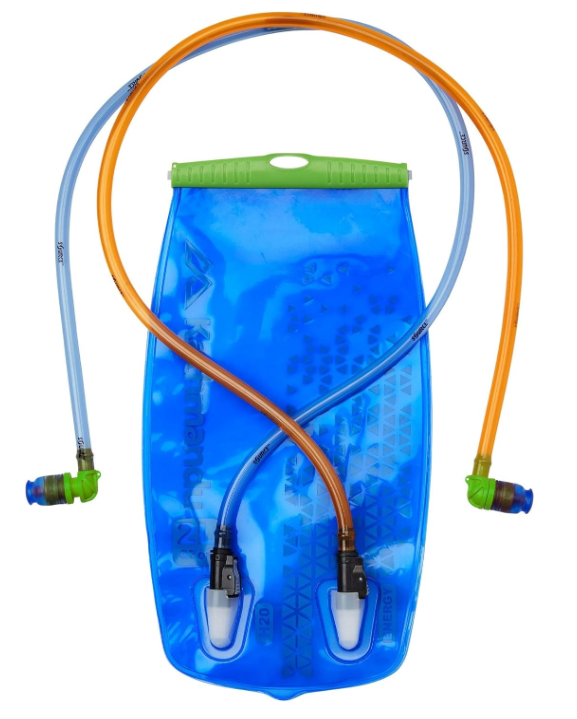
Don’t take electrolytes INSTEAD of water. Take both. For longer hikes, I use a dual bladder from Kathmandu. Epic game changer.
Watch sugar content. Some sports drinks are basically sugar disguised as ‘performance enhancers’. You don’t want to crash 45 minutes into your hike because your electrolyte drink is a lolly in liquid form.
3. Tea and Coffee: Could be the Buzz that Backfires
Ahhhhh, coffee. The liquid motivation that gets me out of bed, into my hiking boots, and out the door. Tea is also a very civilised choice for a little caffeine kick. BUT – and this is a big BUT – these liquids have a dark side. Caffeine is a diuretic, which means it will have you looking for the nearest bush more than once.
However, I run the gauntlet because I LOVE a coffee break on a day hike. And, let’s be honest, hiking must be about what you enjoy. I found a fantastic little thermos in Japan when hiking Kumano Kodo, and I’m now a devotee of coffee whenever and wherever I hike. I’ve made peace with the fact that a quick wee behind a tree is all part of the fun.
Say hello to my two coffee carriers…blue and green!
4. Coconut Water: The Trendy but Worthy Pick
Coconut water is like the Insta influencer of hydration. It’s everywhere, it looks incredible, and it swears it will change your life. But surprisingly, it’s not just a fad. Coconut water is rich in potassium and electrolytes, making it a decent option for rehydrating on the go.
PRO TIPS
It’s not going to quench a heavy thirst like water or a sports drink. It’s more like a bonus drink – the one when you’re taking a breather and feeling a bit extra.
I really don’t like lukewarm coconut water; it’s like drinking…blerk. Get yourself some 300ml sizes, freeze them, and enjoy them on the trail once they’ve thawed. They can also keep food cool – how clever is that!
5. Soup: Yep Soup!
You didn’t misread me. Soup can actually be an incredible hiking liquid, especially if you’re trekking in cooler climates. Imagine you’re halfway through your hike, and instead of slurping boring old water, you pull out a thermos of warm, savoury goodness. Hydration and calories in one go – you can thank me later 😉
PRO TIPS
I would recommend avoiding chunky soups; blended soups are best. There’s nothing worse than a log jam in the thermos as you try to shake it out and end up wearing it.
Watch temperatures. My little Japanese thermos is a beast for keeping fluids at entry temperature, so don’t pack a scalding soup – go for soup on the warm side; otherwise, you won’t be drinking it until you’re driving home.
6. Avoid Soft Drinks or Sugar Fixes
You might be tempted to chuck a fizzy drink or energy shot into your pack, but hold your horses. Soft drinks are loaded with sugar, which leads to an energy spike and inevitable crash, usually at the worst moment. Imagine being halfway up a mountain and realising you have the energy of a sloth in slow motion.
As for energy drinks? Unless you want your heart racing faster than a Swiftie with a VIP meet and greet pass – leave those at home. Save the heart-pounding excitement for when you see that “danger cliff edge” sign.
Te Mata Peak in New Zealand, now that’s a cliff edge!
Wrapping It Up: Hydrate or Hike NOT
So, water is your MVP, but a bit of variety (electrolytes, coconut water, soup) can spice things up – without turning you into a mobile sugar factory. Plan ahead, sip smartly, and your hike will be a great memory rather than a nightmare.
I’m keen to hear what you think your ‘ride or die’ hydration options are when you’re out hiking, comment below and lets see what new ideas we can come up with 🙂
See you out on the trails, and may your bottle never run dry.
Hello fellow hikers/foodies! As Queensland is fully into summer (even though we are officially still in spring), my hiking plans are in hiatus for a couple of months due to my aversion to ticks, leeches and hiking in 32 degree heat. Never fear, we have lots to talk about, including the fuel that will get you from start to finish feeling great!
When you hike, what you take in your backpack is just as important as the trail itself. Every item serves a purpose, from water to a whistle, but few are as crucial as your food choices. The right snacks will fuel your body, keep you energised, and ensure you enjoy the adventure to its fullest. Whether you’re tackling a short day hike or a multi-day trek, here are my top six food items that I take along and why they are my ‘ride or die’ choices.
1. Nuts and Seeds: The Ultimate Energy Booster
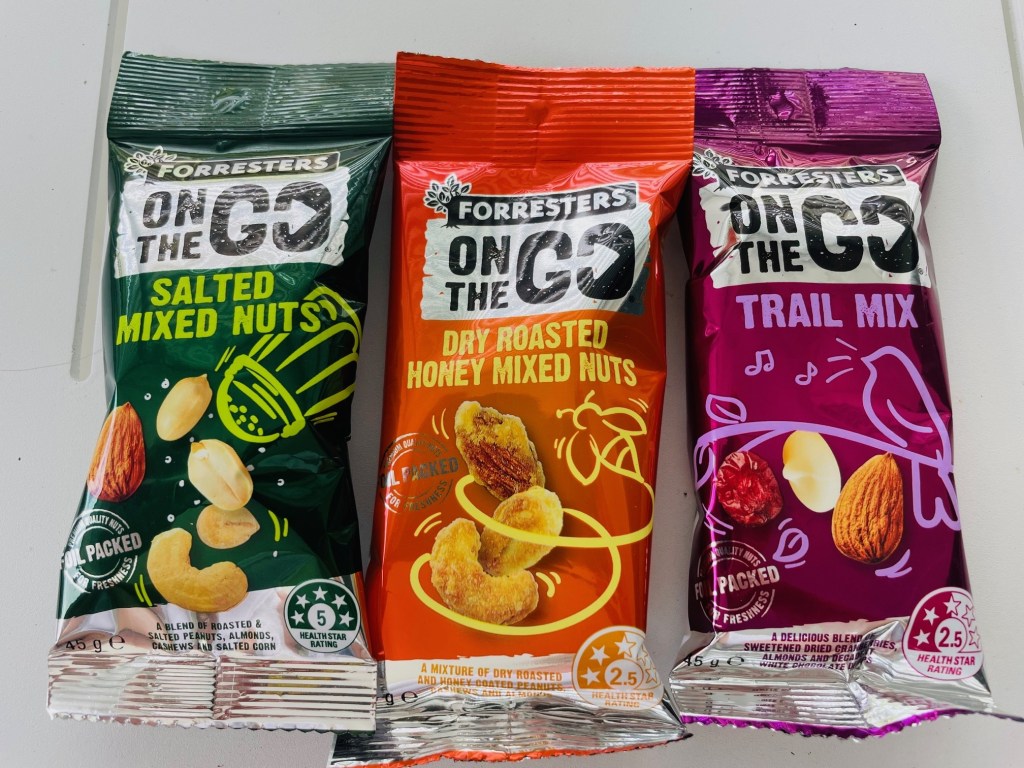
Nuts and seeds are powerhouses of nutrition, offering a perfect balance of healthy fats, protein, and carbohydrates. They’re lightweight, easy to pack, and don’t require refrigeration, making them an ideal hiking snack. A handful of almonds, walnuts, cashews, or mixed seeds can deliver a concentrated source of energy, which is essential for hikes when you need sustained fuel.
Options that I buy from Aldi, good sizes and scrumptious!
Why it’s essential:
Energy Dense – high in calories, perfect for refuelling on the go
Healthy Fats – keep you feeling full and satisfied
Protein Packed – supports muscle repair and recovery, especially during strenuous hikes
You can create your own trail mix (or scroggin, as Aussies and Kiwis call it) by combining nuts with dried fruits and chocolate for an extra energy kick. Opt for unsalted nuts to avoid excessive thirst, and try different combinations like pumpkin and sunflower seeds to keep things interesting.
2. Dried Fruits: Natural Sweetness for a Pick-me-Up
Dried fruits are nature’s lollies, providing a quick burst of sugar easily digested and converted into energy. They’re rich in vitamins, fibre, and natural sugar, making them a perfect companion to more protein-heavy snacks like nuts.
Some of the best dried fruits for hiking include raisins (small but packed with energy), apricots (high in potassium, important for electrolyte balance), dates (excellent for slow-burning energy and fibre) and banana chips (crunchy and sweet!).
Why it’s essential:
Fast Energy – replenishes sugar levels when energy dips
Lightweight – easy to pack and carry
Nutrient Dense– rich in vitamins and minerals
3. Jerky: Protein for Muscle Repair
Whether meat or plant-based, jerky is a high-protein snack perfect for the trail. Protein helps maintain muscle strength and aids in recovery, especially during longer or more challenging hikes.
A biltong style product available locally and delicious!
Since it’s dehydrated, jerky is lightweight and non-perishable, making it easy to carry for extended periods.
Why it’s essential:
Protein Rich – helps prevent muscle breakdown
Long Shelf Life – doesn’t require refrigeration and can last for weeks
Salty Goodness– contains sodium, replacing electrolytes lost through sweat
Choose a low-sodium jerky if you’re hiking in conditions where dehydration is a concern. Vegan and plant-based jerky options made from soy or vegetables are also available if you prefer a meat-free option.
4. Energy Bars: Compact and Convenient Fuel
Energy bars are designed specifically for active people, making them an ideal hiking food. They’re packed with essential nutrients like carbohydrates, fats and proteins in a small, easy-to-carry form.
Bars sitting in my pantry that come hiking with me (ignore expiry date on paleo bar!)
Whether you prefer muesli bars, protein bars, or whole food bars, these snacks are perfect for refuelling quickly and efficiently on the trail.
Why it’s essential:
Convenient – easy on the go, no preparation required
Nutrient Packed– offers a balance of carbs, protein and fats
Portion Controlled– helps manage your energy intake without over eating
Look for bars that are free from artificial additives and high in natural ingredients like oats, nuts and seeds. Avoid bars with too much sugar, as they can cause an energy crash later on.
5. Nut Butters: A Versatile Source of Energy
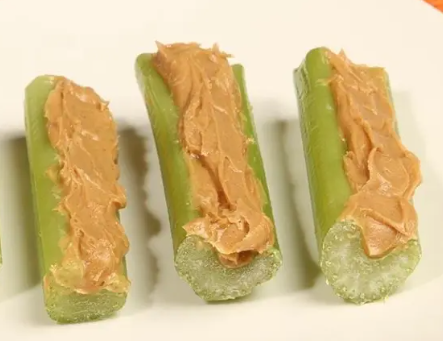
Nut butters are not only delicious but offer a great source of protein, fats, and carbs. When paired with celery or apples, they provide sustained energy, which is important for longer hikes.
Nut butters also come in single-serving packs, making them easy to carry and consume.
Why it’s essential:
Sustained Energy – combines fats and protein for long-lasting fuel
Versatile– eat it on fruit, veggies, bread or solo
Portable– single-serve packets are lightweight and easy to carry.
Prepare nut butter and apple/celery “sandwiches” ahead of time and pop them in a container for easy transportation and access.
6. Tuna Pots: High Protein with a Teeny Tiny Spoon!
Tuna pots or other pre-cooked options provide hikers a high-protein, filling option. They are convenient, lightweight and packed with omega-3 fatty acids, which help reduce inflammation and support heart health – essential for maintaining stamina during prolonged physical activity.
Yummy and fillingA non-tuna option
Why it’s essential:
Protein Rich – helps with muscle repair and keeps you feeling fuller longer
Omega-3s-supports overall health, especially heart health
Convenient– ready to eat and easy to pack, often available in flavours
Keep an eye out for packets that come with a spoon or easy-open designs for ultimate convenience, or you can make your own tuna, chicken or salami snacks to munch on.
Bonus Tips for Packing Hiking Snacks
When packing for a hike, it’s not just about the food you choose but also how you carry and consume it. Here are a few tips to help you make the most of your hiking snacks:
1. Portion Control
Pack enough to keep you energised, but avoid overpacking as extra weight can be a pain. Pre-portion snacks into small baggies or containers so you know how much you’re consuming.
2. Stay Hydrated
While food is essential, don’t forget about hydration. Many of the snacks I’ve mentioned are salty or dense, so fluid is key to staying in top form.
3. Mix and Match
Keep your taste buds tingling by catering to both sweet and savoury. Pair jerky with dried fruits or nut butter with celery. I sometimes take sushi or a salad wrap out on day hikes to keep snacks varied and something to look forward to at break time.
4. Leave Nothing but Footprints
Always make sure your wrappers and rubbish come back out with you. Our national forests are entrusted to us as hiking custodians – make sure you honour that trust.
5. Test New Snacks!
I can’t emphasise the importance of this tip. If you want to take a new snack, try it out ahead of time. This will avoid any nasty digestive surprises caused by food that might not suit you. Trust me; toilets out on the trails are few and far between…. 😮
So, whether you’re a seasoned hiker or just starting out, the right food can make all the difference in your hiking experience. From energy-boosting nuts to protein-packed tuna, these top six hiking snacks will keep you fuelled, energised and ready to tackle whatever trail you choose. So, next time you pack for an adventure, be sure to include these essential foods and enjoy your hike to the fullest!
See you out on the trails
PJ
PS – these suggestions are my opinion only. I am not a nutritionist and wouldn’t presume to give you dietary advice. Please speak to your doctor if you have specific dietary needs or health concerns.
Tackling the Ships Stern Circuit in Lamington National Park
Ahoy fellow hikers! Welcome back to another grand adventure, this time exploring one of Queensland’s treasures – the 20km Ships Stern Circuit in Lamington National park. A mere 70 minute hop from the Gold Coast, this park is part of the majestic Gondwana Rainforest, covering over 366,500 hectares of pure hiking heaven.
I’ve dallied with parts of Ships Stern before but never braved the full 20km loop. Well, today was the day! What could possibly go wrong, right? Spoiler alert: I didn’t anticipate the unseasonable heat, or the final unwelcome hitchhiker.
First Stage: Downward Delight (And Spiderweb Swords)
Being the clever clogs that I am, I arrived before 5.30am and parked at the top of the park near the Binna Burra Cafe, giving me an easy downhill finish to the hike. Plus, with a forecast of over 33 degrees Celsius, I wanted to beat the midday heat.
Pretty sunrise through the forestAlmost empty carpark
The first part of the trail was a lovely, gentle descent, perfect for soaking up the early morning rays….and as it turns out, spiderwebs. Oh, the webs! I became an impromptu samurai, waving a stick to fend off what felt like an entire arachnid population weaving across the trail! Note to self -arriving early means you get the fresh webs, lucky me.
start of the trail, make sure to clean your boots!Samurai sword in actionThe great work the parks staff do so we can enjoy the trails
At about 1.5km in I hit my first dry creek crossing and took in the beautiful views from Koolanbilba Lookout. The trail became steeper as I continued, but I couldn’t help pausing at a natural cave around the 2.6km mark. Who else had sheltered her over the centuries? I felt like an explorer uncovering new lands and treasures – until I remembered I was actually just sweaty and armed with a samurai spider-stick.
Second Stage: Snakes, Sticks and Stunning Views
By the time I hit the 6.5km mark, I started the uphill slog. Let’s be real, I was a little nervous that the rest of the hike might be all uphill from here – but hey, what’s life without a a challenge?
Bit of a clamber overRocking the hat…!Closed trails due to storm damageVery other worldly forest!
As I trudged upward, the trail opened up to spectacular valley views with grassy vistas, and I swapped my cobweb stick for a snake stick. in Queensland’s spring heat, snakes are out and about looking for love. Fortunately I only encountered one tine brown snake and it slithered away quicker than I could say, “NOPE!”
At 8.5km, I arrived at Charraboomba Rock, a stunning rocky outcrop with heart-stopping stairs that cling to the edge of the cliff. Heights aren’t my thing so I skipped this side adventure. Brave souls, you’re on your own for that one! I still had amazing views, so all was well.
Third Stage: Cliff Views and Cliffhangers
At 10km I found a perfect log for my snack break. Just me, my salad wrap, chocolate bar, and the valley stretching out below. I took the opportunity to spray myself liberally with insect repellent, than goodness for that decision as the next part of this tale will reveal!
Feeling refreshed, I set off again, only to find the second stunning lookout just 500m later. Could’ve had my breakfast with an even better view, but oh well! I had a sit and a look, and then continued along the trail, enjoying the breath-taking scenery and the stillness of the morning completely to myself. So far, I had not seen another soul on the trail – a very special experience.
By now I was halfway through the circuit and starting the long trek back. Around the 13km mark, I began the final ascent. I knew that the last 2km would be downhill, but getting there was a sweaty grind – happily the views made it worthwhile.
At 15km I took a breather at Nagarigoon Falls – the only ‘falling’ waterfall I found. Not a huge amount of water, but hey, it was still peaceful and pretty.
Fourth Stage: The Downhill Stretch (And… The Incident)
Finally, I reached the marker for the Border Track and the start of the downhill section, just 2.3km to my car, and more importantly, a flat white at the Binna Burra Café. With gravity on my side, I happily trotted along, oblivious to the horror that awaited me.
the lovely entry gates to the park
With around 1km to go, my backpack strap started to feel…odd. The right hand side was digging in, and no amount of adjusting seemed to help. But I pressed on, keen to finish. It wasn’t until I got back to the car that I discovered the truth.
Fifth Stage: THE TICK (Cue Dramatic Music)
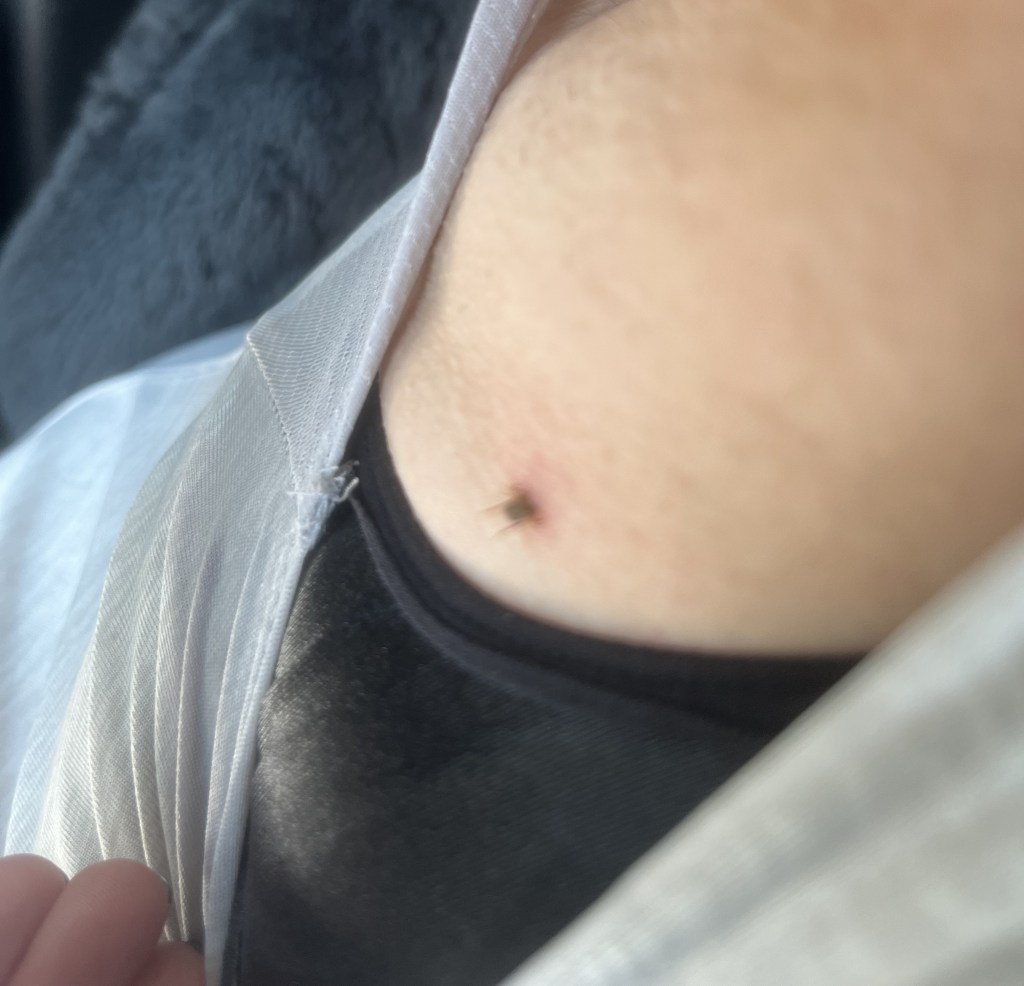
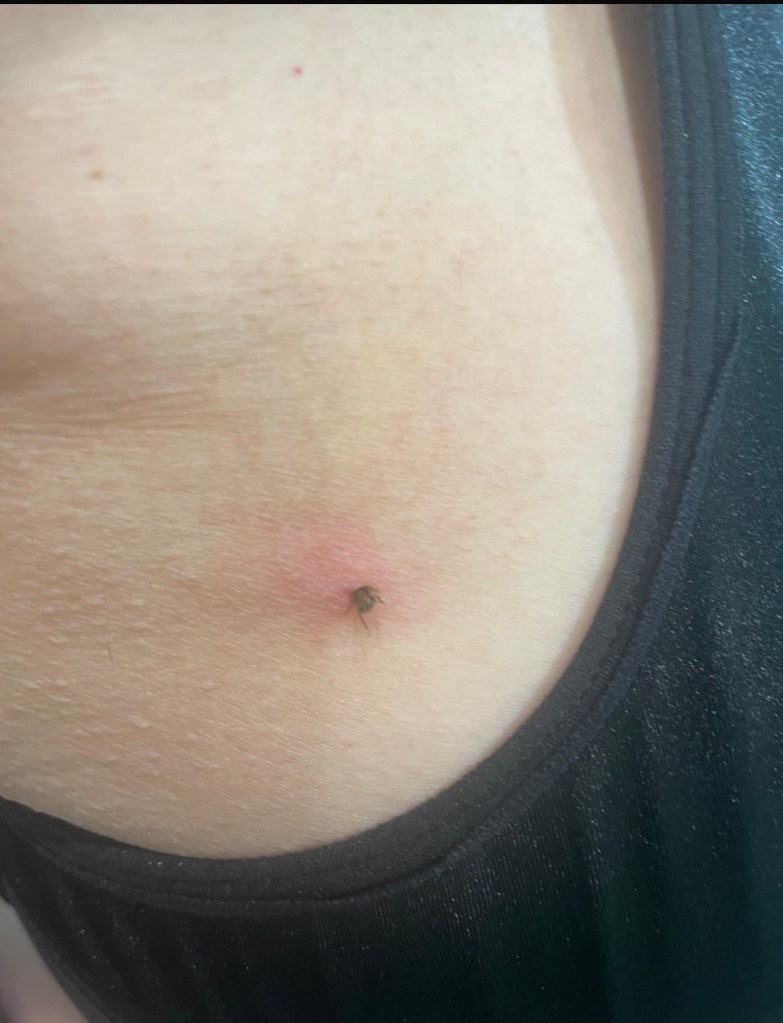
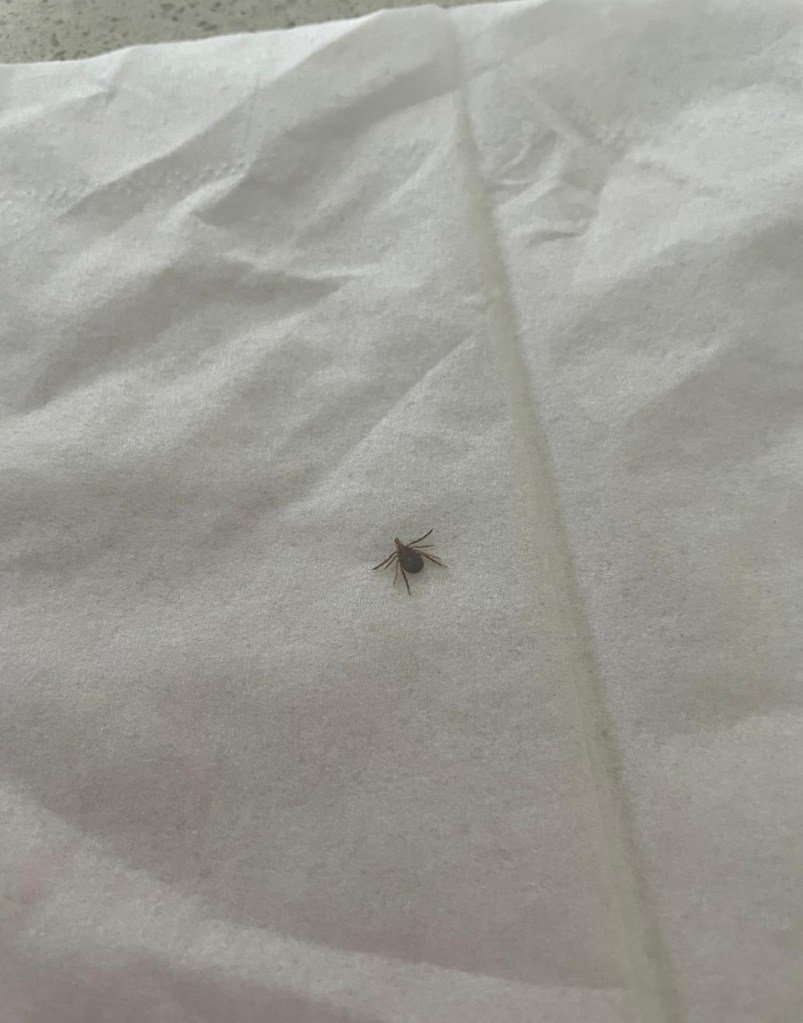
Back at the car, sipping my well earned coffee, the discomfort in the front of my right shoulder was getting worse. What was going on? I checked the area, and there it was. A massive black tick, wriggling happily away like it was at a buffet.
My photographic skills right handed without glasses!
I’ll spare you the gruesome details (yeah nah), but let’s just say that tick had dug in DEEP. With a 70 minute drive home, I had to resist the urge to yank it out, knowing full well you can’t just pull a tick out without risking leaving its head – and its toxins – behind. I emptied a half a can of insect spray on the little bugger and called my sister (a.k.a. tick removal expert). After a tense tweezer-tugging session at her place, the tick was out, intact, and my armpit was back to normal the next day. Crisis averted!
Final Thoughts
Tick drama aside, Ships Stern Circuit was another incredible experience. Stunning views, varied terrain and a good mix of challenge and fun.
Just remember – pack extra insect repellent, watch out for snakes and always, always check for ticks!!
Hello and welcome to my LIKETHEHIKE blog. I’m PJ and I write about the hikes I take, giving you insights, photos, commentary, tips, and tools so you can enjoy hiking and embrace the experience.
VELKOMINN TIL ISLANDS! We’re in Iceland! Land of fire and ice, home to huldufolk, Bjork, the cod wars, glaciers, puffins, $25 glasses of wine (!), and whales.
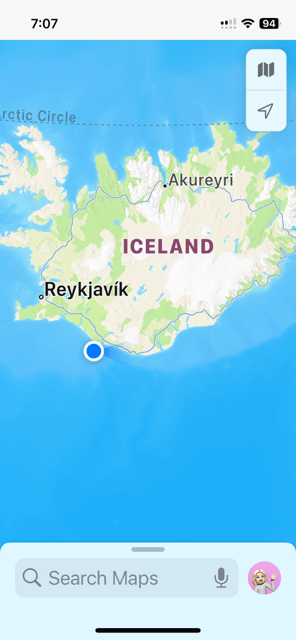
One of our destinations was the island town of Vestmannaeyjar. Located off the southern coast of Iceland, Vestmannaeyjar is a small fishing town on the island of Heimaey, and completely unremarkable except for an incident in 1973 that made global headlines and firmly planted this small island on the tourist map forever.
Before we get into the hike – and yes, I really did hike up and down a live volcano – a bit of context about Heimaey. It’s part of a group of 15 islands and has about 5,000 residents. Believe it or not, this makes Vestmannaeyjar the 12th most populous place in Iceland, given the total population is only 380,000, and 140,000 of those live in the capital Reykjavik.
Heimaey was settled sometime in the 9th century and has remained populated since then, despite losing large numbers of residents to a Turkish pirate raid in 1627 and then the inevitable disease and infant mortality in the 18th century.
Fast forward to January 1973.
Without any warning, an eruption started in the early hours of 23 January and completely destroyed about 60% of the town. Half the houses disappeared under a lava flow, and almost all of the residents were evacuated to the nearby mainland. Bad weather the previous week meant the fishing fleet was in port, miraculous indeed as this enabled the residents to be moved to safety. Amazingly, only one resident died during the eruption. Our local guide advised that the person had broken into a local pharmacy during the eruption and died from noxious fumes after lingering too long…. eek!
The eruption was declared over by July 1973, when the massive cleanup operation commenced. 300 houses had gone under the lava field, and the rest of the town was covered in thick black ash.
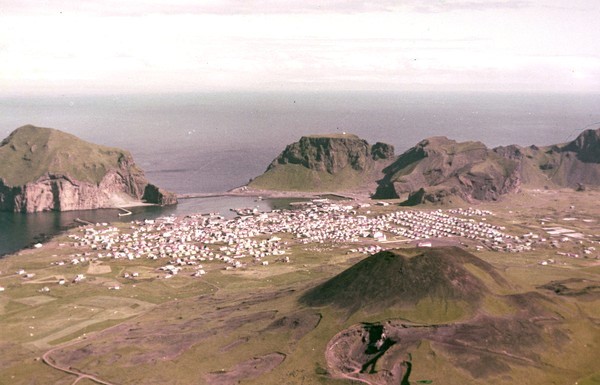
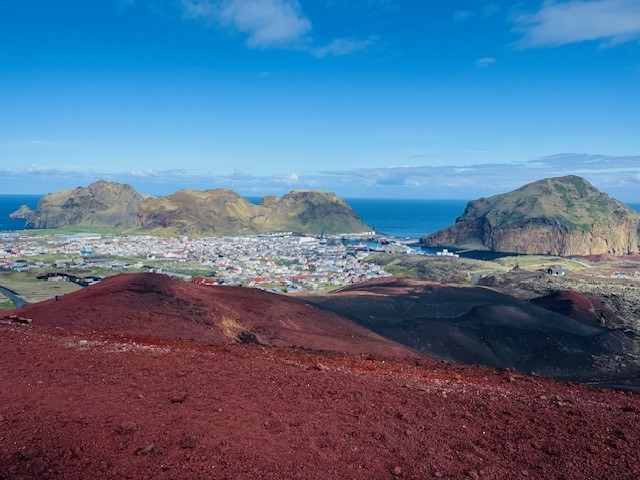
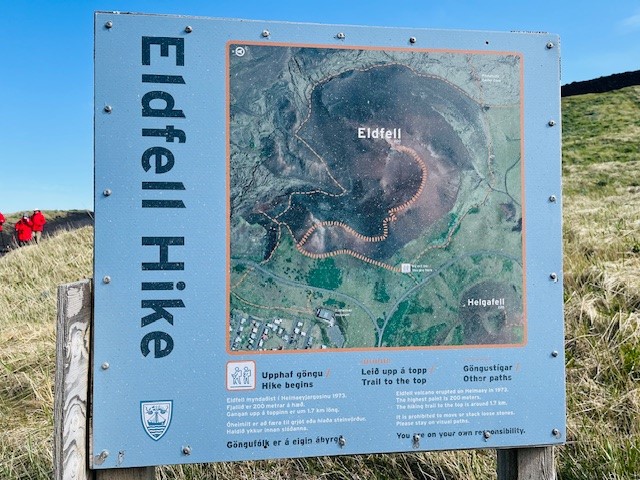
The result of the eruption was the creation of a brand new volcano called Eldfell (hill of fire). Eldfell recently turned 50 years old, so is younger than yours truly! The eruption and resulting lava flow increased the island size by about 20% and completely changed the coastline, pushing into the sea before finally cooling.
Eldfell was our hiking destination – I was going to climb an active volcano!!!
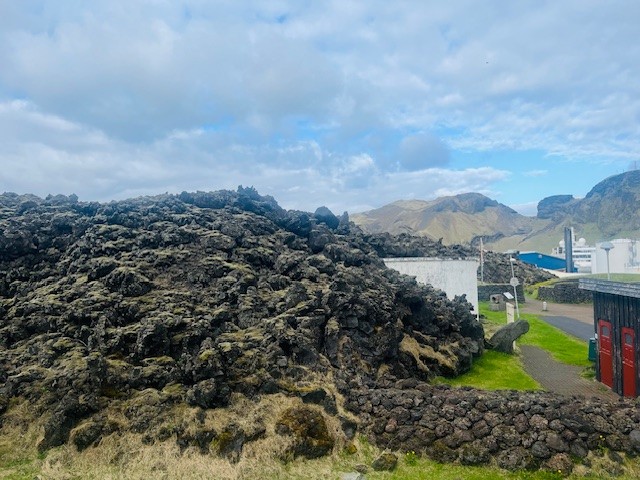
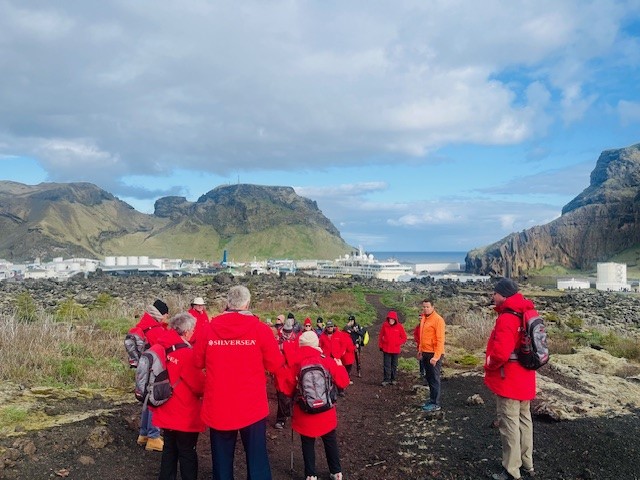
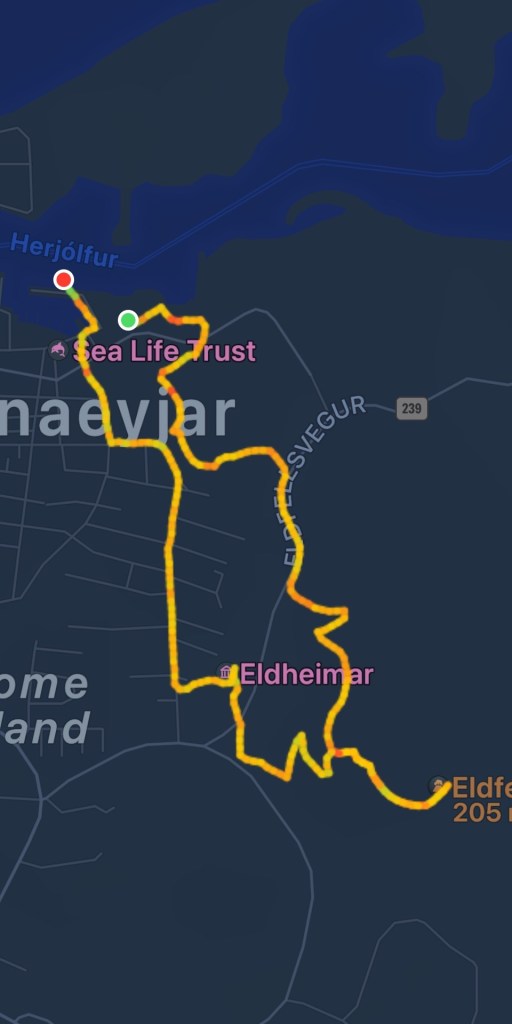
About 20 of us started but that number dropped quickly when the incline of the hike became apparent. We started at the port with our guide taking us past the edge of the lava field, pretty much where the residents were able to stop the lava flow by pumping sea water at it for over 4 months, via huge pumps provided by the US military.
Our very dry witted guideThe edge of the lava fieldLava overrunning the old town water tanks
The main export of Heimaey is fish, but not just for eating. The town manufactures fish oil, and also artificial skin for grafting – all from fish skin! Absolutely fascinating – if you can stand the smell of the factory 😦
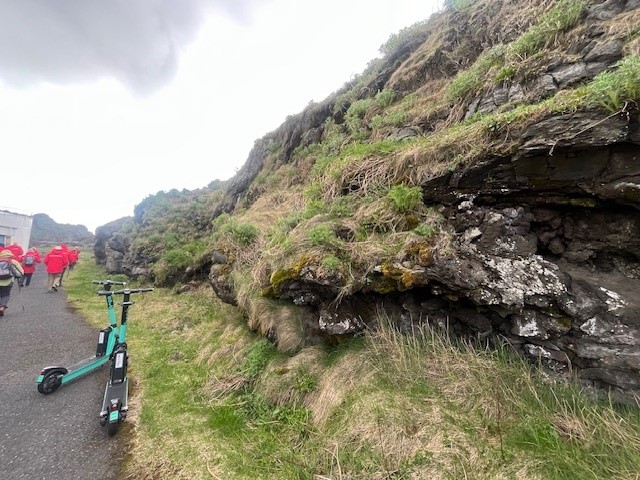
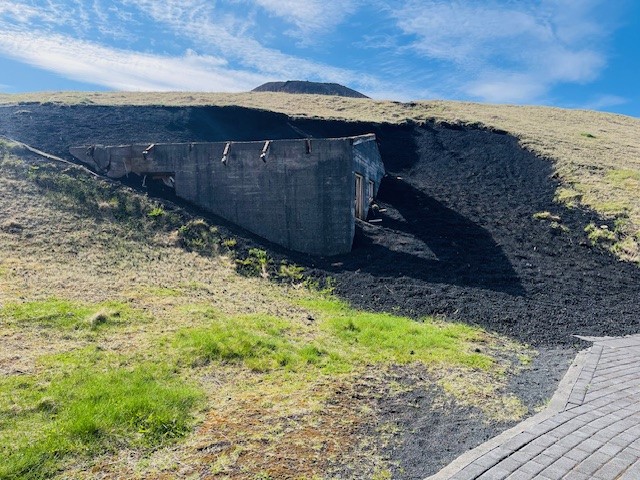
We started upward past what was once the town swimming pool and water supply, now under 10m of lava field. The eruption destroyed much of the island’s small forest, which has been replanted. However, due to such a short growing season, it’s taking a while to get reforested. There’s a saying in Iceland, if you get lost in the forest, just stand up 🙂
Icelandic forest the swimming pool 1om under us…
The day was cold but clear and the sun provided some relief from the biting wind. I was pleased the hike was heading uphill – it gave me a good chance to warm up.
I really struggled to wrap my head around the fact that before January 1973, the landscape we were hiking through didn’t exist. It’s not like the volcano was there before and erupted….nope. Before 1973 it was fields, a dairy farm, and houses. The volcano literally came up out of the earth and grew.
beforeand my expert rendition of after…
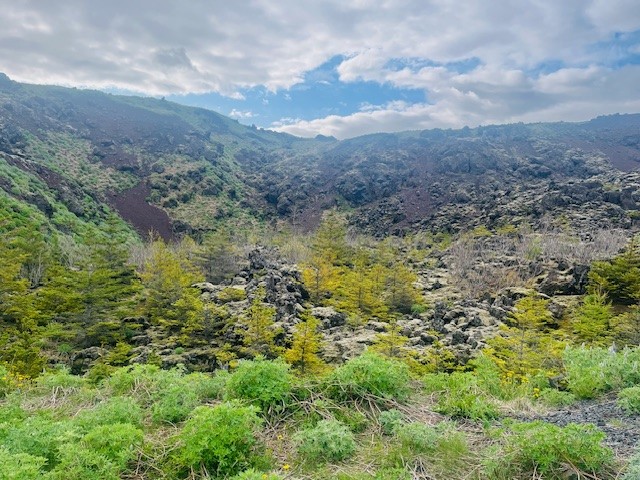
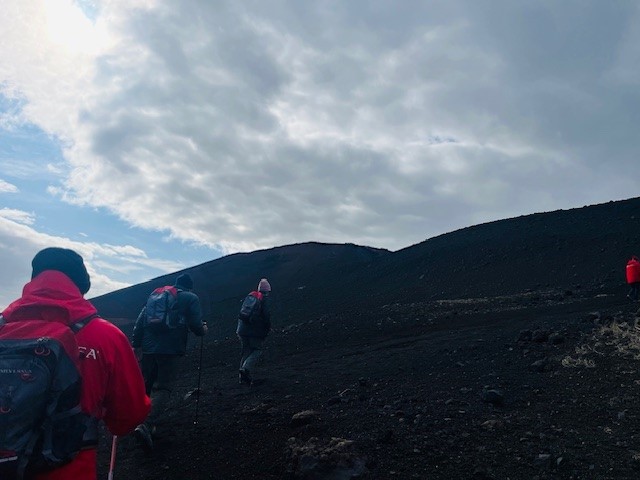
The hiking terrain quickly changed from grass and vegetation to red volcanic rubble. Every now and again little bits of vegetation were present, but it was pretty much barren. It really did feel like we were hiking on the moon. the trail switched back and forth up the side of the volcano and then trekked along the crests. Some parts were a little narrow, but I found that if I kept my head down and focussed on the path, the edges were less scary. Some readers may recall that I really don’t like hiking along cliff edges, it’s not the fear of heights, it’s the fear of falling… 🙂
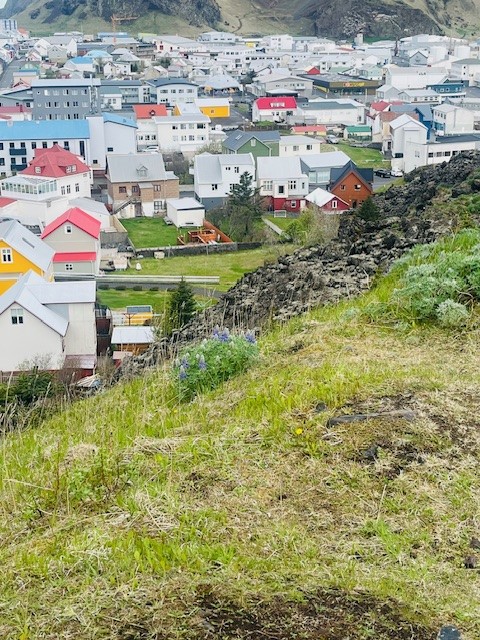
love the colourful housesup, up and upmore up… trying to warm up in the sun…very lizard like
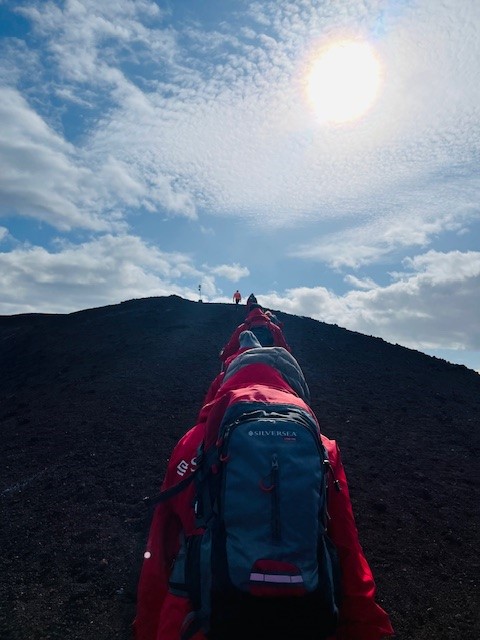
Two cairns marked the start of the final climb. I could see our destination across the valley and the silhouettes of a couple of hikers right up the top – eeek! It seemed like quite a long way and 200m doesn’t sound that bad until you have to hike it.
Yep – all the way up there… look hard for the little red jacketsHelgafell from Eldfell…feel like I’m in Lord of the Rings!!!Mr PJ came along!
After a lot of huffing and puffing, we made it to the top – kinda. There was a stone marker and a bit of flat space to stand and look at the amazing views, and the original inactive Heimaey volcano called Helgafell.
hard to show the incline, but it was quite steepworking on my selfies..old coastline on the right, then new on the left
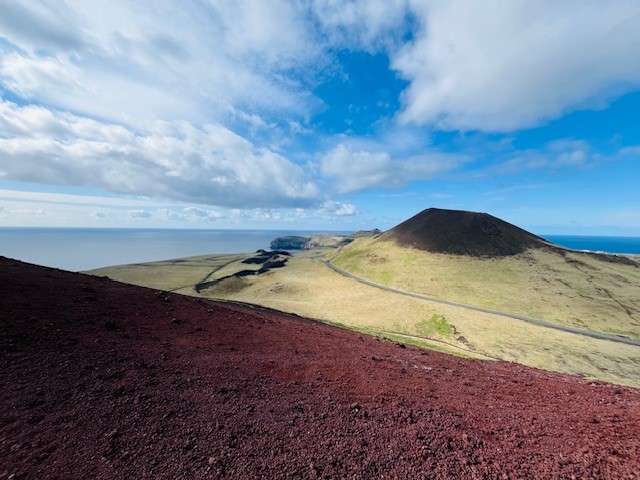
What the photo on the right shows very clearly, is the original coastline to the right, and the new land on the left created by the lava flow….quite incredible.
We then walked along the final quite narrow crest to a section of the volcano where the ground remains warm – confirming we were on an active volcano! Our lovely guide told us that until recently, his party trick was to drop a piece of paper into one of the fissures at the top of the volcano and it would burst into flames. Imagine his disappointment when one day – no fire…! Eldfell is slowly cooling down, but we still felt the warmth in the ground. Thankfully the weather held and the views from the top were pretty amazing.
back down to town and the portthe loneliest island….or fake news?
FUN FACT
The island to the right in the photo is called Ellioaey and is meme famous for being the loneliest place on earth. However – it’s not in the “middle of nowhere” and it’s not “Bjork’s old home” nor has it been “empty for 100 years” and definitely not “built by a billionaire to escape a zombie invasion”– it’s a lodge that can be booked for weekend getaways, and as you can see, it’s literally within spitting distance from Heimaey. Myth busted!
It was time to start the downward journey. Funnily enough, downhill is actually harder than uphill. We were hiking on volcanic scree (little stones) and it made the path quite slippery. More than one person took a backward tumble onto their butts!
I have mentioned this before, but there is a knack to hiking downhill, especially if you’re on loose gravel. If you tilt every so slightly forward from your waist, and just go a little bit faster than normal, your centre of gravity stays marginally in front, so rather than your feet slipping out from under you (and you ending up on your butt) you tend to stay upright. Trust me – it works!
markers showing the buried street namessad, reminded me of a gravestone..
We weren’t going down the trail we came up, We deviated to the southern side of the volcano as our destination was Eldheimar – a museum dedicated to the Eldfell eruption. At the museum, there were a couple of partially excavated homes, and our guide dropped a bombshell. One of the homes belonged to his foourafi (grandfather)!! Very personal.
partially excavated homeimagery in the museumNot 100 or 200 years ago – just 50 – the mind boggles
Our hike then looped back into town and down to the port. We saw markers for lava flow, where the side of a street was destroyed, and the other side untouched. We covered about 7km and it was worth every chilly and windy step!
Some of the most interesting hikes emerge from the unlikeliest of places, and our hike up Eldfell was exactly that. If you choose to be a traveller, rather than a tourist, you will discover some amazing opportunities and experiences. Being open is the key.
As you saw above, Mr PJ was along for the hike and loved it. There was a bit of grumbling about the climb, but that quickly evaporated with the amazing views.
As Icelandic folk say to describe a really great experience…..rusinan I pylsuendanum….. have fun unpicking that one!
Hello and welcome to my LIKETHEHIKE blog. I’m PJ and I write about the hikes I take, giving you insights, photos, commentary, tips, and tools so you can enjoy hiking and embrace the experience.
I’m a week into my holiday exploring the islands of England Scotland and Iceland. I have the opportunity to hike on not one BUT TWO SCOTTISH ISLES! I only have a short window to accomplish this and I’m pretty sure I can pull it off so let’s get into it.
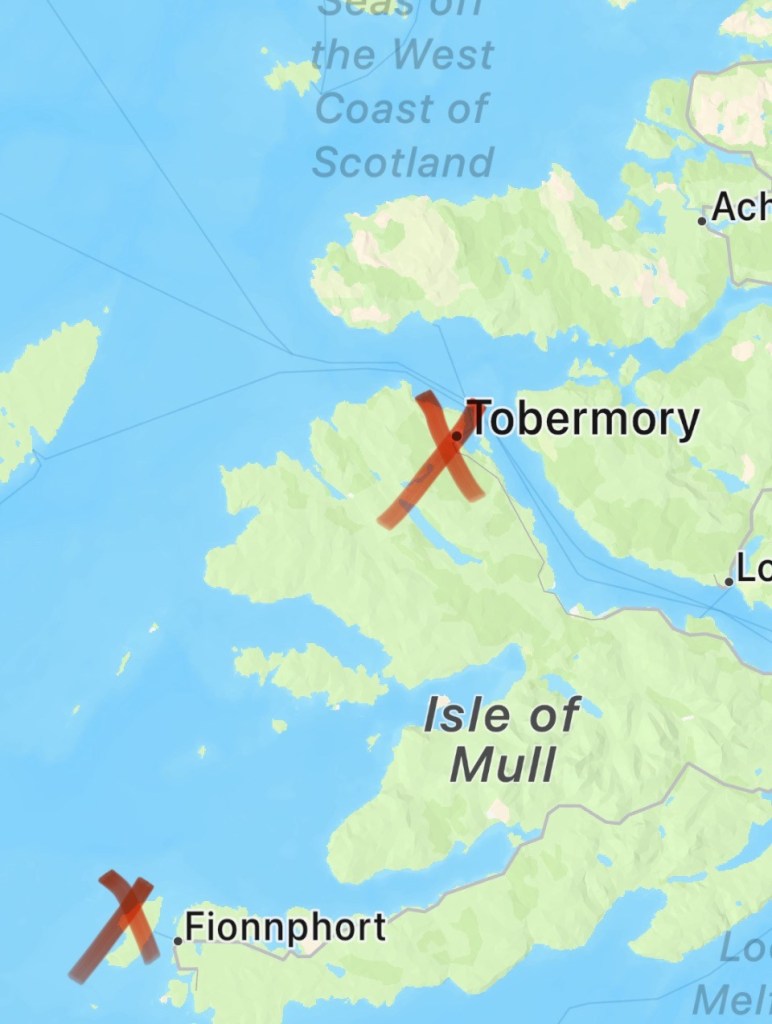
So, this is where I am. What I understand to be the Inner Hebrides, a cluster of islands off the west coast of Scotland. The two isles in question are Mull and Iona.
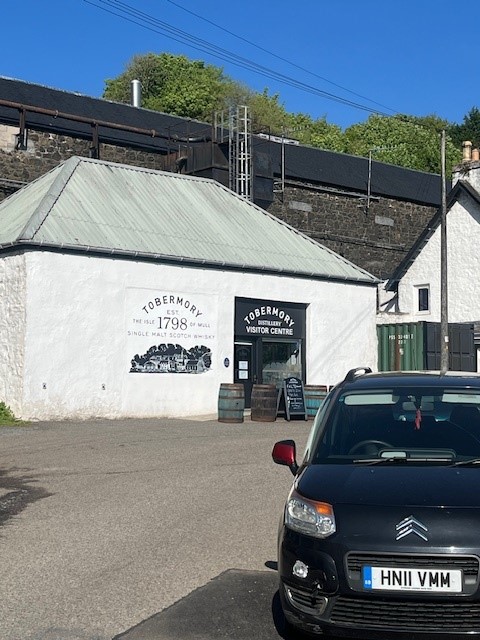
The Isle of Mull sits northwest of Glasgow and is well known for the capital fishing village of Tobermory (Wombles anyone… 😉 ) and a single malt whisky distillery conveniently located about 120m from the pier. It’s green, lush, inviting, home to 1,000 people, and gives off a cosy, welcoming vibe.
The Isle of Iona is completely different in every way. It sits about 125km southwest of Tobermory, right on the western tip of Mull. It’s a tiny isle, no more than 5km long and 1.5km wide. Home to less than 17o residents and the world-famous Iona Nunnery and Abbey, it’s stark, windswept, and hauntingly beautiful. Standoffish but when you get to know it – unforgettable.
DAY ONE MORNING – Hiking the Isle of Mull
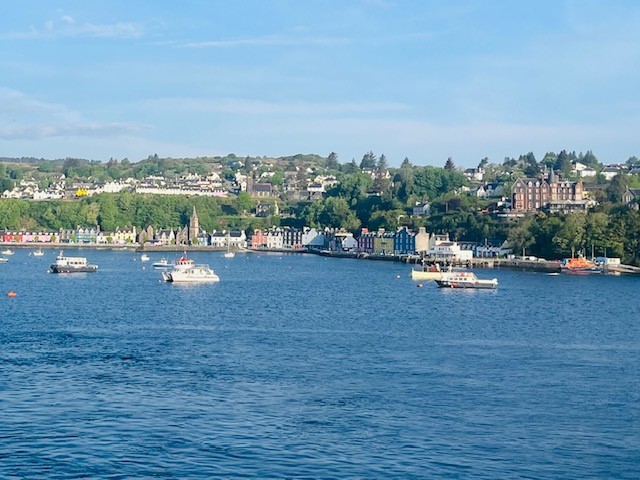
Welcome to Tobermory 🙂 We landed at the pier of this picture postcard village on the northeastern side of the Isle of Mull. It’s the capital of the island and is instantly recognisable for its brightly painted buildings that line the front of the fishing harbour. Tobermory comes from the Gaelic Tobar Mhoire or Mary’s Well, referring to a well nearby dedicated to the Virgin Mary.
‘scuse my lack of photo expertise….but tis a real shot!
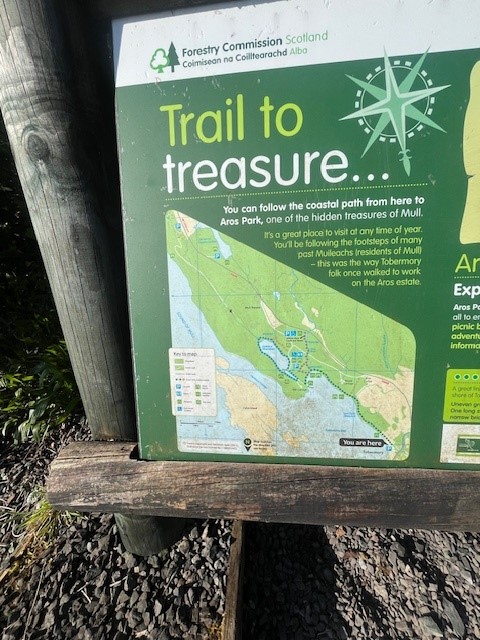
We had a 6km hike that would take us out to the Aros waterfall and explore the harbour front. Rather than hike as part of a group, Mr PJ and I went rogue and decided to do our own thing. Now I wouldn’t usually recommend this, anyone on FB knows what happens to Australian tourists who abandon the cruise excursions and do their own thing…however, the hike was a ‘there and back’ and I was confident that we could manage this in the timeframe given to us.
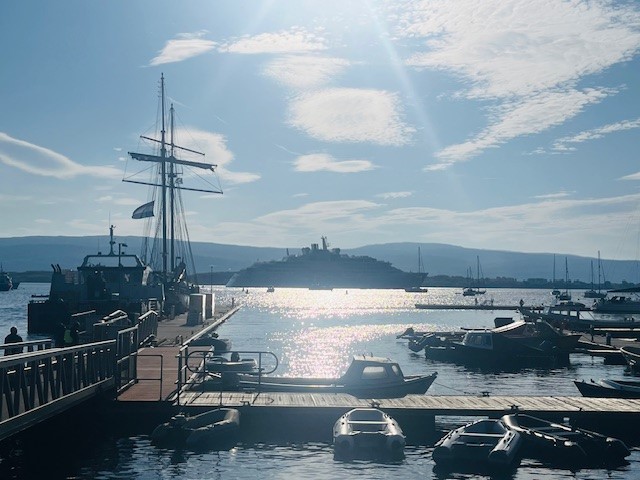
The trail started at the pier, with an easy set of signs and a map. After a short but sharp climb, we were at the first clifftop and so began a hike that offered view after view after view. We were walking away from the village so every vantage point gave us stunning views back to the village and our ship – Silversea Endeavour.
back to the ship from the pier, the day was shaping up to be a stunneralways always always take a photo of your hike…regardless of length…
Tobermory has luscious trees and abundant vegetation with everything in spring bloom. The hike out to the waterfall was just gorgeous. It was mid-morning, the temperature was mild, and the clothing layers came off very quickly. After about 3km we arrived at the waterfall.
Easy and wide trailsView back to home baseThe green was even greener than I can capture on my phone!
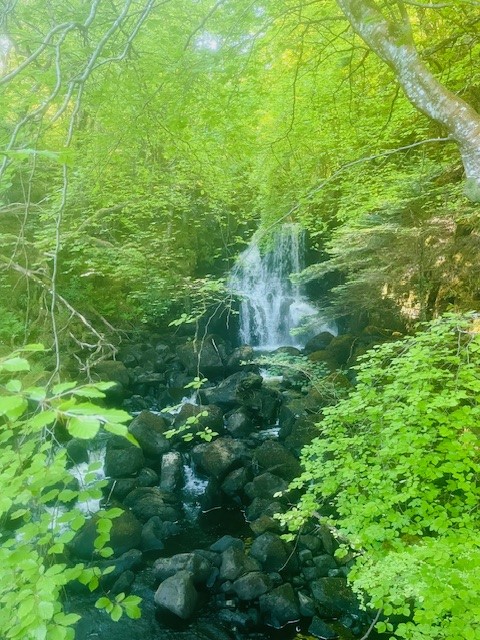
It was a series of short, sharp switches up, and then the same back down to the base of the waterfall. If you hike in Australia, you might be used to high, narrow waterfalls. The Aros was wider and less high, but still very lovely to spend a moment or three contemplating.
We went beyond the falls and explored the adjoining camping and facilities area, where I sadly discovered that the toilets were ‘closed until further notice’. This gave the local wildlife an interesting morning show, but when you gotta go, you gotta go! After my unplanned toilet stop, we decided to head back so we were within our deadline for transfer back to the ship.
Can you see the ship in the background??!
Now, I’m not a petty person by nature, but….it gave me great pleasure to pass the ship hiking group as they huffed and puffed their way up the hill, walking poles flying in all directions and excursion staff urging them onwards and upwards. You take your joy where and when you find it 🙂
The return section was just as enjoyable as the outward section. We passed trail runners, hikers, walkers with dogs, and a heap of visitors just enjoying the Isle.
We did the hike in good time, but remember, it’s not about the time you take, but the time you spend. 🙂
Tobermory, you turned it on weather wise, hike wise and whisky wise. Oh, we had to stop at the distillery at the end of the hike and sample the wares, it would have been rude not to!
DAY TWO AFTERNOON – Hiking the Isle of Iona
If Tobermory was a soft spring morning, Iona was a wild and exciting afternoon. I could not have picked two more different isles to hike on.
Iona is world famous for the Iona Nunnery and Abbey. It’s one of the oldest Christian centres in Western Europe, with first dated records from about 560AD. It’s home to clan Donald and Macdonald, neither of which are my ancestors. I hail from mainland Scotland, clan Leslie just outside of Aberdeen 🙂
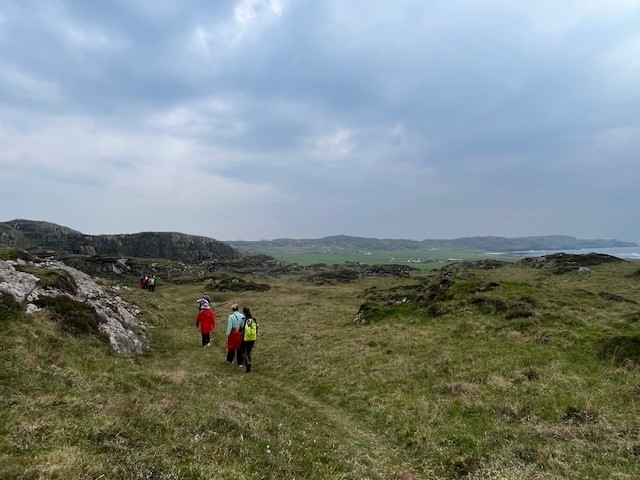
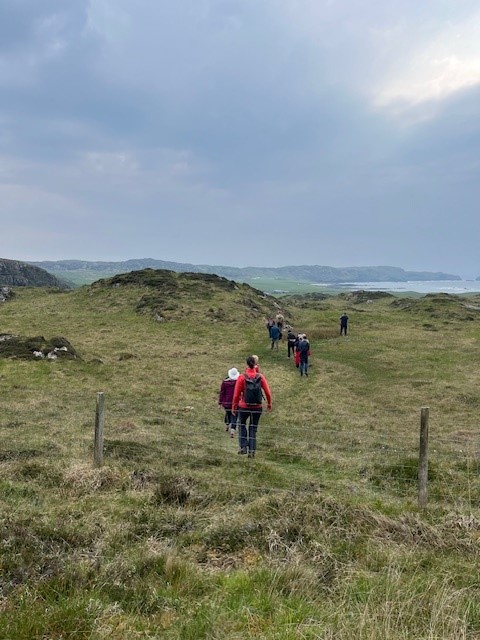
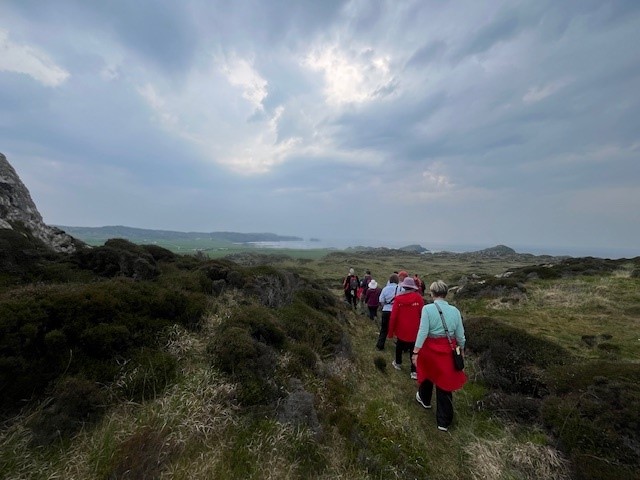
We had a fascinating walk around the Nunnery and the Abbey, then met for the hike traversing the Isle, Yep – traversing the isle! Not for the faint-hearted as we had limited time and a decent distance to travel, so only the fit and feisty were present. We started just outside the Abbey and made our way through the fields. The first thing that struck me as we walked along was the complete absence of any trees. Iona is at the western tip of a series of isles and is exposed to the forces of nature. Any trees on the island would be imported and protected as part of a house garden. There are no trees naturally on Iona, the winds destroy them long before they can take root.
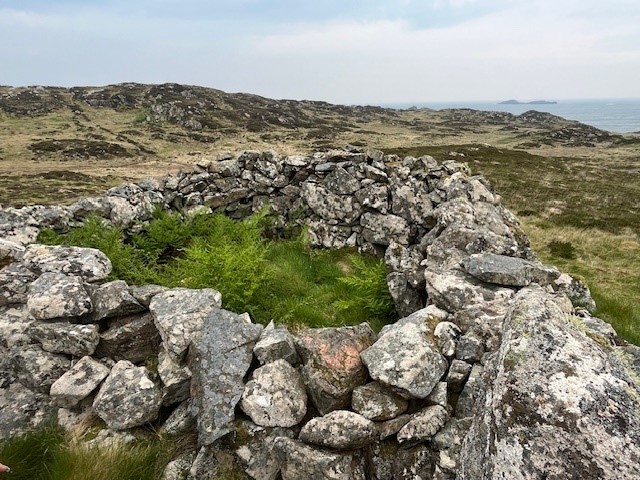
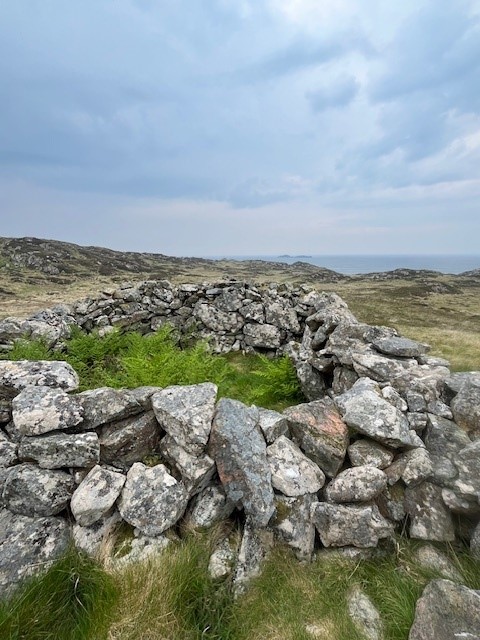
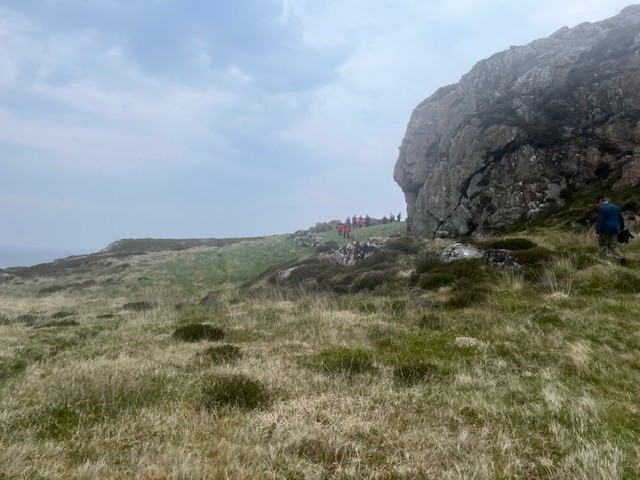
At around the 1.5km mark, the guide took us up a hill to a cluster of stones, originally a hermit cell. It’s an ancient ruin nestled into the side of the hill, built by a devout Christian hermit – or so the legend says. Whether it was built by a hermit or shepherds wanting shelter, the structure is centuries old and pretty special to visit.
The terrain was interesting to traverse. Much of the ground is either boggy or a mixture of reeds and sphagnum moss, which looks dry and stable but is actually full of spring water. So as soon as you step on it, down you go! It caught out a few people wearing sneakers. Not me though, thank you Gore-tex Merrells 😉
To be honest, I found the landscape a little unnerving. If you hike regularly in forests and bush trails, a space devoid of any vegetation higher than your knee is ‘interesting’. There were rocky outcrops covered in lichen and magnificent views down to a grey and menacing sea. The hike was very much about the environment and what we were walking through – very different and visually confronting.
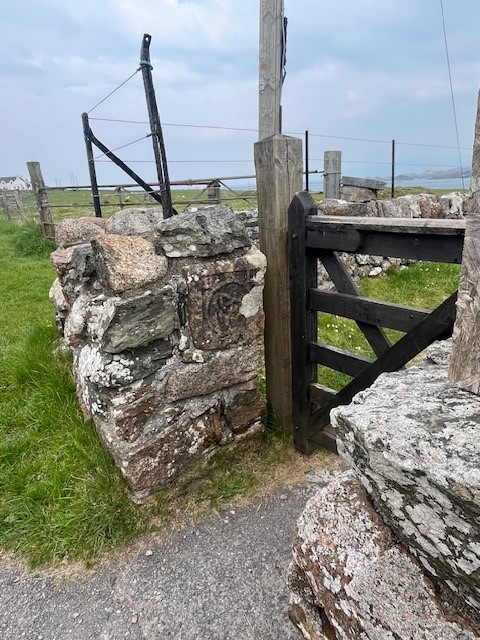
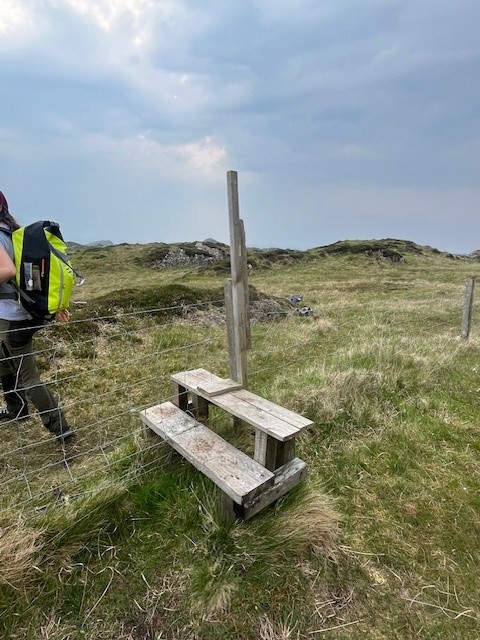
There were gates and stiles to navigate and at about 3km we went over a stile that marked the high point, we were officially in the middle of the island. Occasionally we passed flocks of sheep and their cute little black headed lambs.
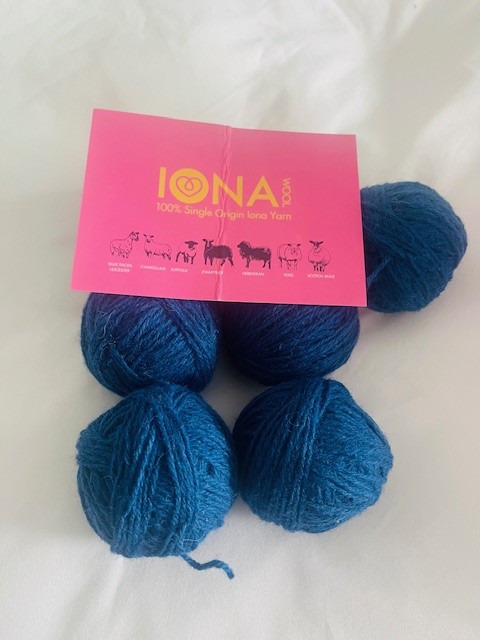
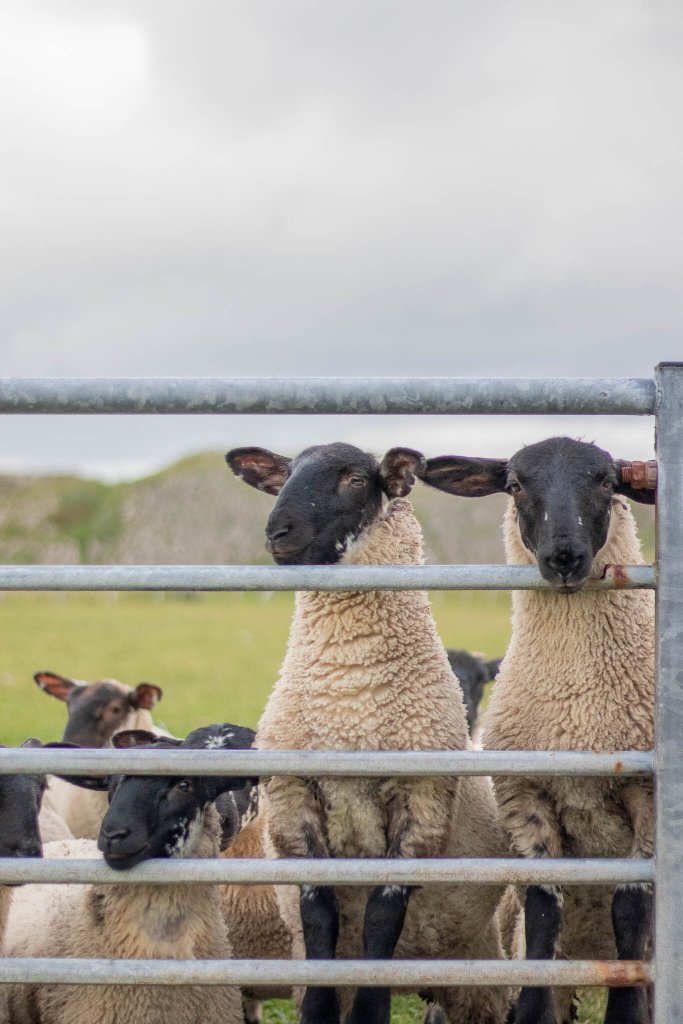
Side note – Iona is home to seven crofts (little rented farmlets), two larger farms and over 1,000 native sheep. The wee black headed ones are Suffolk or Scotch Mule breeds. I know this as I may have spent some time pre-hike at the Iona Wool Store in the village. No judgment please, I like to shop and knit. Two for one! It’s that kind of blog.
Heading up to the hermit hutMy Iona wool purchase. Thinking bed socks Photo compliments of the lovely website http://www.Ionawool.com
We made our way downward, and what did we stumble upon but the local golf course! Well, this is Scotland so I’m not surprised. From what I understand, Scotland is first in the world for the most golf courses per capita. The Iona Golf Course is mown by sheep and cattle, free to play on, and has a wicked 14th hole 😉
Got Mr PJ out again… 14th hole, wicked fairway and tricky par 3 layup for the green….A green and a hole. I think.
Downward we went, and soon we arrived at the ocean, wild, grey, and absolutely breathtaking. We had the beach to ourselves, and forget sand, it was pebbles, grass, and sheep poop. Our final 1.2km was a brisk walk down the main (only) road back toward the village and pier.
see – no trees!One day I’ll work out selfies….not today tho!
I was struck yet again by the stark and windswept nature of the isle, and what it might mean for residents. Looking at the houses, they are all built to capture sunlight when possible, everyone has skylights and glass to make the most of daylight. I saw woodpiles for home fires, which must come in via ferry as there are no forests or trees on the isle.
Such a beautiful and awe-inspiring land to walk across, such a pleasure, such a privilege.
Just a fraction under 6km to hike across an island – pretty cool!The village’s name is Baile Mor… which means big town. It’s not…
So I did it, two Scottish Isle hikes in two days. WOOOOOOOHOOOOO!
Not the longest of hikes if you read some of my previous blogs, but definitely up there in terms of uniqueness and enjoyment.
The Scottish Isles offer such a range of experiences and opportunities, for all budgets, all mobilities, and all persons. I can absolutely recommend them as a destination for anyone wanting to simultaneously lose and discover themselves hiking. Have a look at visitscotland.com for more info.
Hello and welcome to my LIKETHEHIKE blog. I’m PJ and I write about the hikes I take, giving you insights, photos, commentary, tips, and tools so you can enjoy hiking and embrace the experience.
Today I’m on the Isle of Man – woohoo!!!!! A self-governing Crown dependency smack in the middle of the Irish Sea between England and Ireland. Best known for the TT motorcycle race, the Isle of Man is home to 65,000 islanders descended from both Celtic and Viking invaders. The Isle of Man is part of our UK holiday – and I couldn’t wait to hike on it.
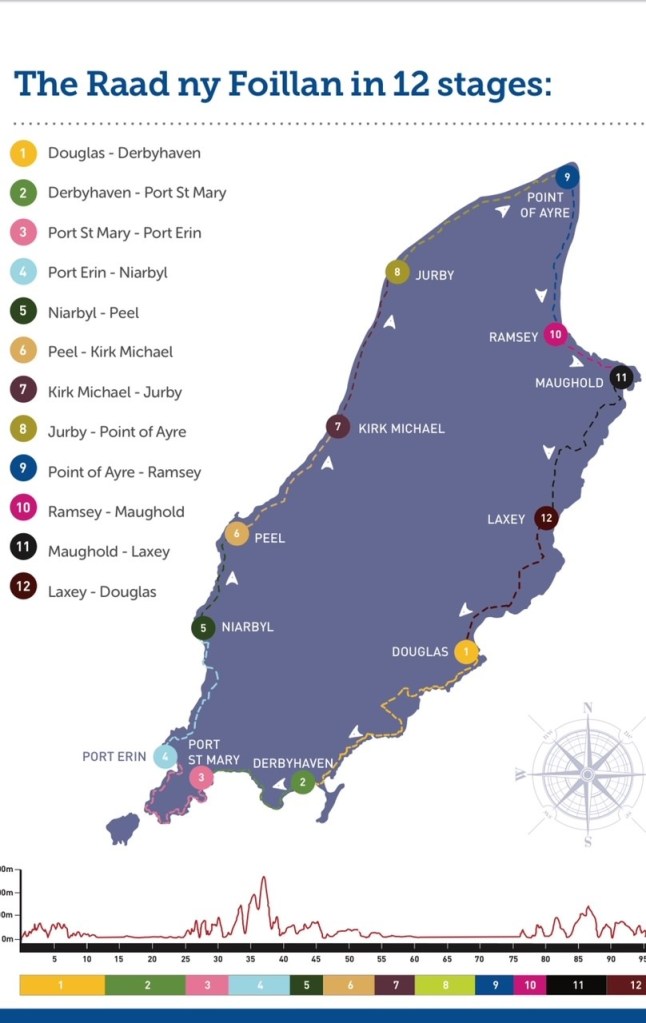
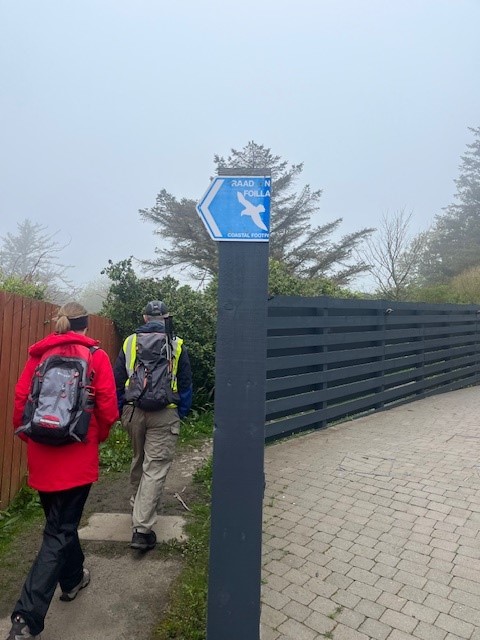
The Raad ny Foillan is 160km of coastal walking trail that circumnavigates the island and translates loosely as ‘The Way of the Gull”. Visitors and locals have been walking and talking about this trail for hundreds of years, so it makes sense for yours truly to investigate.
Our cruise excursion team arranged for us to walk a section of the Raad ny Foillan, taking in the clifftops of Port St Mary, cross the peninsula to Cregneash, and then down to Port Erin, about 7-8km all up.
About 20 hardy souls signed up to walk the section, led by a local hiking guide, Chris Callow from Island Heritage Tours. If you’re planning a trip to the Isle of Man and want a great hiking experience, I can thoroughly recommend him. He also does ancestral research and trips for Antipodeans looking for family heritage on the Isle – if you think you have ancestors from this neck of the woods, Chris is your bloke.
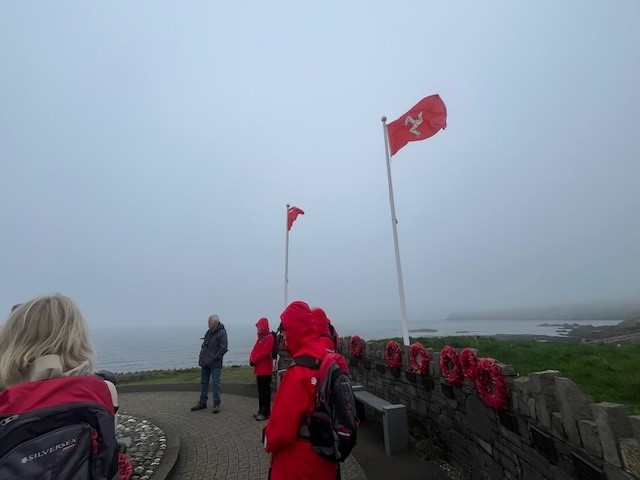
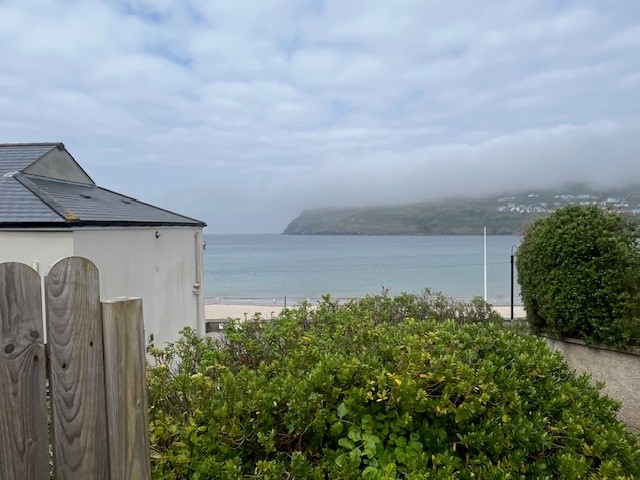
We started on the cliffs above Port St Mary beach. I was hoping for a clear day, but the sea mist was swirling, and although stunning, it meant that views might be out of the question. The beauty of a guide is that not only do you hike, but you also get a heaping of local stories and history – all very fascinating. Our first stop was a memorial for ships that took part in Operation Dynamo, the evacuation of Dunkirk in 1940. Three local ships assisting with evacuation were destroyed, with significant loss of life. It’s only fitting that the memorial sits on a clifftop overlooking the sea…
Handy hint – Manx is the word used to describe people or things that belong to the Isle of Man. Also, I believe, a cat without a tail which comes from the Isle. Go figure! We kept moving and wound our way towards the cliffs overlooking Perwick Bay facing due east, which I’m sure would show a spectacular sunrise – on a clear morning.
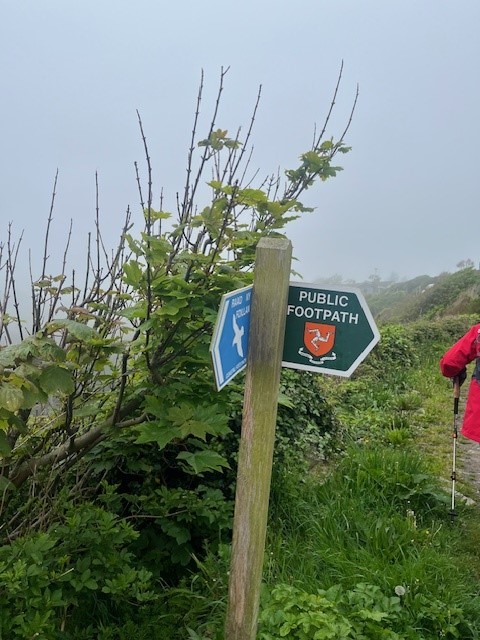
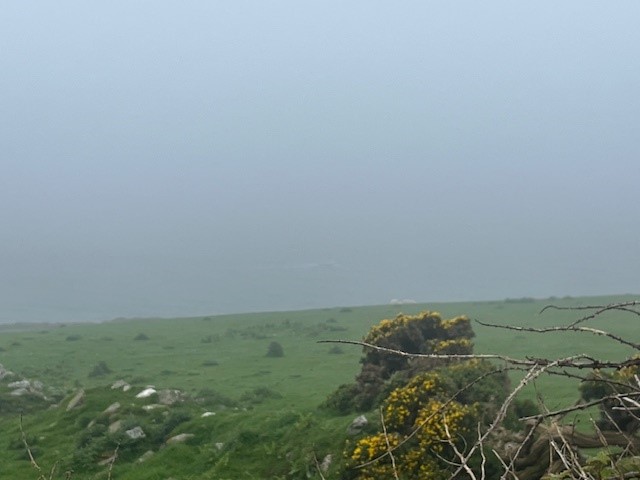
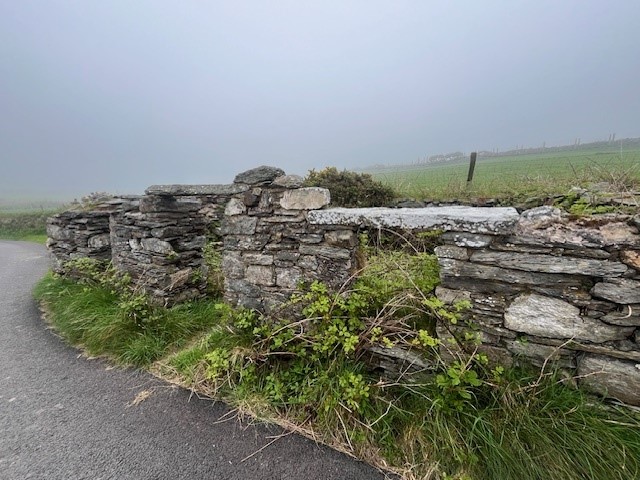
The trail is very well marked, and as I discovered in Kent, trails are supported and encouraged by the government, councils, and even private landowners. A hiker’s dream. The clifftop houses quickly made way for green open fields, dotted with woolly sheep and lambs. The stonework and foliage were just lovely, and kinda made up for the fact that the sea mist seemed to be getting heavier, not lighter!
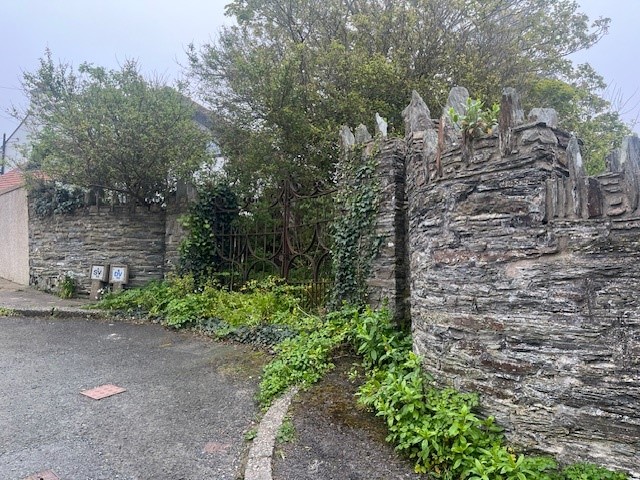
Very clear signageWalls are delighfully designed and feature intricate stonework
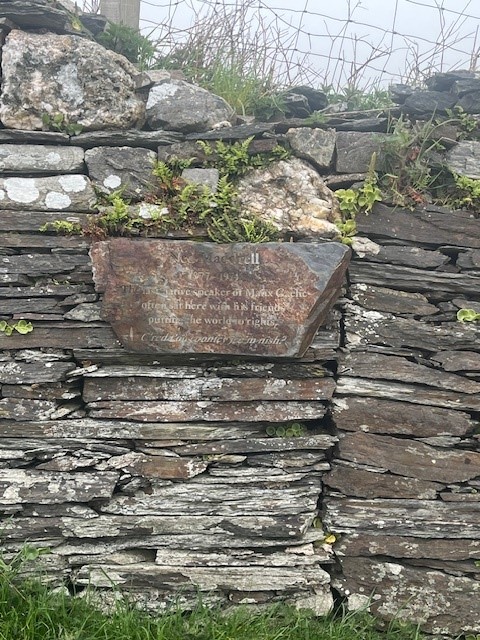
Our next fascinating fact was around the 2.4km mark where a sign and a simple wooden bench recognised Ned Maddrell, the last native Manx speaker on the island. Local schools are leading the charge to ensure that the next generation of Islanders retain this important cultural artifact, which is similar to Irish, Scottish, and Welsh Gaelic (all of which are waaaaay out of my remit). The locals are very proud of their language, culture, and independence, totally understandable.
Ned’s signThe sea view is out there somewhere!Upward climbing
Not too far along the trail, we came to another reminder of the impact of war on the island. On a misty day probably very similar to this one, a US Flying Fortress crashed into the side of the hill, killing all on board. I wasn’t surprised, given the thickness of the mist we were hiking through. Still, a sobering reminder that the weather and the terrain will always remain dominant over us mere humans.
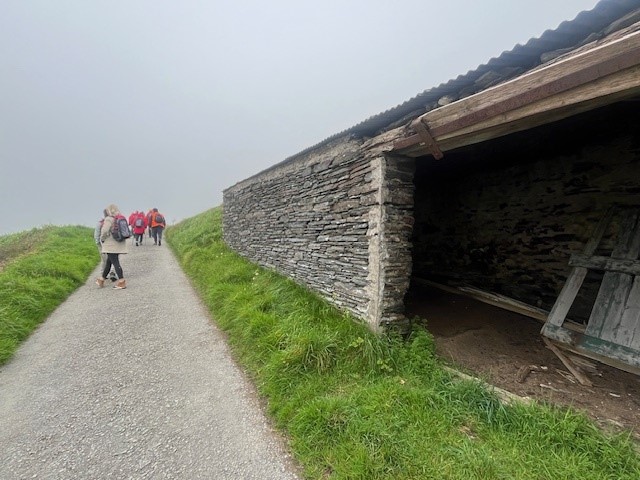
Sobering memorialThese bothys just pop up in the mist – lovely
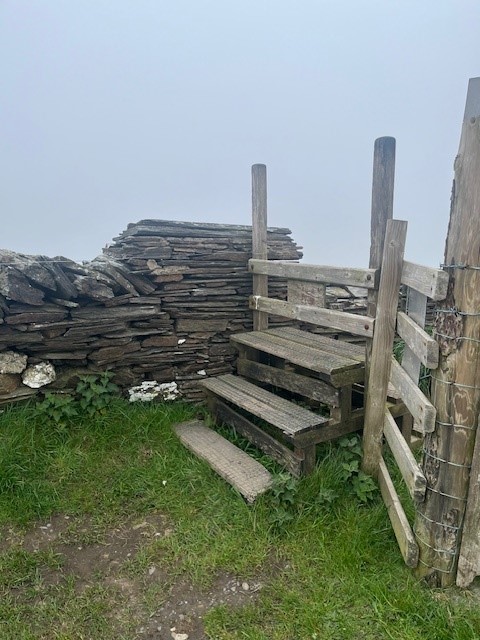
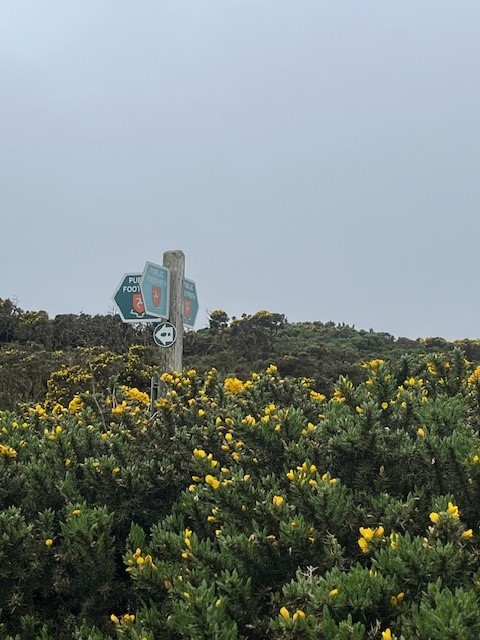
We kept climbing up and up and up. There were some quite steep sections, we traversed through fields, gorse patches, over stiles, and through gates. Most of the area looked like it was being actively farmed. so it was important we followed the hiker rule and leave gates as you find them.
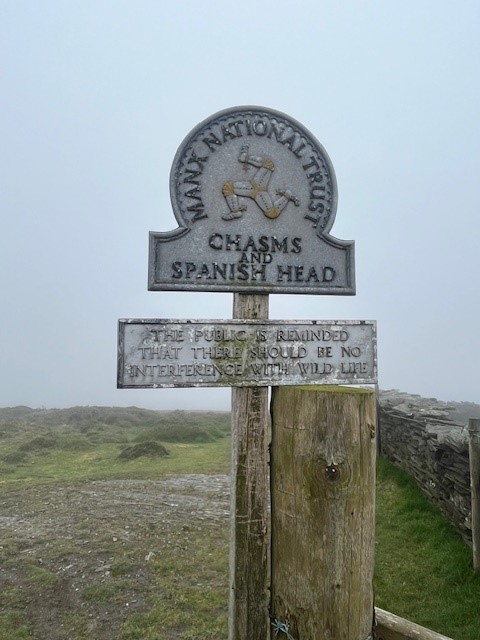
An abandoned house appearing in the mistLots of stiles to clamber overThe Chasms is a clifftop feature where you can see amazing birdlife, too dangerous for us on a misty morning…
The highest point in the hike was about 4km in, a pretty amazing destination called Cregneash, a historical Manx village lovingly restored and running as an example of a 19th-century crofting community. Surprisingly, people still live here and little “private house” signs remind you not to barge on in. Good place for a quick coffee stop 🙂 Thankfully it was a short stop as the mist hadn’t cleared and it was quite chilly! Hiking meant moving and moving was warm.
Meet Mr PJ. He’s signing up for some holiday hikes with me. Yay!
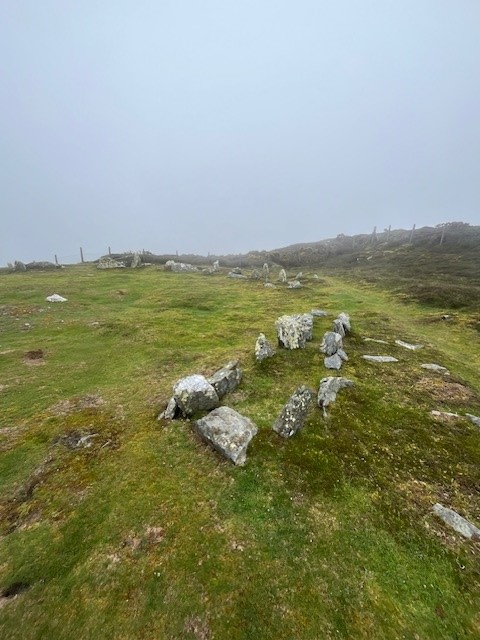
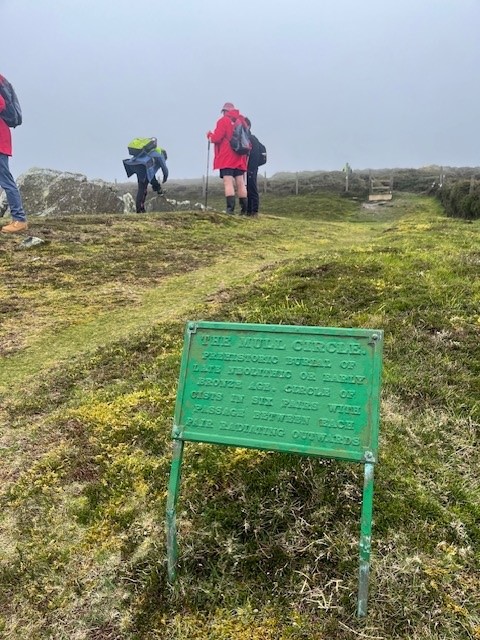
Our next waypoint was at 5.5km and on the crest of the peninsula. Meayll (Mull) Circle is a bronze age burial site that is evidence of island occupation from Neolithic to Medieval times. It’s a chambered cairn with 12 burial chambers in a 5.5m circle. It really was an honour and a privilege to hike through a countryside that has markers dating back thousands of years….and be able to walk the ground, touch the stones, and feel the history.
On eof the 12 chambersAs you can see, the mist was really settling in up at the crest.
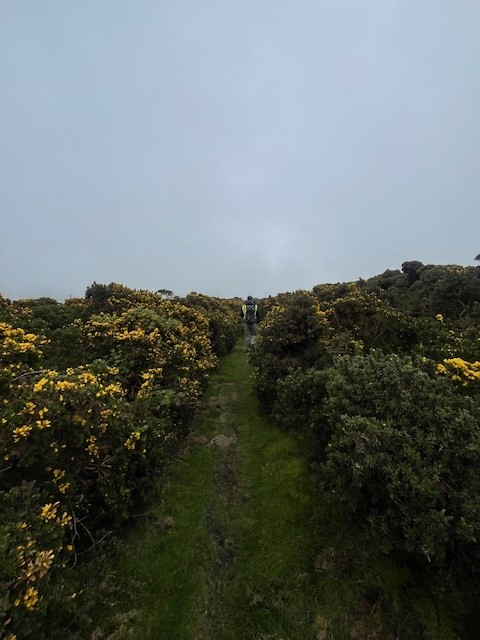
A lot of the landscape on the crest was gorse-laden, which was challenging to walk through. The tracks were wet and mucky underfoot, but thankfully I took my Merrell waterproof hiking shoes for just such an occasion. I had a decent backpack and took my wet weather gear. I still had to pick off quite a few gorse prickles at the end of the hike.
Gorse for acres. My farmer dad would be getting out the spray!Excellent signage, even in the middle of a gorse field
We were now heading downhill towards Port Erin. We traversed trails, a couple of country lanes and passed some fascinating stone buildings, one was going to be restored, and one that should probably be knocked down (yuk! no accounting for bad taste)
Thankfully on the leeward side of the island, the sea mist had lifted a bit, and we got a view down to the port and beyond. Heading down steep hills is usually a bit more challenging on the knees, but this trail was manageable and with the end in sight, the pace picked up.
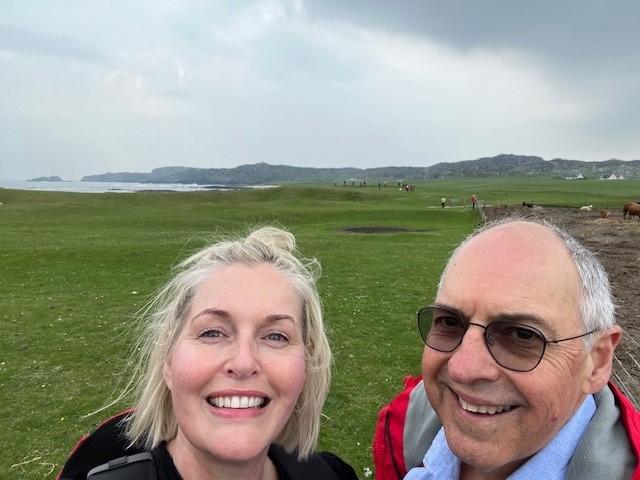
Our hike came to an end at the beach in Port Erin. We clocked about 7.5km – it was a fantastic hike. It had lots of uphill sections which I imagine on a clear day would give you the most incredible views. Despite limited views, we still had a great morning, and I managed to coax Mr PJ out for a hike – win! I haven’t converted him yet, but give me time… 😉
My watch stopped working on a couple of stretches, or I forgot to take it off pause….doh.
If the Isle of Man sounds like you, and you want to pack your hiking boots, then put Raad ny Foillan on your bucket list and get cracking!
I’m PJ and I write about the hikes I take, giving you insights, photos, commentary, tips and tools so you can enjoy hiking and embrace the experience.
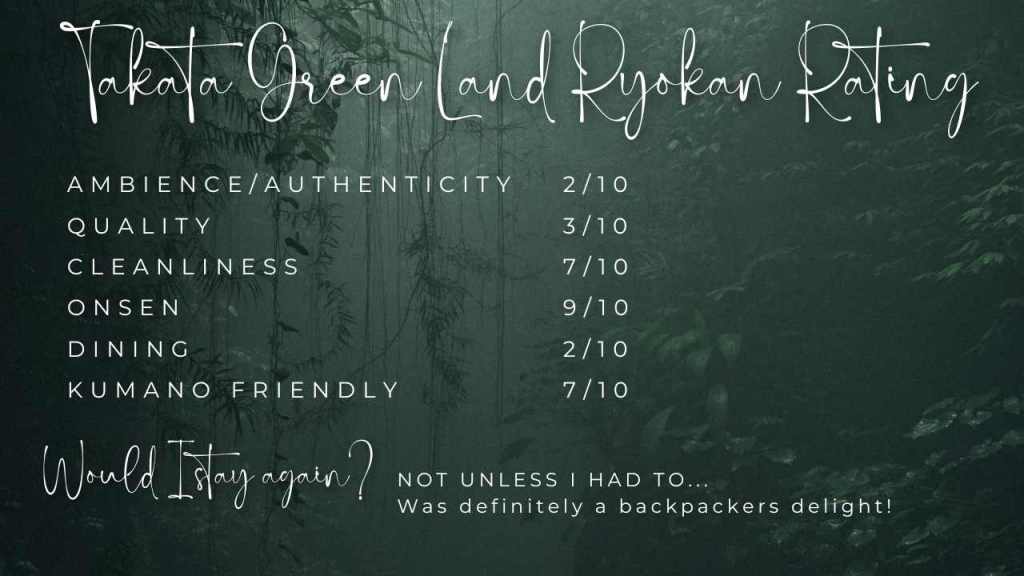
We’re back for the second instalment of “Rating the Ryokans” – with my very mathematical (!) approach that measures ambience, quality, cleanliness, onsen, dining and whether the establishment is Kumano and hiker friendly. In my last blog, TB and I had just departed the fantastic Manseiro in Kii-Katsuura which had a lovely onsen and a truly magical evening dining extravaganza.
TAKATA GREEN LAND (KUMOTORI ONSEN) – SORTA RYOKAN EXPERIENCE…
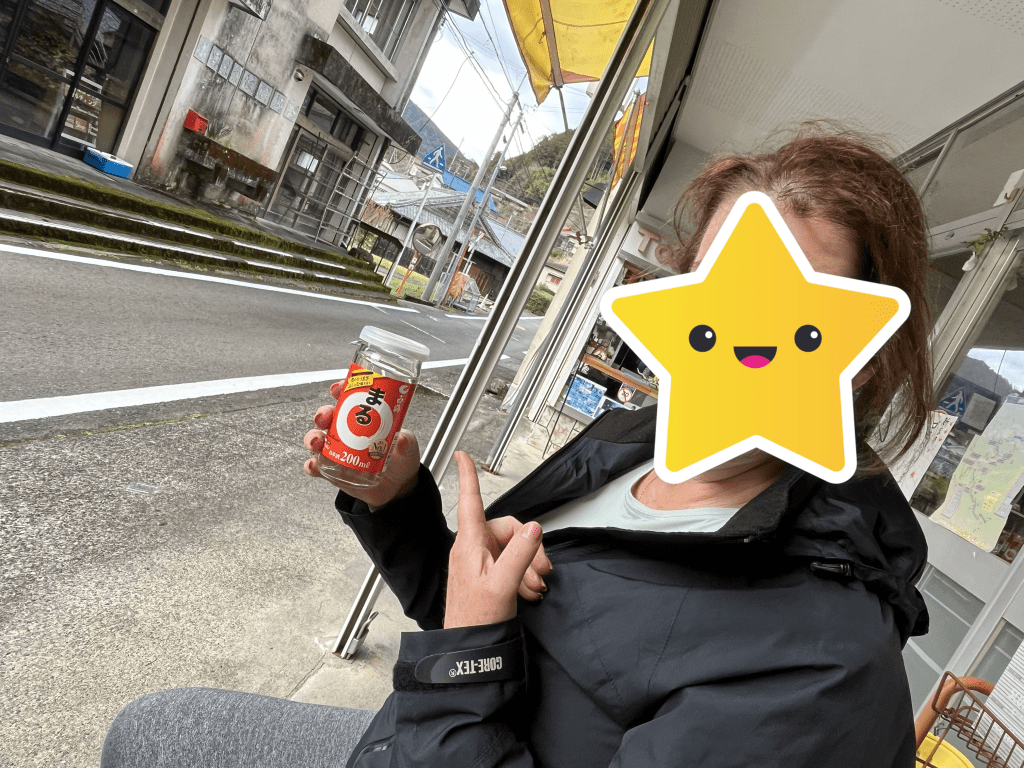
Our next stop was after our longest and most challenging day on Kumano. We did over 20km on some serious trails, finishing at a little village called Koguchi. We found a dinky corner store where we devoured drinks and snacks while waiting for our hotel shuttle.
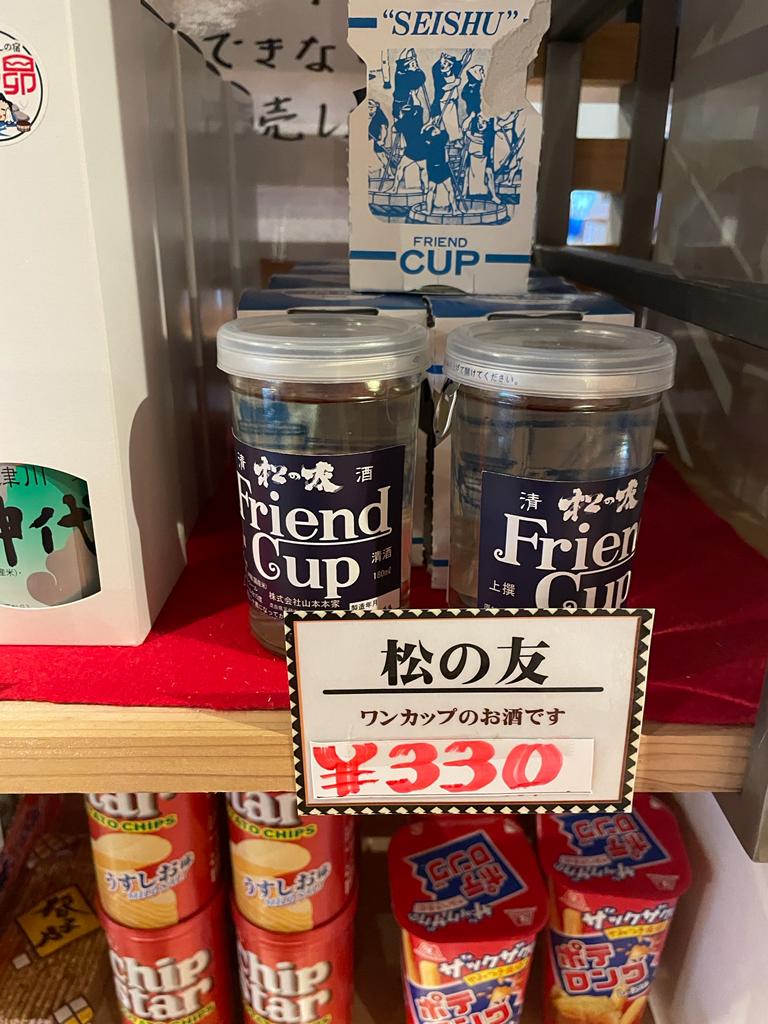
Only just noticed that the label is mirrored! TB and her best friend cup!
We arrived at Takata Green Land – and were perplexed. It looked like a sports complex, or perhaps a school camp destination. There were a number of interconnected buildings and the reception area gave off a very backpacker vibe, complete with worn industrial carpet, vinyl seating, pingpong table and 27,000 vending machines.
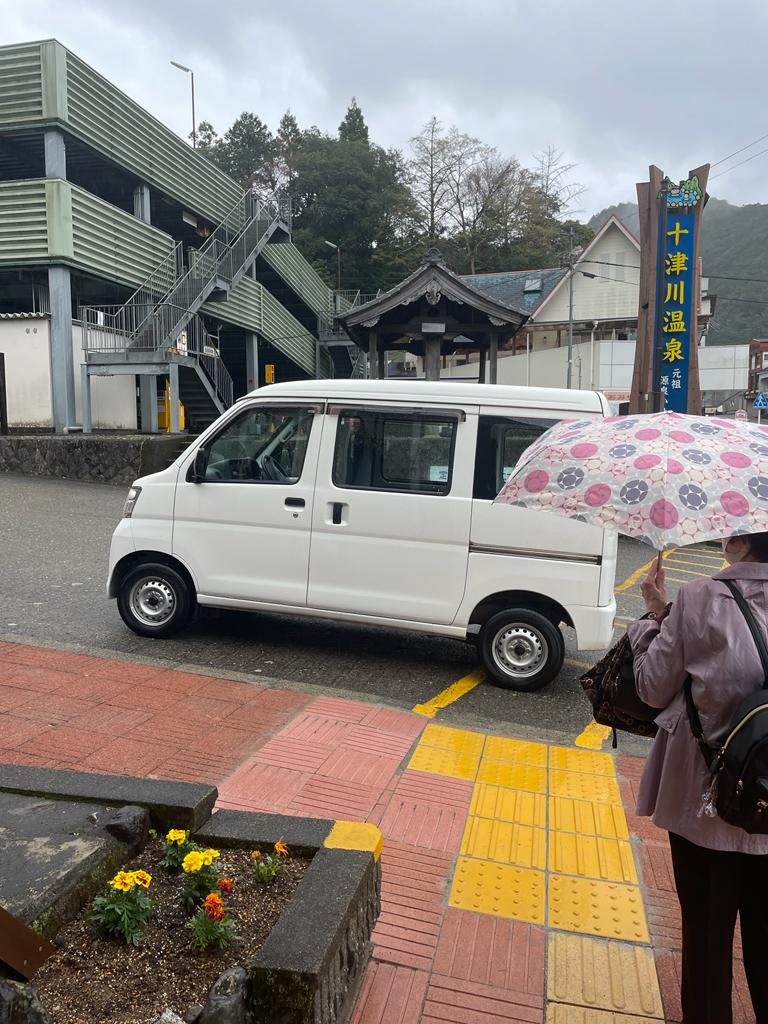
The foyerOur dinky little shuttle van!
Happily our suitcases were waiting for us at reception. Unhappily we had a second floor tatami room and no lift. I almost killed me lifting cases up two flights of stairs after a 20km hike….
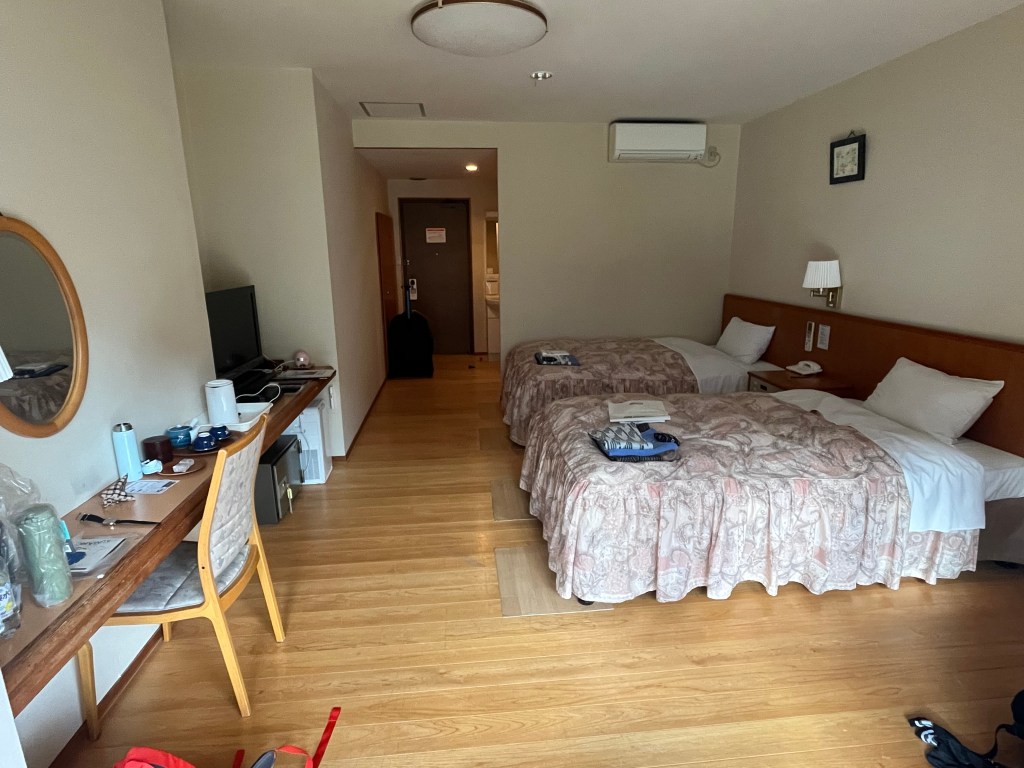
The room was very average. Clean, but sadly, much worse for wear with stained, damaged tatami matting, dings and dents in the walls. Such a shame as I suspect that it must have been quite lovely at one point in time. We had shared toilet and sink facilities right outside our room, and as it was very quiet, we pretty much had those to ourselves.
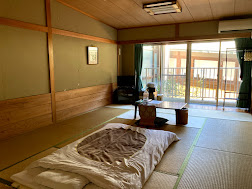
Example of room
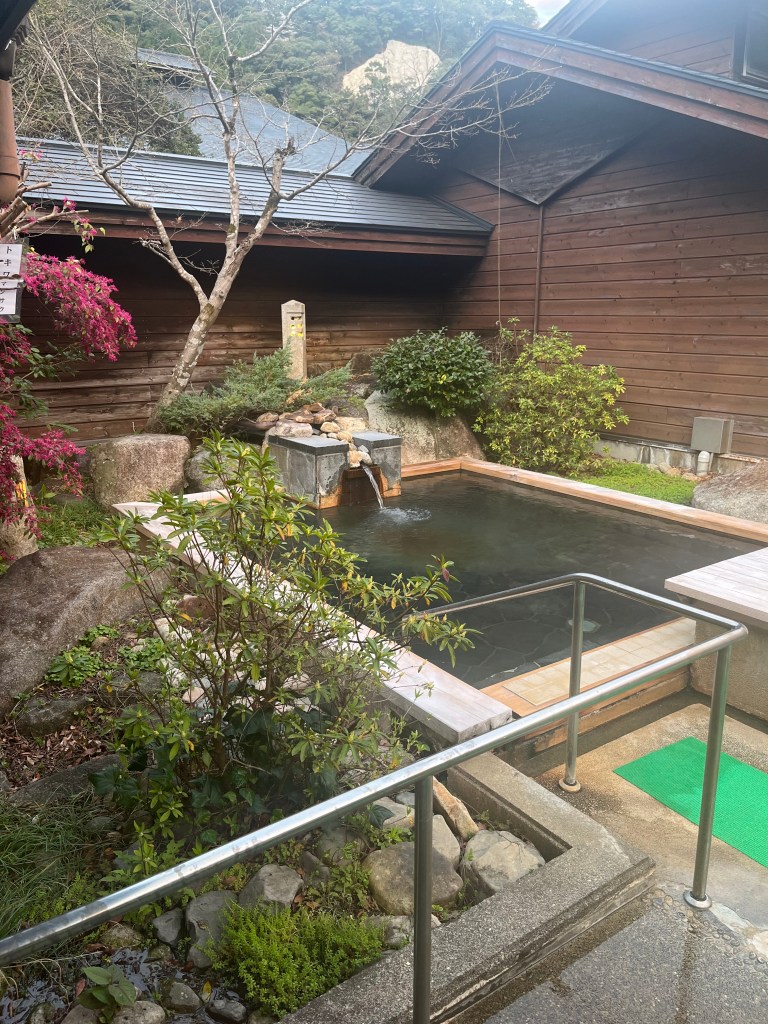
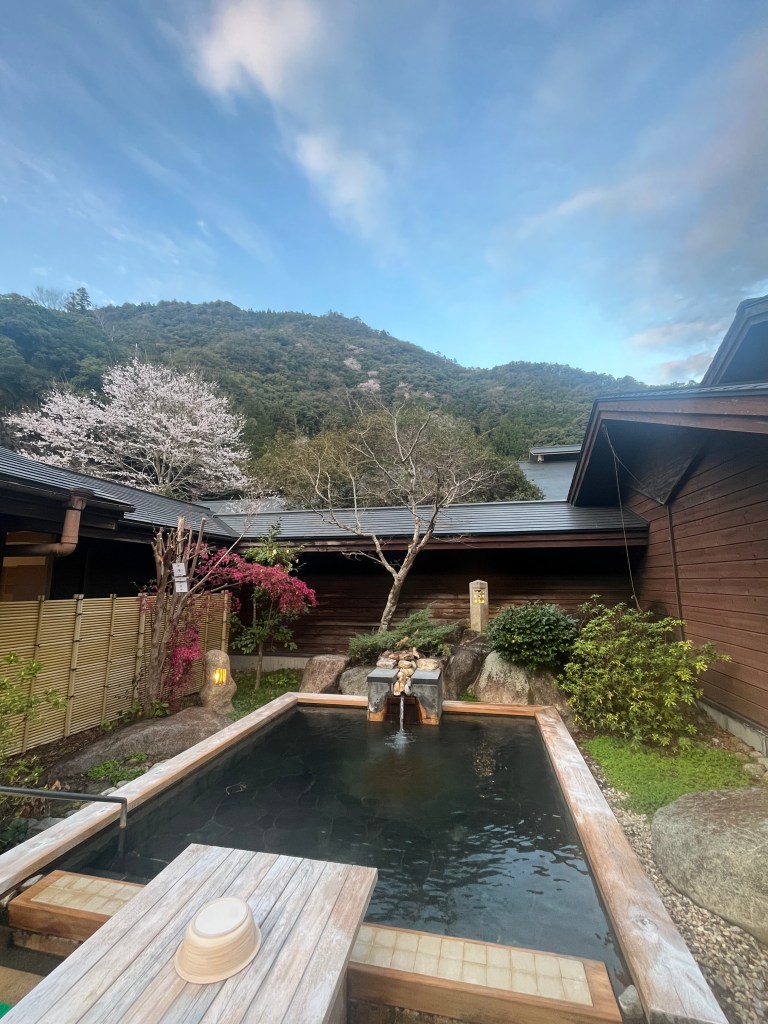
The onsen, however, was first rate. Takata Green Land had an outside onsen which we could access via a private walkway. I am not the most graceful gazelle as my family will confirm, so add the complexity of full nudity, cold misty weather, a wet wooden walkway , and speed – and you can imagine the rest. I skidded into the outside hot pool very disgracefully but to the great amusement of my sister and the other onsen users, who were far too polite to show their mirth.
Travel photo of indoors
Unfortunately the onsen experience was the singular highlight of our stay. Post onsen we had high hopes for our evening meal. We were ushered into what looked like a school dining hall, which was doubling as a storage facility. Along two sides of the room were an array of plastic storage containers and boxes stacked ceiling high, and stored against wall was an outdoor canteen arrangement. We were two of the three guests dining that evening, three lonely place settings on a table about 20m long.
The food was fair, with a number of courses including salad, rice, miso, fish and a shabushabu with vegetables. I have to admit, we gave up before dessert and fled to our room.
TB decided that we were staying at the local Hi-De-Hic camp off season and I reckon she was right.
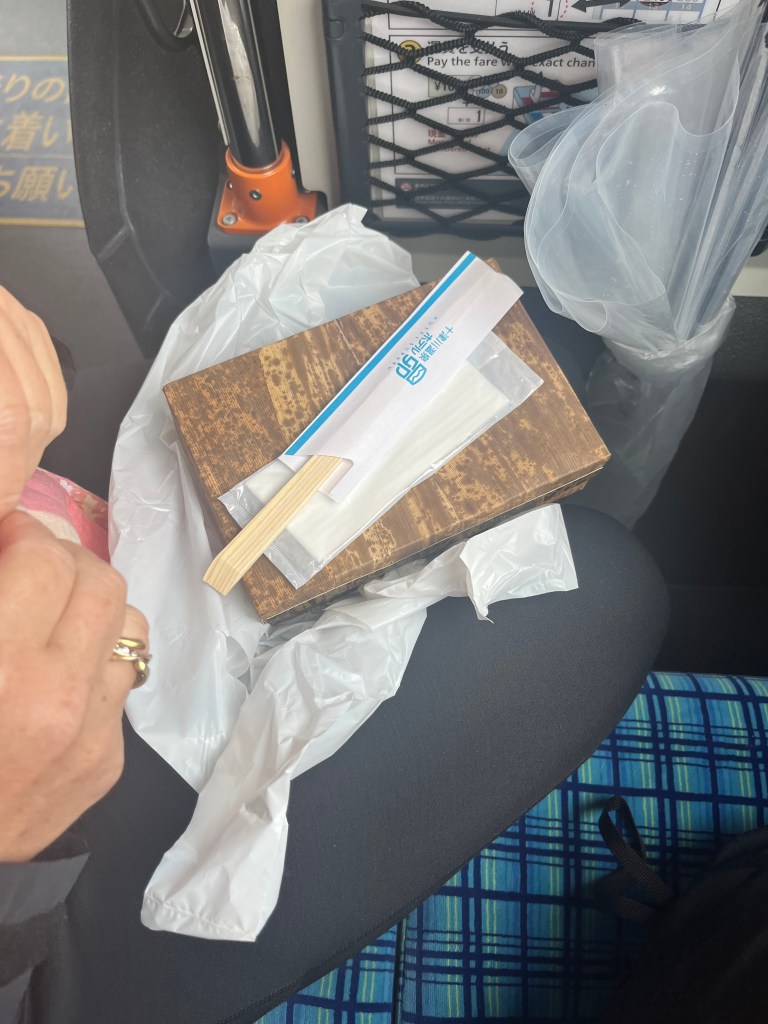
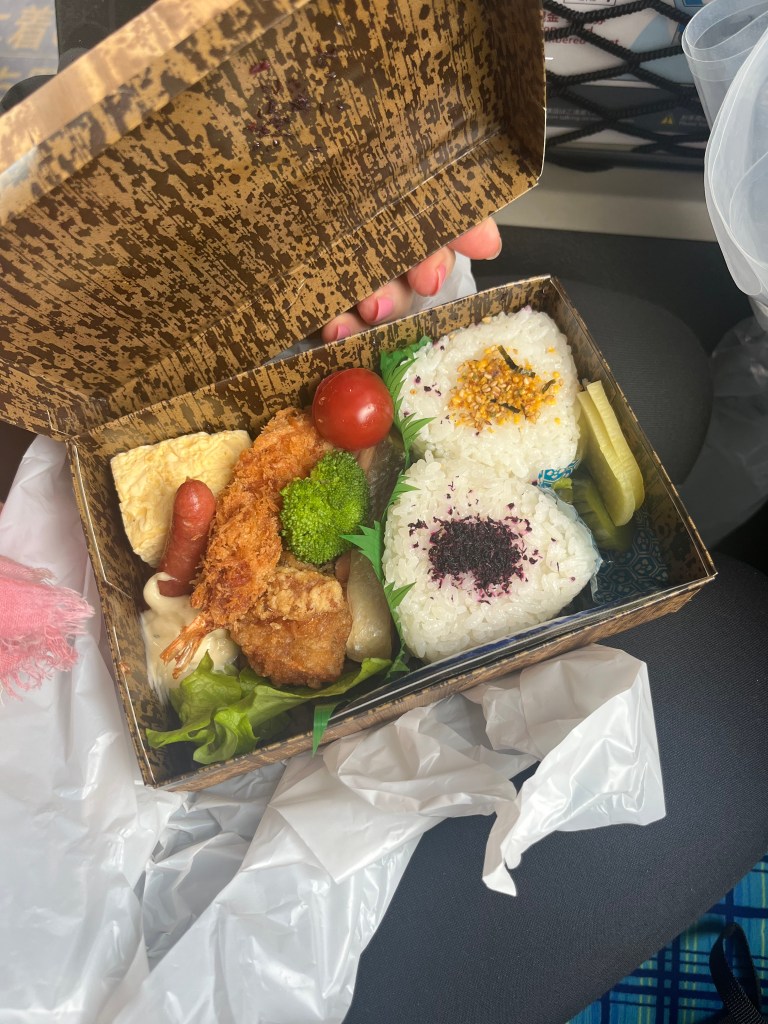
We departed early the next morning to get a bus connection to Hongu and then onto other hiking adventures. We were given a very substantial bento box, which was nice for lunch, well, more like a snack on the bus 🙂
HOTEL SUBARU – ROYKAN/HOT SPRINGS EXPERIENCE
After our Hi-De-Hi experience at Takata Green Land, I hit up Google to see what awaited us at Hotel Subaru. It looked OK – thank goodness.
Our instructions were to finish the hike, take the local bus, alight at the relevant stop and then walk down the road for 1.4km. Righto. There was a bit of excitement as the last half of the walk to the hotel was through a long road tunnel! We scurried through on a narrow pedestrian platform, and I didn’t realise how noisy a car tunnel was – deafening!
As we exited the tunnel – there was Hotel Subaru. It unfolded in front of us with a gigantic outdoor sound shell and fields to the right, and a sweeping driveway which led to the reception area.
Can I say – BEST WELCOME EVER!!!!!!
Name up in lights!Pretty good prices
Omotenashi was in full swing at Hotel Subaru. The front desk was attentive and very helpful. The hotel lobby was immaculate and had a very well stocked (and modestly priced) convenience store where we could purchase some sake ‘friend cups’.
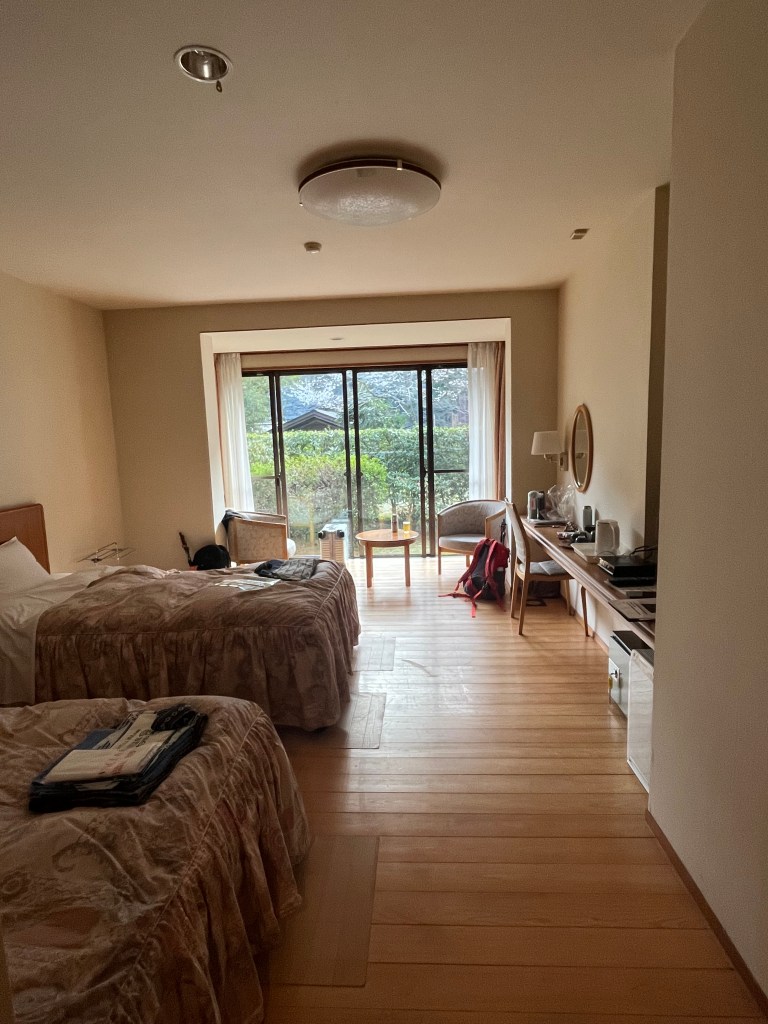
We had been assigned our only western room for our whole Kumano experience. The staff were very insistent on showing us every feature of the room itself, which took some time – mostly via mime as our Japanese, I’m embarrassed to say, was limited to yes, no, hello, goodbye and thank you! But we had a very enthusiastic delivery of our Japanese phrases…
Our room was very clean and tidy – AND – we had a sink and a loo – happy days!
It was, however, frozen in 1989. Complete with bed ruffles, English tea sets and matching curtains. Which provoked a fit of the giggles from TB as the earnest Assistant Manager was pointing out the room features….endlessly. I think the friend cups had a bit to do with it.
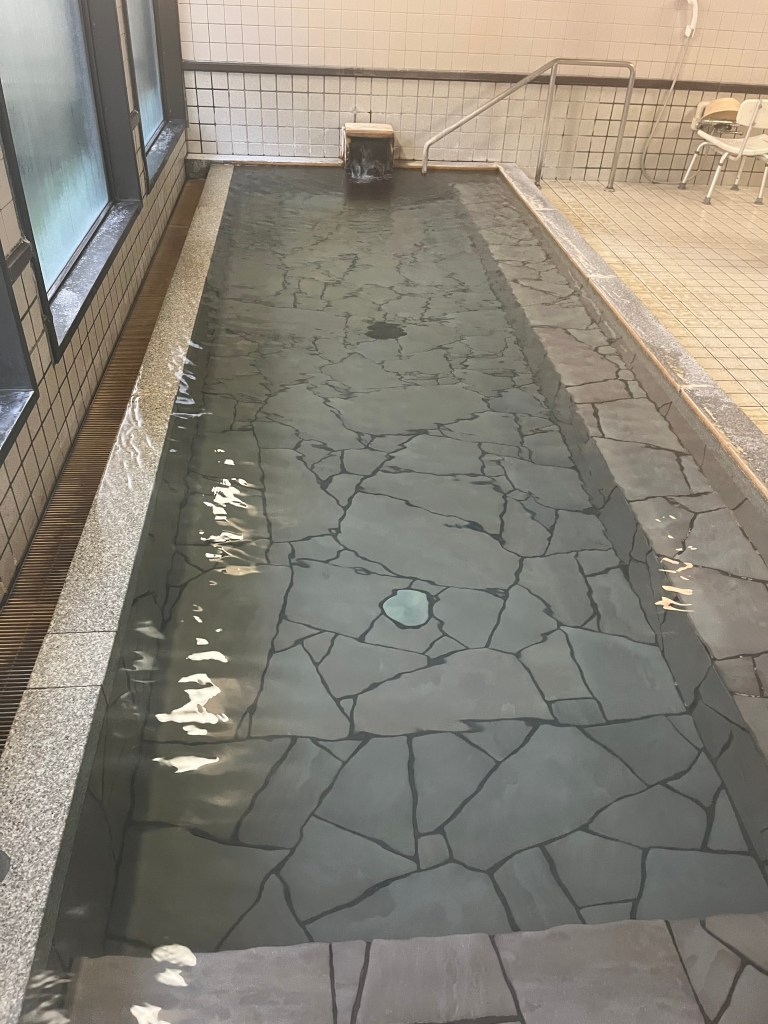
Hotel Subaru is renowned for its onsen, and wowser – hello fantastic onsen! It was a remarkable setup, indoor and out. And again, we pretty much had it to ourselves and by now TB and I regarded ourselves as onsen aficionados! Off came the hiking gear, out came the wash bag and the onsen basket and pfffft – who needs a modesty towel?!
COLD plunge pool!!!Women’s outdoorWomen’s indoorWhere we wallowed for quite some time!
The outside onsen was tranquil, and soothing, and we had the place to ourselves (which meant I could sneak some photos!) We emerged squeaky clean and very relaxed.
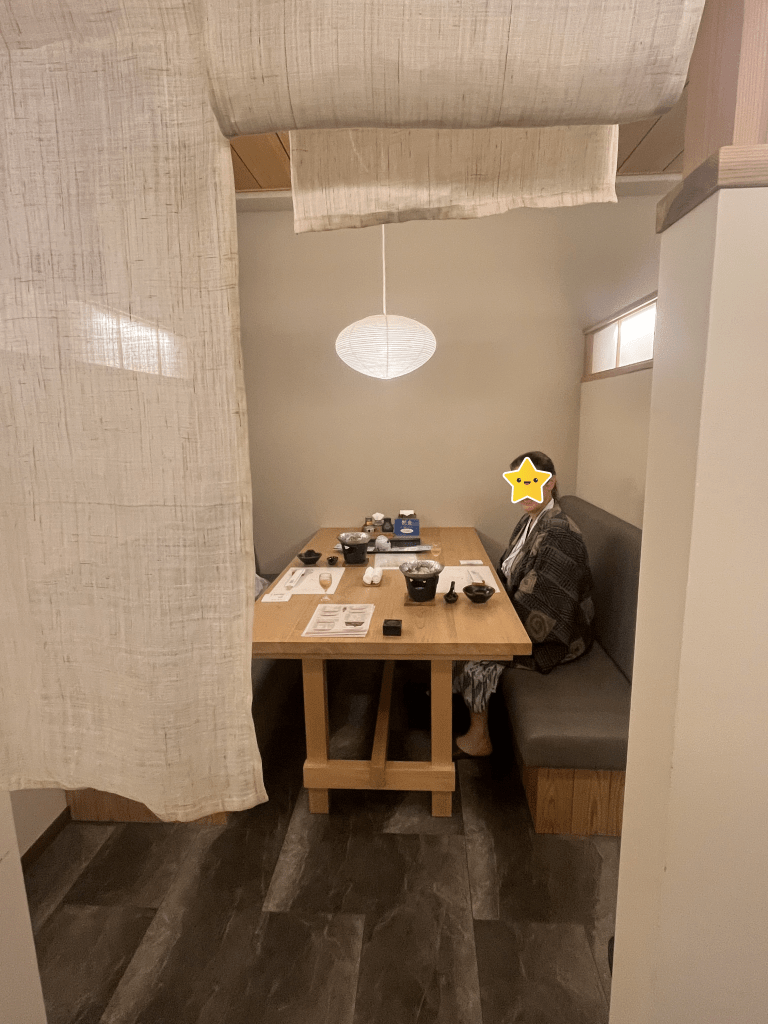
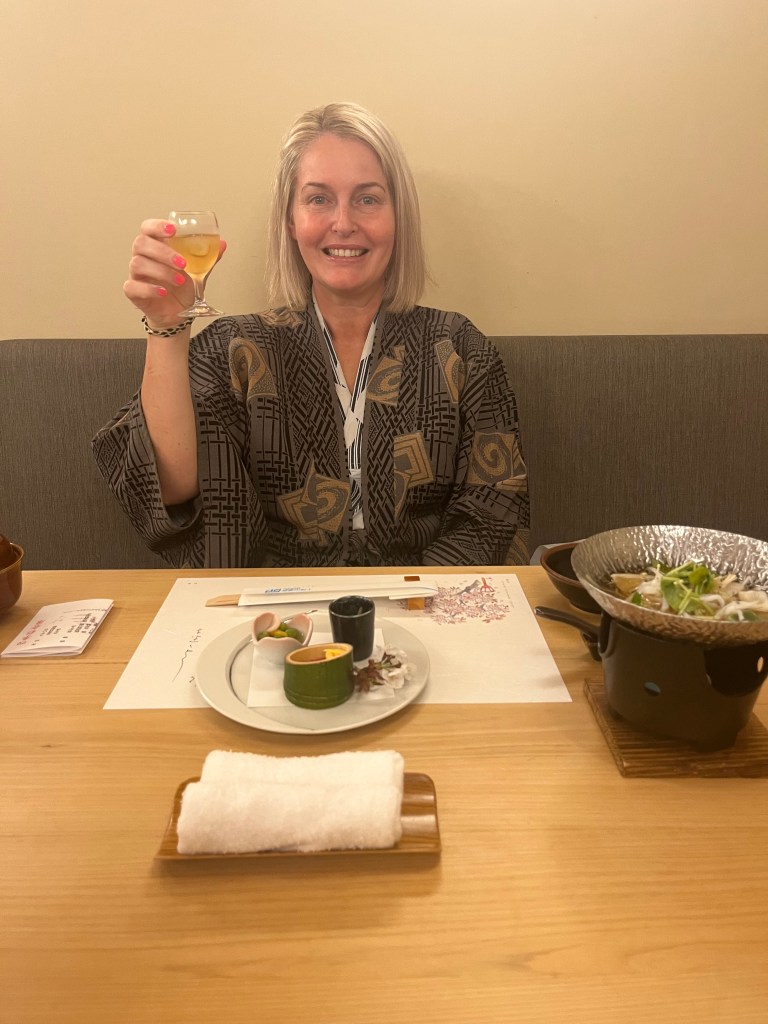
This is where we both now did a happy dance. You know dinner is going to be great when you are shown to your own little dining enclave, complete with privacy curtain and a table set for a king (actually, two majestic queens).
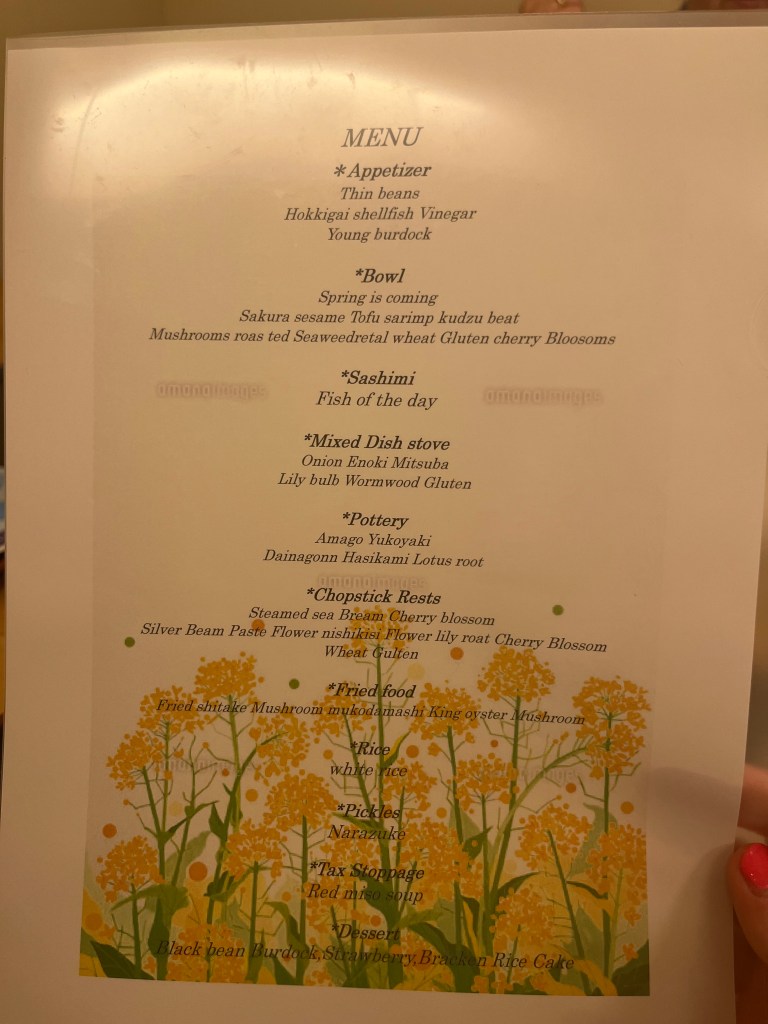
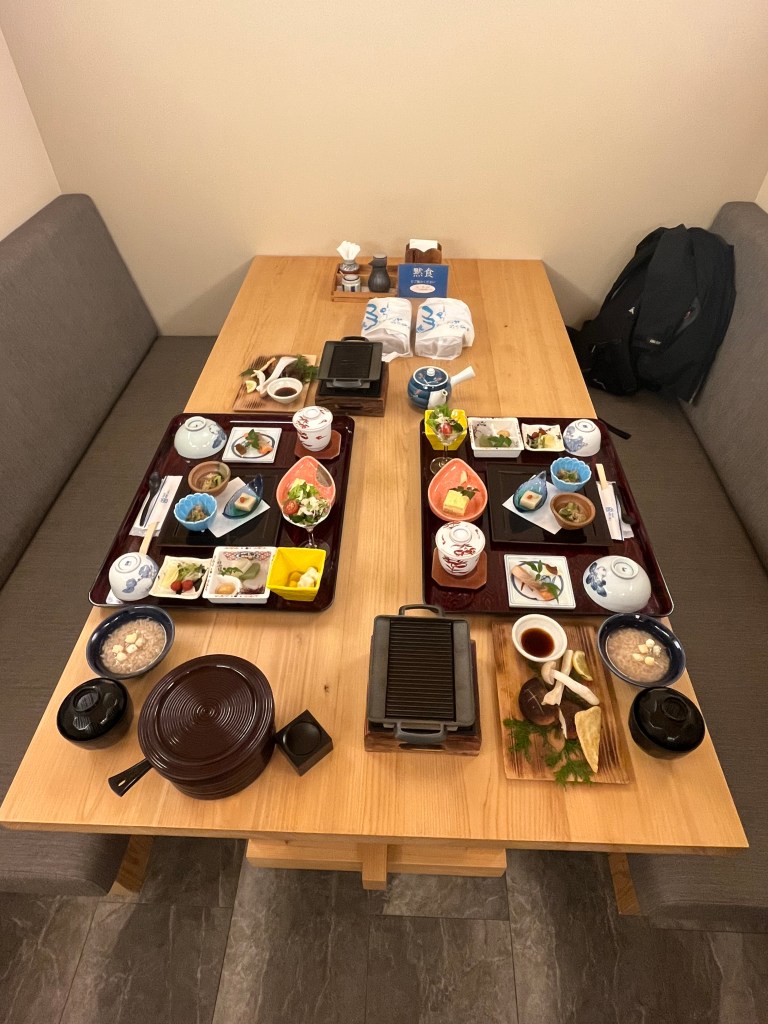
TB happily seatedWhy yes I will have a glass…The beautifully scripted menuThis was actually BREAKFAST the next morning!!!! See our bento boxes for lunch...
We were treated to some incredible dishes including a whole cooked fish, a shabushabu which was a meal in itself and some beautiful sake. The atmosphere really made it a treat and the attendants were impeccable in their service and attention to detail.
I can see why omotenashi is such a part of the overall Japanese hospitality experience. I felt like visiting royalty, but in a way that showed immense respect to all parties. Well done Hotel Subaru.
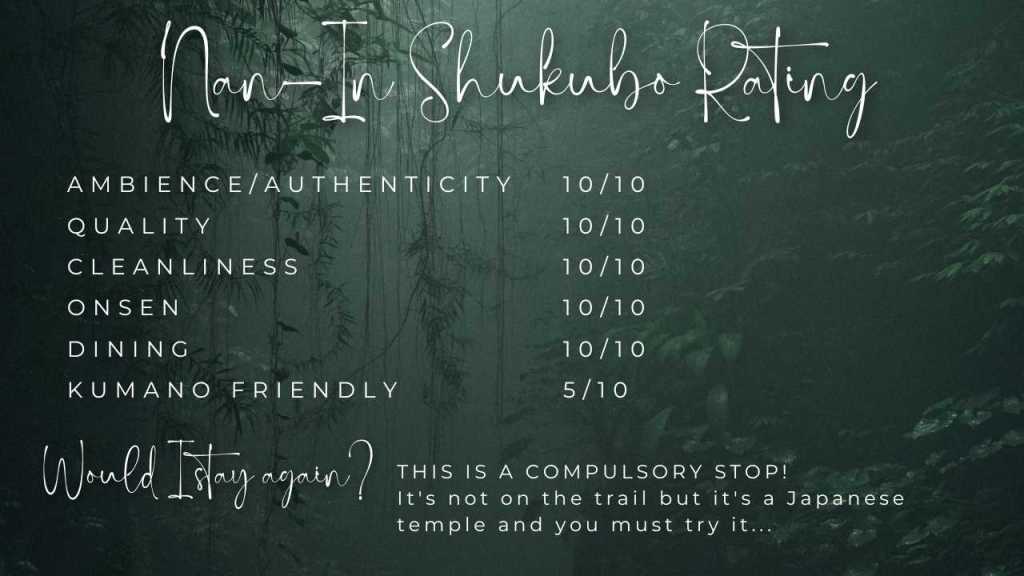
NAN-IN TEMPLE – SHUKUBO EXPERIENCE
Our final destination before returning to Tokyo wasn’t on the Kumano trail, but falls within the prefecture of Wakayama, the spiritual centre of Kumano. Koyasan (Mount Koya) is the mountain of temples, comprised of 117 Buddhist temples founded over 1,200 years ago. Located high in the forest covered mountains, it won’t be a spoiler alert for me to say this was one of the most magical and spiritually affirming destinations I’ve ever had the privilege of going to.
Please put Koyasan on your list when hiking Kumano, you won’t be disappointed. And you will certainly get your walking distances in. TB and I walked 10km on our first day in Koyasan – so much to see!
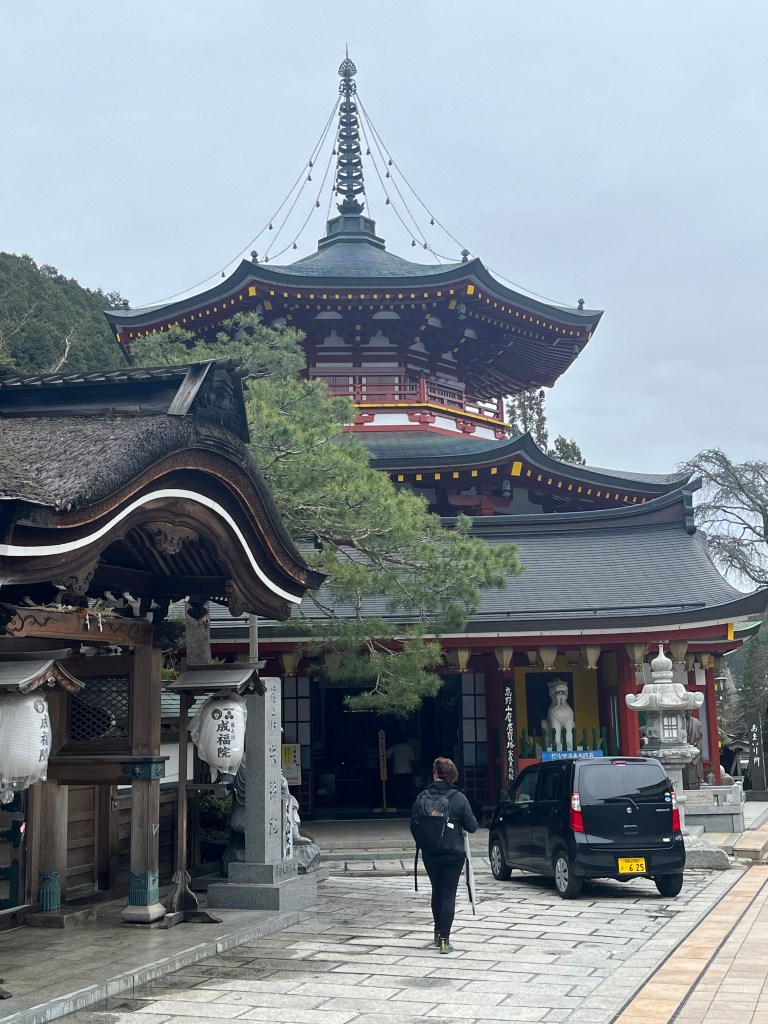
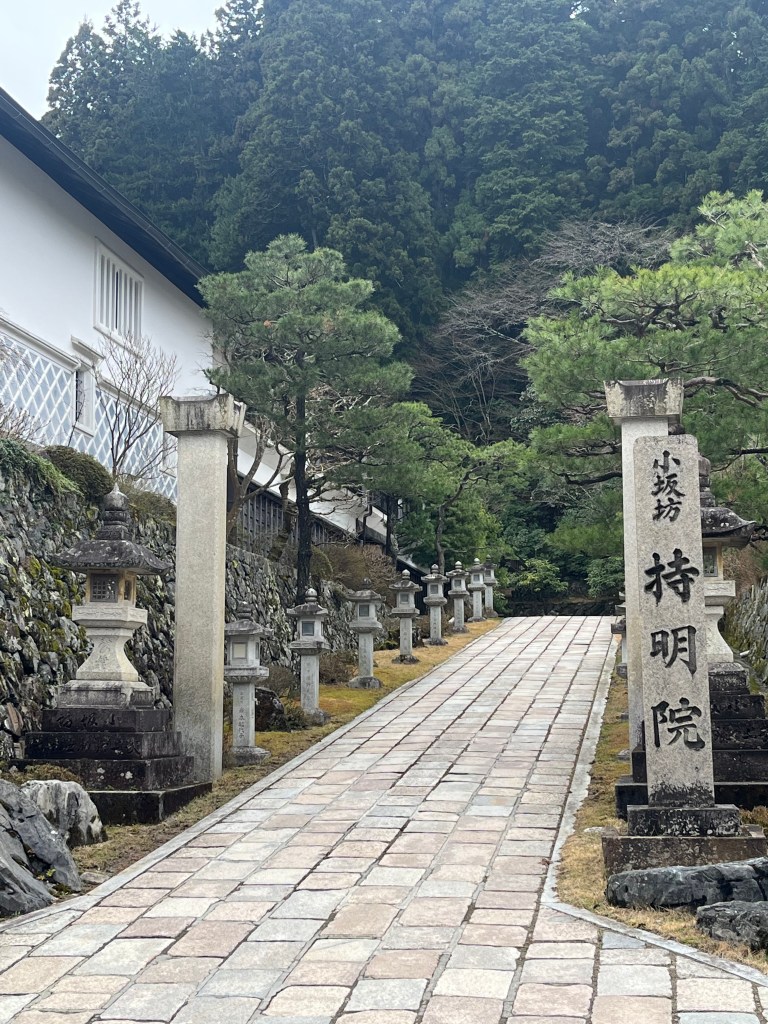
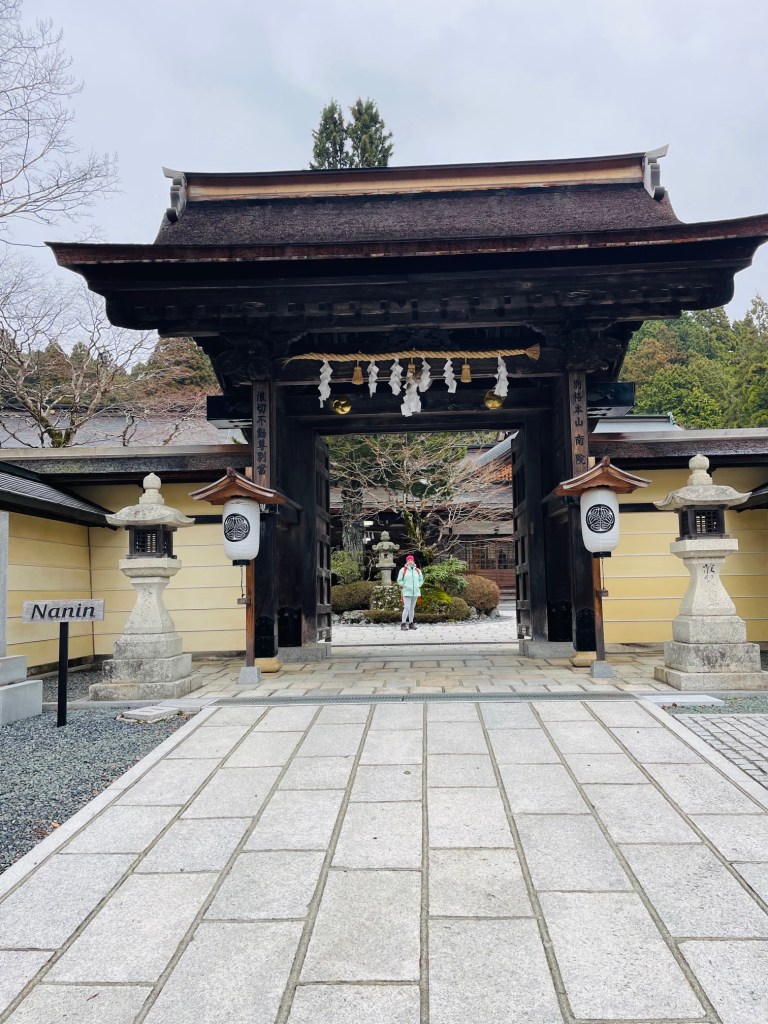
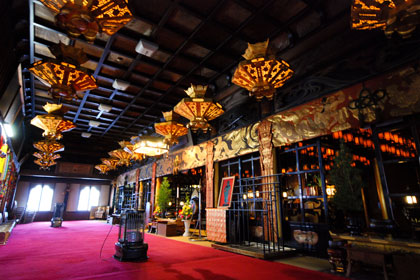
Nan-In is one of the many temples which has been partially modified to allow for overnight experiences. They offer a simple, traditional glimpse into the Buddhist life and rituals. We were very impressed with the entrance to Nan-In, which was rather ornate to honour the gods. The temple is to the left, and the accommodation on the right of the compound.
We were greeted (as we were used to now) with outstanding omotenashi. Our boots had little homes to live in outside the front door and our raincoats and packs were dried and delivered to our room. Koyasan is quite high, and it was about 6 degrees and misty rain when we arrived…brrrrrrr.
We were looked after by a young monk who spoke English, he was very patient and helpful. He seemed to be on call 24/7 for guests as whenever we popped our heads into the office door, the monks waved us out and the young monk appeared soon after. That’s omotenashi!
We were shown to our room, past the communal sinks and toilet facilities. Everything was immaculate and I am not exaggerating when I say you could have eaten off the floor. The attention to detail was incredible and could be seen in every nook and cranny as we walked through the building.
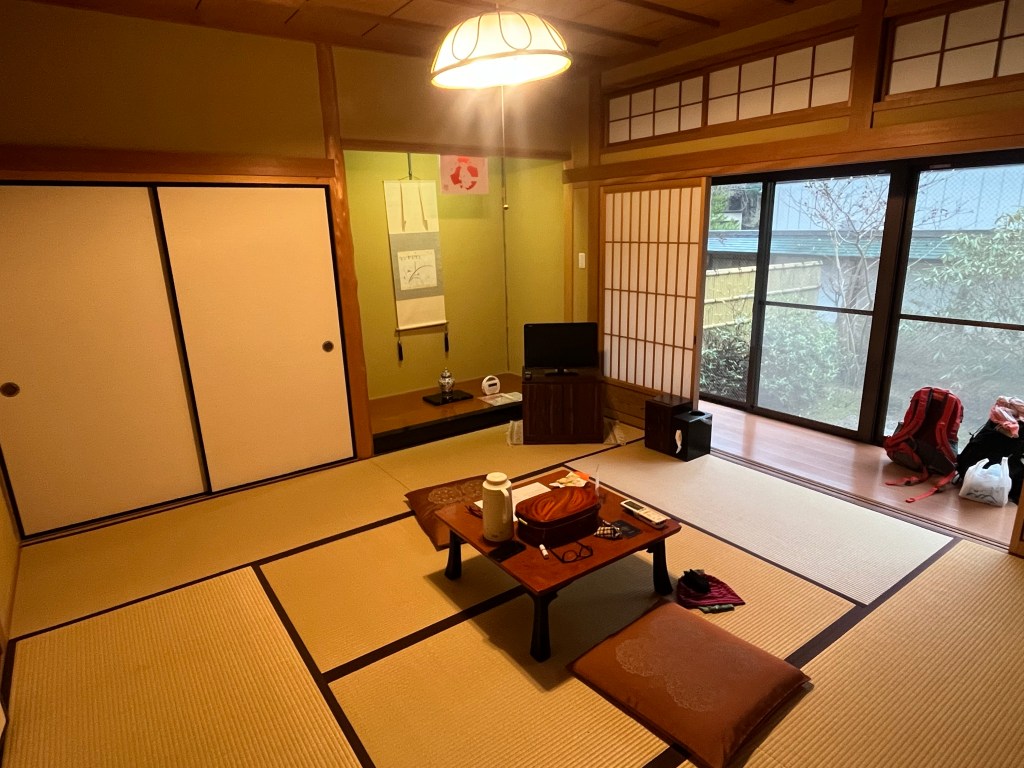
Look out – incoming!Our lovely tatami room
Our room was superb and had a lovely courtyard view. It consisted of an entrance space where suitcases lived, and then the main tatami space, with a sunroom out to the courtyard. We were the only guests in the wing…there’s something to be said for travelling in shoulder season… 😉
Our dinner slot was 6pm. Because we had been exploring Koyasan until quite late, we flipped things around and had dinner before the onsen. We presented ourselves at the main entry, and were ushered into a very ornate and opulent private dining room. There was a shrine in one corner, beautifully decorated sliding panels and a low dining table set for two. The only indication that we weren’t alone in the temple were the twanging American voices of a group across the hallway as they a) struggled to sit down on the floor, b) figure out the eating utensils and c) make sense of the communal bathroom facilities 🙂
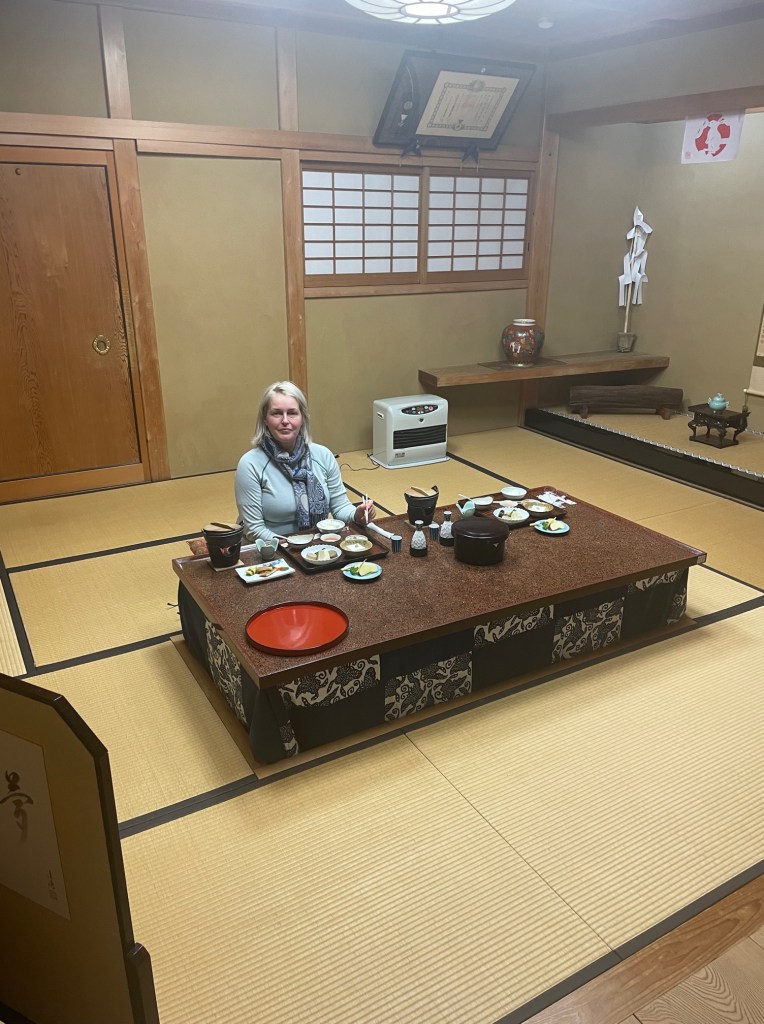
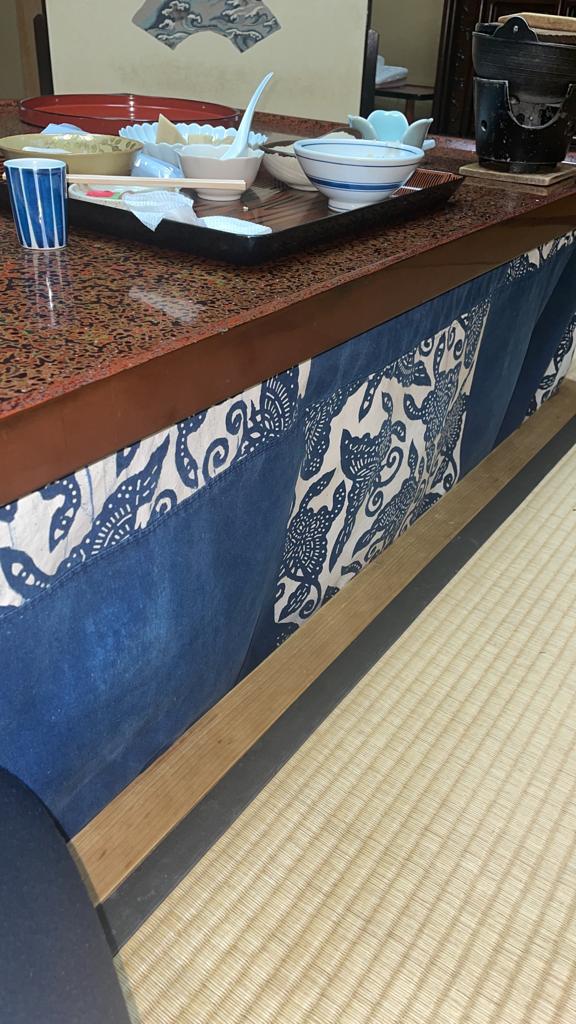
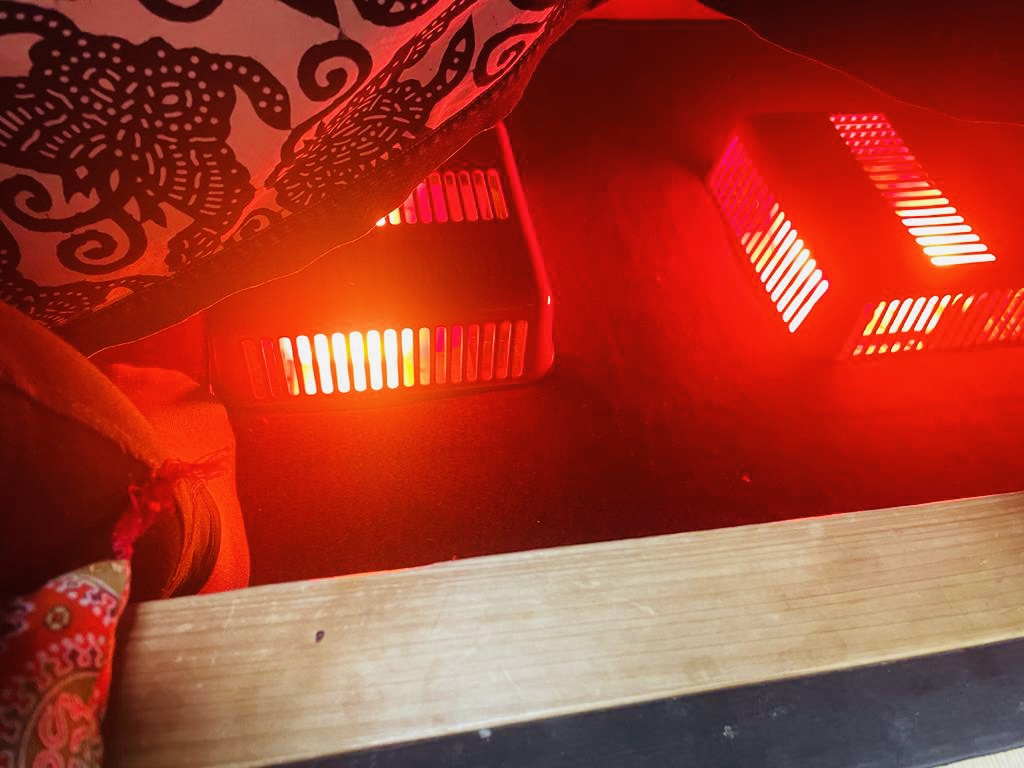
Our dining experience was a wonderful treat. Koyasan is a mountain village and was quite cold, even in late March. To counter that, we had UNDER TABLE HEATING!! Our meal was simple, but perfect. I am now an expert in how many ways tofu can be cooked and still taste lovely. All the temples are strictly vegetarian and based on what we were served, possibly plant based. We had (again) modestly priced sake and enjoyed every sip.
After our wonderful meal we went for a soak. The onsen, was very small and indoor only. It did the trick however and we were able to cleanse, bathe and soak solo. It’s not a prerequisite, but still nice to have the onsen to yourself.
Kumano Travel photo of the onsen
TIP
Most onsens are only open during the evening, not in the morning. Plan to bathe on your arrival, or after dinner. If you’re a morning bather, be prepared to adjust…or sponge bath in the loos! at Nan-In, the onsen was open from 4pm to 10pm. Look for the coloured curtains which denote gendered bathing areas – they also do swap around so always check the colours. I have no easy answer for my non-gendered readers except to follow you authentic self and enjoy your onsen experience.
Overnight, no complaints. We were warm and comfy. Except our pillows were beans. Yep, dried beans. Quite firm and small, maybe A4 size? I was clever, I ditched the pillow and went for a bundle of clothes. Worked a treat. TB persevered with her bean torture, and ended up doing emails for most of the night. Not me!
We had an invitation to attend morning prayers before breakfast. No way we were going to miss that! We almost didn’t get in as TB and I were trying to ‘pull’ a ‘slide’ door but we made it. The ceremony was very calming and beautiful to witness. I love the fact that Buddhism just assumes you’re good people, no threshold, no test, just come on in. I’m not a religious person but I appreciate anything that encourages me to stop – breathe – and centre myself.
Kumano Travel photo of worship hall
Breakfast was a cut down version of dinner, again in our own dining paradise with fabulous service and food. Lots of vegetables and tofu. I was very happy 🙂
TB and I left with our souls and tummies replenished and looking forward to our final leg in Japan.
So there you have it. my list of Rating the Ryokans. There are places I wouldn’t stay at again, but I wouldn’t change a thing.
TB and I had the trip of our lives and that included all the experiences. Ichie Cafe, the hairy snoring neighbour but wonderful chiffon cake, the Hi-De-Hi camp with a magical misty outside onsen…every less than ideal stay was also a travel moment to be treasured, embraced and remembered.
Take my rankings with a grain of salt and rather than put you off, I hope these two blogs enrich your decision making process. Not one of our nights on the trail was unpleasant. Every night was an experience – with maybe a couple I don’t need to repeat!
Hello and welcome to my LIKETHEHIKE blog. I’m PJ and I write about the hikes I take, giving you insights, photos, commentary, tips and tools so you can enjoy hiking and embrace the experience.
Let’s talk URBAN HIKING. Yep. URBAN HIKING
What is Urban Hiking?
Urban hiking is walking in a city – usually on a route you haven’t explored before – taking new paths, up hills, down stairs, through parks and reserves, following signs, seeing new things. Sounds pretty good huh?!
Urban hiking is easy to plan and execute. You can use maps, or simply start walking and see where the hike takes you. If you’re staying at a hotel, ask the front desk. Locals are very happy to point you in the right direction.
What Do You Need?
Urban hiking is a bit different to trail hiking.
No Backpack. I do wear exercise tights with pockets so I can carry a mobile, glasses and ever present lip salve. If I’m feeling like a long urban hike I’ll dust off the bum bag (fanny pack). Food and water I buy as I need it.
No Hiking Boots. I wear a hybrid or trail sneaker. I find that asphalt walking can be a bit harder on my knees and hips, so I like the additional padding a trail shoe provides. My latest find was at North Face, Vectiv Infinite Trail Shoes. Super padded and comfy. Another tried and true option is New Balance Fresh Foam Hierro v6. Both are great for urban hiking.
Keep the Hat! I still wear a hat and sunscreen. I’m a child of the 70’s and we weren’t very sun smart back then. Skin protection is EVERYTHING. I use a full brim hat rather than a baseball cap.
Time of Day. Is important for an urban hike. A city has so many personalities that change according to the time of day. I prefer early morning, but have also hiked later in the day for a change of pace. Don’t worry too much about distance, but look for interesting destinations, happenings, landmarks or people. This will create a great urban hiking experience.
Urban Hike #1 – Sydney CBD
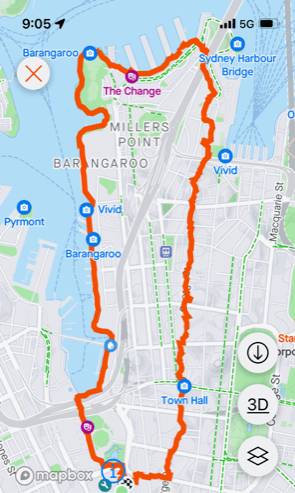
I was in Sydney for work and needed to stretch my legs. I mapped out a cheeky wee 8km urban hike which took in Darling Harbour, Barangaroo, Walsh Bay, the Harbour Bridge, The Rocks and the CBD.
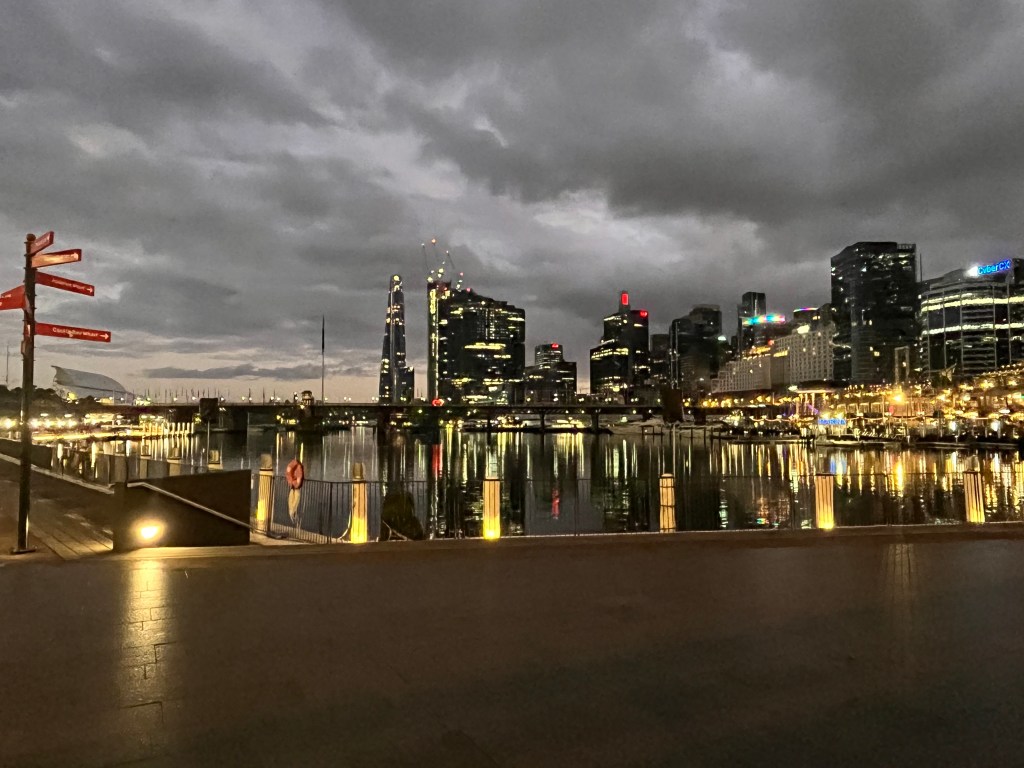
Darling Harbour
Always a favourite destination for either revitalisation or rest, Darling Harbour sits just west of the Sydney CBD. It’s home to restaurants, ships, parks, art trails, ferries, you name it. It was home to the maritime industry through the 1800’s, Sydney’s first gasworks and during the 1980’s underwent a decade long gentrification project.
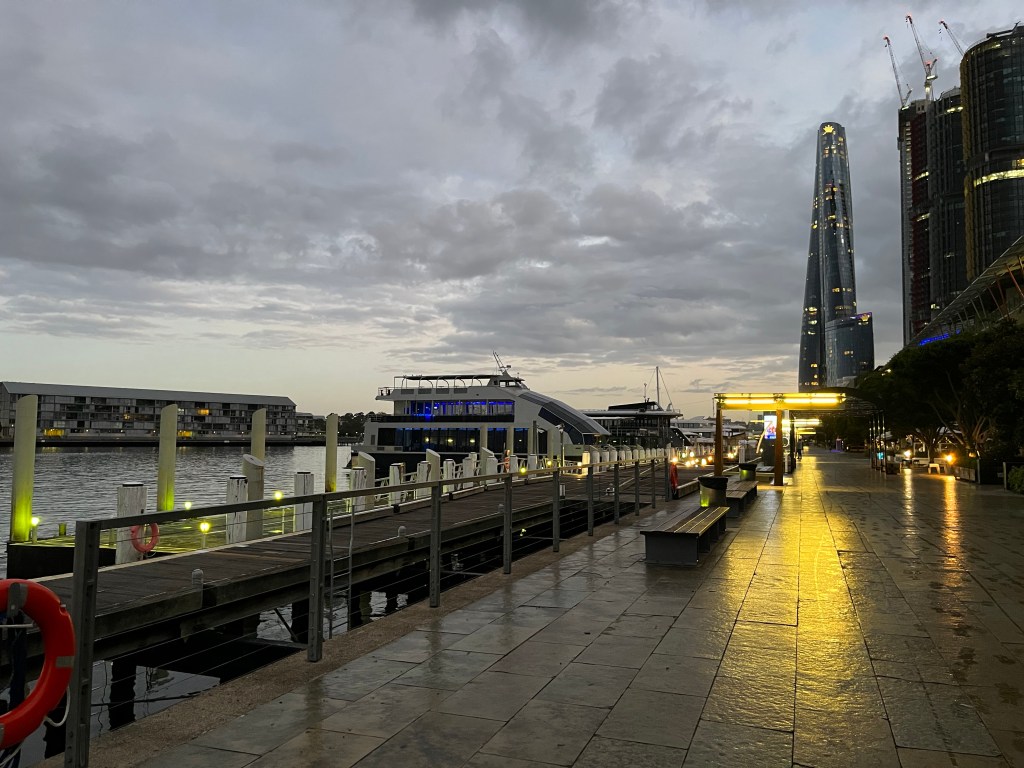
Handy maps are scattered aroundLooking down the harbour out to sea – a little drizzly!
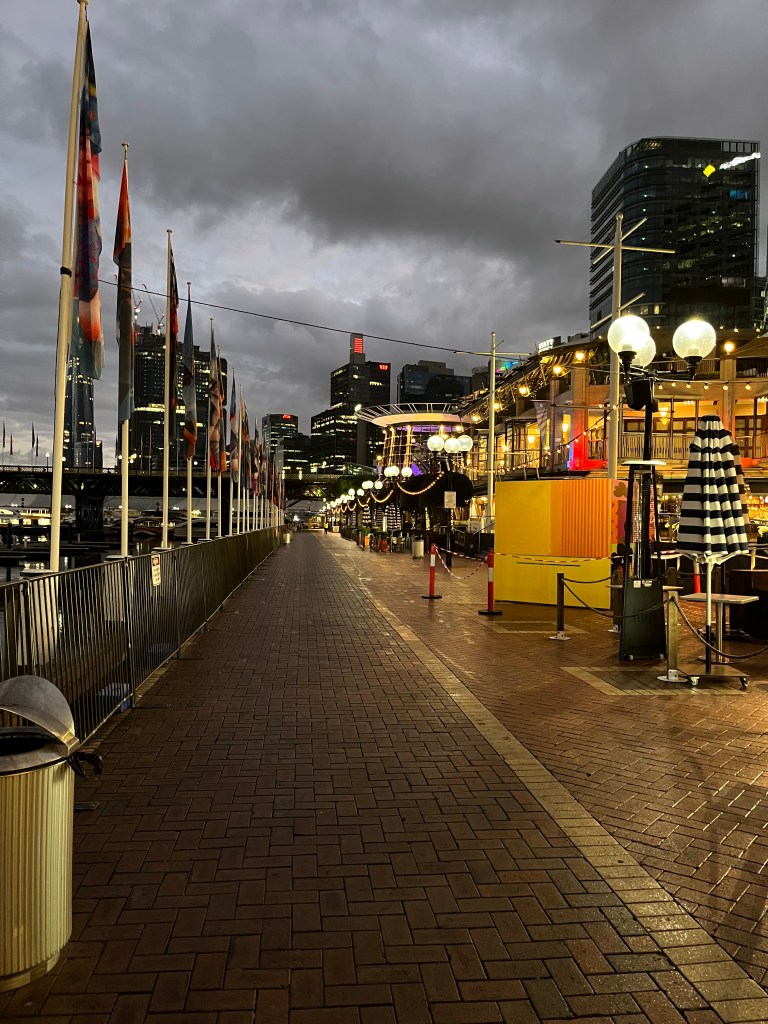
For about 3km I walked along the reclaimed wharf, past ferries and a very still harbour. At this time of morning it’s you, some keen exercisers and a whole heap of tradies coming down to work on the construction sites scattered around. It’s still a working harbour but very pedestrian friendly.
Pride Week in Sydney Kings WharfComing into Barangaroo
Barangaroo Reserve
Barangaroo is part of Gadigal country and is named after a powerful female Cammeraygal leader of the Eora nation. Barangaroo Reserve is a landmark waterfront destination, made up of hotels, entertainment precincts, reserves and water. It’s marked by over 75,000 native trees and bushes as well as very distinct square sandstone blocks lining the foreshore. It provides incredible views onto the harbour and passing aquatic traffic. It’s a very visually powerful space to walk though at dawn.
Barangaroo Point with a SIlverSeas vessel peeking around. Note to the left, a Sydney ferry. Around the point and this is what you see! Fantastic!
Millers Point, Walsh Bay, Dawes Point
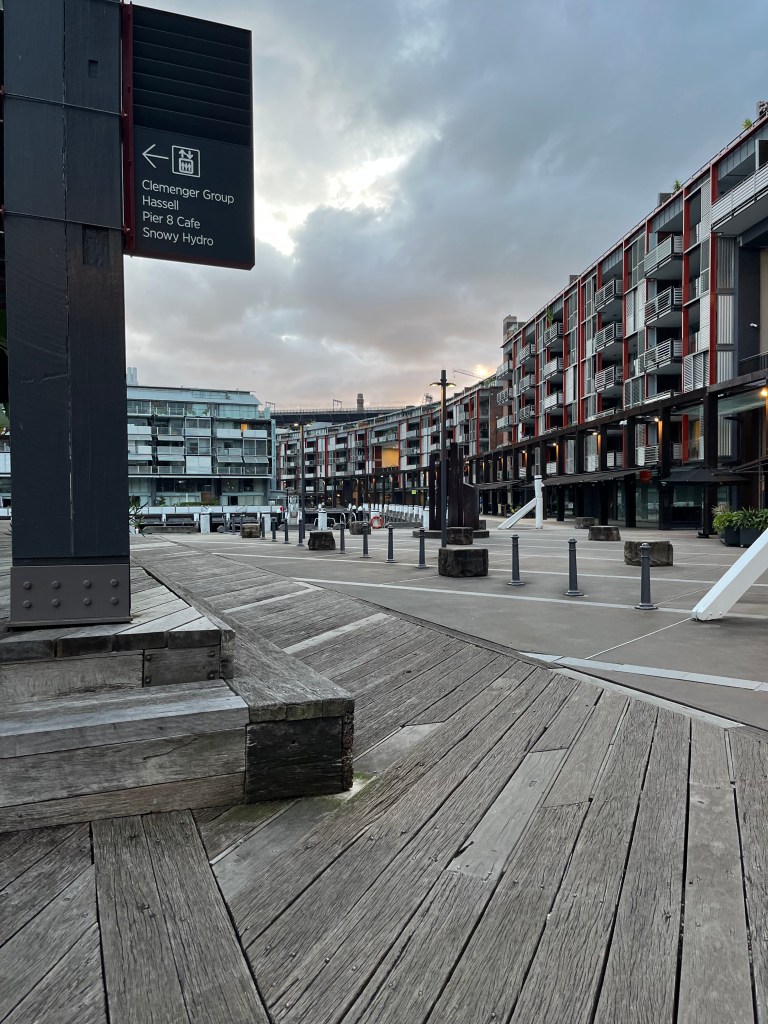
At about the 3.5km mark (just around the point you can see in the pic above), you will exit Barangaroo Reserve and enter Millers Point, then Walsh Bay. You could simply follow the road, but I try to stay away from roads wherever possible. With a little bit of trial and error, I found I could walk through the refurbished wharves in Walsh Bay, now home to cafes, residences and a cultural precinct. AND – you get to walk underneath the Sydney Harbour Bridge…!
The exit from Barangaroo Reserve. Historic workmen’s cottages still residential. Walsh Bay wharvesDawes Bay view
The Rocks
Coming out of Dawes and Walsh Bay, the vibe is very historic and utilitarian. This used to be a working area, and the streetscape reflects that. One of the fun parts of this walk is actually walking right under the Sydney Harbour Bridge!
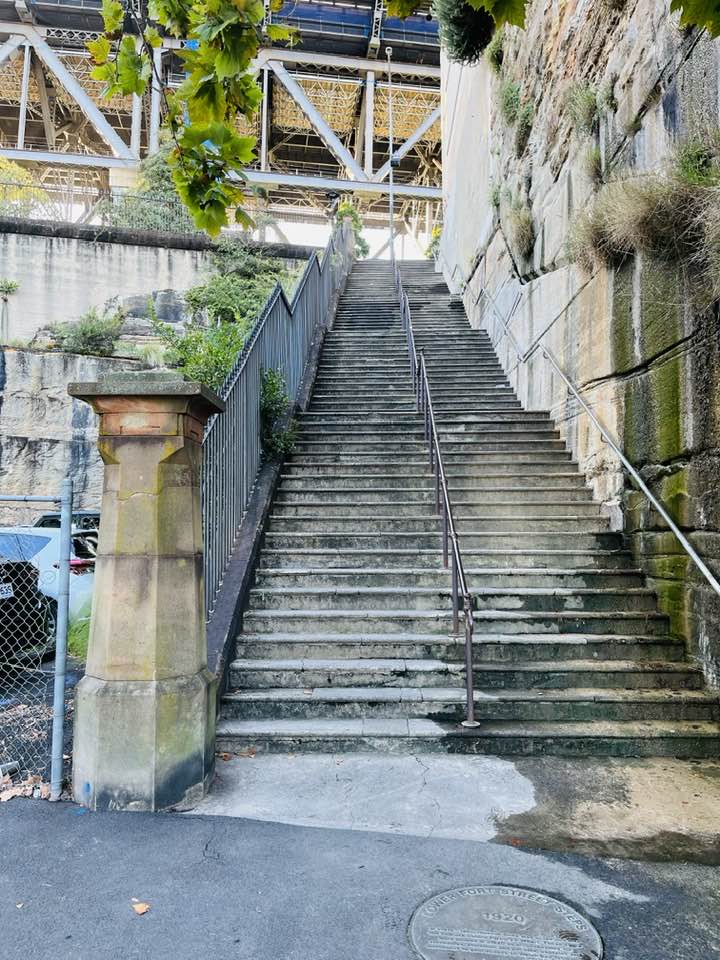
Coming out of the wharf district100 year old stairs up to the Bridge and The Rocks. My knees felt about 85 years old looking at these!Under the bridge – and look at the Opera House in the distance….
This would have to be one of my recommended destinations in Sydney. Nestled into the side of the sandstone headland supporting the Harbour Bridge, this tiny neighbourhood is a maze of historic laneways, colonial terrace houses, old pubs and a working harbourfront, dating back to 1788.
A pristine example of Rocks terrace housingLanewaysDid I mention it was Pride Week in Sydney?!Looking from The Rocks toward Circular Quay – where a monolith was berthed! Road shut for Pride revelry.
The Rocks is also home to a passenger ship terminal, The Museum of Contemporary Art and over 50 heritage listed buildings. Your urban hike might slow down a bit as you walk through this fantastic slice of Sydney history, or might even go on pause for a quick coffee break.
George St & Sydney CBD
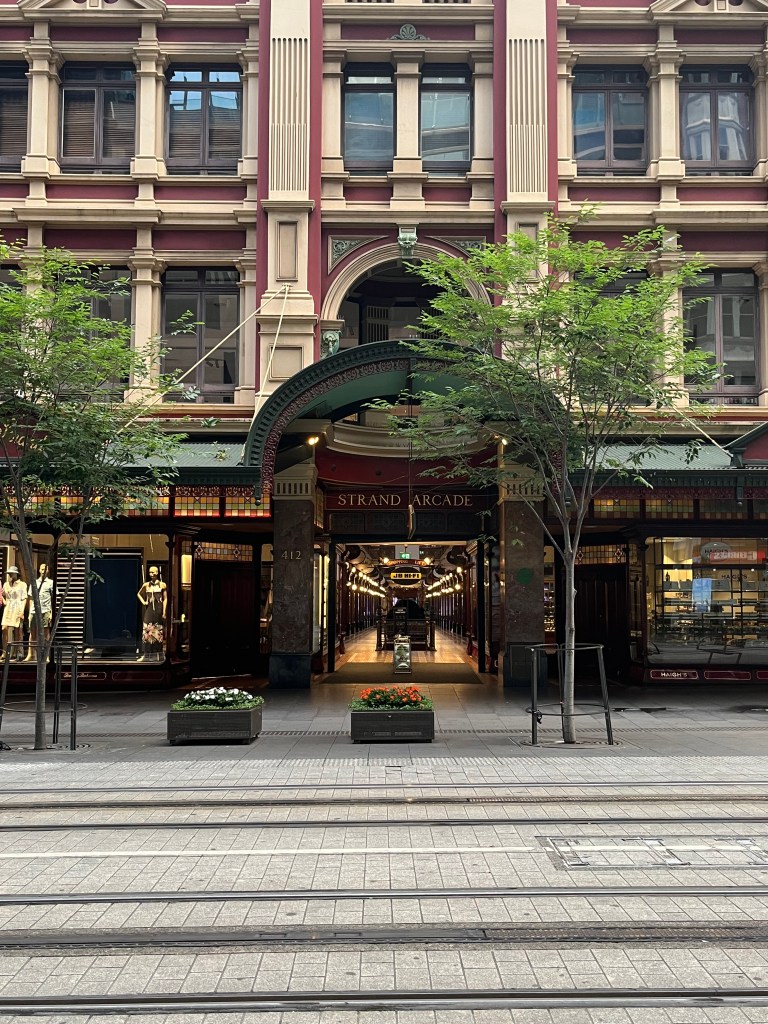
Once through The Rocks it’s a brisk troy up the middle of Sydney CBD via George St. Running for 3km from Circular Quay to Chinatown, it was Sydney’s original high street, and is still home to a number of the city’s most prestigious buildings and precincts. I walked George St around 7.30am and it was still relatively quiet, with only the first office workers trotting to work. By 11am, George St is awash with humanity. It’s mainly a pedestrian and light rail thoroughfare, so very easy to walk.
Start of George St, all to myself 🙂 Strand Arcade, one of the Sydney CBD landmarksNot often you see George St this quiet…
Compulsory Stop – QVB Time
It was about 7km into my urban hike when I felt the need for sustenance. Another great destination in Sydney CBD presented itself – the Queen Victoria Building (or QVB in Aussie vernacular).
QVB is a five-level heritage listed building which is now home to premium retailers such as Bally, Camilla, Coach, Furla, Jimmy Choo, Longines, Georg Jensen, Dior – it’s a shopping destination! It’s also home to a range of eateries, and my breakfast destination.
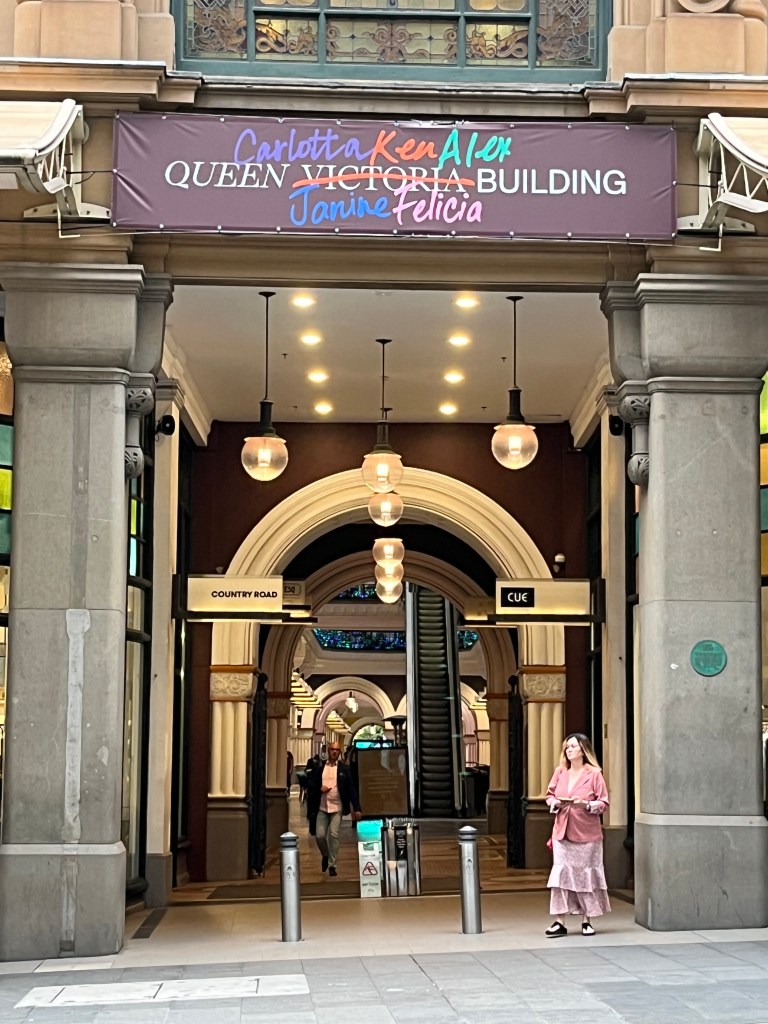
My visit to Sydney coincided with 2023 Pride Week, so the city was packed with pride related activities, events and decorations. Hence the temporary re-naming of QVB.
Eastern entry to QVBBreakfast sustenance at Manon BrasseriePeeking over the cafe curtain at the movie madness
Stopping somewhere on your urban hike provides two benefits:
Sustenance, in both solid and liquid form; and
An opportunity to people what, to get a sense of the flow in the area.
I had a quick but delicious breakfast and coffee at Manon Brassier, and watched a film crew outside the café as they hustled and bustled very busily filming an ‘as yet unnamed’ movie adjacent to the Queen Victoria statue. By now Sydney was well and truly awake with workers, shoppers, tradies and all the madness of a large CBD.
Last Leg
It was a final 2km up George St to Chinatown, past the Town Hall to my hotel and the start of my working day.
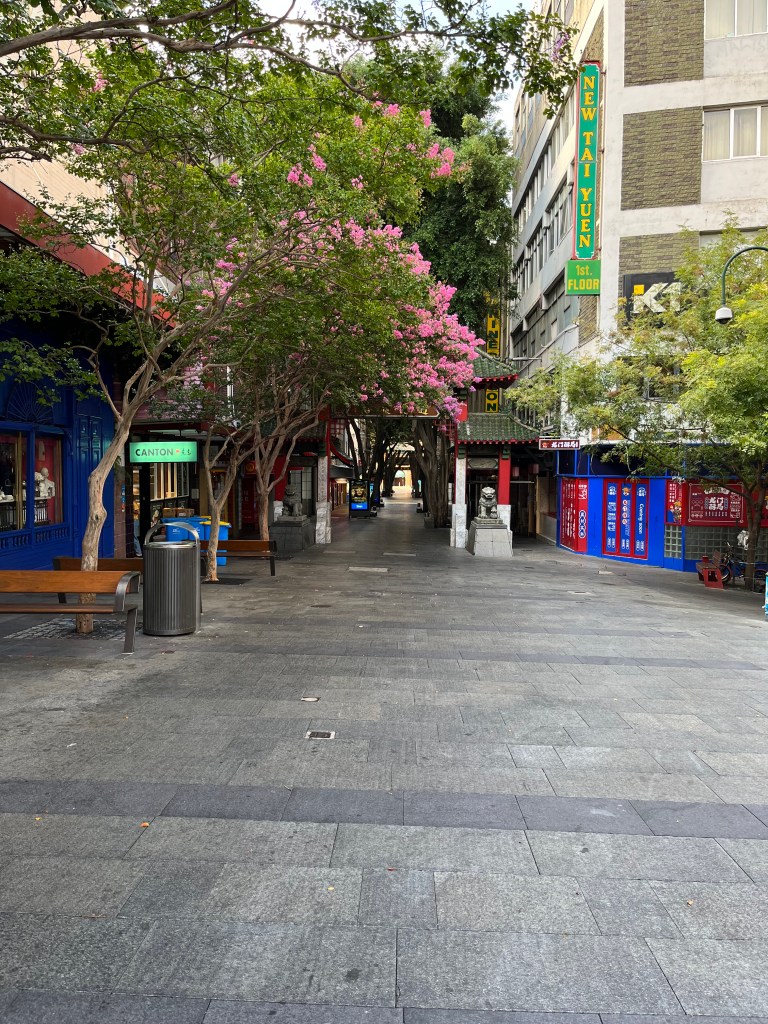
Sydney Town HallChinatown…where racism IS NOT WELCOME 🙂
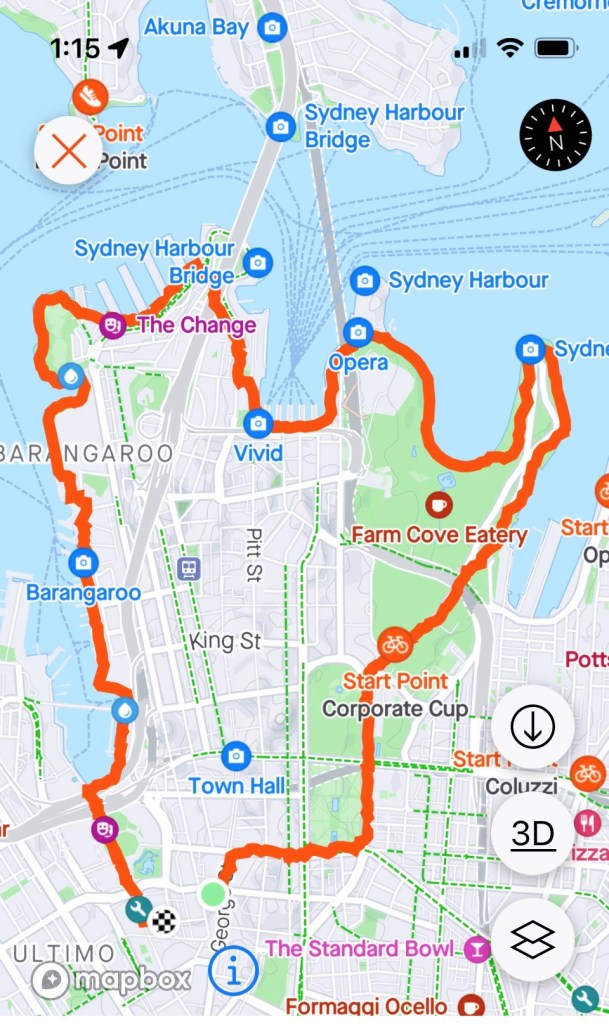
Sydney has a wide range of walking trails/tracks/areas for visitors to explore. I also love walking around the Opera House, the botanic gardens, the harbour, Woolloomooloo (yep, that’s a real place), the Domain, and there’s a great 10km circuit that takes in most of these places.
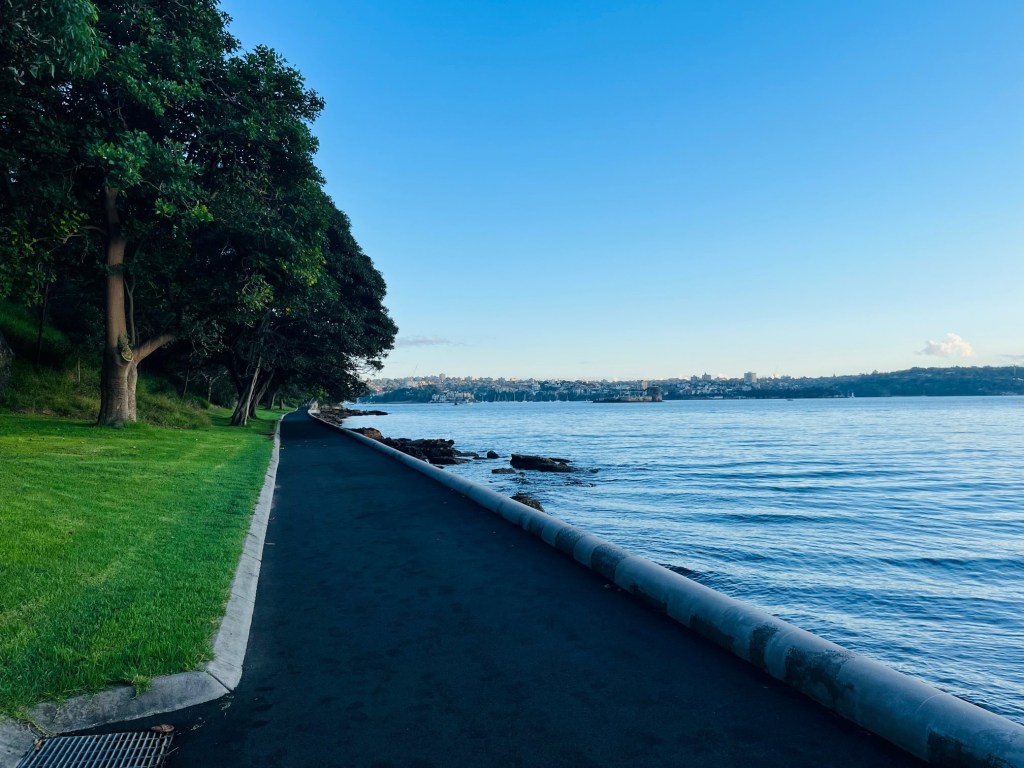
Bottom of DomainLonger 10km urban hike of Sydney CBDGreat shot!
Take the time to explore your city – or take advantage of travel and explore a new city. You’ll be surprised at what you find.



















































































































 Like The Hike