Shikoku Series – The Best of Both Worlds, Why We Use Hiking Companies for Self-Guided Hikes

There is a particular kind of freedom that comes with walking from one place to another under your own steam. You carry what you need for the day, follow the trail, stop when something catches your eye and eventually arrive somewhere completely new. Nobody is hurrying you along. Nobody is telling you when to take a break. And if you decide that a scenic lookout, a tiny cafe or a slightly questionable detour deserves your attention, you can change the plan.

This is exactly what I love about self -guided hiking.

But – and it’s quite a big but – multi-day hiking also comes with a sizeable pile of logistics. There are routes to research, accommodation to book, luggage to move, transfers to organise, maps to understand, food to source and contingency plans to consider. Add another country, another language and a trail that wanders through small villages and remote areas, and suddenly the planning can become a bigger expedition than the hike itself.

This is where a hiking company earns its keep.

Supported, But Still Self-Guided

For our Kumano Kodo hike in 2023, we booked through the Australian company RAW Travel. For our upcoming Shikoku adventure, we are using Auswalk.

Both trips give us what I think is the sweet spot of multi-day hiking – the structure and support of an organised trip, with the freedom and independence of walking it ourselves.

We are not joining a tour group or following a guide carrying a little flag. We make our own way each day. We decide when to start, how quickly (or slowly) to walk, where to stop and how long to stay there. We can talk all day, walk in silence, take too many photos, investigate a side trail or stop for snacks and breaks whenever the mood strikes. In other words, we get to create our own fun.

At the same time, somebody with local knowledge has already done the heavy lifting behind the scenes. The itinerary is mapped out, the accommodation is booked, the luggage transfers are arranged, and on-the-ground support is available if something goes wrong.

That combination is a winner.

The Joy of Luggage-Free Hiking

One of the biggest benefits is walking without hauling your entire holiday on your back. Our main luggage is transferred between accommodations, so we only carry what we need for the day (and occasionally an overnight). Water, lunch, essential gear, some safety essentials and whatever else has survived my ongoing campaign to reduce backpack weight!

You are still a hiker. Your legs certainly know they have been hiking. But you are not carrying clothes, a tent, cooking equipment, toiletries and every other possession over every hill and through every forest. For us, luggage-free hiking makes the trip more enjoyable and more sustainable over consecutive days. It means less strain on the body, more energy to appreciate where we are and a considerably better chance that TAB and I will still be on speaking terms at the end of the hike!

The Boring Bits are Already Done

I enjoy planning a hiking holiday. I love researching destinations, looking at maps and imagining what each day will bring. What I enjoy less is trying to piece together multiple overnight options, luggage issues, connections and backup options in places I don’t know. A hiking company takes care of those moving parts. They design daily stages that are broadly achievable, select accommodation that works with you and the route and provide the practical info to get from A to B.

That local knowledge is particularly valuable on trails such as the Kumano Kodo and the Shikoku routes, where walking days can involve rural areas, limited public transport, and accommodation off the beaten track.

It removes a great deal of uncertainty without removing the adventure.

Support off the Beaten Track

Self-guided doesn’t have to mean completely on your own. Knowing there is someone to contact if we are lost, miss a connection, encounter a trail issue or need to change plans provides a reassuring safety net. Hopefully, we won’t need it. But on a long walk in another country, it’s comforting to know that support exists beyond a frantic internet search and Google Translate at 10pm on a Monday night.

This was part of what made our Kumano Kodo experience with RAW Travel feel so manageable. We had the independence we wanted, but we were not starting each day without a plan or backup. We anticipate the same balance with Auswalk for Shikoku.

Are There Drawbacks?

Of course. The biggest is cost.

Booking through a hiking company will usually be more expensive than arranging everything yourself. We are paying for their expertise, route planning, booking administration, luggage transfers, trip information, and on-ground support. If you enjoy detailed planning, speak the local language, and have plenty of time to research and confirm every stage, then you can absolutely organise your hiking trip yourself.

There is also slightly less flexibility before and during the trip. Accommodation is booked in advance, luggage needs to be ready at certain times, and you generally need to finish each day at the booked location. You can’t just wake up and decide to stay another night or completely change direction.

And while luggage transfers are the gift of the gods, they do require a little discipline. One piece and 20kg max means that. One piece and no more than 20kg. You also need to prepare physically, understand the next day’s route, carry the right gear, monitor the weather and make sensible decisions. Supported isn’t the same as chauffeured.

Why it Works For Us

TAB and I both work fulltime. We have limited annual leave and a range of family commitments (husbands, children, fur babies, etc). We have a strong preference for spending our holiday hiking rather than untangling logistics. Using a hiking company gives us confidence before we leave and support while we are away. It means the major pieces are in place, but the experience still belongs to us.

We will still walk every kilometre ourselves. We will still need to read the maps, navigate local transport, manage the hills, cope with the weather and find our way. We will still make the decisions, create the laughs and collect the stories.

We just won’t be dragging a suitcase up a mountain or trying to book tonight’s lodgings online from the side of the trail. For us, supported hiking is the best of both worlds. The freedom to have our own adventure, with just enough organisation in the background to allow us to enjoy it.

And honestly, if someone else is willing to make sure my clean clothes arrive before I do, I’m very happy to call that money well spent.

See you out on the trails

PJ 🙂

Building a Multi-Day Hike Training Plan That Fits Real Life

When people hear that TB and I are hiking around Shikoku in Japan this October, the first question is usually “how are you training for that?” The answer surprises them a little.

I’m not spending every weekend climbing mountains or running marathons. Instead, I’ve built a routine that fits around work, family, the doggos and life in general. Because I’ve learned that the best training plan isn’t the most impressive one, it’s the one you will actually stick to.

Shikoku 2026 is a multi-day hike, which means success isn’t about smashing out one huge day. It’s about being able to get up the next morning…and do it all again. Day after day. So, my focus has been on building endurance, strength and consistency.

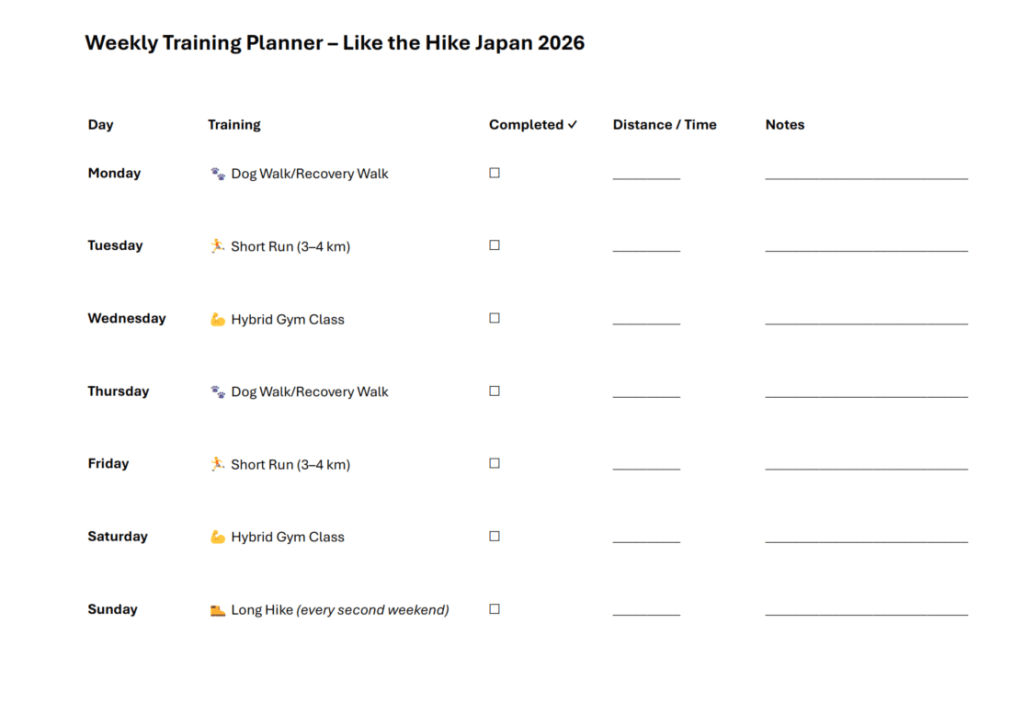
The Weekly Plan

My training isn’t complicated, but every session has a purpose.

1. Short Runs (3-4km)

A couple of shorter runs each week help build cardio fitness without taking up hours of my day. They’re long enough to get the heart rate up and keep the legs moving, but short enough to fit in before or after work. They’re also great for maintaining a base level of fitness between the bigger sessions.

Just to be clear, my ‘run’ pace is barely past a really fast walk pace, please don’t think I’m trying to beat a Gout Gout record!!

2. Hybrid Gym Classes

I belong to a local gym that offers a range of group classes, with slightly scary names like CC45, Body Pump, Core Fusion, WOW, and Team HIIT. What they all have in common is 45 minutes of strength training combined with cardio. For hiking, strong legs are important, but so are your core, back, shoulders and balance. Carrying a pack for multiple days (even if it’s only 5kg) places demands on your whole body, not just your feet and legs.

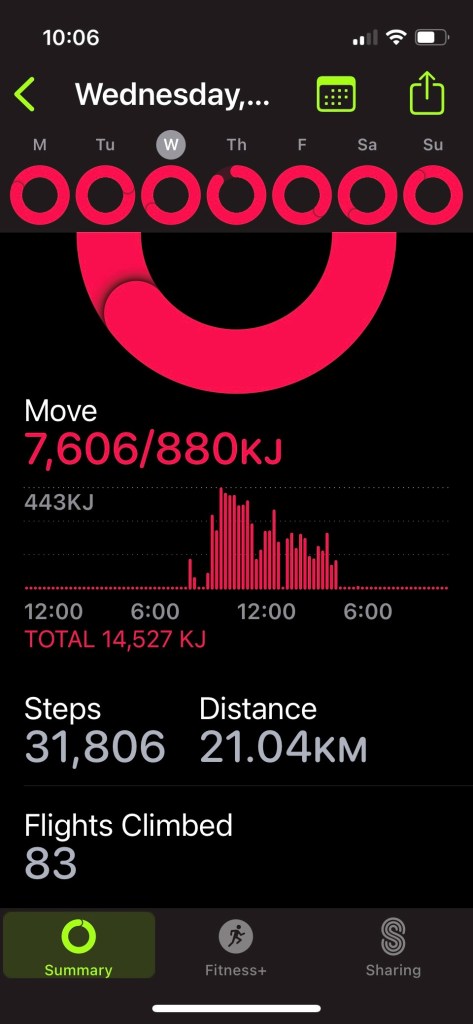
3. Long Hikes Every Second Weekend

Every second weekend is reserved for the most important session, a long hike of 10 km or more.

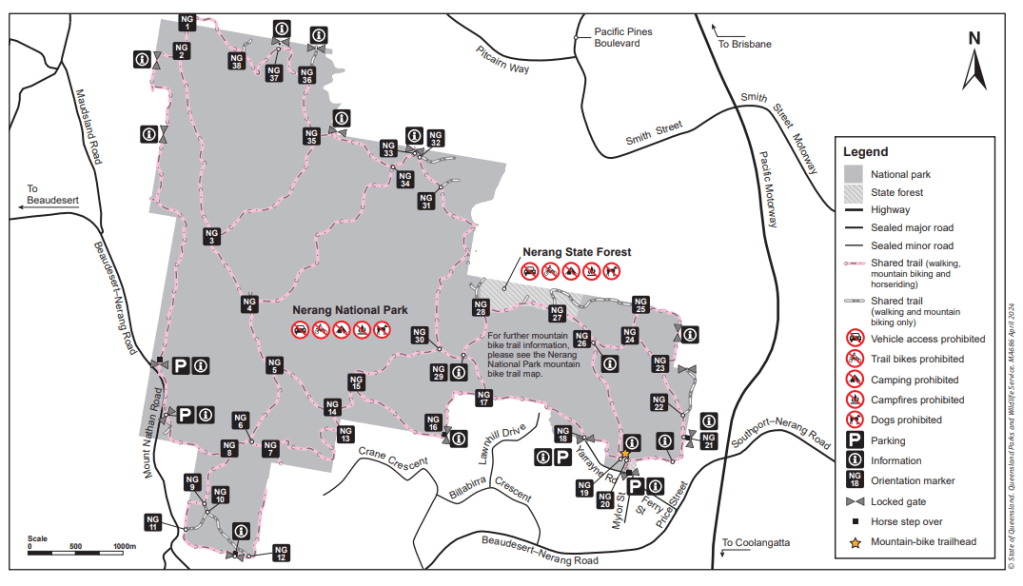
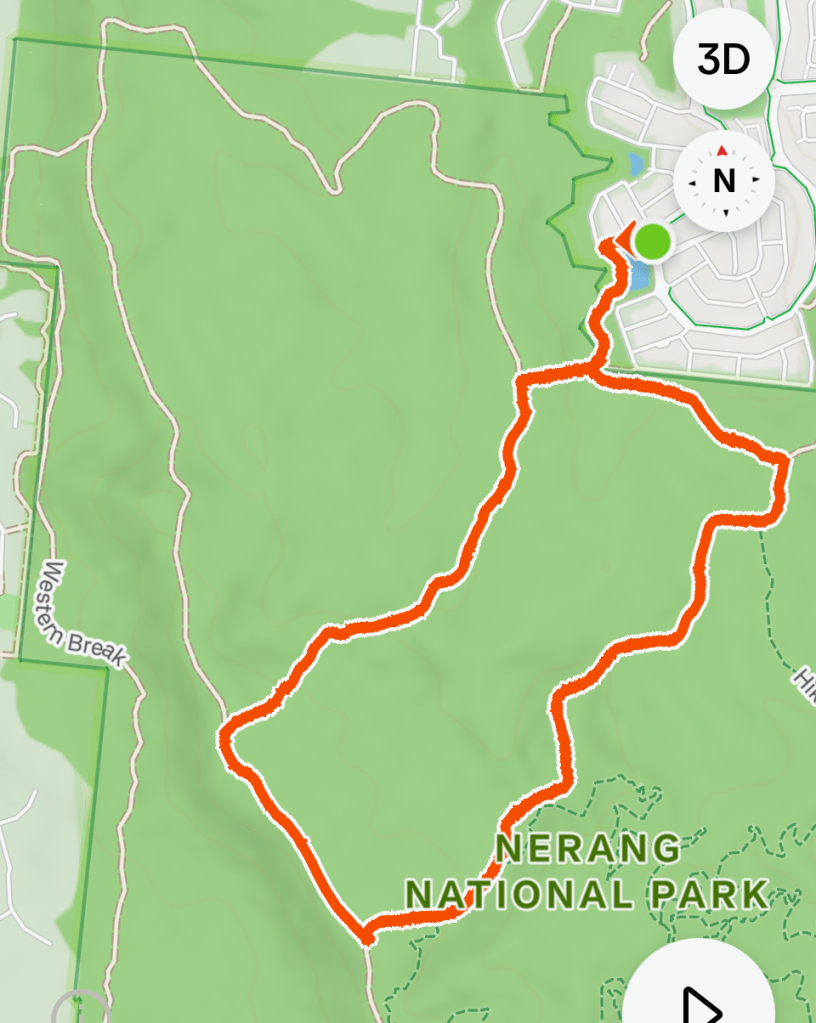
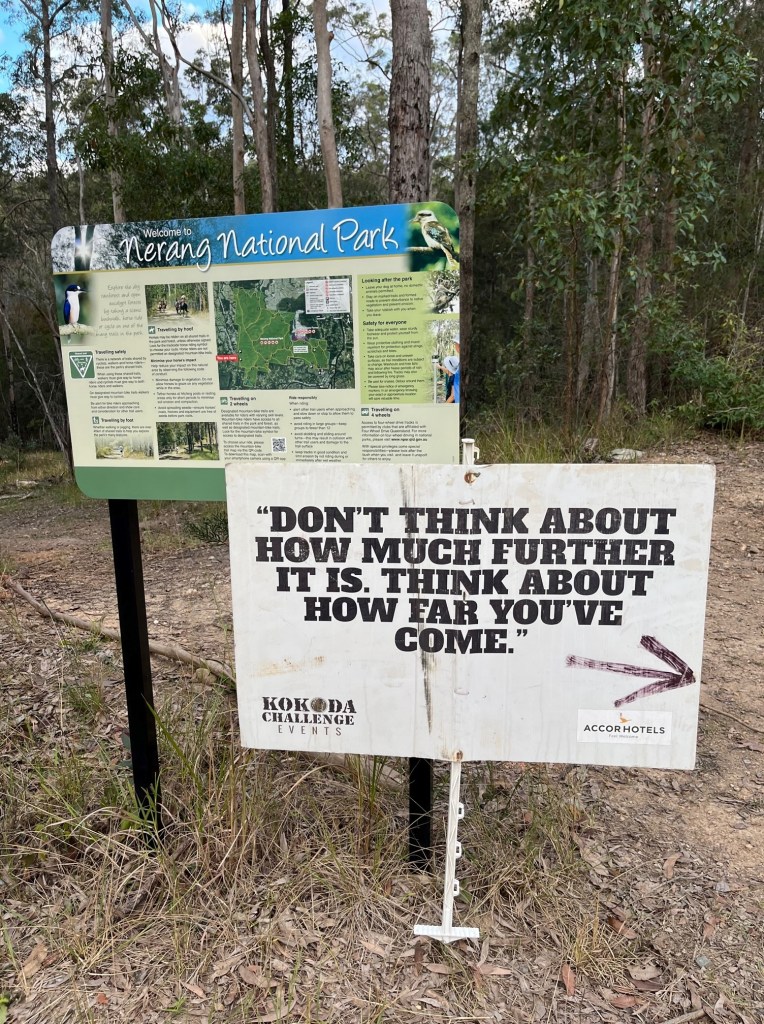
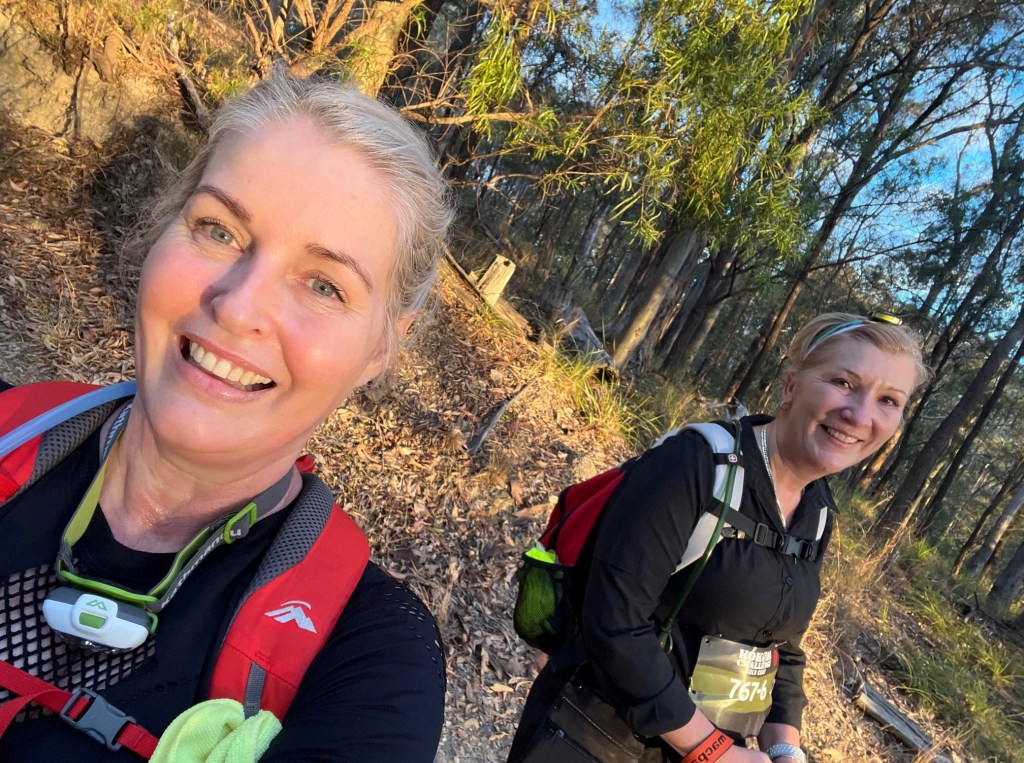
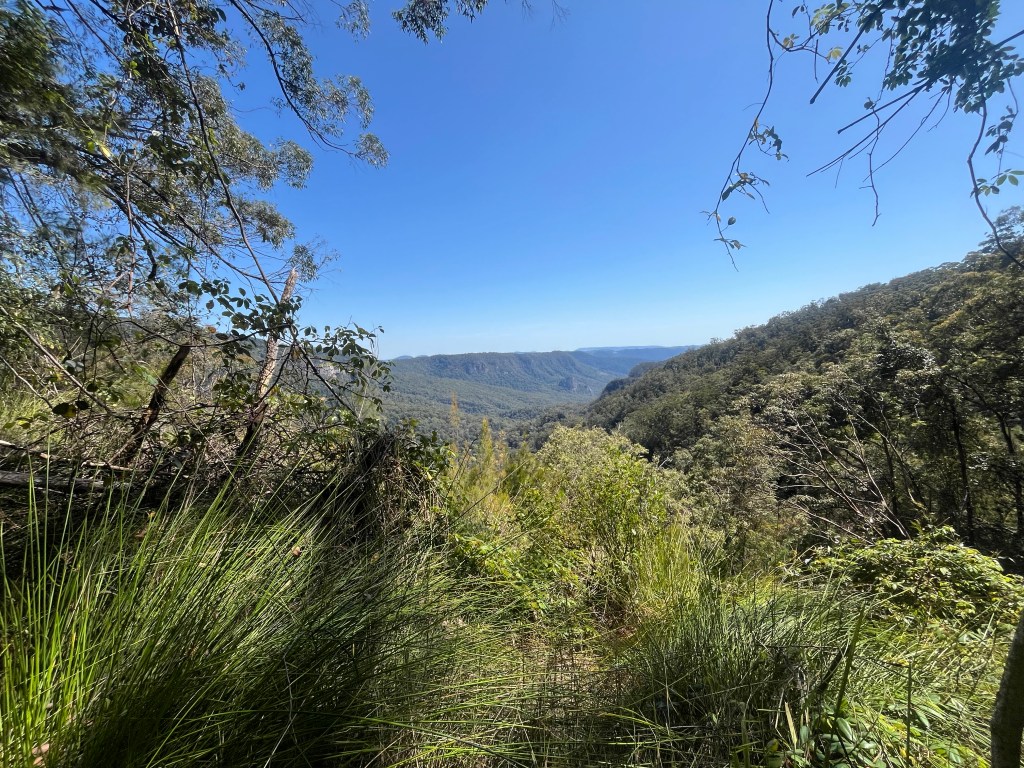
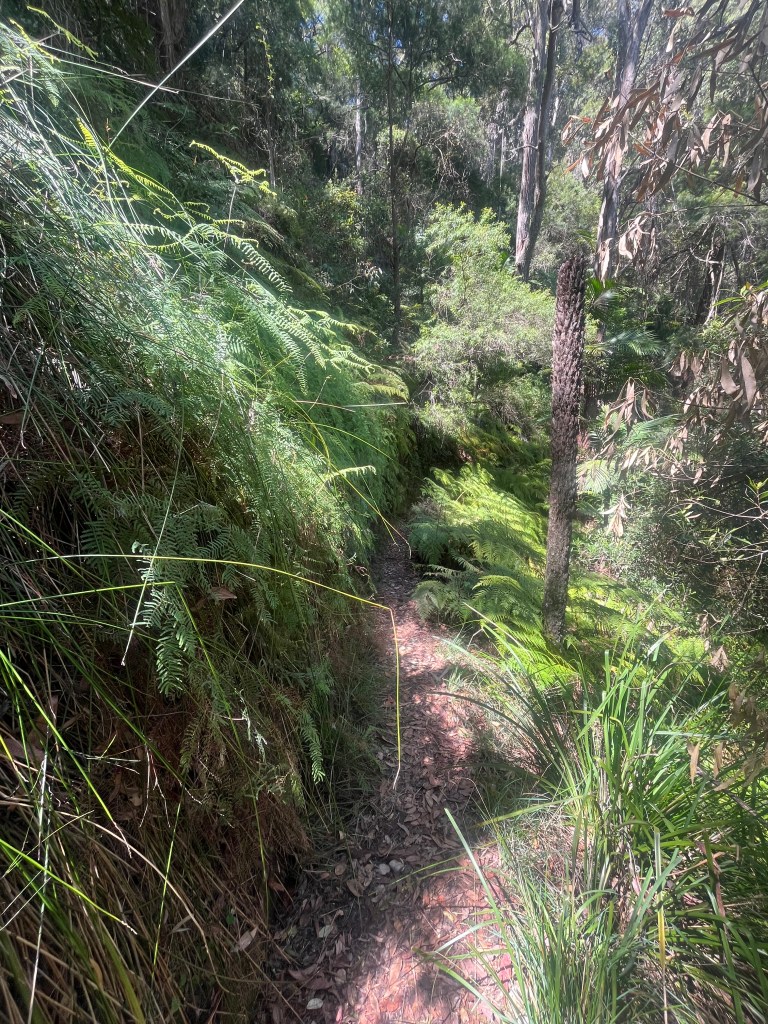
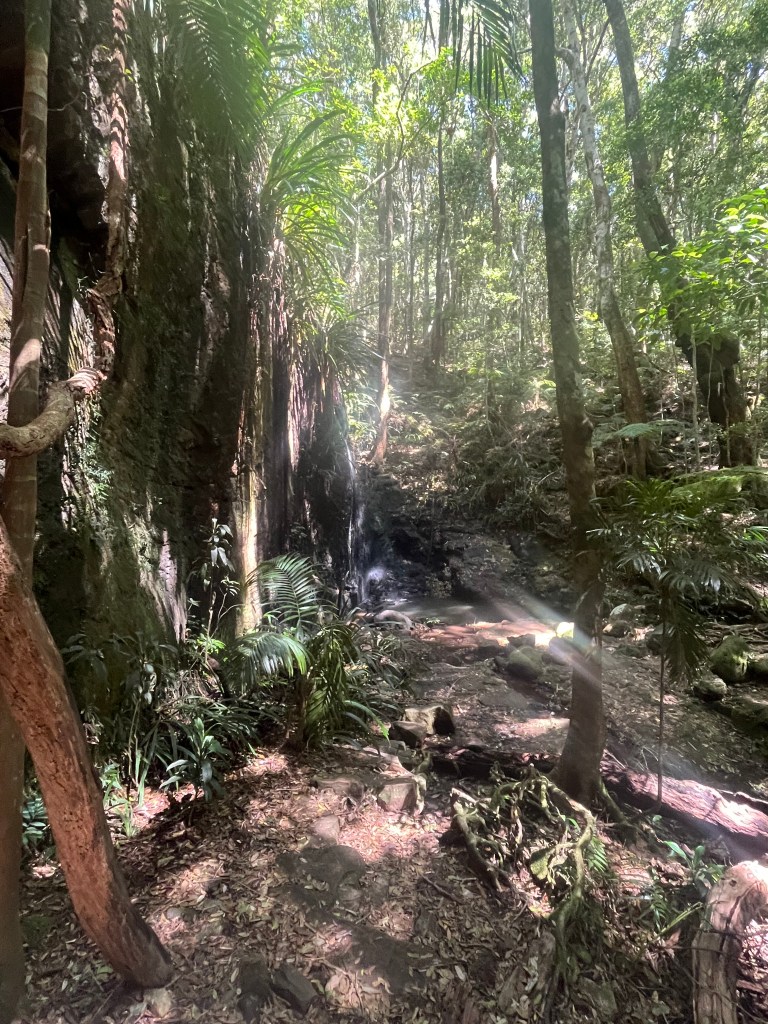
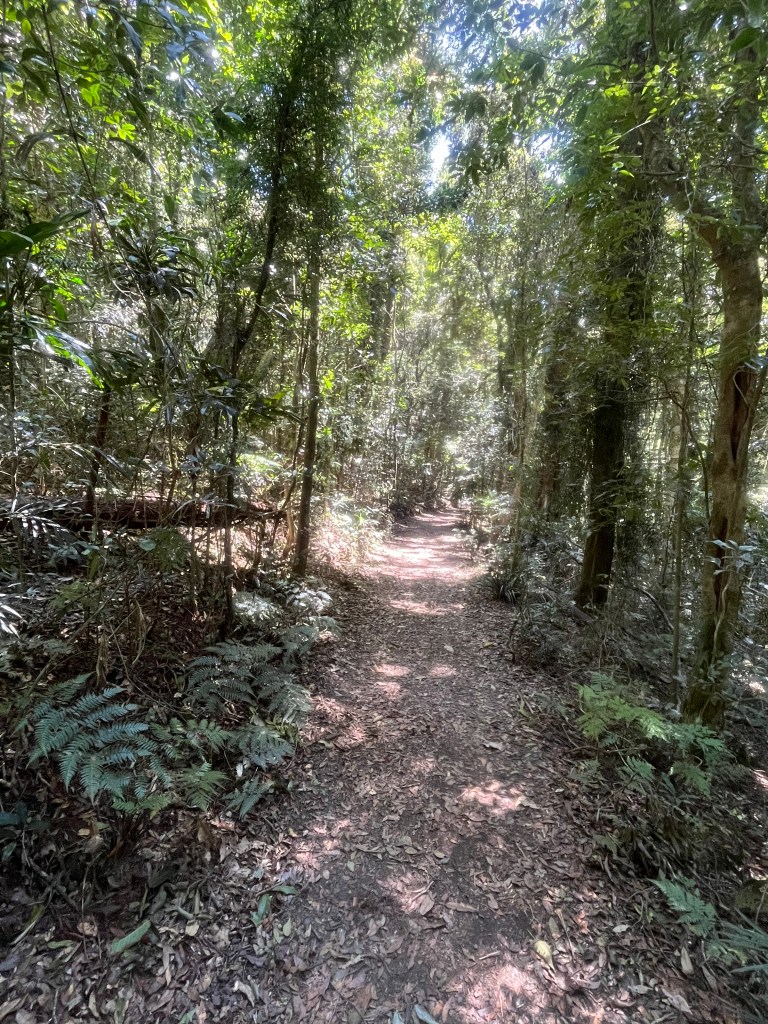
These hikes aren’t about speed. They’re about spending time on our feet (yep, TB is along, too!), learning what works, testing gear, wearing the backpack, experimenting with nutrition, and getting comfortable with being uncomfortable. We are mostly training in Nerang National Park for two reasons. 1) It’s close, so it works into a busy weekend, and 2) you’re either climbing up a hill or scrambling down one, so excellent conditioning.

It’s easy to find a 10+km section and get the distance done before lunch. Last weekend was a cheeky wee 8km intro hike, doing one of the loops in the NW corner.

4. Walking the Dogs

The final piece of the puzzle is probably the easiest and most enjoyable.

Regular walks with Moby and Maisie add extra kilometres without feeling like training. They keep me moving on recovery days, help loosen up tired legs and make sure I’m consistently active throughout the week.

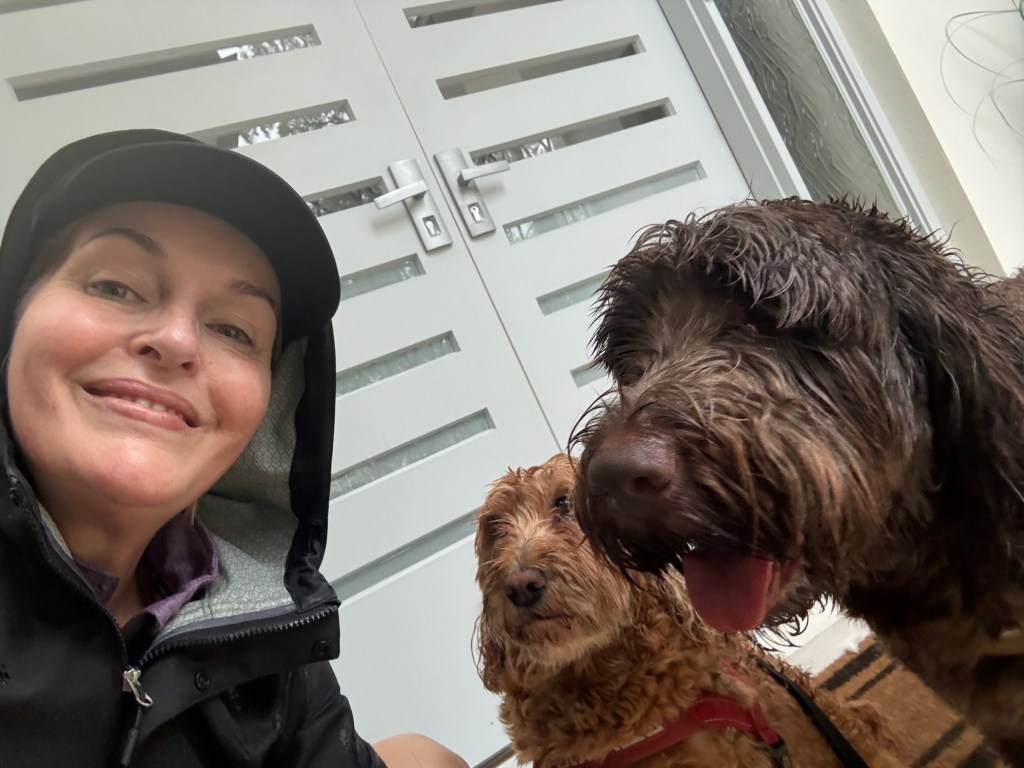
Plus, the doggos seem to think every walk is an adventure, which is a pretty good attitude to have 🙂 (well, not so much Maisie on that rainy morning!)

It’s Not About Being Perfect

There’ll be weeks when work gets busy. There’ll be days when I miss a run, miss a gym class or swap things around. And that’s OK.

I’ve deliberately built flexibility into the plan because missing one session won’t derail weeks and weeks of preparation. What matters is getting back into the routine the next day.

Consistency beats perfection every single time.

Training for the Journey

The Shikoku pilgrimage isn’t just a physical challenge for TB and me. It’s also about slowing down. embracing simplicity, spending time with my sister and enjoying the journey. In many ways, the training reflects that.

The most fabulous training plan in the world won’t guarantee success on the trail. But turning up consistently, week after week, will give us the best chance of enjoying every step of our Shikoku adventure. And that’s exactly what this journey is all about.

See you out on the trails!

PJ 🙂

Our Next Adventure Begins!

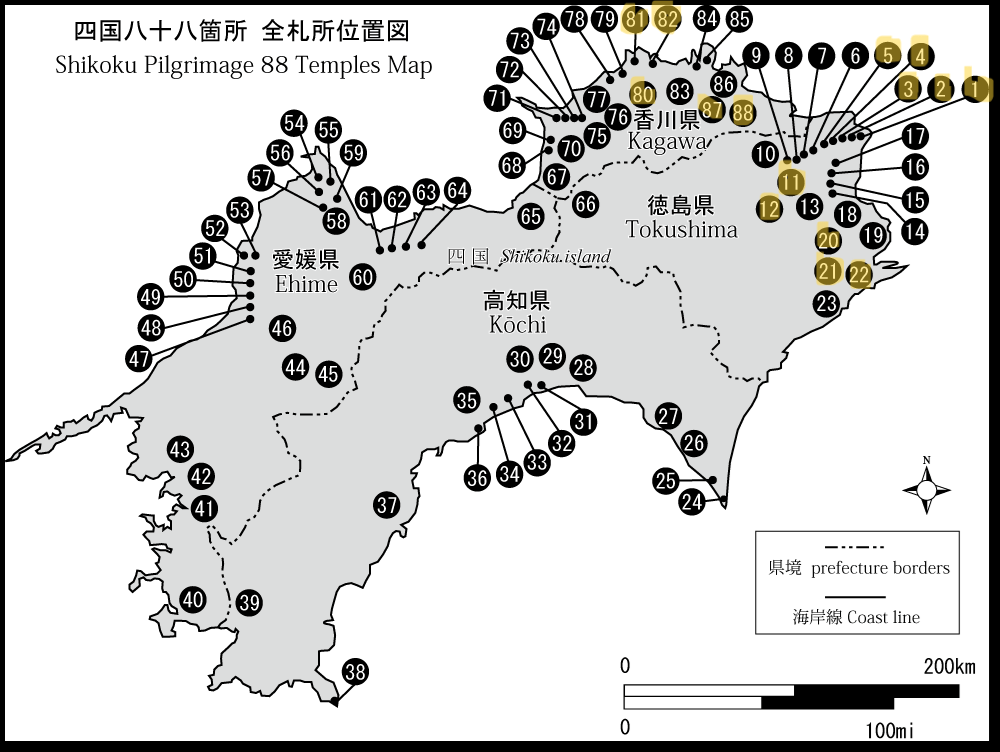
Well, we’ve done it. My sister TB and I have officially booked our next hiking adventure. In October 2026, we’ll be heading to Japan to walk sections of the famous Shikoku Pilgrimage, an incredible trail that winds its way around Shikoku Island, connecting 88 temples through mountains, forests, coastal villages and bustling towns. It’s a journey steeped in history, culture and spirituality, and one that’s been on our radar for some time.

We’re hiking the yellow coloured sections!

Now that the flights are booked and the countdown has begun, it feels real. And that’s where this new blog series comes in.

Why “Like the Hike”?

Over the coming months, I want to share the lead-up to our adventure, not because I’m an expert hiker, but because I’m not. I’m just an ordinary person with a fulltime job, a husband, two slightly spoiled dogs, a calendar that always seems fuller than I’d like, and a goal that’s just audacious enough to be exciting.

I don’t spend every weekend climbing mountains.

I don’t own every piece of the latest hiking gear.

I don’t have unlimited time to train.

Like most people, I have to fit adventure around real life. And maybe that’s why I love to write this blog.

Come Along for the Journey

This won’t be a polished travel guide or a “how to” from someone who’s conquered every famous trail. Instead, it will be an honest look at preparation, planning, training, gear decisions, the inevitable overthinking about what to pack, and, hopefully, a few laughs along the way.

I’ll be sharing things like why we chose Shikoku, how I’m training around work and everyday life, the gear I’m upgrading, and the gear that’s staying home, how we’re planning to travel carry on only (!), food, accommodation, and budget, the mistakes we’ll probably make even before leaving home and eventually, what it actually feels like to walk the trail itself.

If you’re planning your own adventure, I hope some of it helps. If you’re simply curious, I hope you enjoy coming along for the ride.

And if you’ve ever looked at a hiking trail and thought, “I’d love to do that one day”, maybe this series will show you that you don’t have to be an extraordinary trail athlete to enjoy an extraordinary adventure.

You just have to take the first step.

So…welcome!

We’ve got 11 weeks until we depart (eeeek!). Lots to prepare, lots to learn and a long walk waiting for us in Japan. The next blog will break down our training plan to make sure we are trail fit, along with stress-testing our gear (and our bodies!).

Until then, see you out on the trails.

PJ.

The Top Six Reasons Why You Need to Take a Hike – Literally!

How Hiking Can Fix Your Brain and Your Mood

Let’s face it, when someone says, “Let’s go for a hike”, your brain might conjure up idyllic images of mountaintop vistas, birds chirping, gentle breezes in the trees and your social feed blowing up with likes. Meanwhile, your legs are filing a formal complaint. But don’t let the prospect of sore calves fool you. Hiking isn’t just good for your quads and glutes; it’s also a mental health miracle worker. Here are my top six psychological benefits of hiking – and why you should lace up those boots and hit the trails, even if you’re convinced you’re really more “indoorsy”.

1. Nature is Basically a Mood Booster on Steroids

Ever notice how being in nature makes your problems feel as insignificant as a mosquito’s opinion? That’s because exposure to greenery reduces cortisol (a.k.a. the stress hormone) faster than that mosquito will get you. Studies show that spending time in nature can help alleviate anxiety, depression and stress. It’s like therapy, but cheaper – and with fewer awkward silences.

Plus, lets be honest: trees don’t judge you.

Chilling with a coffee in Lamington National Park

2. It’s Meditation But with Better Scenery

Hiking is basically meditation for people who hate sitting still. Yep – that’s me! The rhythmic act of putting one foot in front of the other helps quiet your mind, while the ever-changing scenery keeps your brain from checking out. Bonus: unlike that perfect yoga instructor you went to for a while, the mountains and trails won’t annoyingly suggest you “focus on your breathing“…

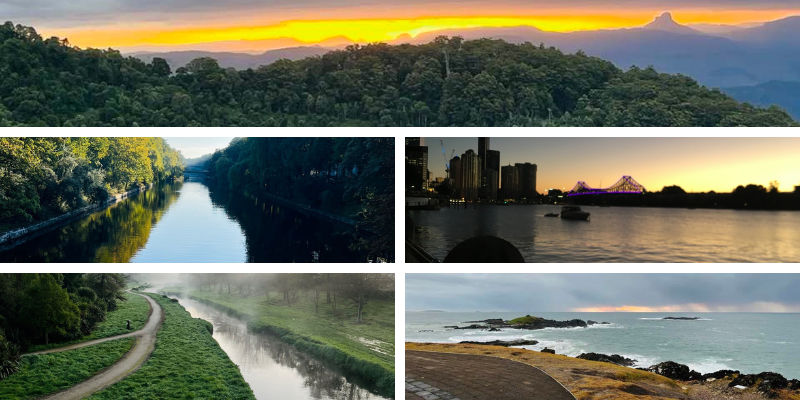
Gold Coast hinterland, Berlin, Brisbane, Hawkes Bay and Coffs Harbour..some of my favourite meditations!

Trail time also encourages mindfulness. You’ll find yourself tuning into the sound of rustling leaves, the feel of the ground beneath your boots or the sunrise over the hills. Maybe it’s the distant sound of a stream bubbling away or the earthy smell of eucalyptus after rain. Hiking immerses you in the present moment, making it easier to leave your worries behind – and reminding you that sometimes, the journey is actually the reward.

3. It Sparks Creativity (even if you’re not an artsy type)

If you’ve ever needed a fresh perspective on life – or just a clever caption for your hiking selfies – hiking is your creative catalyst. Studies show that spending time outdoors can boost creative problem-solving by up to 50%. Something about all that fresh air and Vitamin D makes your brain go, “Oh hey, I have ideas!”

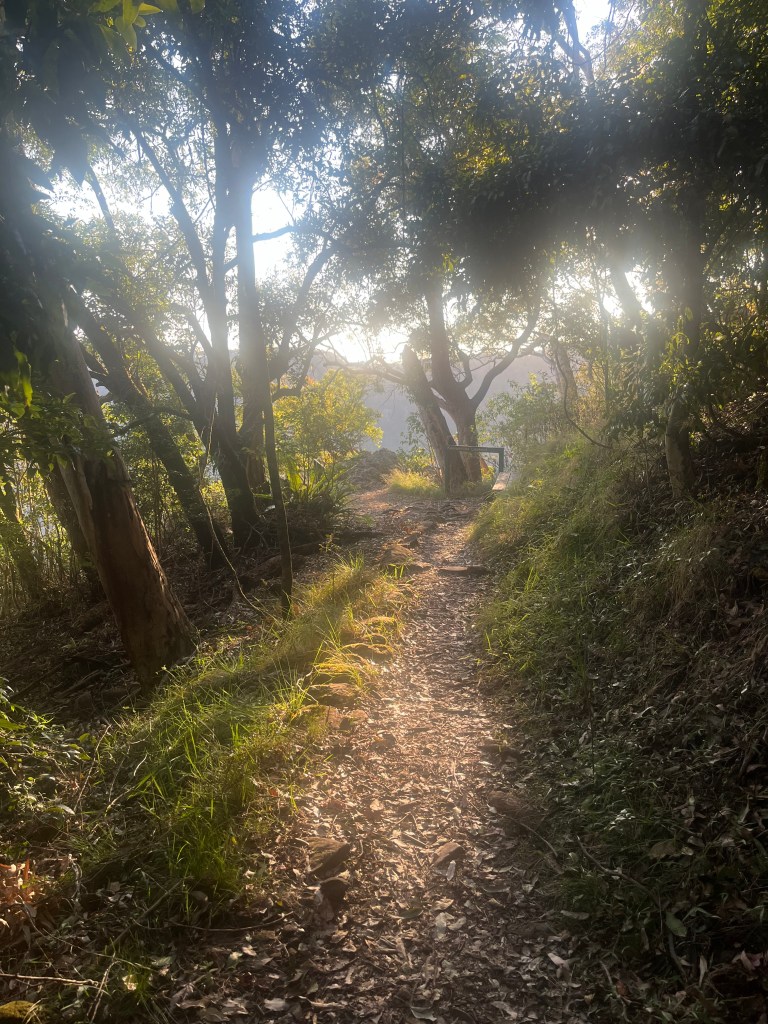
A contemplative break on the Ships Stern Circuit on Gold Coast

So, the next time you’re feeling uninspired or stuck on a personal project, grab your boots and head out for a hike. Worst case? You’ll return with a fresh outlook. Best case? You’ll stumble upon a stunning view, an Icelandic volcano, or a quirky wildlife encounter that sparks your imagination.

4. It Builds Confidence (and Muscles)

There’s nothing quite like summiting a hill – or even surviving a particularly muddy or difficult trail section – to make you feel like an absolute legend. Hiking challenges you mentally and physically, pushing you out of your comfort zone. Every step you take (cue The Police) reinforces your resilience, reminding you that you’re more capable than you think.

And if the trail beats you this time? Don’t worry. You’ll have an epic story about how you heroically wrestled with nature (or at least your bootlaces). Maybe you’ll remember the time you climbed Heartbreak Hill on the Kokoda Challenge despite every muscle screaming for a break or how you navigated through ever-diminishing daylight after 8 hours on Kumano Kodo like the determined explorer you are.

These moments remind you that overcoming challenges – big or small – is always worth it.

5. It’s Social – But in a Chill Way

Hiking with friends is like a group chat, but with fewer emojis and more meaningful conversations. The shared experience of conquering a trail together strengthens bonds and creates memories you will fondly recall for years. (Like the time when you took the ‘shortcut’ that added two hours and 5km onto your hike!)

Even solo hikers get a social boost. The hiking community is surprisingly friendly, and fellow hikers will smile, nod, or share a quick chat about trail conditions. Sometimes, you’ll find yourself swapping stories with strangers at a scenic overlook, united by the simple joy of the journey. It’s humanity at it’s best – refreshingly kind, genuine, and far removed from the digital noise of your daily life.

6. Your Gateway to Travel and Adventure

I could never have dreamed 10 years ago that I would hike in as many countries as I have. Hiking isn’t just about local trails; it’s a gateway to travel and adventure. You get to explore different landscapes and meet a diverse range of people. From seasoned hikers sharing stories to locals offering tips about hidden gems, every encounter enriches your experience

Travelling for hiking also broadens your horizons, literally and figuratively. Whether you’re trekking along 1,000-year-old monk trails in Japan or scaling a volcano in Iceland, each new trail is a cultural and personal discovery. Plus, nothing bonds people faster than getting lost together or making it to the end of the hike intact and before sunset!

So, Why Should You Try Hiking?

Sure, hiking involves sweat, blisters, discomfort and the occasional “why am I doing this” moment.

But, the psychological benefits far outweigh the temporary irritation. It’s a workout for your body and a holiday for your mind. Plus, it gives you an excuse to wear that $350 rain jacket you impulsively bought on sale at the end of summer!

So go ahead: embrace the experience (and the great outdoors). Your brain will thank you.

See you out on the trails.

PJ 🙂
Drink Like a Pro – How to Survive a Day Hike Without Becoming a Human Raisin!

So, you’ve decided to join an amazing group of individuals and conquer the great outdoors. Good for you! Whether you’re a seasoned hiker or the kind who thinks taking the rubbish out in the dark counts as “adventuring”, there’s one thing everyone needs to get right: HYDRATION.

But not all liquids are created equal, and what you sip can make or break your hike. Let’s dive into the world of liquids that will keep you going – and maybe even help you survive the great outdoors (or at least look impressive while you’re out there).

1. Water – The Classic Companion

First things first, let’s talk about water. It’s reliable, classic, and does exactly what it says on the label – keeps you hydrated. No surprise here; it’s your go-to liquid for a day-long hike and not negotiable.

My water pack is totally worth the investment!

But let’s be honest, water can be boring. It’s the liquid equivalent of a first aid kit – practical and essential but not exactly the life of the party. I will say, though, when I hiked the Kokoda Challenge for 15 hours, plain cold water transformed into the nectar of the gods.

PRO TIPS

  • Take at least 2 litres of water for a full-day hike. A single 500ml bottle just won’t cut it.
  • Fancy it up with an infuser. Throw in some mint, lemon, or cucumber slices, and you’ll be the poshest person on the trail. Your fellow hikers might roll their eyes, but hey, at least your water won’t taste like, well, water.

2. Electrolyte Drinks: The Athlete’s Secret Weapon

Yep, hiking is definitely a sport, and electrolytes are like water’s smarter, more athletic cousin. When you’re sweating buckets and feeling like you’re auditioning for The Survivor, your body loses more than just water – it loses electrolytes. These are the little ions responsible for things like muscle function and energy. A big deal, actually.

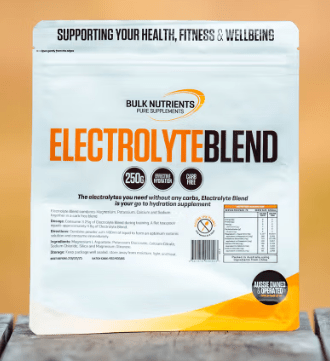
Look for sports drinks like Gatorade or Powerade, or go for a tablet or powder you can add to water on the go or before you start.

PRO TIPS

  • Don’t take electrolytes INSTEAD of water. Take both. For longer hikes, I use a dual bladder from Kathmandu. Epic game changer.
  • Watch sugar content. Some sports drinks are basically sugar disguised as ‘performance enhancers’. You don’t want to crash 45 minutes into your hike because your electrolyte drink is a lolly in liquid form.

3. Tea and Coffee: Could be the Buzz that Backfires

Ahhhhh, coffee. The liquid motivation that gets me out of bed, into my hiking boots, and out the door. Tea is also a very civilised choice for a little caffeine kick. BUT – and this is a big BUT – these liquids have a dark side. Caffeine is a diuretic, which means it will have you looking for the nearest bush more than once.

However, I run the gauntlet because I LOVE a coffee break on a day hike. And, let’s be honest, hiking must be about what you enjoy. I found a fantastic little thermos in Japan when hiking Kumano Kodo, and I’m now a devotee of coffee whenever and wherever I hike. I’ve made peace with the fact that a quick wee behind a tree is all part of the fun.

Say hello to my two coffee carriers…blue and green!

4. Coconut Water: The Trendy but Worthy Pick

Coconut water is like the Insta influencer of hydration. It’s everywhere, it looks incredible, and it swears it will change your life. But surprisingly, it’s not just a fad. Coconut water is rich in potassium and electrolytes, making it a decent option for rehydrating on the go.

PRO TIPS

  • It’s not going to quench a heavy thirst like water or a sports drink. It’s more like a bonus drink – the one when you’re taking a breather and feeling a bit extra.
  • I really don’t like lukewarm coconut water; it’s like drinking…blerk. Get yourself some 300ml sizes, freeze them, and enjoy them on the trail once they’ve thawed. They can also keep food cool – how clever is that!

5. Soup: Yep Soup!

You didn’t misread me. Soup can actually be an incredible hiking liquid, especially if you’re trekking in cooler climates. Imagine you’re halfway through your hike, and instead of slurping boring old water, you pull out a thermos of warm, savoury goodness. Hydration and calories in one go – you can thank me later 😉

PRO TIPS

  • I would recommend avoiding chunky soups; blended soups are best. There’s nothing worse than a log jam in the thermos as you try to shake it out and end up wearing it.
  • Watch temperatures. My little Japanese thermos is a beast for keeping fluids at entry temperature, so don’t pack a scalding soup – go for soup on the warm side; otherwise, you won’t be drinking it until you’re driving home.

6. Avoid Soft Drinks or Sugar Fixes

You might be tempted to chuck a fizzy drink or energy shot into your pack, but hold your horses. Soft drinks are loaded with sugar, which leads to an energy spike and inevitable crash, usually at the worst moment. Imagine being halfway up a mountain and realising you have the energy of a sloth in slow motion.

As for energy drinks? Unless you want your heart racing faster than a Swiftie with a VIP meet and greet pass – leave those at home. Save the heart-pounding excitement for when you see that “danger cliff edge” sign.

Te Mata Peak in New Zealand, now that’s a cliff edge!

Wrapping It Up: Hydrate or Hike NOT

So, water is your MVP, but a bit of variety (electrolytes, coconut water, soup) can spice things up – without turning you into a mobile sugar factory. Plan ahead, sip smartly, and your hike will be a great memory rather than a nightmare.

I’m keen to hear what you think your ‘ride or die’ hydration options are when you’re out hiking, comment below and lets see what new ideas we can come up with 🙂

See you out on the trails, and may your bottle never run dry.

PJ

Urban Hikes #2 – Views and Volcano Blues on Mt Eden

Hello and welcome to Like the Hike, a blog written by yours truly giving you insights, photos, commentary, tips and tools so you can enjoy hiking as much as I do. Today we’re talking about urban hiking. Back in the day, I did a blog on urban hiking in Sydney, covering some great options. We are in Auckland, New Zealand this time – bring it on!

If you’re in Auckland and your idea of exercise is strolling from the couch to the fridge, it’s time to shake things up. Let me introduce you to urban hiking, the hybrid sport where you’re as likely to dodge coffee-carrying commuters as you are to admire distant scenic vistas. And what better place to try it than the iconic Mt Eden, a 5-6km round trip guaranteed to get your heart pumping and your socials popping.

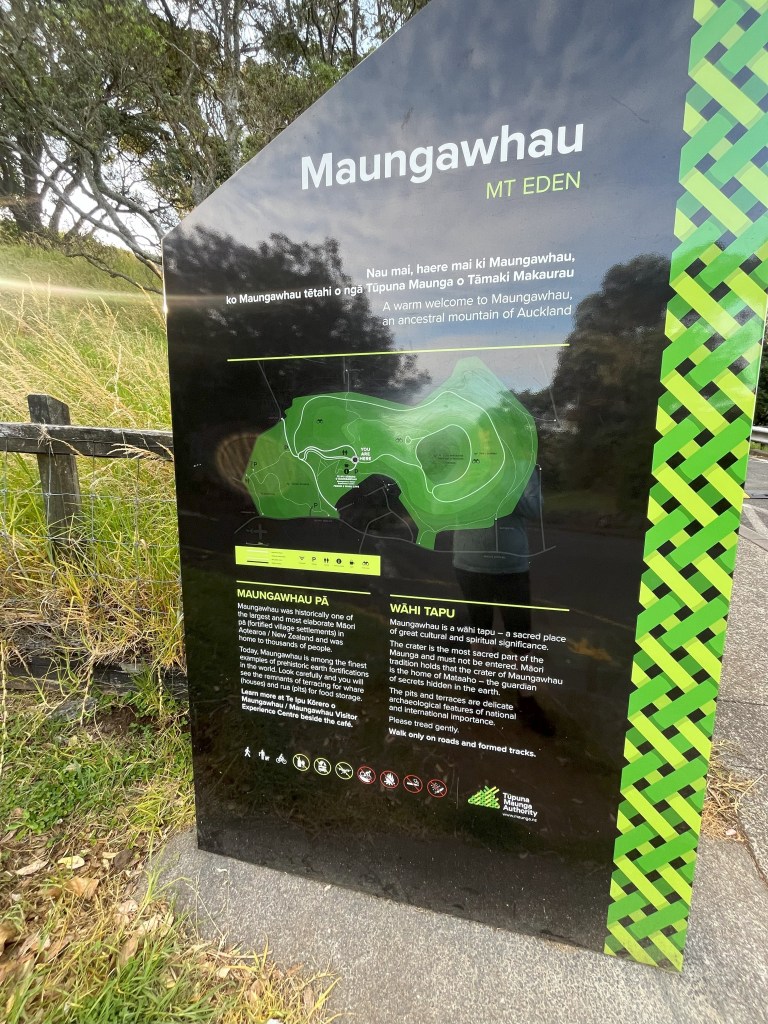
The Lowdown on Mt Eden (or Maungawhau if you’re up for a bit of bilingual education)

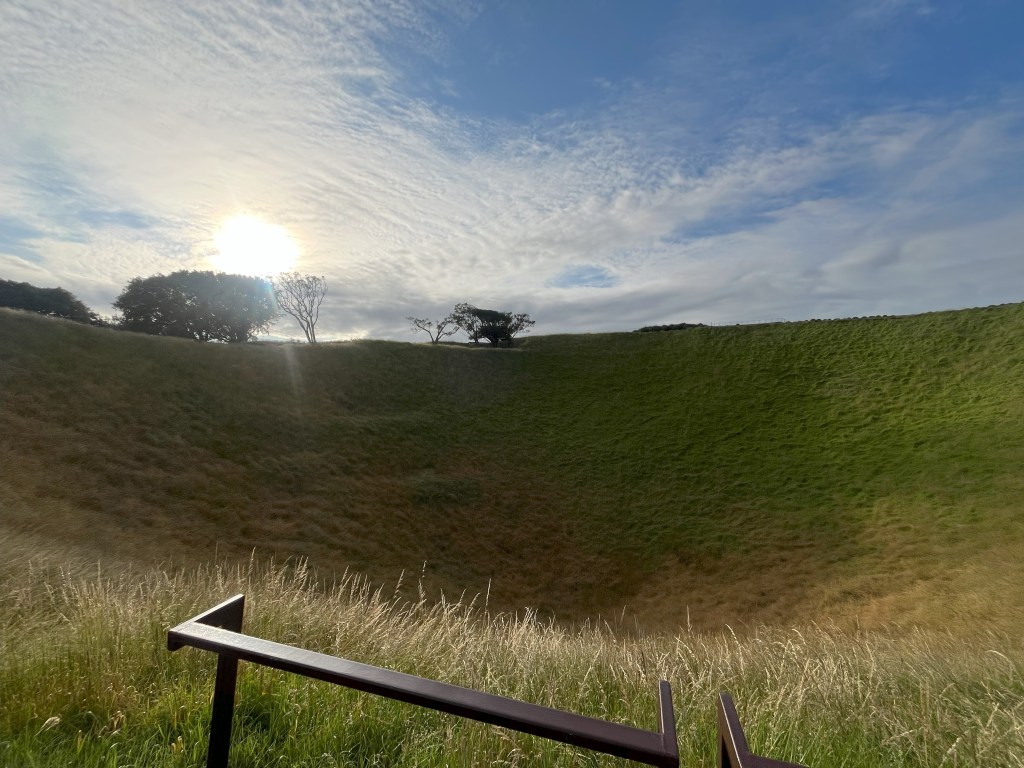
Mt Eden/Maungahwau isn’t just a bump on the Auckland skyline; it’s a literal high point, being the city’s tallest natural elevation at 196 metres. This extinct volcano – yes, Auckland is basically a city built on geological firecrackers – has a history as rich as your post-hike flat white (that’s a latte in Aotearoa).

The Maori name for Mt Eden, Maungawhau, means “Mountain of the Whau Tree”. The summit crater, affectionately called Te Ipu-a-Mataaho (“Bowl of Mataaho”), was formed by volcanic activity around 28,000 years ago. In pre-pakeha times, it was a bustling Maori settlement housing several hundred people, with terraced garden, food storage pits and fortified living spaces. Today, its a protected archaeological and culturally significant site – so no, you can’t dig for treasure but you can marvel at it’s natural grandeur and incredible views.

The Urban Hiking Experience

Urban hiking is like regular hiking, but with bonus features: public bathrooms, nearby bakeries and zero chance of encountering a snake or a spider (unless you count the suited ones on their way to work!). Mt Eden’s foot print is perfect for city slickers, runners and hikers who want to channel their inner explorer without sacrificing wifi.

The trail I took winds through suburban streets, tree lined paths and a winding track that circles its way up the mount to the summit. There are a number of access points to get into the reserve, I took the one with about 4 flights of stairs from Glenfell Place. That’s the red bit in my tracking! Along the way you’ll spot everything from joggers to locals walking their highly enthusiastic dogs. The ascent is steep enough to feel accomplished but mercifully short…you can see that in the red and yellow sections!

Why You’ll Love It

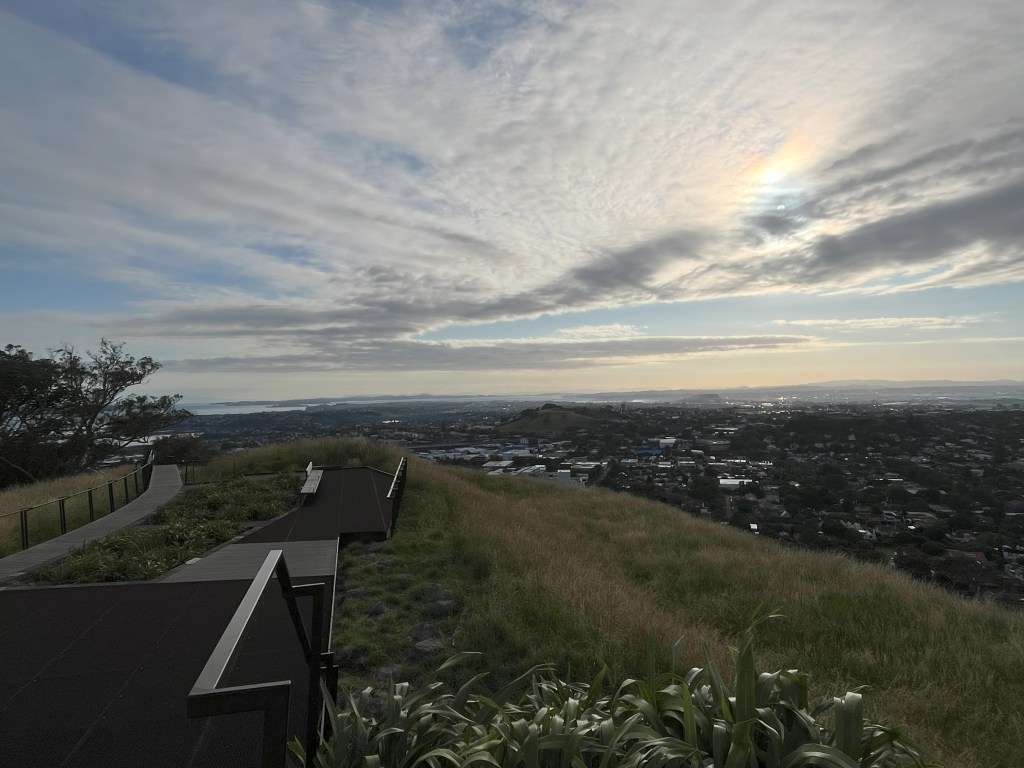
  1. Views that WOW – at the summit, you’re rewarded with 360 panoramic views of Auckland, including Waitemata Harbour, Rangitoto Island, a plethora of extinct volcanos and the city skyline. It’s like Mother Nature’s way of saying “thanks for sweating“.
  2. History on Tap – as you explore the summit, you’ll literally be walking through centuries of history and cultural richness. The Maungawhau Visitor Experience Centre is also worth a recce after you’ve finished at the crater.
  3. Fitness without the Fuss – forget treadmills and fluro gym lighting. Urban hiking lets you burn calories while soaking up sunshine and fresh air (remember your hat!). Both are scientifically proven to improve your mood, or at least make you less grumpy about steep hills.
  4. Cafe Proximity – end your adventure with a well deserved treat at one of the local cafes. Nothing says “hiker’s reward” like a flaky croissant and a flat white.

Tips for First Timers

Pick your Footwear – you probably don’t need to wear hiking boots, I prefer a hybrid shoe or sturdy sneaker for urban hikes, still supportive but not too inflexible.

Wear Layers – Auckland’s weather changes faster than a TikTok trend, so be prepared for sun, wind and rain, all probably in the same hour.

Respect the Significance of the Land – Mt Eden/Maungawhau is a strongly sacred site, or a wahi tapu. The crater is especially significant, so stick to the marked paths and enjoy the views. This isn’t a race, it’s a walk….with style.

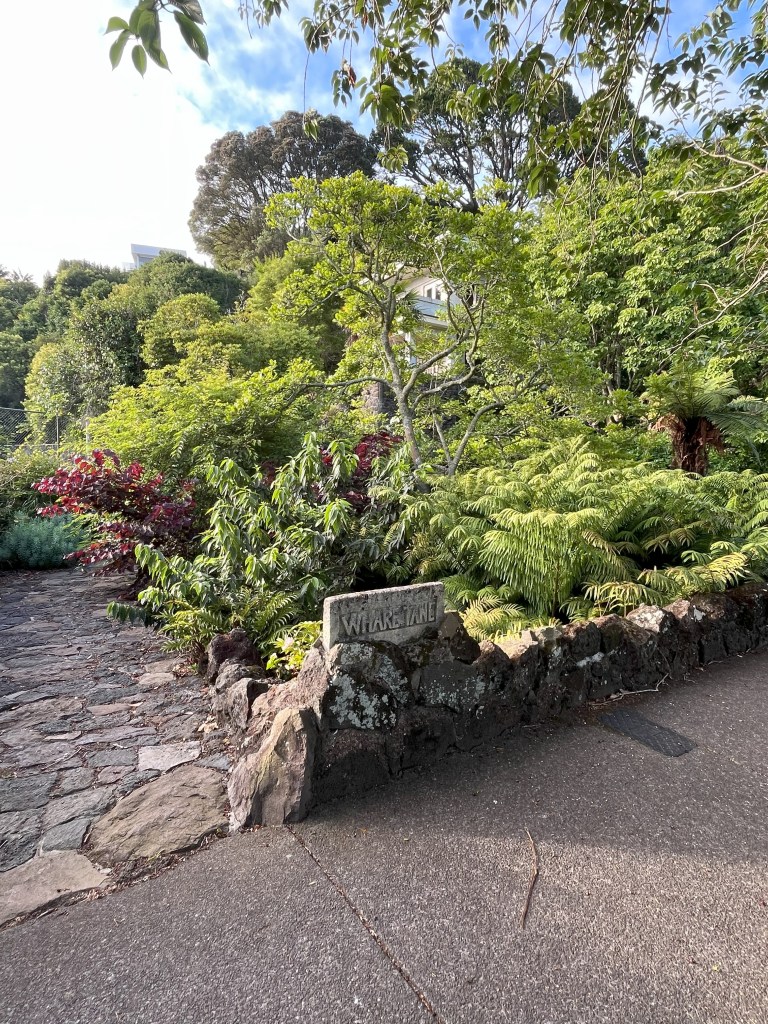
Enjoy your Surrounds – urban hiking isn’t just about the mountains or the reserves, it’s also about the scenery along the way. Seek out interesting architecture, buildings or streets. I found the Governors Residence and a lovely old house with stone maori carvings…quite special.

Final Thoughts

Hiking around Mt Eden is proof that adventure doesn’t have to involve remote wilderness or epic gear. In fact, a hike of just 5.8km is more than satisfying, it’s downright enjoyable. Sometimes, all you need is a good pair of sneakers, a sense of curiosity and a willingness to sweat a little.

So, lace up, hydrate, slap on sunscreen and a hat, and get ready to like the hike. Who knows, you may even fall in love with it 😉

See you out on the trails

PJ

Trail Mix and Chill: Six Snack Ideas to Keep you Hiking and Happy

Hello fellow hikers/foodies! As Queensland is fully into summer (even though we are officially still in spring), my hiking plans are in hiatus for a couple of months due to my aversion to ticks, leeches and hiking in 32 degree heat. Never fear, we have lots to talk about, including the fuel that will get you from start to finish feeling great!

When you hike, what you take in your backpack is just as important as the trail itself. Every item serves a purpose, from water to a whistle, but few are as crucial as your food choices. The right snacks will fuel your body, keep you energised, and ensure you enjoy the adventure to its fullest. Whether you’re tackling a short day hike or a multi-day trek, here are my top six food items that I take along and why they are my ‘ride or die’ choices.

1. Nuts and Seeds: The Ultimate Energy Booster

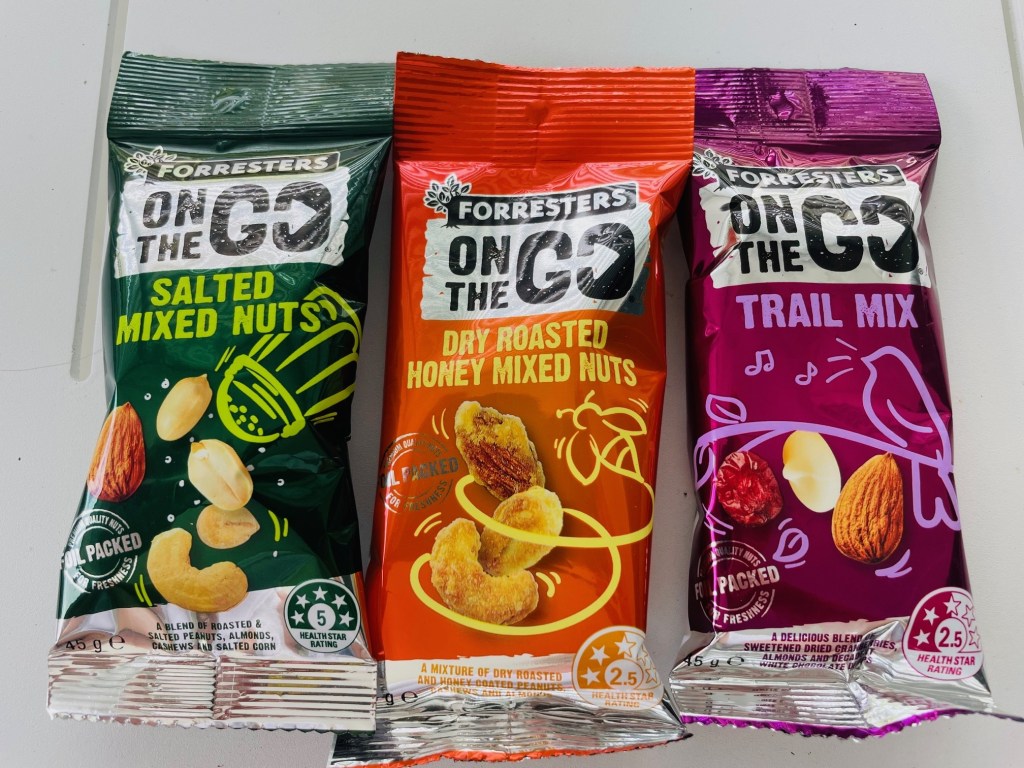
Nuts and seeds are powerhouses of nutrition, offering a perfect balance of healthy fats, protein, and carbohydrates. They’re lightweight, easy to pack, and don’t require refrigeration, making them an ideal hiking snack. A handful of almonds, walnuts, cashews, or mixed seeds can deliver a concentrated source of energy, which is essential for hikes when you need sustained fuel.

Why it’s essential:

Energy Dense – high in calories, perfect for refuelling on the go

Healthy Fats – keep you feeling full and satisfied

Protein Packed – supports muscle repair and recovery, especially during strenuous hikes

You can create your own trail mix (or scroggin, as Aussies and Kiwis call it) by combining nuts with dried fruits and chocolate for an extra energy kick. Opt for unsalted nuts to avoid excessive thirst, and try different combinations like pumpkin and sunflower seeds to keep things interesting.

2. Dried Fruits: Natural Sweetness for a Pick-me-Up

Dried fruits are nature’s lollies, providing a quick burst of sugar easily digested and converted into energy. They’re rich in vitamins, fibre, and natural sugar, making them a perfect companion to more protein-heavy snacks like nuts.

Some of the best dried fruits for hiking include raisins (small but packed with energy), apricots (high in potassium, important for electrolyte balance), dates (excellent for slow-burning energy and fibre) and banana chips (crunchy and sweet!).

Why it’s essential:

Fast Energy – replenishes sugar levels when energy dips

Lightweight – easy to pack and carry

Nutrient Dense– rich in vitamins and minerals

3. Jerky: Protein for Muscle Repair

Whether meat or plant-based, jerky is a high-protein snack perfect for the trail. Protein helps maintain muscle strength and aids in recovery, especially during longer or more challenging hikes.

A biltong style product available locally and delicious!

Since it’s dehydrated, jerky is lightweight and non-perishable, making it easy to carry for extended periods.

Why it’s essential:

Protein Rich – helps prevent muscle breakdown

Long Shelf Life – doesn’t require refrigeration and can last for weeks

Salty Goodness– contains sodium, replacing electrolytes lost through sweat

Choose a low-sodium jerky if you’re hiking in conditions where dehydration is a concern. Vegan and plant-based jerky options made from soy or vegetables are also available if you prefer a meat-free option.

4. Energy Bars: Compact and Convenient Fuel

Energy bars are designed specifically for active people, making them an ideal hiking food. They’re packed with essential nutrients like carbohydrates, fats and proteins in a small, easy-to-carry form.

Bars sitting in my pantry that come hiking with me (ignore expiry date on paleo bar!)

Whether you prefer muesli bars, protein bars, or whole food bars, these snacks are perfect for refuelling quickly and efficiently on the trail.

Why it’s essential:

Convenient – easy on the go, no preparation required

Nutrient Packed– offers a balance of carbs, protein and fats

Portion Controlled– helps manage your energy intake without over eating

Look for bars that are free from artificial additives and high in natural ingredients like oats, nuts and seeds. Avoid bars with too much sugar, as they can cause an energy crash later on.

5. Nut Butters: A Versatile Source of Energy

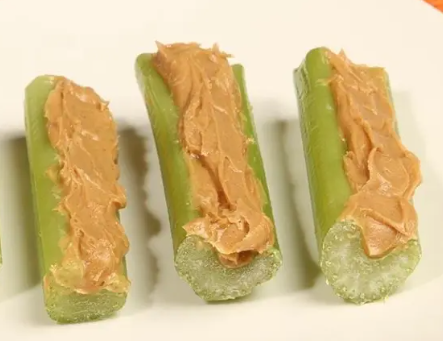
Nut butters are not only delicious but offer a great source of protein, fats, and carbs. When paired with celery or apples, they provide sustained energy, which is important for longer hikes.

Nut butters also come in single-serving packs, making them easy to carry and consume.

Why it’s essential:

Sustained Energy – combines fats and protein for long-lasting fuel

Versatile– eat it on fruit, veggies, bread or solo

Portable– single-serve packets are lightweight and easy to carry.

Prepare nut butter and apple/celery “sandwiches” ahead of time and pop them in a container for easy transportation and access.

6. Tuna Pots: High Protein with a Teeny Tiny Spoon!

Tuna pots or other pre-cooked options provide hikers a high-protein, filling option. They are convenient, lightweight and packed with omega-3 fatty acids, which help reduce inflammation and support heart health – essential for maintaining stamina during prolonged physical activity.

Why it’s essential:

Protein Rich – helps with muscle repair and keeps you feeling fuller longer

Omega-3s-supports overall health, especially heart health

Convenient– ready to eat and easy to pack, often available in flavours

Keep an eye out for packets that come with a spoon or easy-open designs for ultimate convenience, or you can make your own tuna, chicken or salami snacks to munch on.

Bonus Tips for Packing Hiking Snacks

When packing for a hike, it’s not just about the food you choose but also how you carry and consume it. Here are a few tips to help you make the most of your hiking snacks:

1. Portion Control

Pack enough to keep you energised, but avoid overpacking as extra weight can be a pain. Pre-portion snacks into small baggies or containers so you know how much you’re consuming.

2. Stay Hydrated

While food is essential, don’t forget about hydration. Many of the snacks I’ve mentioned are salty or dense, so fluid is key to staying in top form.

3. Mix and Match

Keep your taste buds tingling by catering to both sweet and savoury. Pair jerky with dried fruits or nut butter with celery. I sometimes take sushi or a salad wrap out on day hikes to keep snacks varied and something to look forward to at break time.

4. Leave Nothing but Footprints

Always make sure your wrappers and rubbish come back out with you. Our national forests are entrusted to us as hiking custodians – make sure you honour that trust.

5. Test New Snacks!

I can’t emphasise the importance of this tip. If you want to take a new snack, try it out ahead of time. This will avoid any nasty digestive surprises caused by food that might not suit you. Trust me; toilets out on the trails are few and far between…. 😮

So, whether you’re a seasoned hiker or just starting out, the right food can make all the difference in your hiking experience. From energy-boosting nuts to protein-packed tuna, these top six hiking snacks will keep you fuelled, energised and ready to tackle whatever trail you choose. So, next time you pack for an adventure, be sure to include these essential foods and enjoy your hike to the fullest!

See you out on the trails

PJ

PS – these suggestions are my opinion only. I am not a nutritionist and wouldn’t presume to give you dietary advice. Please speak to your doctor if you have specific dietary needs or health concerns.

Ships Ahoy and Ticks Galore!

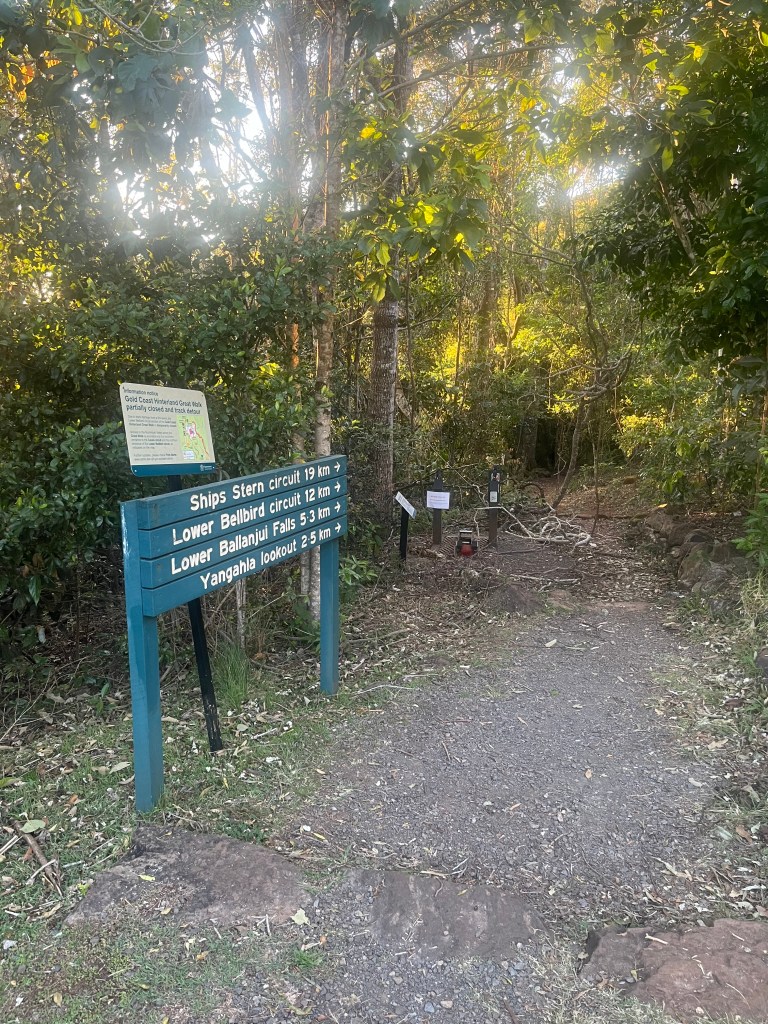
Tackling the Ships Stern Circuit in Lamington National Park

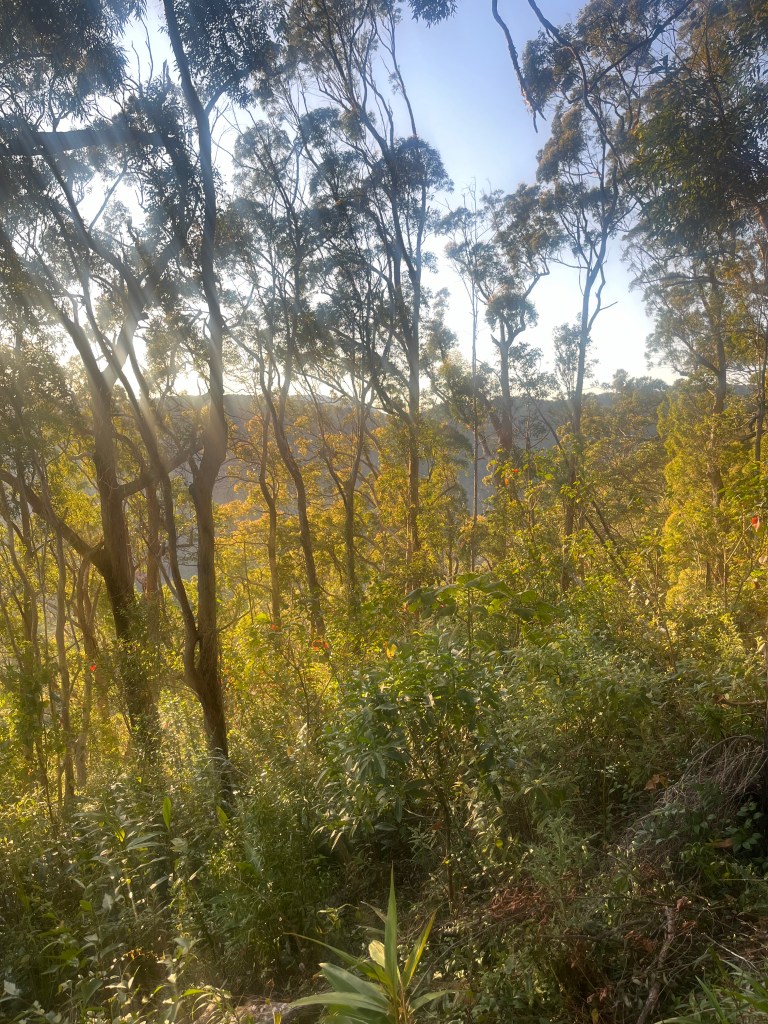
Ahoy fellow hikers! Welcome back to another grand adventure, this time exploring one of Queensland’s treasures – the 20km Ships Stern Circuit in Lamington National park. A mere 70 minute hop from the Gold Coast, this park is part of the majestic Gondwana Rainforest, covering over 366,500 hectares of pure hiking heaven.

I’ve dallied with parts of Ships Stern before but never braved the full 20km loop. Well, today was the day! What could possibly go wrong, right? Spoiler alert: I didn’t anticipate the unseasonable heat, or the final unwelcome hitchhiker.

First Stage: Downward Delight (And Spiderweb Swords)

Being the clever clogs that I am, I arrived before 5.30am and parked at the top of the park near the Binna Burra Cafe, giving me an easy downhill finish to the hike. Plus, with a forecast of over 33 degrees Celsius, I wanted to beat the midday heat.

The first part of the trail was a lovely, gentle descent, perfect for soaking up the early morning rays….and as it turns out, spiderwebs. Oh, the webs! I became an impromptu samurai, waving a stick to fend off what felt like an entire arachnid population weaving across the trail! Note to self -arriving early means you get the fresh webs, lucky me.

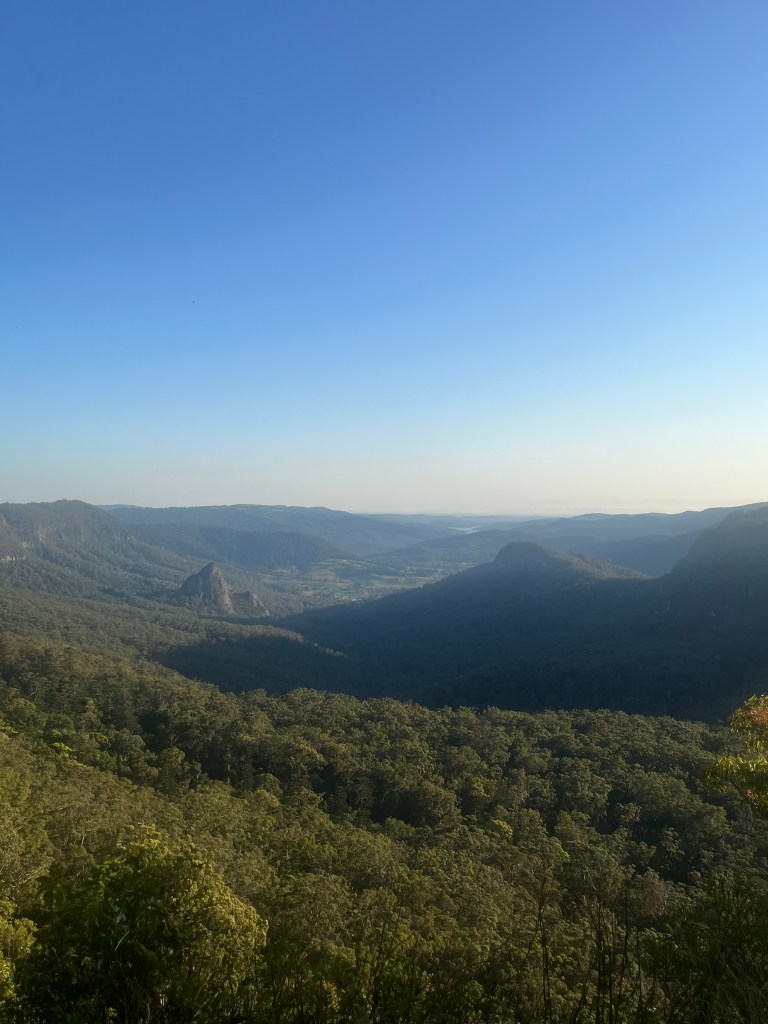
At about 1.5km in I hit my first dry creek crossing and took in the beautiful views from Koolanbilba Lookout. The trail became steeper as I continued, but I couldn’t help pausing at a natural cave around the 2.6km mark. Who else had sheltered her over the centuries? I felt like an explorer uncovering new lands and treasures – until I remembered I was actually just sweaty and armed with a samurai spider-stick.

Second Stage: Snakes, Sticks and Stunning Views

By the time I hit the 6.5km mark, I started the uphill slog. Let’s be real, I was a little nervous that the rest of the hike might be all uphill from here – but hey, what’s life without a a challenge?

As I trudged upward, the trail opened up to spectacular valley views with grassy vistas, and I swapped my cobweb stick for a snake stick. in Queensland’s spring heat, snakes are out and about looking for love. Fortunately I only encountered one tine brown snake and it slithered away quicker than I could say, “NOPE!”

At 8.5km, I arrived at Charraboomba Rock, a stunning rocky outcrop with heart-stopping stairs that cling to the edge of the cliff. Heights aren’t my thing so I skipped this side adventure. Brave souls, you’re on your own for that one! I still had amazing views, so all was well.

Third Stage: Cliff Views and Cliffhangers

At 10km I found a perfect log for my snack break. Just me, my salad wrap, chocolate bar, and the valley stretching out below. I took the opportunity to spray myself liberally with insect repellent, than goodness for that decision as the next part of this tale will reveal!

Feeling refreshed, I set off again, only to find the second stunning lookout just 500m later. Could’ve had my breakfast with an even better view, but oh well! I had a sit and a look, and then continued along the trail, enjoying the breath-taking scenery and the stillness of the morning completely to myself. So far, I had not seen another soul on the trail – a very special experience.

By now I was halfway through the circuit and starting the long trek back. Around the 13km mark, I began the final ascent. I knew that the last 2km would be downhill, but getting there was a sweaty grind – happily the views made it worthwhile.

At 15km I took a breather at Nagarigoon Falls – the only ‘falling’ waterfall I found. Not a huge amount of water, but hey, it was still peaceful and pretty.

Fourth Stage: The Downhill Stretch (And… The Incident)

Finally, I reached the marker for the Border Track and the start of the downhill section, just 2.3km to my car, and more importantly, a flat white at the Binna Burra Café. With gravity on my side, I happily trotted along, oblivious to the horror that awaited me.

With around 1km to go, my backpack strap started to feel…odd. The right hand side was digging in, and no amount of adjusting seemed to help. But I pressed on, keen to finish. It wasn’t until I got back to the car that I discovered the truth.

Fifth Stage: THE TICK (Cue Dramatic Music)

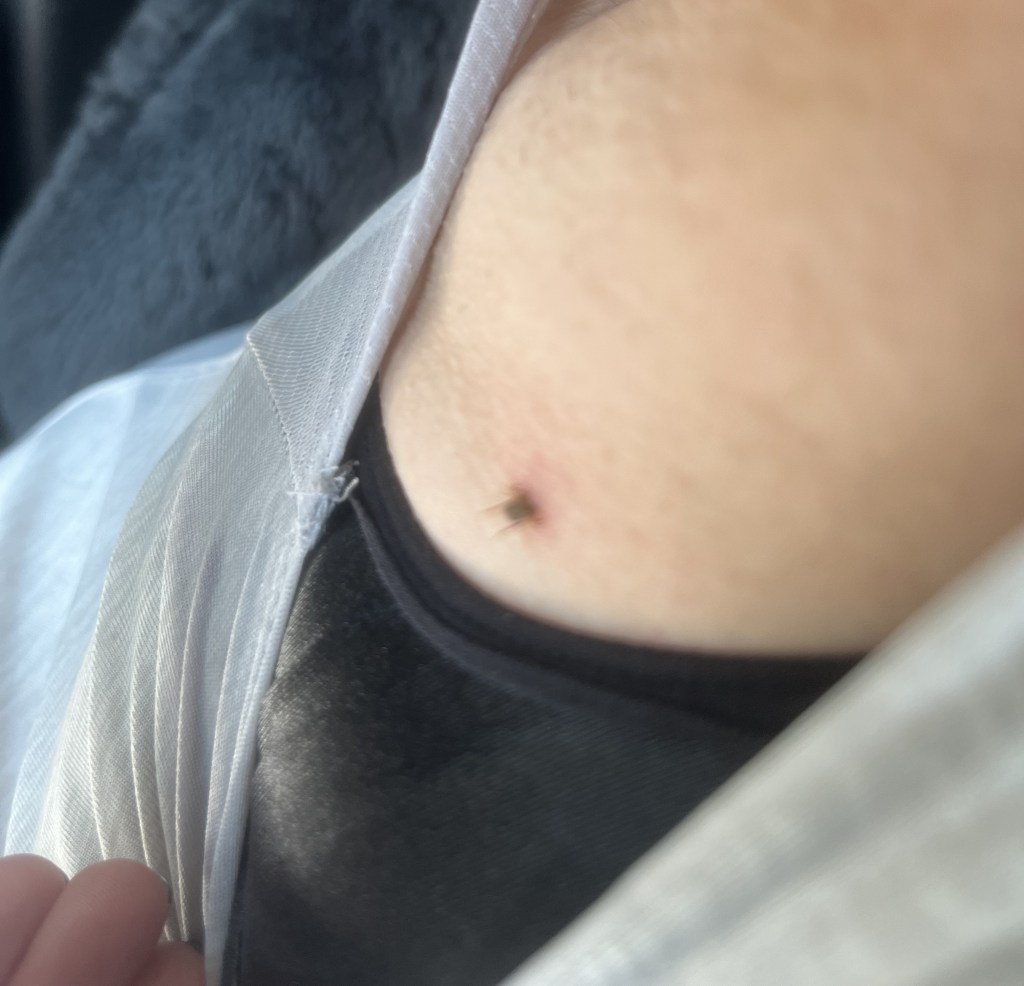
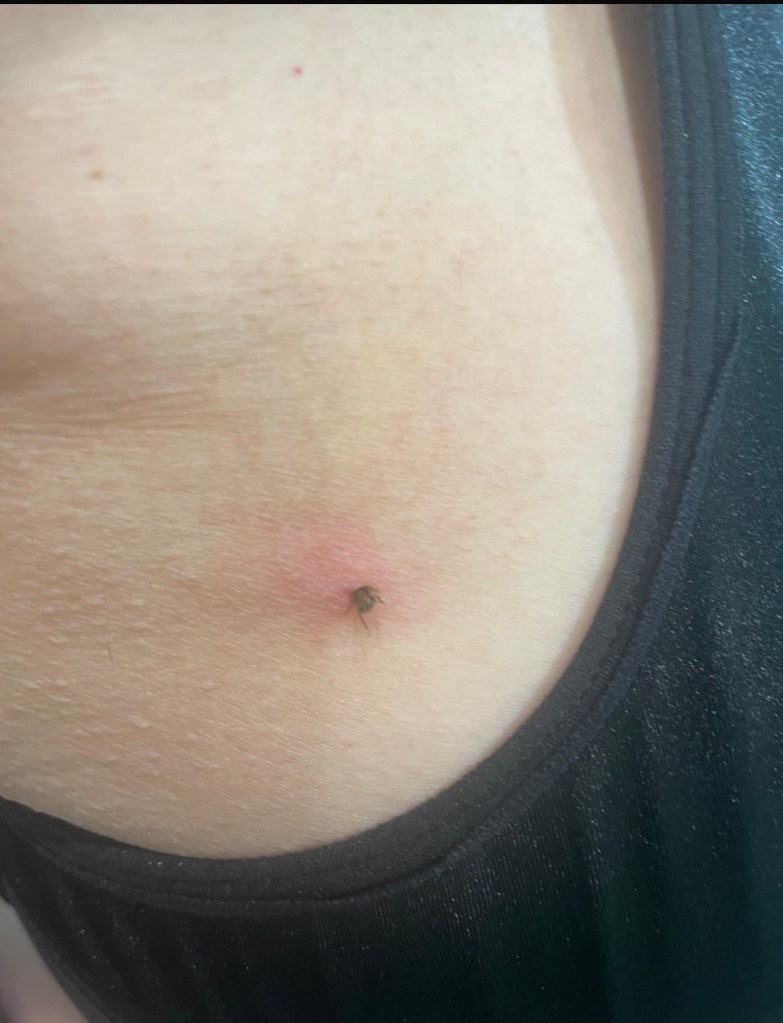
Back at the car, sipping my well earned coffee, the discomfort in the front of my right shoulder was getting worse. What was going on? I checked the area, and there it was. A massive black tick, wriggling happily away like it was at a buffet.

My photographic skills right handed without glasses!

I’ll spare you the gruesome details (yeah nah), but let’s just say that tick had dug in DEEP. With a 70 minute drive home, I had to resist the urge to yank it out, knowing full well you can’t just pull a tick out without risking leaving its head – and its toxins – behind. I emptied a half a can of insect spray on the little bugger and called my sister (a.k.a. tick removal expert). After a tense tweezer-tugging session at her place, the tick was out, intact, and my armpit was back to normal the next day. Crisis averted!

Final Thoughts

Tick drama aside, Ships Stern Circuit was another incredible experience. Stunning views, varied terrain and a good mix of challenge and fun.

Just remember – pack extra insect repellent, watch out for snakes and always, always check for ticks!!

See you out on the trails…

PJ

Two Scottish Isles, Two Hikes, Two Days – Can It Be Done??

Hello and welcome to my LIKETHEHIKE blog. I’m PJ and I write about the hikes I take, giving you insights, photos, commentary, tips, and tools so you can enjoy hiking and embrace the experience.

I’m a week into my holiday exploring the islands of England Scotland and Iceland. I have the opportunity to hike on not one BUT TWO SCOTTISH ISLES! I only have a short window to accomplish this and I’m pretty sure I can pull it off so let’s get into it.

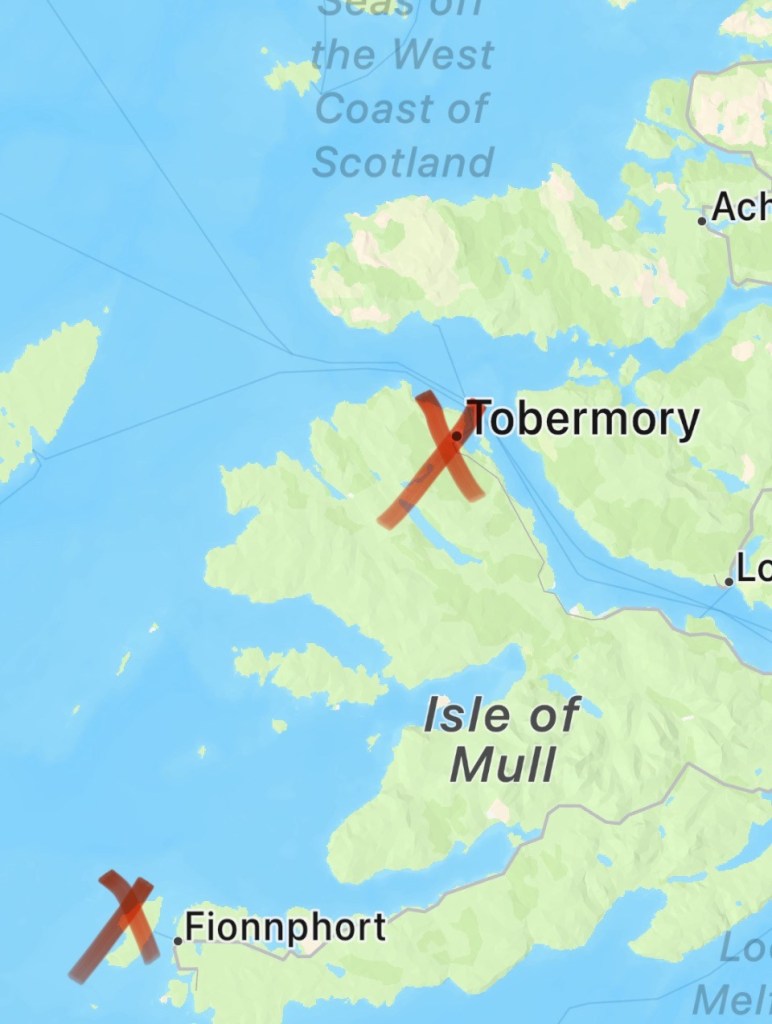
So, this is where I am. What I understand to be the Inner Hebrides, a cluster of islands off the west coast of Scotland. The two isles in question are Mull and Iona.

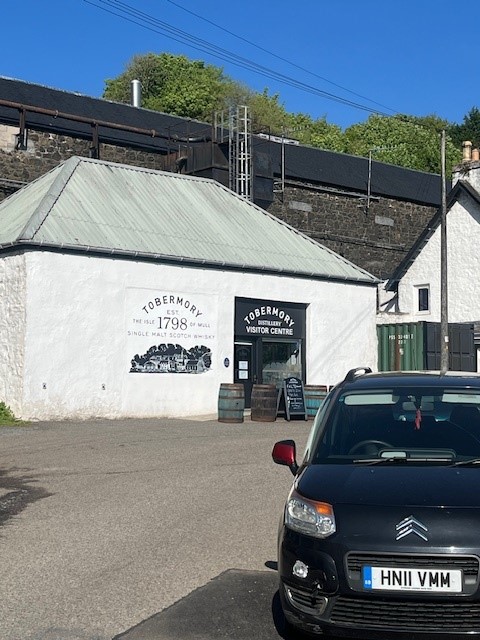
The Isle of Mull sits northwest of Glasgow and is well known for the capital fishing village of Tobermory (Wombles anyone… 😉 ) and a single malt whisky distillery conveniently located about 120m from the pier. It’s green, lush, inviting, home to 1,000 people, and gives off a cosy, welcoming vibe.

The Isle of Iona is completely different in every way. It sits about 125km southwest of Tobermory, right on the western tip of Mull. It’s a tiny isle, no more than 5km long and 1.5km wide. Home to less than 17o residents and the world-famous Iona Nunnery and Abbey, it’s stark, windswept, and hauntingly beautiful. Standoffish but when you get to know it – unforgettable.

DAY ONE MORNING – Hiking the Isle of Mull

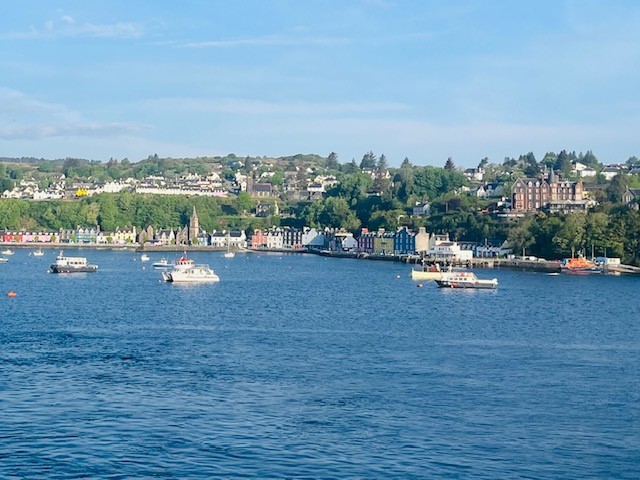
Welcome to Tobermory 🙂 We landed at the pier of this picture postcard village on the northeastern side of the Isle of Mull. It’s the capital of the island and is instantly recognisable for its brightly painted buildings that line the front of the fishing harbour. Tobermory comes from the Gaelic Tobar Mhoire or Mary’s Well, referring to a well nearby dedicated to the Virgin Mary.

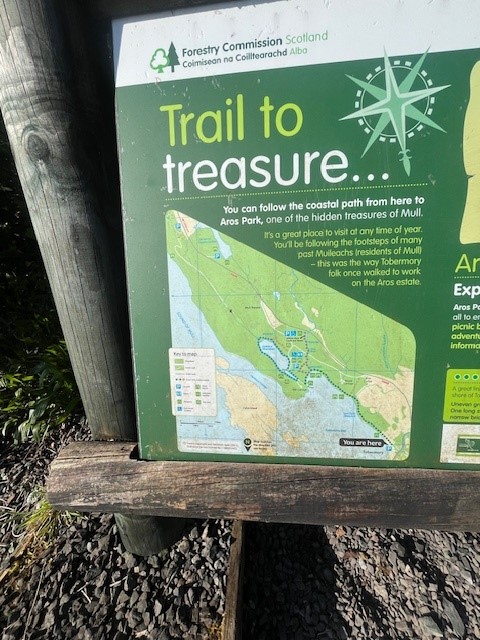
We had a 6km hike that would take us out to the Aros waterfall and explore the harbour front. Rather than hike as part of a group, Mr PJ and I went rogue and decided to do our own thing. Now I wouldn’t usually recommend this, anyone on FB knows what happens to Australian tourists who abandon the cruise excursions and do their own thing…however, the hike was a ‘there and back’ and I was confident that we could manage this in the timeframe given to us.

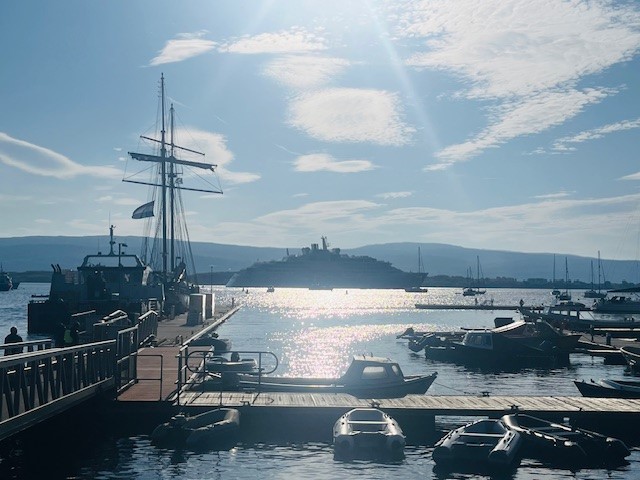
The trail started at the pier, with an easy set of signs and a map. After a short but sharp climb, we were at the first clifftop and so began a hike that offered view after view after view. We were walking away from the village so every vantage point gave us stunning views back to the village and our ship – Silversea Endeavour.

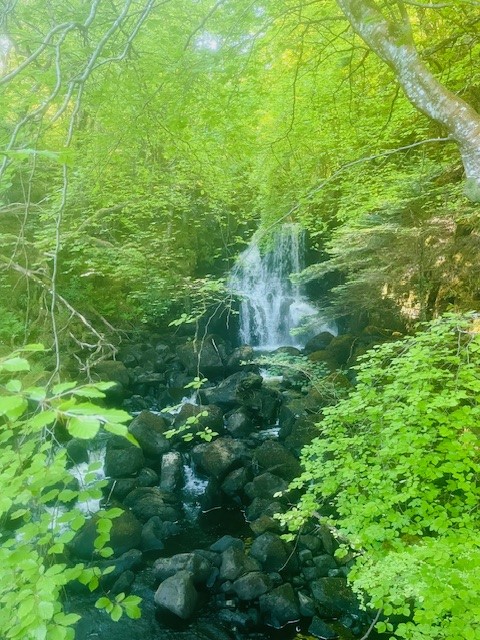
Tobermory has luscious trees and abundant vegetation with everything in spring bloom. The hike out to the waterfall was just gorgeous. It was mid-morning, the temperature was mild, and the clothing layers came off very quickly. After about 3km we arrived at the waterfall.

It was a series of short, sharp switches up, and then the same back down to the base of the waterfall. If you hike in Australia, you might be used to high, narrow waterfalls. The Aros was wider and less high, but still very lovely to spend a moment or three contemplating.

We went beyond the falls and explored the adjoining camping and facilities area, where I sadly discovered that the toilets were ‘closed until further notice’. This gave the local wildlife an interesting morning show, but when you gotta go, you gotta go! After my unplanned toilet stop, we decided to head back so we were within our deadline for transfer back to the ship.

Now, I’m not a petty person by nature, but….it gave me great pleasure to pass the ship hiking group as they huffed and puffed their way up the hill, walking poles flying in all directions and excursion staff urging them onwards and upwards. You take your joy where and when you find it 🙂

The return section was just as enjoyable as the outward section. We passed trail runners, hikers, walkers with dogs, and a heap of visitors just enjoying the Isle.

We did the hike in good time, but remember, it’s not about the time you take, but the time you spend. 🙂

Tobermory, you turned it on weather wise, hike wise and whisky wise. Oh, we had to stop at the distillery at the end of the hike and sample the wares, it would have been rude not to!

DAY TWO AFTERNOON – Hiking the Isle of Iona

If Tobermory was a soft spring morning, Iona was a wild and exciting afternoon. I could not have picked two more different isles to hike on.

Iona is world famous for the Iona Nunnery and Abbey. It’s one of the oldest Christian centres in Western Europe, with first dated records from about 560AD. It’s home to clan Donald and Macdonald, neither of which are my ancestors. I hail from mainland Scotland, clan Leslie just outside of Aberdeen 🙂

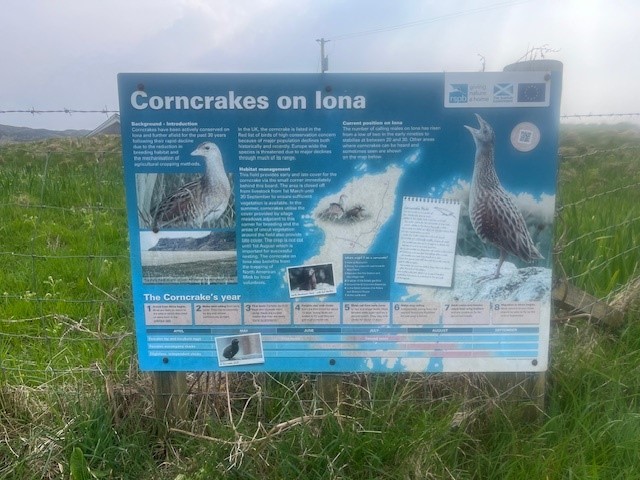
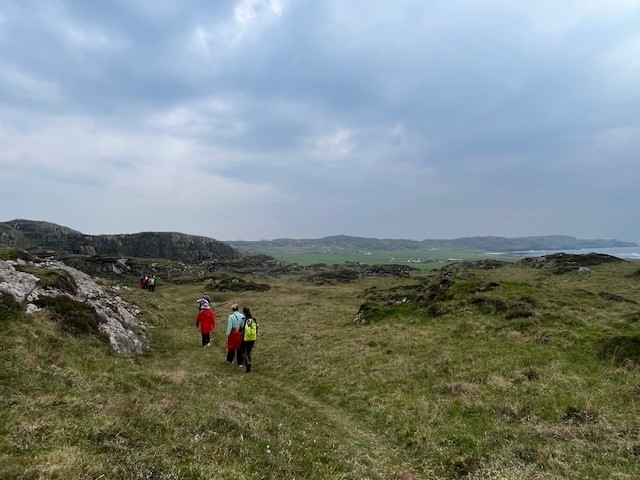
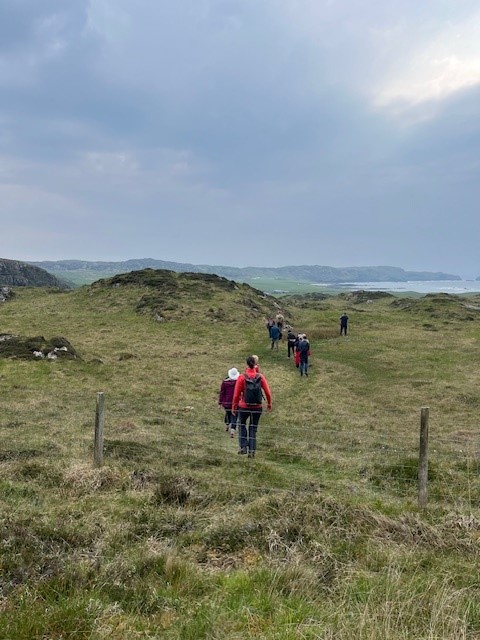
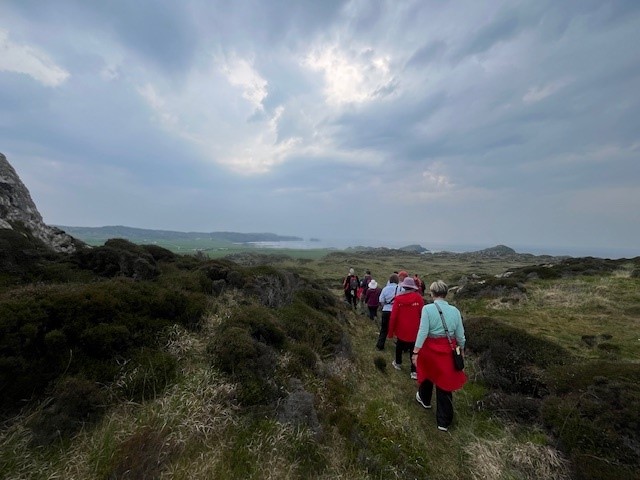
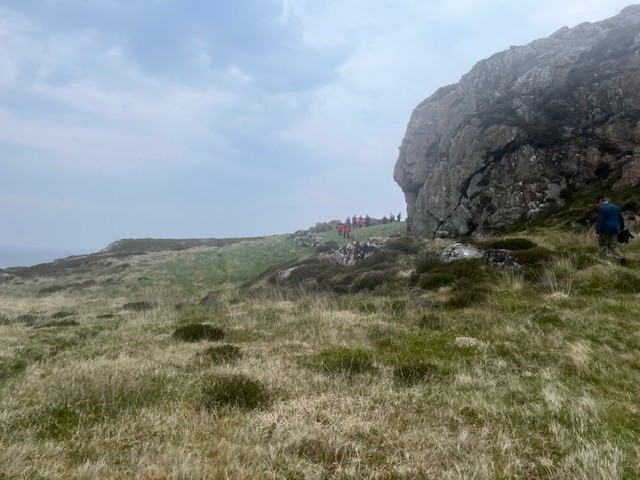
We had a fascinating walk around the Nunnery and the Abbey, then met for the hike traversing the Isle, Yep – traversing the isle! Not for the faint-hearted as we had limited time and a decent distance to travel, so only the fit and feisty were present. We started just outside the Abbey and made our way through the fields. The first thing that struck me as we walked along was the complete absence of any trees. Iona is at the western tip of a series of isles and is exposed to the forces of nature. Any trees on the island would be imported and protected as part of a house garden. There are no trees naturally on Iona, the winds destroy them long before they can take root.

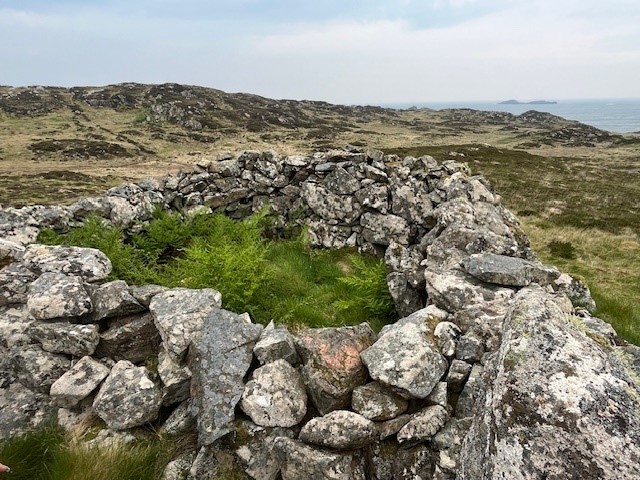
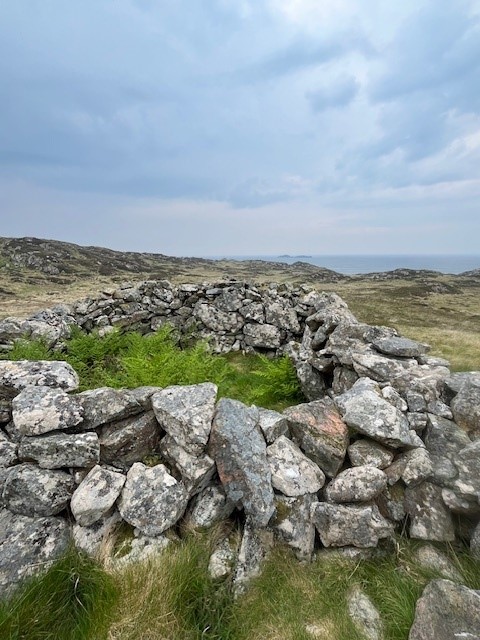
At around the 1.5km mark, the guide took us up a hill to a cluster of stones, originally a hermit cell. It’s an ancient ruin nestled into the side of the hill, built by a devout Christian hermit – or so the legend says. Whether it was built by a hermit or shepherds wanting shelter, the structure is centuries old and pretty special to visit.

The terrain was interesting to traverse. Much of the ground is either boggy or a mixture of reeds and sphagnum moss, which looks dry and stable but is actually full of spring water. So as soon as you step on it, down you go! It caught out a few people wearing sneakers. Not me though, thank you Gore-tex Merrells 😉

To be honest, I found the landscape a little unnerving. If you hike regularly in forests and bush trails, a space devoid of any vegetation higher than your knee is ‘interesting’. There were rocky outcrops covered in lichen and magnificent views down to a grey and menacing sea. The hike was very much about the environment and what we were walking through – very different and visually confronting.

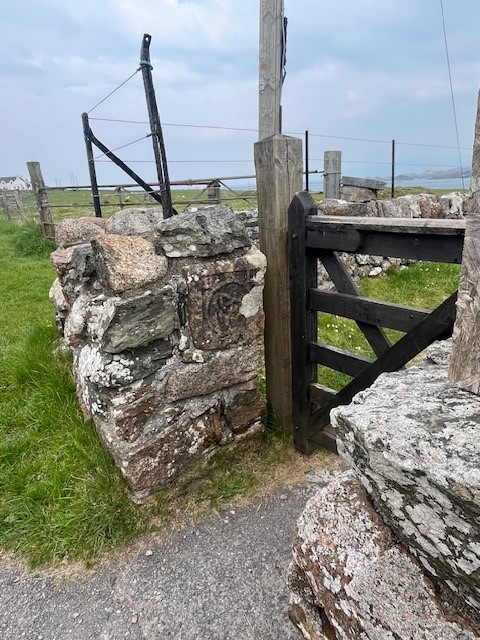
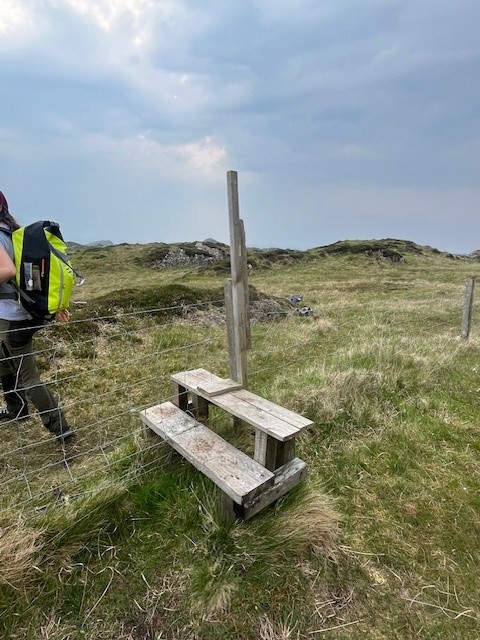
There were gates and stiles to navigate and at about 3km we went over a stile that marked the high point, we were officially in the middle of the island. Occasionally we passed flocks of sheep and their cute little black headed lambs.

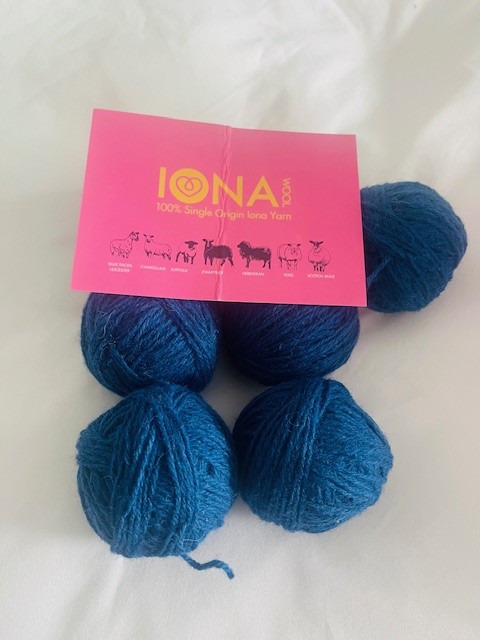
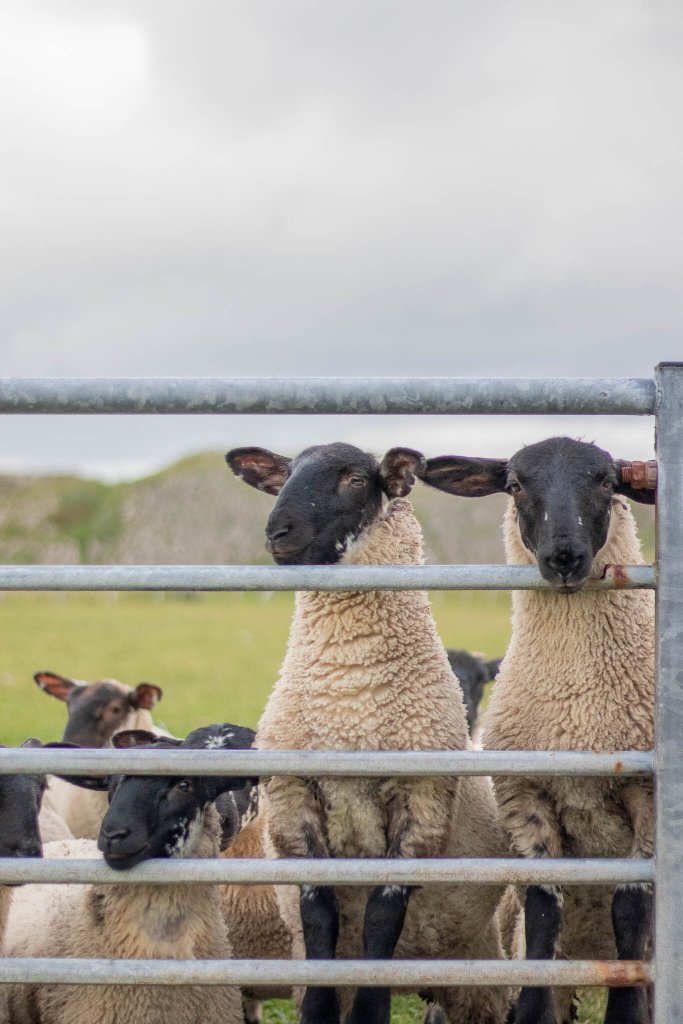
Side note – Iona is home to seven crofts (little rented farmlets), two larger farms and over 1,000 native sheep. The wee black headed ones are Suffolk or Scotch Mule breeds. I know this as I may have spent some time pre-hike at the Iona Wool Store in the village. No judgment please, I like to shop and knit. Two for one! It’s that kind of blog.

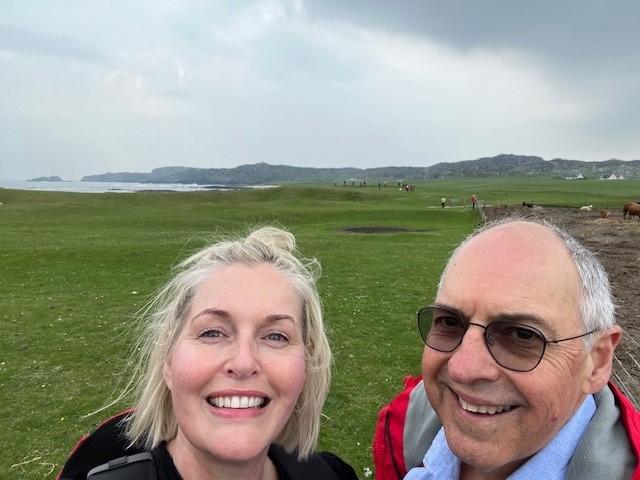
We made our way downward, and what did we stumble upon but the local golf course! Well, this is Scotland so I’m not surprised. From what I understand, Scotland is first in the world for the most golf courses per capita. The Iona Golf Course is mown by sheep and cattle, free to play on, and has a wicked 14th hole 😉

Downward we went, and soon we arrived at the ocean, wild, grey, and absolutely breathtaking. We had the beach to ourselves, and forget sand, it was pebbles, grass, and sheep poop. Our final 1.2km was a brisk walk down the main (only) road back toward the village and pier.

I was struck yet again by the stark and windswept nature of the isle, and what it might mean for residents. Looking at the houses, they are all built to capture sunlight when possible, everyone has skylights and glass to make the most of daylight. I saw woodpiles for home fires, which must come in via ferry as there are no forests or trees on the isle.

Such a beautiful and awe-inspiring land to walk across, such a pleasure, such a privilege.

Just a fraction under 6km to hike across an island – pretty cool! The village’s name is Baile Mor… which means big town. It’s not…

So I did it, two Scottish Isle hikes in two days. WOOOOOOOHOOOOO!

Not the longest of hikes if you read some of my previous blogs, but definitely up there in terms of uniqueness and enjoyment.

The Scottish Isles offer such a range of experiences and opportunities, for all budgets, all mobilities, and all persons. I can absolutely recommend them as a destination for anyone wanting to simultaneously lose and discover themselves hiking. Have a look at visitscotland.com for more info.

See you soon out on the Icelandic trails!

PJ 🙂

The Blog about NOT HIKING…

Hello and welcome to my LIKETHEHIKE blog. I’m PJ and I write about the hikes I take, giving you insights, photos, commentary, tips and tools so you can enjoy hiking and embrace the experience.

Ahhhh, the enjoyment of a hike. Getting your pack ready, pouring over hiking maps, deciding on your snacks, your gear, the timing, then actually getting there and having a fantastic day.

EXCEPT.

When you don’t.

HIKING IN QUEENSLAND SUMMERS

I’m very lucky to live in a beautiful part of Australia. Queensland is an outdoor pursuits paradise and as they say, it’s beautiful one day and perfect the next. I can drive one hour south and been in the middle of the Gondwana Forest. An hour north puts me in a subtropical rainforest wonderland.

For nine months of the year, hiking in Queensland is a pure delight. For the other three months, it can be positively hazardous to your health.

Let me tell you why…..in escalating order of threat to safety and sanity….

#1 Hazard – Leeches

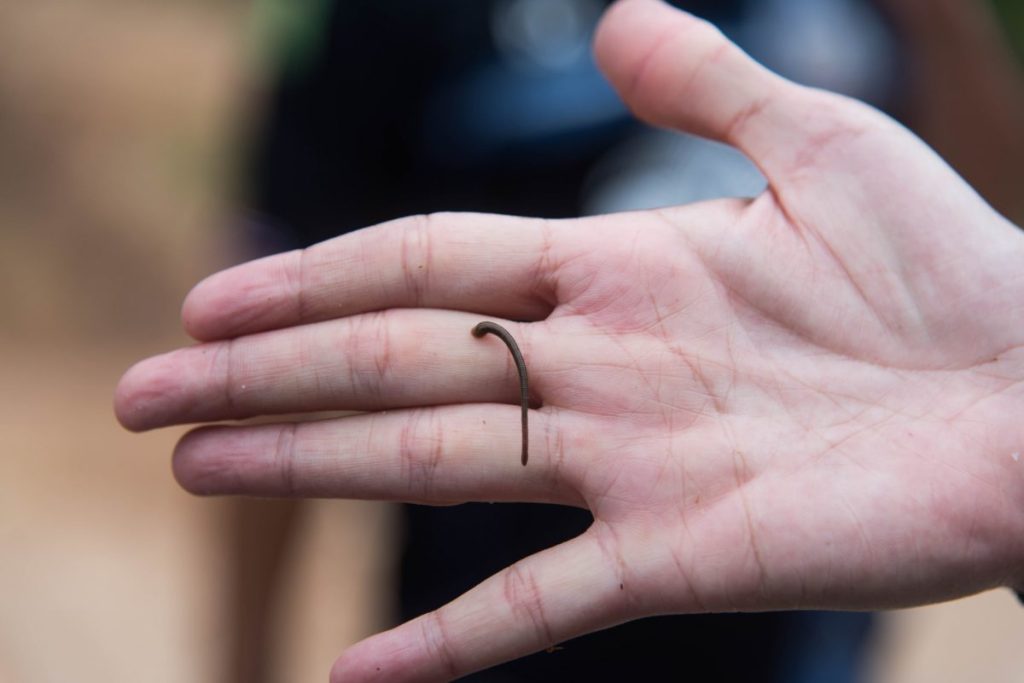
Or scientifically speaking, the Gnathobdellida (jawed leech). Leeches are closely related to earthworms, but act very differently especially when hikers are around!

Leeches are common on the ground or in foliage in rain forests. They are sanguivorous, blood sucking parasites that feed on preferred hosts like kangaroos, possums, padymelons, birds, frogs and HIKERS.

My first encounter with leeches was about 10 years ago when I did a short hike in Lamington National Park. The waterfalls were in full flow, the birds were singing, the sun was shining and it was a great day….until I got back to the car and took my boots off. There, tucked into the top of my socks and firmly attached to my legs were about eight leeches.

They ranged in size from a thin worm (like above) to fat black sausages the size of a thumb, all pulsing in sheer delight as they feasted. To say I panicked was an understatement. I didn’t know anything about leeches, how to remove them, what to do….so I ripped them all off as I hopped and cursed around the car. Not a pretty sight.

I now know that leeches are not painful, nor are they poisonous. In fact, you rarely know you have one on yo, so they are rather polite creatures. They inject an anticoagulant/anaesthetic as part of their feeding process so when they’re removed, you continue to bleed for quite some time. Leeches aren’t dangerous but they rate quite high in the YUK category so prevention is much better than cure.

TIP

Carry either bug repellent or a Ziploc of salt, either will easily remove a feasting leech. I liberally spray myself with bug repellent before I hike and this seems to keep most creepy crawlies at bay. Remember to spray BEFORE you put on socks, pants etc as they just love to burrow under clothing…

#2 Hazard – Ticks

So now we head into more dangerous territory. Ticks are parasites that feed on human and animal blood, They can vary in size from a pinhead to a fingernail, and they need blood to grow. Unlike leeches which drop off once finished, ticks stay attached to their hosts and feed for several days. Depending on the species of tick, this longevity can make the host quite sick.

Hikers are susceptible to ticks in summer. I went on a two day group hike last October, and ticks were literally dropping out of the trees onto us. Each rest break involved some serious tick inspections, with several of the group removing ticks from chests, groins and even ears!

Tick season runs from the end of winter, through spring and into summer, with ticks being most active during periods of high humidity, which in Queensland is summer.

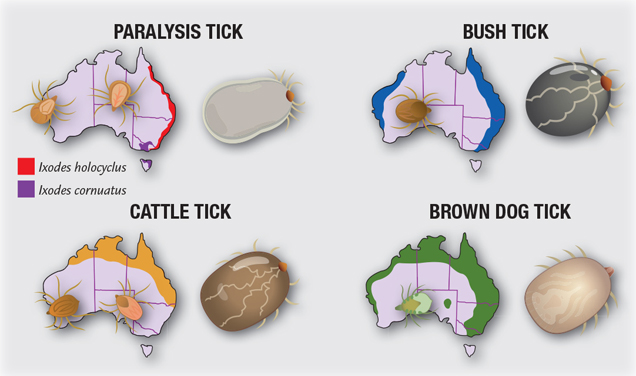
Just because it’s Australia, we have a tick called Ixodes holocyclus, or the Australian Paralysis Tick.

This nasty causes paralysis by injecting neurotoxins into its host. Tick paralysis is most often seen in animals but humans can also be affected.

Locating and removing ticks early is important as human reactions can range from itching, to full blown allergies, and respiratory distress. There is a saying in Australia, “freeze it, don’t squeeze it” which means, don’t try to pull the tick off as often its head remains embedded…along with the toxins. Instead use a pressurised cryoliquid product like Tick Off to kill the tick.

TIP

I carry Tick Off as part of my first aid kit when I hike. I haven’t needed to use it (but friends have) and it works by killing the tick, which then drops off. I do know some hikers who are confident to tweezer ticks out, and there’s a tale that you can remove them safely by twisting them out anticlockwise but I will stick with the spray thanks!

#3 Hazard – Snakes

The one thing that will strike fear in my heart is the thought of a snake bite when I’m hiking. But really, how prevalent are snakes when out hiking in summer?

In Queensland more that 800 people were bitten by snakes annually in 2020-2022. In January 2023, 97 people were bitten.

As snakes are cold blooded, these encounters happen during our summer months when the slithery critters are on the move for food or a mate. Interestingly, most snake bites occur when people are trying to interact with a snake, to move it or kill it. 90% of these bites happen in people’s homes or back yards and not all snakes are venomous.

So, statistically, my chance of being bitten by a venomous snake when out hiking is pretty low. Doesn’t change how I feel about it though!

I have only ever seen two snakes out hiking. One was a lovely emerald tree snake sunning itself on a trail and the other was a death adder, also snoozing on a trail. Both scarpered pretty quickly.

My philosophy is to treat all wildlife with healthy caution, especially snakes. Given they are much more active in summer, I’m very happy for them to have the bush for those months, and I’ll hike in the cooler months 🙂
TIP

Snakes aren’t aggressive unless they are threatened, so if you come across a snake, stand still and wait to see where it goes. Then you go the other way, letting it disappear. Whatever you do, don’t try to move it, touch it or scare it. They sense the vibrations in the ground as you approach and are usually long gone before you even see them.

#4 Hazard – Dehydration

I bet you were expecting me to name another dreaded Aussie insect or animal as my highest summer hiking hazard – but NO!

From my experience, the most hazardous aspect of hiking in a Queensland summer is dehydration. Temperatures can reach well over 35 degrees (95+f) by mid-morning and any strenuous prolonged exercise can trigger dangerous dehydration. And our 2023-2024 summer has been brutal with a number of heatwaves lasting days.

The worts part about dehydration is you may not even know its happening. Feeling thirsty means you’ve gone too long without fluids and a dry mouth and decreased energy could be mistaken for a response to summer heat. Another good trick to stay alert for dehydration is the “umbles”. Stumbling, mumbling, grumbling and fumbling are all signs that you need to stop and hydrate.

The added challenge for staying hydrated in summer is that water alone isn’t going to cut it. Your body needs electrolytes and minerals such as potassium, magnesium and zinc. When I hike in hotter months, I use a dual water bladder so I can carry plain water in one chamber and electrolytes in the second chamber. And when you think you’ve packed enough fluid, throw in another bottle because you just might need it! The general rule of thumb for hydration while hiking in heat is one litre per hour.

TIP

If you are hiking in summer, hydrate BEFORE you start, Chug down 500-750ml of fluid in the hour before you hit the trail. When you’re hiking, take small, frequent sips. My water bladder has a great mouth piece that I thread through my shoulder straps and it sits nicely near my neck, handy for sipping. Finally, continue to hydrate AFTER you’re done, using electrolytes or a sports supplement like DripDrop or Skratch in at least 1 litre of water.

In Summary…

So there we are. My top four reasons for not hiking in the height of summer in Queensland.

It’s a personal preference only, and of course, anyone can enjoy hiking in any season and not experience discomfort, but I really enjoy my hikes and I don’t want to be panicking about sucky, slithery, bitey creatures!!

The threat of leeches, ticks, snakes and heat keep me off the trails for just a few months, but trust me, the rest of the year I’m out there having a ball!

See you out on the trails (very soon)

PJ