
When people hear that TB and I are hiking around Shikoku in Japan this October, the first question is usually “how are you training for that?” The answer surprises them a little.
I’m not spending every weekend climbing mountains or running marathons. Instead, I’ve built a routine that fits around work, family, the doggos and life in general. Because I’ve learned that the best training plan isn’t the most impressive one, it’s the one you will actually stick to.
Shikoku 2026 is a multi-day hike, which means success isn’t about smashing out one huge day. It’s about being able to get up the next morning…and do it all again. Day after day. So, my focus has been on building endurance, strength and consistency.
The Weekly Plan
My training isn’t complicated, but every session has a purpose.
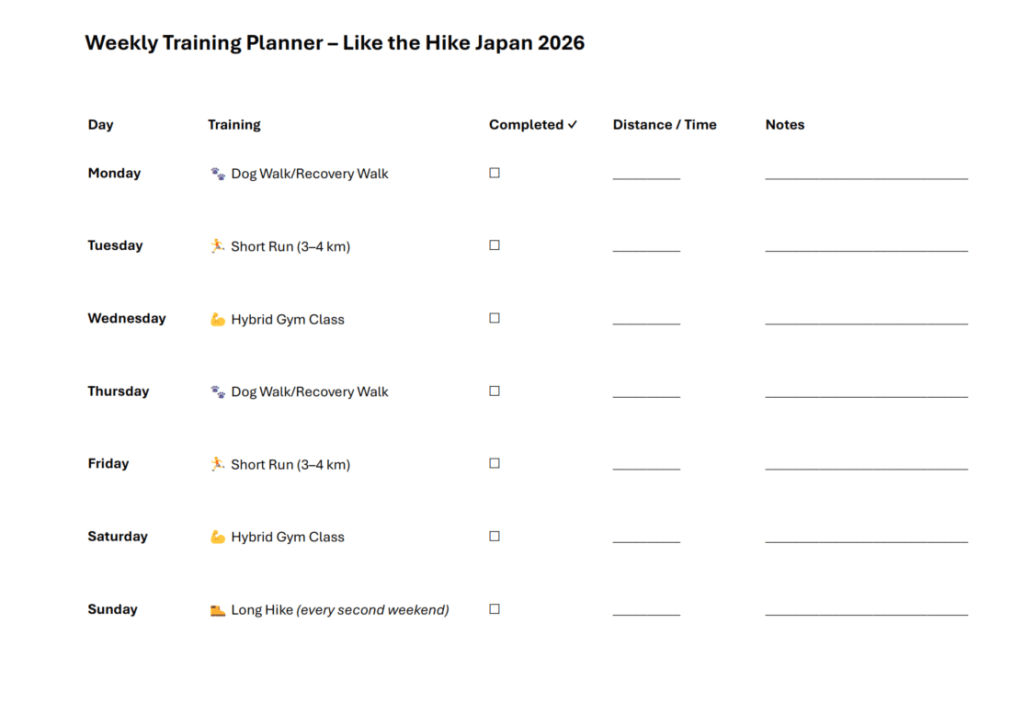
1. Short Runs (3-4km)
A couple of shorter runs each week help build cardio fitness without taking up hours of my day. They’re long enough to get the heart rate up and keep the legs moving, but short enough to fit in before or after work. They’re also great for maintaining a base level of fitness between the bigger sessions.
Just to be clear, my ‘run’ pace is barely past a really fast walk pace, please don’t think I’m trying to beat a Gout Gout record!!
2. Hybrid Gym Classes
I belong to a local gym that offers a range of group classes, with slightly scary names like CC45, Body Pump, Core Fusion, WOW, and Team HIIT. What they all have in common is 45 minutes of strength training combined with cardio. For hiking, strong legs are important, but so are your core, back, shoulders and balance. Carrying a pack for multiple days (even if it’s only 5kg) places demands on your whole body, not just your feet and legs.
3. Long Hikes Every Second Weekend
Every second weekend is reserved for the most important session, a long hike of 10 km or more.
These hikes aren’t about speed. They’re about spending time on our feet (yep, TB is along, too!), learning what works, testing gear, wearing the backpack, experimenting with nutrition, and getting comfortable with being uncomfortable. We are mostly training in Nerang National Park for two reasons. 1) It’s close, so it works into a busy weekend, and 2) you’re either climbing up a hill or scrambling down one, so excellent conditioning.
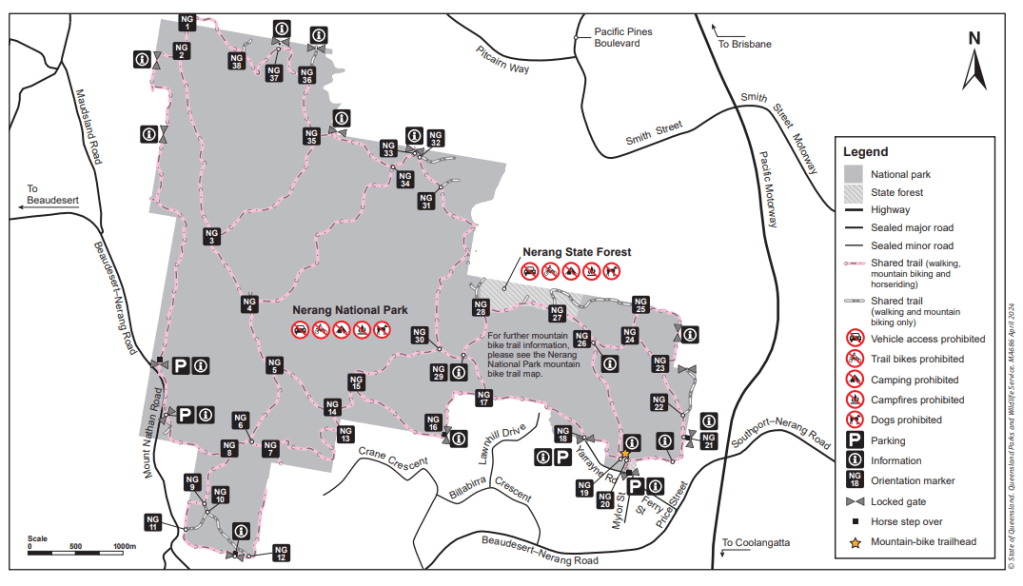
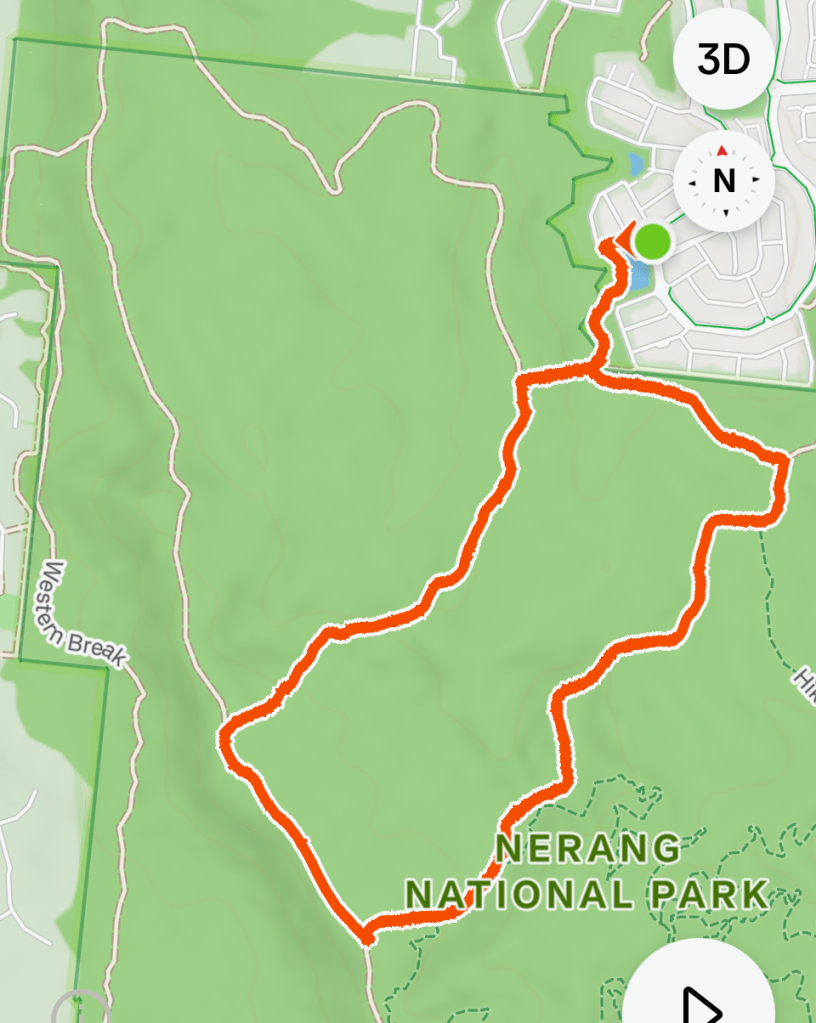
It’s easy to find a 10+km section and get the distance done before lunch. Last weekend was a cheeky wee 8km intro hike, doing one of the loops in the NW corner.
4. Walking the Dogs
The final piece of the puzzle is probably the easiest and most enjoyable.
Regular walks with Moby and Maisie add extra kilometres without feeling like training. They keep me moving on recovery days, help loosen up tired legs and make sure I’m consistently active throughout the week.
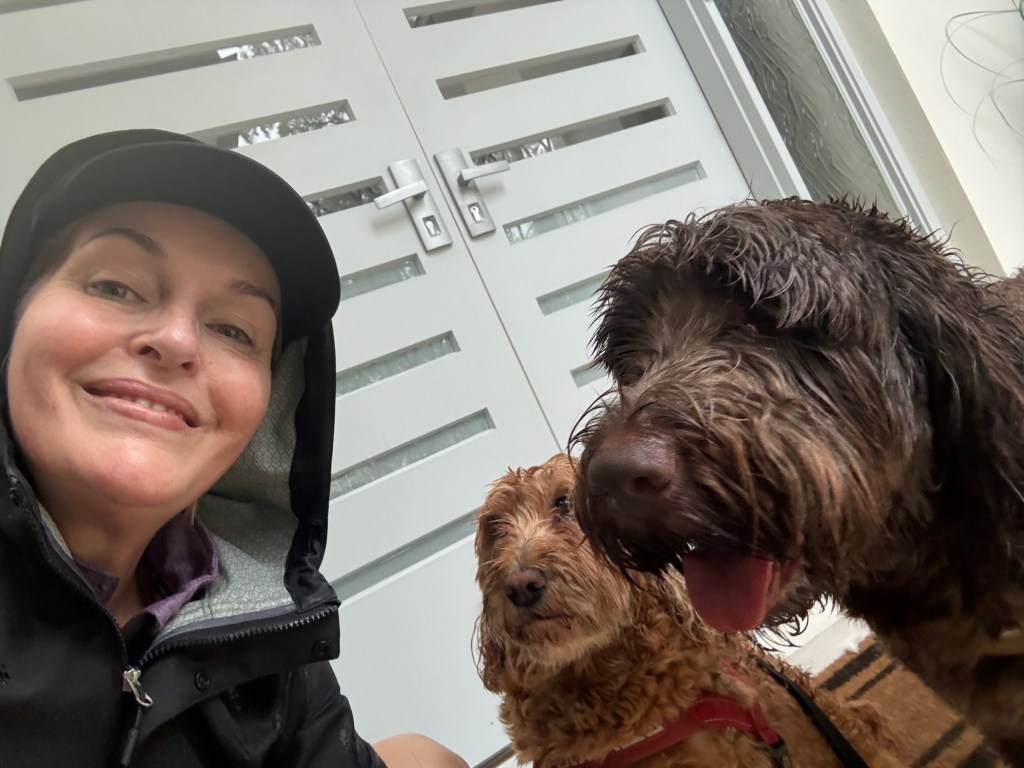
Plus, the doggos seem to think every walk is an adventure, which is a pretty good attitude to have 🙂 (well, not so much Maisie on that rainy morning!)
It’s Not About Being Perfect
There’ll be weeks when work gets busy. There’ll be days when I miss a run, miss a gym class or swap things around. And that’s OK.
I’ve deliberately built flexibility into the plan because missing one session won’t derail weeks and weeks of preparation. What matters is getting back into the routine the next day.
Consistency beats perfection every single time.
Training for the Journey
The Shikoku pilgrimage isn’t just a physical challenge for TB and me. It’s also about slowing down. embracing simplicity, spending time with my sister and enjoying the journey. In many ways, the training reflects that.
The most fabulous training plan in the world won’t guarantee success on the trail. But turning up consistently, week after week, will give us the best chance of enjoying every step of our Shikoku adventure. And that’s exactly what this journey is all about.
See you out on the trails!
PJ 🙂

 Like The Hike