
Hello and welcome to my LIKETHEHIKE blog. I’m PJ and I write about the hikes I take, giving you insights, photos, commentary, tips and tools so you can enjoy hiking and embrace the experience.
Ahhhh, the enjoyment of a hike. Getting your pack ready, pouring over hiking maps, deciding on your snacks, your gear, the timing, then actually getting there and having a fantastic day.
EXCEPT.
When you don’t.
HIKING IN QUEENSLAND SUMMERS
I’m very lucky to live in a beautiful part of Australia. Queensland is an outdoor pursuits paradise and as they say, it’s beautiful one day and perfect the next. I can drive one hour south and been in the middle of the Gondwana Forest. An hour north puts me in a subtropical rainforest wonderland.
For nine months of the year, hiking in Queensland is a pure delight. For the other three months, it can be positively hazardous to your health.
Let me tell you why…..in escalating order of threat to safety and sanity….
#1 Hazard – Leeches
Or scientifically speaking, the Gnathobdellida (jawed leech). Leeches are closely related to earthworms, but act very differently especially when hikers are around!
Leeches are common on the ground or in foliage in rain forests. They are sanguivorous, blood sucking parasites that feed on preferred hosts like kangaroos, possums, padymelons, birds, frogs and HIKERS.
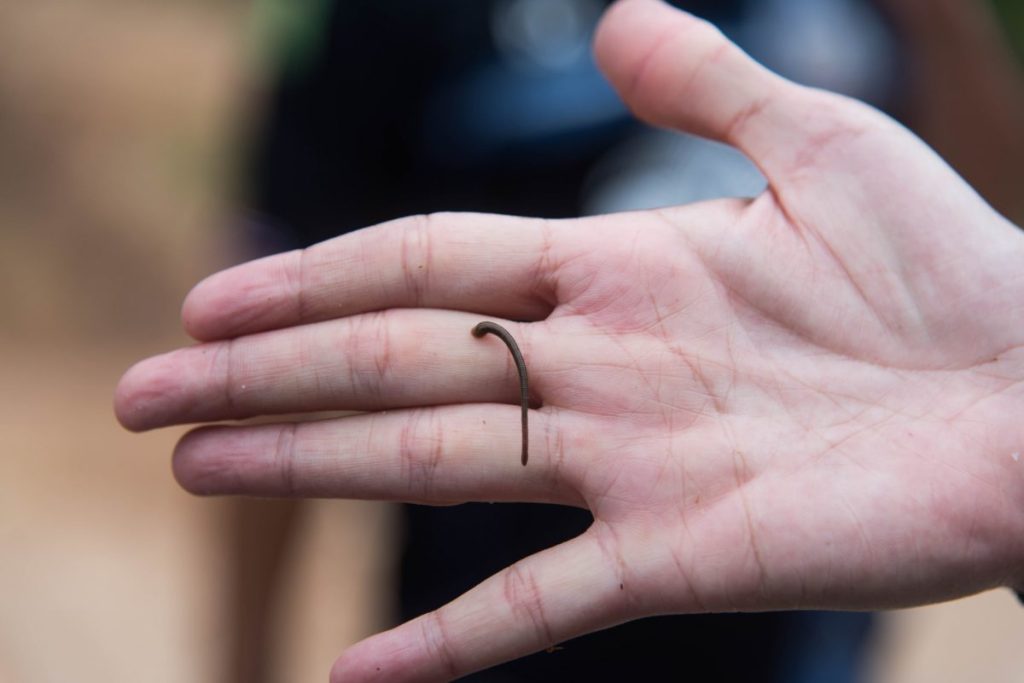
My first encounter with leeches was about 10 years ago when I did a short hike in Lamington National Park. The waterfalls were in full flow, the birds were singing, the sun was shining and it was a great day….until I got back to the car and took my boots off. There, tucked into the top of my socks and firmly attached to my legs were about eight leeches.
They ranged in size from a thin worm (like above) to fat black sausages the size of a thumb, all pulsing in sheer delight as they feasted. To say I panicked was an understatement. I didn’t know anything about leeches, how to remove them, what to do….so I ripped them all off as I hopped and cursed around the car. Not a pretty sight.
I now know that leeches are not painful, nor are they poisonous. In fact, you rarely know you have one on yo, so they are rather polite creatures. They inject an anticoagulant/anaesthetic as part of their feeding process so when they’re removed, you continue to bleed for quite some time. Leeches aren’t dangerous but they rate quite high in the YUK category so prevention is much better than cure.
TIP
Carry either bug repellent or a Ziploc of salt, either will easily remove a feasting leech. I liberally spray myself with bug repellent before I hike and this seems to keep most creepy crawlies at bay. Remember to spray BEFORE you put on socks, pants etc as they just love to burrow under clothing…
#2 Hazard – Ticks
So now we head into more dangerous territory. Ticks are parasites that feed on human and animal blood, They can vary in size from a pinhead to a fingernail, and they need blood to grow. Unlike leeches which drop off once finished, ticks stay attached to their hosts and feed for several days. Depending on the species of tick, this longevity can make the host quite sick.
Hikers are susceptible to ticks in summer. I went on a two day group hike last October, and ticks were literally dropping out of the trees onto us. Each rest break involved some serious tick inspections, with several of the group removing ticks from chests, groins and even ears!
Tick season runs from the end of winter, through spring and into summer, with ticks being most active during periods of high humidity, which in Queensland is summer.
Just because it’s Australia, we have a tick called Ixodes holocyclus, or the Australian Paralysis Tick.
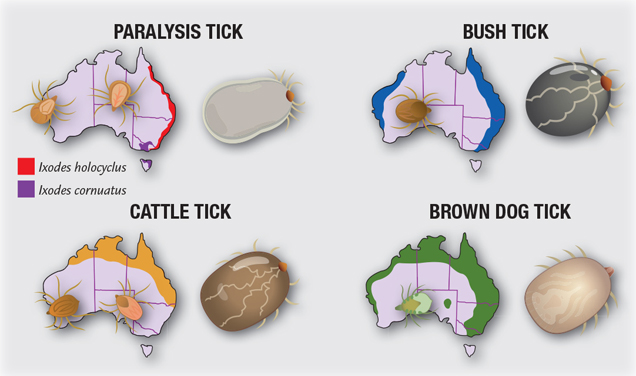
This nasty causes paralysis by injecting neurotoxins into its host. Tick paralysis is most often seen in animals but humans can also be affected.
Locating and removing ticks early is important as human reactions can range from itching, to full blown allergies, and respiratory distress. There is a saying in Australia, “freeze it, don’t squeeze it” which means, don’t try to pull the tick off as often its head remains embedded…along with the toxins. Instead use a pressurised cryoliquid product like Tick Off to kill the tick.

TIP
I carry Tick Off as part of my first aid kit when I hike. I haven’t needed to use it (but friends have) and it works by killing the tick, which then drops off. I do know some hikers who are confident to tweezer ticks out, and there’s a tale that you can remove them safely by twisting them out anticlockwise but I will stick with the spray thanks!
#3 Hazard – Snakes
The one thing that will strike fear in my heart is the thought of a snake bite when I’m hiking. But really, how prevalent are snakes when out hiking in summer?
In Queensland more that 800 people were bitten by snakes annually in 2020-2022. In January 2023, 97 people were bitten.
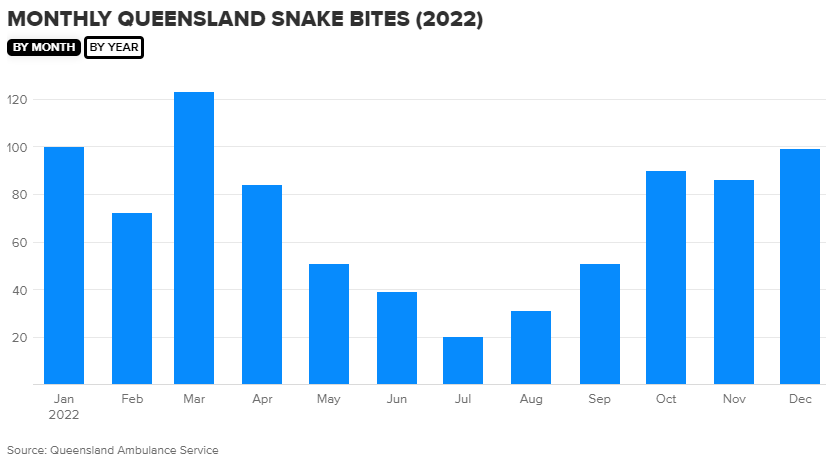
As snakes are cold blooded, these encounters happen during our summer months when the slithery critters are on the move for food or a mate. Interestingly, most snake bites occur when people are trying to interact with a snake, to move it or kill it. 90% of these bites happen in people’s homes or back yards and not all snakes are venomous.
So, statistically, my chance of being bitten by a venomous snake when out hiking is pretty low. Doesn’t change how I feel about it though!
I have only ever seen two snakes out hiking. One was a lovely emerald tree snake sunning itself on a trail and the other was a death adder, also snoozing on a trail. Both scarpered pretty quickly.
My philosophy is to treat all wildlife with healthy caution, especially snakes. Given they are much more active in summer, I’m very happy for them to have the bush for those months, and I’ll hike in the cooler months 🙂
TIP
Snakes aren’t aggressive unless they are threatened, so if you come across a snake, stand still and wait to see where it goes. Then you go the other way, letting it disappear. Whatever you do, don’t try to move it, touch it or scare it. They sense the vibrations in the ground as you approach and are usually long gone before you even see them.
#4 Hazard – Dehydration
I bet you were expecting me to name another dreaded Aussie insect or animal as my highest summer hiking hazard – but NO!
From my experience, the most hazardous aspect of hiking in a Queensland summer is dehydration. Temperatures can reach well over 35 degrees (95+f) by mid-morning and any strenuous prolonged exercise can trigger dangerous dehydration. And our 2023-2024 summer has been brutal with a number of heatwaves lasting days.
The worts part about dehydration is you may not even know its happening. Feeling thirsty means you’ve gone too long without fluids and a dry mouth and decreased energy could be mistaken for a response to summer heat. Another good trick to stay alert for dehydration is the “umbles”. Stumbling, mumbling, grumbling and fumbling are all signs that you need to stop and hydrate.
The added challenge for staying hydrated in summer is that water alone isn’t going to cut it. Your body needs electrolytes and minerals such as potassium, magnesium and zinc. When I hike in hotter months, I use a dual water bladder so I can carry plain water in one chamber and electrolytes in the second chamber. And when you think you’ve packed enough fluid, throw in another bottle because you just might need it! The general rule of thumb for hydration while hiking in heat is one litre per hour.
TIP
If you are hiking in summer, hydrate BEFORE you start, Chug down 500-750ml of fluid in the hour before you hit the trail. When you’re hiking, take small, frequent sips. My water bladder has a great mouth piece that I thread through my shoulder straps and it sits nicely near my neck, handy for sipping. Finally, continue to hydrate AFTER you’re done, using electrolytes or a sports supplement like DripDrop or Skratch in at least 1 litre of water.
In Summary…
So there we are. My top four reasons for not hiking in the height of summer in Queensland.
It’s a personal preference only, and of course, anyone can enjoy hiking in any season and not experience discomfort, but I really enjoy my hikes and I don’t want to be panicking about sucky, slithery, bitey creatures!!
The threat of leeches, ticks, snakes and heat keep me off the trails for just a few months, but trust me, the rest of the year I’m out there having a ball!
See you out on the trails (very soon)
PJ

 Like The Hike
Great read thanks for sharing
LikeLiked by 1 person
Hi,
I just wanted to take a moment to thank you for your wonderful blog post about not hiking. It really resonated with me, and I appreciate how you highlighted the beauty of taking a break from the outdoors. Your perspective is refreshing, and it’s a great reminder that sometimes it’s okay to just relax and enjoy life in different ways.
Thanks again for sharing your thoughts!
Best, Jaseph
LikeLiked by 1 person